

Will Strict Proof of Citizenship Block Black Voters?
By Darius Spearman (africanelements)
Support African Elements at patreon.com/africanelements and hear recent news in a single playlist. Additionally, you can gain early access to ad-free video content.
The United States House of Representatives recently passed a bill known as the SAVE Act. This legislation would require people to show physical proof of citizenship before they can register to vote in federal elections. For decades, the system relied on a person swearing they were a citizen under penalty of perjury. Now, lawmakers want to move toward a much stricter requirement for paper documents. Supporters say this is necessary to protect the integrity of the ballot box. However, many experts argue this change targets specific groups of people. They point to a troubling history of disenfranchisement that has long affected the Black community (brennancenter.org).
President Donald Trump has expressed strong support for these stricter measures during his current term. He and other proponents argue that the current system allows noncitizens to influence American elections. They claim that state agencies like the DMV make it too easy for ineligible people to sign up. This legislative push represents a major shift in how the country manages voter registration. It moves the responsibility away from the government and places a heavy burden on the individual voter. For those without easy access to birth certificates or passports, the right to vote may become a luxury they cannot afford (foxnews.com).
The New High Stakes of Proving Your Citizenship
Representative Chip Roy is one of the primary voices behind the SAVE Act. He argues that the National Voter Registration Act of 1993 created a loophole. This older law allowed people to register by mail or at the DMV using a simple affirmation. Roy believes this “honor system” is not enough to keep noncitizens off the rolls (foxnews.com). He claims that federal agencies are registering people without checking their legal status first. The SAVE Act seeks to change this by mandating documentary proof of citizenship in person (democracydocket.com).
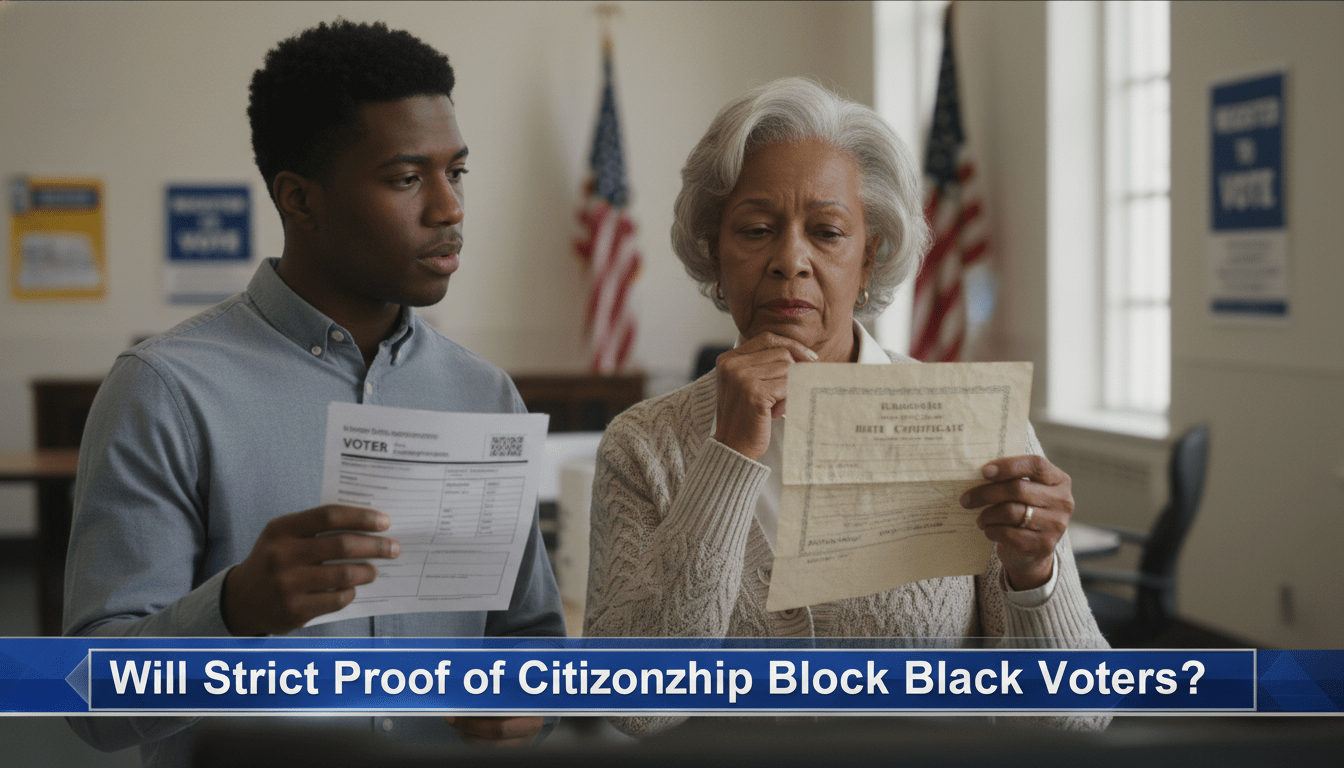
The proposed law would require documents like a passport or a birth certificate for all new registrations. Critics argue that this creates a massive hurdle for millions of eligible Americans. A recent survey found that over 21 million citizens do not have these documents ready to use (brennancenter.org). Many people lose these papers over time due to moves, fires, or natural disasters. For a person who has voted for decades, being asked for a birth certificate now can feel like a sudden wall. This shift changes the fundamental relationship between the citizen and the state (aclu.org).
The current administration maintains that the risk of noncitizen voting is high enough to justify these rules. They argue that protecting the value of a legal vote is the most important goal. However, many civil rights groups see this as a solution looking for a problem. They worry that the real result will be fewer eligible voters at the polls. This tension highlights a deeper conflict in American politics regarding who gets to participate in democracy. As the debate continues, the focus remains on the specific groups who will find it hardest to comply (brennancenter.org).
Why Millions of Black Americans Lack Proper Papers
The history of documentation in the United States is not equal for everyone. During the Jim Crow era, Black families faced systemic exclusion from white hospitals. In states like Mississippi, Black midwives attended nearly 88 percent of Black births as late as the 1940s (africanelements.org). These midwives were often the only healthcare providers available to the Black community. Because these births happened at home and outside of the official state system, many were never registered. This created a generation of citizens who were born “off the grid” (brennancenter.org).
This period is often called the “Granny Midwife” era. It represents a time when the state failed to provide services to its Black residents. Now, many of these elderly citizens are being asked to provide records that were never created for them. For these individuals, the lack of a birth certificate is not a sign of negligence. It is a direct result of historical segregation and state-sponsored neglect. When modern laws require these missing papers, they punish people for the discrimination they faced decades ago (brennancenter.org).
Without a birth certificate, obtaining other forms of identification becomes almost impossible. It creates a “nightmare of non-existence” where a person cannot prove who they are to the government. This history shows that the federalism and black politics of the past still shape the rights of people today. A law that seems neutral on its face can have a very different impact based on a person’s background. For those born into a segregated healthcare system, a simple registration form becomes a significant barrier (africanelements.org, brennancenter.org).
Average cost for replacement birth certificates and state IDs. This does not include travel costs or lost wages.
The Economic Price Tag of a Free Vote
While voting itself is free, getting the papers to register often costs money. A replacement birth certificate can cost over $50 when including processing and shipping fees. Obtaining a state driver’s license can cost as much as $89 in some areas (brennancenter.org). For a person living on a fixed income or working for low wages, these costs are significant. They can represent a full day of pay for many workers. This financial burden acts as a modern version of the old poll tax (brennancenter.org).
The SAVE Act also requires voters to present these documents in person. This adds the cost of transportation and the loss of wages from taking time off work. Many government offices have limited hours and are located far from rural or low-income neighborhoods. For a voter without a car, the trip to a registration office can take several hours on public transit. These indirect costs further exclude people who are already struggling financially. The right to vote should not depend on the size of a person’s bank account (democracydocket.com, brennancenter.org).
Advocacy groups argue that these costs disproportionately affect minority communities. Statistics show that 11 percent of Americans of color lack ready access to citizenship documents (brennancenter.org). This is higher than the 8 percent of white citizens who face the same issue. When the law makes registration expensive and time-consuming, it filters out the voices of the poor. This is a form of anti-black politics that limits political participation. Ensuring that every citizen can vote without paying a fee is a core principle of a fair democracy (brennancenter.org).
Debunking the Myths of Noncitizen Voting
Lawmakers pushing for the SAVE Act often claim that noncitizen voting is a widespread problem. However, data from multiple sources shows that this is not true. A study of the 2016 election looked at 42 different jurisdictions. It found that suspected noncitizen voting made up only 0.0001 percent of all votes cast (brennancenter.org). Even the Heritage Foundation, which tracks election fraud, found very few cases. They documented only about two dozen instances over twenty years across the entire country (brennancenter.org).
Most cases where noncitizens end up on voter rolls are the result of clerical errors. Sometimes, a DMV clerk might accidentally offer a registration form to someone who is not eligible. In Georgia, an audit of 25 years of records found that officials successfully blocked almost every attempt by a noncitizen to register. Only a tiny fraction ever managed to get on the rolls, and they did not actually vote (brennancenter.org). The current safeguards are already very effective at preventing fraud (aclu.org).
Political scientists and election experts agree that noncitizen voting does not impact election results. The penalties for a noncitizen caught voting are extremely high. They can face prison time and immediate deportation from the country. Most people are not willing to risk their entire lives to cast a single illegal ballot. The narrative of “millions of illegal aliens” voting is not supported by any verified evidence. Instead, it serves as a justification for making registration harder for everyone else (brennancenter.org, brennancenter.org).
Lessons from Kansas and Arizona
We do not have to guess what will happen if the SAVE Act becomes law. Several states have already tried to implement similar rules. Kansas required proof of citizenship for registration between 2013 and 2016. During that short time, the state blocked over 30,000 people from registering to vote (brennancenter.org). This was roughly 12 percent of all applicants in the state. Most of these people were eligible citizens who simply did not have their papers with them at the time (brennancenter.org).
Arizona also passed a law in 2004 requiring documentary proof for federal elections. This led to a major legal battle that went all the way to the Supreme Court. In 2013, Justice Antonin Scalia wrote that states cannot add their own requirements to the federal registration form. The Court ruled that the federal government has the final say over how people register for national elections (democracydocket.com). The SAVE Act is a direct attempt by Congress to change the law so that the Supreme Court’s ruling no longer applies (foxnews.com).
These examples show that strict documentation rules always result in fewer citizens being able to vote. In Kansas, the law was eventually struck down because it violated the Constitution. The courts found that the state could not prove there was a noncitizen voting problem that justified such a harsh rule. Despite these legal failures at the state level, some federal lawmakers want to take these same failed policies nationwide. The impact would likely be millions of blocked registrations across the country (brennancenter.org).
Voters blocked in just 3 years
Percentage of all applicants rejected
The Legal Battle Over Incomplete Records
The fight over who is allowed to vote often moves from the legislature to the courtroom. In North Carolina, there was a recent attempt to purge 225,000 voters from the rolls. The challenge claimed that these voters had “incomplete records” because of missing ID numbers (democracydocket.com). This effort happened very close to the 2024 election. Civil rights groups argued that this was a tactic to scare voters and reduce turnout (wcnc.com).
The courts eventually stepped in to protect these voters. A federal court ruled that removing so many people right before an election violated the law. Later, a Republican candidate for the State Supreme Court challenged over 60,000 ballots. The North Carolina Supreme Court eventually ruled that those votes were valid (democracydocket.com). These cases show that the legal system is often the last line of defense for voting rights. However, lawsuits are slow and expensive, and the damage is often already done (carolinajournal.com).
To settle a lawsuit with the Department of Justice, North Carolina started a “Registration Repair Project.” Instead of removing voters, the state now works to find the missing information. Voters can use a database to see if their record is missing a number and fix it online. This approach ensures that the rolls are accurate without taking away anyone’s right to vote. It proves that there are ways to manage elections that do not involve mass disenfranchisement. Balancing security with access is possible when the goal is fairness (democracydocket.com).
The Future of Federalism and Voting Rights
The SAVE Act represents a significant moment in the history of American democracy. It forces us to ask what it means to be a citizen and how we prove it. For some, the bill is a simple way to keep elections secure. For others, it is a dangerous tool that echoes the discriminatory practices of the past. The tension between state power and federal protection is at the heart of this issue. As states pass their own laws, the federal government must decide if it will step in to protect the rights of all citizens (brennancenter.org).
History teaches us that voting rights are never completely secure. The Voting Rights Act of 1965 was a major victory, but it has been weakened over time. When the Supreme Court ended “preclearance” in 2013, it gave states more freedom to change their rules. Now, we are seeing a wave of new requirements that make it harder for marginalized groups to participate. The SAVE Act is part of this larger trend of restricting the ballot box. It moves the country further away from the goal of universal participation (brennancenter.org).
The debate over proof of citizenship will likely continue for years. It involves deep questions about identity, security, and the legacy of segregation. For the Black community, these are not just political arguments; they are personal struggles for recognition. Ensuring that every eligible person can vote is essential for a healthy democracy. If the law creates barriers that only some people can climb, it is not a fair law. The future of American elections depends on how we choose to answer these difficult questions today (aclu.org, brennancenter.org).
About the Author
Darius Spearman is a professor of Black Studies at San Diego City College, where he has been teaching for over 20 years. He is the founder of African Elements, a media platform dedicated to providing educational resources on the history and culture of the African diaspora. Through his work, Spearman aims to empower and educate by bringing historical context to contemporary issues affecting the Black community.
