


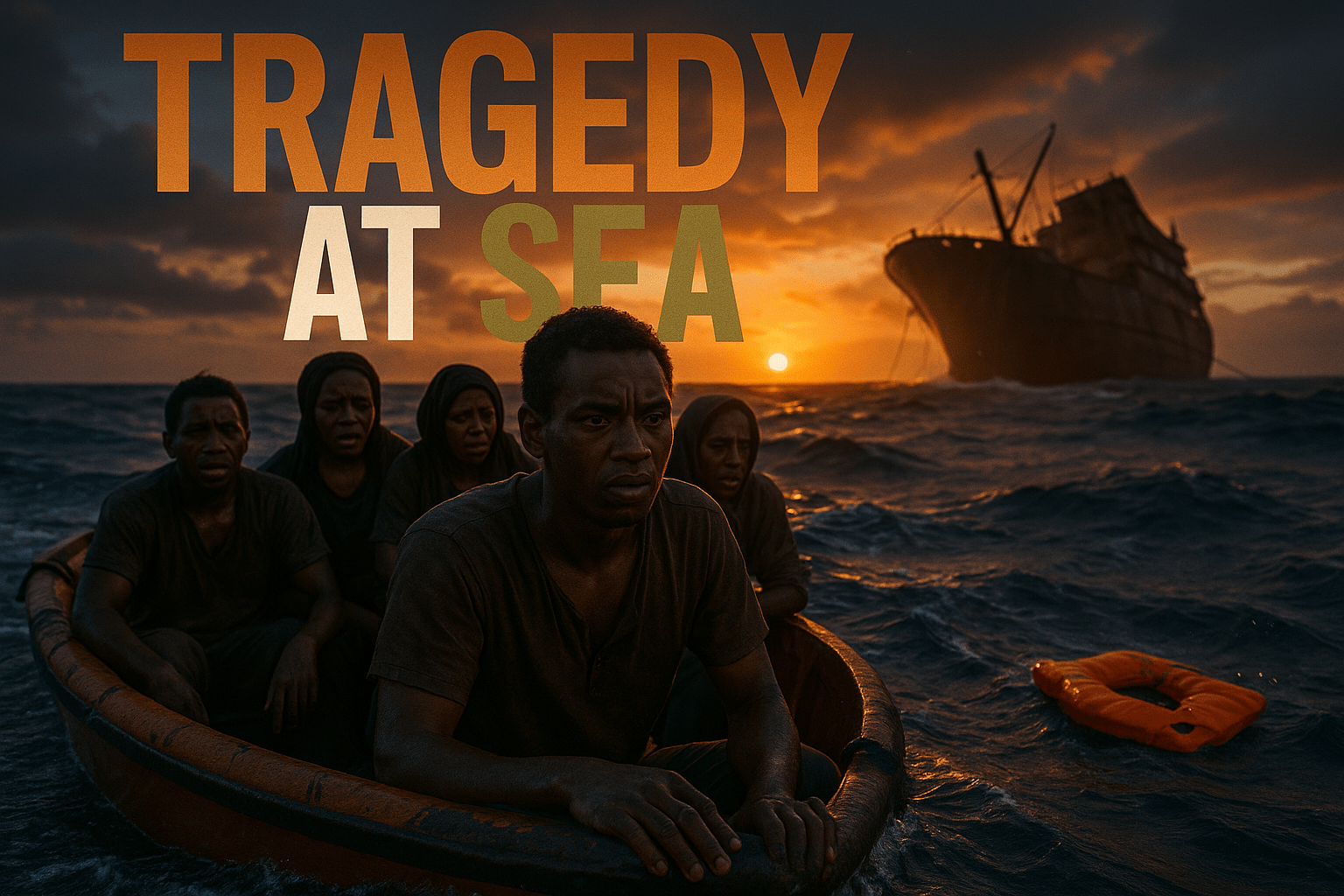
Yemen Shipwreck: A Migrant Tragedy
By Darius Spearman (africanelements)
Support African Elements at patreon.com/africanelements and hear recent news in a single playlist. Additionally, you can gain early access to ad-free video content.
Deadly Passage: African Migrants in Peril
A recent shipwreck off the coast of Yemen has tragically claimed the lives of at least 68 African migrants, with 74 others missing and presumed dead (npr.org). This devastating incident involved a vessel carrying 154 Ethiopian migrants that capsized in the Gulf of Aden off the southern Yemeni province of Abyan (npr.org). The bodies of 54 individuals were found washed ashore in the Khanfar district, while 14 more were recovered and taken to a hospital morgue in Zinjibar, the provincial capital of Abyan (npr.org). Only 12 people survived this horrific event (npr.org).
This incident is a stark reminder of the immense dangers faced by African migrants seeking a better life. In addition to the immediate threat of drowning, those who survive these perilous journeys often face severe human rights violations upon arrival in Yemen, including detention in inhumane conditions, exploitation, and forced transfers (iom.int). The International Organization for Migration (IOM) and its partners are actively involved in providing lifesaving assistance, protection services, and health services to migrants in Yemen, and they advocate for their rights (reports.unocha.org).
Yemen's Role: A Dangerous Transit Route
Yemen continues to be a significant transit route for migrants from East Africa and the Horn of Africa who are seeking work in Gulf Arab countries, even amidst an ongoing civil war (npr.org). The Gulf of Aden, a crucial maritime route connecting the Horn of Africa to Yemen, serves as a primary entry point for these migrants (iom.int). Migrants often undertake dangerous journeys across the Red Sea or Gulf of Aden in overcrowded boats, facilitated by smugglers (npr.org).
The ongoing civil war in Yemen significantly exacerbates the dangers faced by migrants. They often travel across conflict frontlines and are exposed to human rights violations, injury, and the risk of being stranded in a war-torn country (iom.int). The IOM reports that their teams regularly encounter migrants who have been injured in the conflict or become stranded during their journeys (iom.int). Those who manage to survive the journey to Yemen frequently find themselves trapped in a dire situation (iom.int).
Smugglers' Recklessness: A Growing Threat
Smugglers play a dangerous and exploitative role in facilitating migration to Yemen. They often make false promises and knowingly send migrants into perilous conditions, leading to tragic outcomes such as shipwrecks and deliberate drownings (iom.int). Reports indicate that smugglers are becoming more reckless, sending boats into hazardous conditions to evade patrols (iom.int). This increased recklessness is evidenced by their actions of knowingly sending boats into dangerous conditions and pushing people onto perilous journeys despite clear weather warnings (iom.int).
The consequences of this recklessness are dire. In March, two migrants died and 186 others went missing after four boats capsized off Yemen and Djibouti (npr.org). In April, over 180 migrants were feared dead after shipwrecks off Yemen's coast, with no bodies recovered from one incident where 124 men and 57 women were on board (iom.int). These incidents highlight the severe dangers migrants face in their search for a better future (iom.int).
Migrant Journeys: Hope and Desperation
Migrants arriving in Yemen are primarily from the Horn of Africa, with a significant number being Somali and Ethiopian (iom.int). They undertake perilous journeys, often seeking work in Gulf countries, driven by the hope of a better future (iom.int). The journey from Africa to Yemen via the Gulf of Aden was the world's busiest maritime migration route prior to COVID-19 (iom.int).
Despite the ongoing civil war and the inherent dangers, the allure of economic opportunity in Gulf countries remains a powerful motivator. The IOM's Displacement Tracking Matrix (DTM) collects information on the flow of migrants to Yemen, including their profiles, challenges, and intentions (reliefweb.int). This data helps to understand the complex factors driving these desperate journeys and the hopes that propel individuals to risk everything for a chance at a better life.
Decreasing Arrivals, Increasing Risks
The number of migrants arriving in Yemen has decreased in 2024, likely due to increased patrolling of the waters (cnn.com). More than 60,000 migrants arrived in Yemen in 2024, a decrease from 97,200 arrivals in 2023 (cnn.com). While this decrease might suggest a reduction in overall risk, it also indicates a shift in smuggler tactics.
Migrants arriving at Migrant Response Points in Yemen have reported that smugglers are becoming more reckless, knowingly sending boats into dangerous conditions to avoid patrols (iom.int). This means that even with fewer overall crossings, each journey carries a heightened risk of tragedy. The decrease in arrivals, therefore, does not necessarily translate to increased safety for those who still attempt the crossing. Instead, it underscores the desperate measures taken by both migrants and smugglers in a dangerous environment.
Humanitarian Response: A Lifeline in Crisis
While specific details on rescue operations for individual shipwrecks are often limited, the International Organization for Migration (IOM) and its partners are actively involved in providing crucial support to migrants in Yemen (iom.int). They operate across the region to support these migrants and provide lifesaving assistance to those who find themselves abused or stranded along the route (iom.int). This assistance includes specialized protection services, lifesaving health services, and aid to meet basic needs (reports.unocha.org).
The IOM is deeply concerned about the safety and well-being of people moving through Yemen (iom.int). They continue to advocate for the protection, dignity, and rights of these extremely vulnerable individuals who require urgent support and assistance (reports.unocha.org). For example, the UN has liaised with authorities in Aden to advocate for the release of migrants held on the street outside IOM premises (reports.unocha.org). These efforts are vital in a region where migrants face immense challenges and often lack legal protections.
Migrant Arrivals in Yemen (2023 vs. 2024)
The Perilous Journey: A Continuing Crisis
The recent shipwreck is not an isolated incident. Hundreds of migrants have died or gone missing in shipwrecks off Yemen in recent months (npr.org). These tragedies serve as a sobering reminder of the grave dangers migrants endure in search of a better future (iom.int). The causes of these frequent tragedies are often linked to the smugglers' recklessness, as they knowingly send boats into dangerous conditions and disregard weather warnings (iom.int).
The situation is further complicated by the fact that migrants often travel across conflict frontlines in Yemen, exposing them to grave human rights violations such as detention in inhumane conditions, exploitation, and forced transfers across lines of control (iom.int). The IOM continues to highlight the urgent need for support and assistance for these extremely vulnerable individuals (reports.unocha.org).
Understanding Key Terms in Migration
A crucial maritime route connecting the Horn of Africa to Yemen, serving as a primary entry point for migrants seeking to reach Gulf countries. Smugglers are highly active in this area, often making false promises to vulnerable migrants.
Individuals who facilitate illegal migration, often making false promises and knowingly sending migrants into perilous conditions, leading to tragic outcomes like shipwrecks and deliberate drownings.
The Broader Context: A Call for Action
The ongoing crisis in Yemen, coupled with the desperate circumstances driving migrants from their home countries, creates a complex and dangerous environment. The IOM’s annual migration report for Yemen aims to provide insights into these migratory drivers and intentions (reliefweb.int). Understanding these factors is crucial for developing effective and humane responses to the crisis.
The international community must address the root causes of migration, including conflict, poverty, and lack of opportunity in countries of origin. Furthermore, there is an urgent need to strengthen search and rescue operations, provide comprehensive humanitarian assistance, and ensure the protection of migrants’ rights. The repeated tragedies in the waters off Yemen serve as a powerful call to action for all stakeholders to work together to prevent further loss of life and to ensure the safety and dignity of all migrants.
ABOUT THE AUTHOR
Darius Spearman has been a professor of Black Studies at San Diego City College since 2007. He is the author of several books, including Between The Color Lines: A History of African Americans on the California Frontier Through 1890. You can visit Darius online at africanelements.org.
