
Listen to this article
Download AudioJaiyana Evans Missing Los Angeles: A Community’s Plea
By Darius Spearman (africanelements)
Support African Elements at patreon.com/africanelements and hear recent news in a single playlist. Additionally, you can gain early access to ad-free video content.
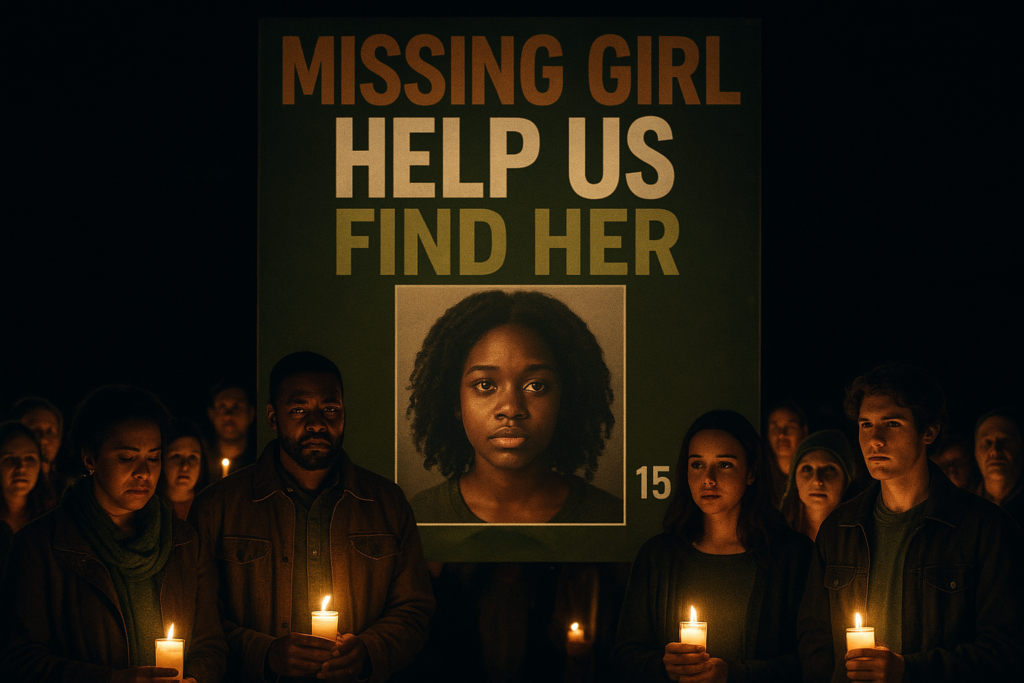
The disappearance of a child sends ripples of fear and concern through any community. When that child is a Black girl, these concerns are often amplified by a history of systemic issues that can affect how these cases are handled. Jaiyana Evans, a 15-year-old from Los Angeles, has been missing, and her community is desperately seeking answers. This situation underscores the ongoing need for vigilance and equitable attention for all missing children. Thus, her story is not just about one missing teen; it’s about the safety and visibility of all our young people.
The Day Jaiyana Vanished: A Missing Teen Alert
Jaiyana Evans was last seen on a morning that likely began like any other. On May 1, around 7:15 a.m., she left her home in the 2200 block of East 115th Street in the Watts neighborhood of Los Angeles, presumably on her way to school (15-Year-Old Black Girl from Los Angeles Still Missing After Nearly 2 Weeks; Watts teen Jaiyana Evans reported missing in South LA; blackandmissingfdn Instagram). This simple act of heading to school is a daily routine for millions of teenagers. However, for Jaiyana, this departure marked the beginning of a worrying mystery.
The alarm was raised when Jaiyana never made it to her classes. Her failure to arrive at school immediately prompted deep concern for her well-being (15-Year-Old Black Girl from Los Angeles Still Missing After Nearly 2 Weeks). As of May 13, 2025, she had been missing for nearly two weeks, a period filled with anxiety for her family and community (15-Year-Old Black Girl from Los Angeles Still Missing After Nearly 2 Weeks). This extended absence only deepens the urgency to find her. Furthermore, the days turning into weeks without any sign of Jaiyana has undoubtedly been agonizing for those who know and love her.
A Face in the Crowd: Description of the Missing Teen
Knowing what Jaiyana Evans looks like is crucial for the public to help. She is described as a 5-foot-tall Black girl, weighing about 110 pounds. Jaiyana has brown hair and brown eyes (Watts teen Jaiyana Evans reported missing in South LA; 15-Year-Old Black Girl from Los Angeles Still Missing After Nearly 2 Weeks). These details paint a picture of a young girl who needs to be found and brought home safely.
When she was last seen, Jaiyana wore black pants, a black Simon Tech School sweater, and black shoes. She was also carrying a Casper the Ghost backpack (Watts teen Jaiyana Evans reported missing in South LA; 15-Year-Old Black Girl from Los Angeles Still Missing After Nearly 2 Weeks).
Key Information: Jaiyana Evans
The Search Effort and Public Appeal for This Missing Teen
Authorities, including the Los Angeles Police Department (LAPD), are actively seeking the public’s help to find Jaiyana Evans (Watts teen Jaiyana Evans reported missing in South LA; 15-Year-Old Black Girl from Los Angeles Still Missing After Nearly 2 Weeks). Her disappearance has been widely reported, with various organizations joining the LAPD in asking for community assistance (blackandmissingfdn Instagram; 15-Year-Old Black Girl from Los Angeles Still Missing After Nearly 2 Weeks). This broad appeal underscores the seriousness of her case.
If you have any information that could help locate Jaiyana, you are urged to contact Detective III Patsenhann at 213-709-3784. For tips outside of business hours, call 877-527-3247 (Watts teen Jaiyana Evans reported missing in South LA). It’s important to understand that direct contact with a detective might be better for urgent information, while the non-business hours line ensures accessibility at all times. Indeed, every piece of information, no matter how small it may seem, could be the key to bringing Jaiyana home.
Watts Community: A Historic Backdrop
Jaiyana Evans’ disappearance occurred in Watts, a neighborhood with a rich and complex history. Initially a ranching community, Watts transformed with the arrival of railroads in the late 19th century and became a working-class African American neighborhood by the 1940s, as many Black families migrated from segregated states seeking better opportunities (Watts, Los Angeles – Wikipedia; Background Information – AmDoc). This historical context is essential for understanding the community fabric.
The 1965 Watts riots brought national attention to the area, highlighting systemic issues of racial tension and economic inequality (History of Watts, California – EBSCO). While this event shaped its reputation, Watts is known for cultural landmarks like the Watts Towers and significant community efforts to improve living conditions. Today, Watts is a predominantly Hispanic neighborhood with a notable African American minority, recognized for its cultural contributions and resilience (Watts, Los Angeles – Wikipedia; Background Information – AmDoc). Community mobilization, seen in events like the Watts Christmas parade and through advocacy groups, showcases the neighborhood’s capacity to respond to social issues. Consequently, this inherent strength could be pivotal in the search for Jaiyana.
Watts: Resilience and History
Migration Hub
Became a key destination for African Americans migrating from segregated states in the 1940s.
1965 Riots
Highlighted deep-seated issues of racial tension and economic disparity, shaping its national image.
Cultural Landmarks
Home to iconic sites like the Watts Towers, symbolizing community artistry and spirit.
Community Today
A diverse neighborhood known for ongoing efforts towards revitalization and cultural contributions.
Child Safety: Organizations and Systemic Challenges
Organizations like the National Center for Missing & Exploited Children (NCMEC) play a critical role in addressing cases of missing and exploited children in the U.S. Established in 1984, NCMEC operates a national hotline and provides resources to law enforcement and families (National Center for Missing & Exploited Children). They also advocate for child safety legislation, such as the National Child Search Assistance Act (NCSA), which mandates law enforcement to accept missing person reports and provides search resources (Missing Children’s Assistance Act – OJP). While the number of missing children reported to the NCSA hotline has generally been decreasing, specific data for 2025 isn’t available yet. This decline could be due to improved prevention, changes in data collection, or even underreporting in some communities.
However, systemic challenges persist, particularly for missing children of color. The Black and Missing Foundation is a vital advocacy group that highlights and combats racial disparities in media coverage and law enforcement responses (Black and Missing Foundation). These disparities often mean less visibility and delayed action. For instance, the criteria for issuing Amber Alerts, prioritizing cases based on perceived risk, can sometimes lead to unequal attention. The lack of media coverage and delayed public alerts for missing children of color can significantly hinder investigations. Moreover, institutional biases within law enforcement can affect the priority given to these cases, compounding the issue of public trust, which is often lower in Black communities due to historical and ongoing experiences of racial bias.
Challenges in Locating Missing Children of Color
Keeping Hope Alive for Every Missing Teen
Like Jaiyana’s, missing persons cases can remain active for extended periods. This is due to ongoing investigations, the potential for new leads to emerge, and the critical need for continued community engagement. The work involves traditional detective efforts combined with tips from the public, all of which take time to develop and pursue. Public awareness campaigns, like those for Jaiyana Evans, are vital for generating these leads (blackandmissingfdn Instagram).
The fact that Jaiyana Evans has been missing for weeks does not mean efforts cease; rather, it often intensifies the need for public involvement. Every share of her information, every conversation, and every vigilant eye can make a difference. The community’s role in these situations cannot be overstated. Therefore, it is essential to keep Jaiyana’s face and story in the public consciousness, hoping that someone, somewhere, will provide the information that brings her home safely.
ABOUT THE AUTHOR
Darius Spearman has been a professor of Black Studies at San Diego City College since 2007. He is the author of several books, including Between The Color Lines: A History of African Americans on the California Frontier Through 1890. You can visit Darius online at africanelements.org.
