
Listen & Share
Unrest in Los Angeles: A Community Stands Firm
By Darius Spearman (africanelements)
Support African Elements at patreon.com/africanelements and hear recent news in a single playlist. Additionally, you can gain early access to ad-free video content.
Showdown in Los Angeles
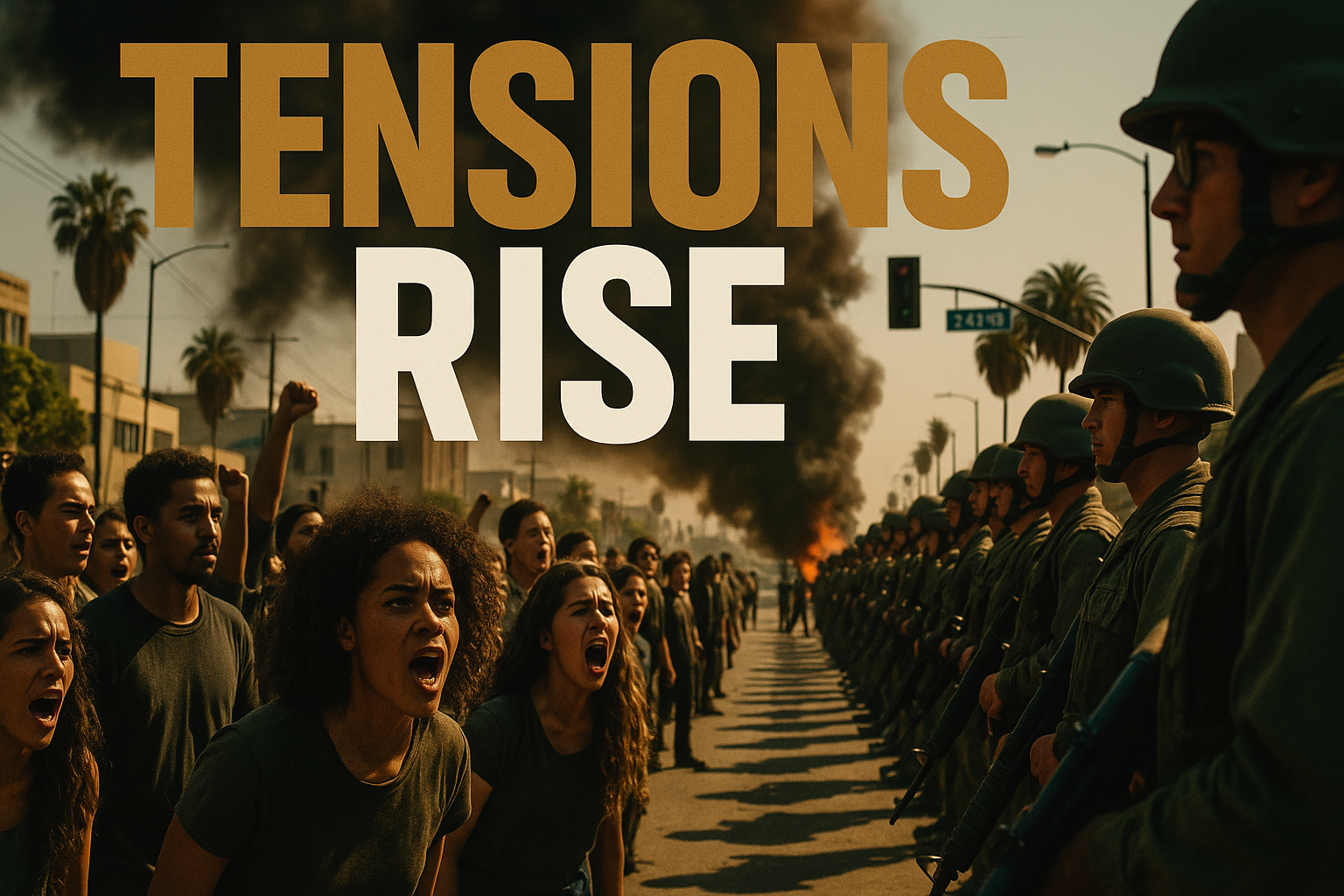
Los Angeles found itself at a crossroads as President Trump made the surprising decision to deploy the National Guard to the city. This move came in direct response to heated protests against the operations of Immigration and Customs Enforcement, often known as ICE. For many in our communities, particularly those who have seen the long arm of government power misused, this development sparked deep concern. The deployment included approximately 2,000 National Guard troops (National Guard Troops Arrived in Downtown Los Angeles).
The President sent in these troops under federal authority, specifically citing Title 10 of the U.S. Code (The legal issues raised by Trump sending the National Guard to L.A.). This law allows the federal government to activate National Guard units for federal service, placing them under national command rather than state control. Therefore, the deployment was not requested by California’s Governor, Gavin Newsom, who publicly stated his opposition to the federal intervention, calling it “purposefully inflammatory” (National Guard Troops Arrived in Downtown Los Angeles). President Trump pushed the LAPD chief to request the National Guard, describing protesters as “troublemakers and insurrectionists” (LA Immigration Protests Live Updates: Trump Calls on LAPD Chief to Request National Guard ‘Right Now’). This tension between federal control and state authority creates a significant point of contention for many states across the nation.
National Guard Deployment Key Data
Protests Turn Tense
The protests in Los Angeles escalated significantly, moving from peaceful demonstrations to these clashes between anti-ICE protesters and the police. These confrontations included direct engagements with immigration agents (Unlawful Assembly Declared for All Downtown LA Amid Violent Unrest). While one confrontation left, two officers injured with non-life-threatening injuries, the escalation mainly consisted of property destruction, fires, vandalism, and throwing objects. Ultimately, the situation became so strained that authorities declared an unlawful assembly across all of downtown Los Angeles (Unlawful Assembly Declared for All Downtown LA Amid Violent Unrest). This declaration essentially takes away the right to protest and allows law enforcement to forcibly disperse crowds, often leading to arrests.
In addition to the confrontations, reports indicate that protesters set fires, while federal agents used flash-bang grenades (National Guard Troops Arrived in Downtown Los Angeles). Flash-bang grenades, also known as stun grenades, are non-lethal explosive devices designed to disorient people with a loud bang and bright flash. While intended to be non-lethal, these devices carry risks, including possible hearing damage, burns, and other physical injuries if they are used improperly or too close to individuals. Their use in protests has often sparked concerns about excessive force and the militarization of police responses, especially in communities already wary of law enforcement overreach. The protests had been ongoing for several days with significant unrest reported, leading up to the National Guard deployment (Unlawful Assembly Declared for All Downtown LA Amid Violent Unrest).
The Impact of ICE
At the heart of these tensions are the operations of ICE, the federal law enforcement agency tasked with enforcing immigration laws within the United States. ICE conducts investigations into illegal immigration, detains and removes undocumented immigrants, and enforces laws related to customs and immigration violations. For many in our Black and Brown communities, ICE’s actions often feel like a direct assault, disproportionately affecting families and disrupting neighborhood life. The repeated news of raids, detentions, and deportations understandably fuels widespread concern and anger.
The anti-ICE protests reflect deep-seated opposition to these enforcement tactics. Many activists view ICE actions as discriminatory and harmful, particularly to immigrant communities and people of color. Protests frequently erupt following ICE raids or when heightened enforcement policies lead to family separations or the detention of community members. These demonstrations are a cry for accountability and an end to what many characterize as racially unjust immigration policing. In many ways, the struggles against ICE are an extension of the broader fight for racial and social justice that has long defined the experiences of African American and immigrant communities across the United States. Furthermore, the motivation for such strong reactions from the communities is because they are seen as targeting vulnerable populations.
Timeline of Escalation
Legal Concerns and Community Rights
The deployment of the National Guard under Title 10 has sparked significant legal and constitutional concerns, especially regarding its use to quell domestic protests. Legal scholars like Erwin Chemerinsky described the deployment as “chilling” (The legal issues raised by Trump sending the National Guard to L.A.). This statement signals worry about using military forces to potentially suppress peaceful dissent, which could challenge fundamental civil liberties. The issue highlights the ongoing tension between federal authority and state resistance when dealing with domestic unrest (The legal issues raised by Trump sending the National Guard to L.A.).
For African American communities and civil liberties advocates, these deployments raise grave questions. There is a deep history of state and federal forces being used against Black communities during protests and civil rights movements. The potential for the federal government to override state control of the Guard, particularly without state consent, adds another layer of complexity. Activists contend that such actions could be seen as an infringement on the First Amendment rights of assembly and free speech. They stress the importance of protecting these rights while also condemning racially biased policing tactics that often accompany such deployments (The President’s Power to Call Out the National Guard Is Not a Blank Check). The legal consequences for both the government and protesters are significant, potentially leading to lawsuits against authorities for civil rights violations if tactics are deemed excessive.
Impact on Communities of Color
Militarized responses and aggressive policing tactics deepen fear and distrust within African American and immigrant neighborhoods.
ICE actions, including raids and deportations, lead to family separations and profound instability for many families.
Communities of color report disproportionate targeting by immigration enforcement and perceived racial profiling.
Concerns arise over the suppression of peaceful assembly and free speech due to heavy-handed law enforcement actions.
The Path Forward for Community Resilience
The situation in Los Angeles represents a critical moment for our nation. The deployment of the National Guard to quell protests, especially those rooted in deep concerns about immigration enforcement, showcases the escalating tensions across the country. It also highlights the ongoing debate about the proper role of federal forces in local matters, a debate that has historically impacted civil rights struggles in the United States. Indeed, the intersection of immigration enforcement and racial justice becomes undeniably clear amidst such events.
As communities of color have done countless times before, they continue to seek pathways forward that prioritize justice, equity, and the protection of fundamental human rights. Social justice advocates continue to call for de-escalation, meaningful reform of agencies like ICE, and greater accountability from all law enforcement entities. The events in Los Angeles serve as a reminder that the struggle for liberation and dignity is ongoing. A clear timeline of these events begins with protests intensifying for several days before the National Guard was actually deployed (Is Pres. Trump’s deployment of California National Guard legal? Law professor weighs in). The unlawful assembly declaration occurred as the protests became increasingly confrontational with authorities (Unlawful Assembly Declared for All Downtown LA Amid Violent Unrest). This indicates a reaction to escalating tensions rather than an abrupt, unprovoked action.
ABOUT THE AUTHOR
Darius Spearman has been a professor of Black Studies at San Diego City College since 2007. He is the author of several books, including Between The Color Lines: A History of African Americans on the California Frontier Through 1890. You can visit Darius online at africanelements.org.
