


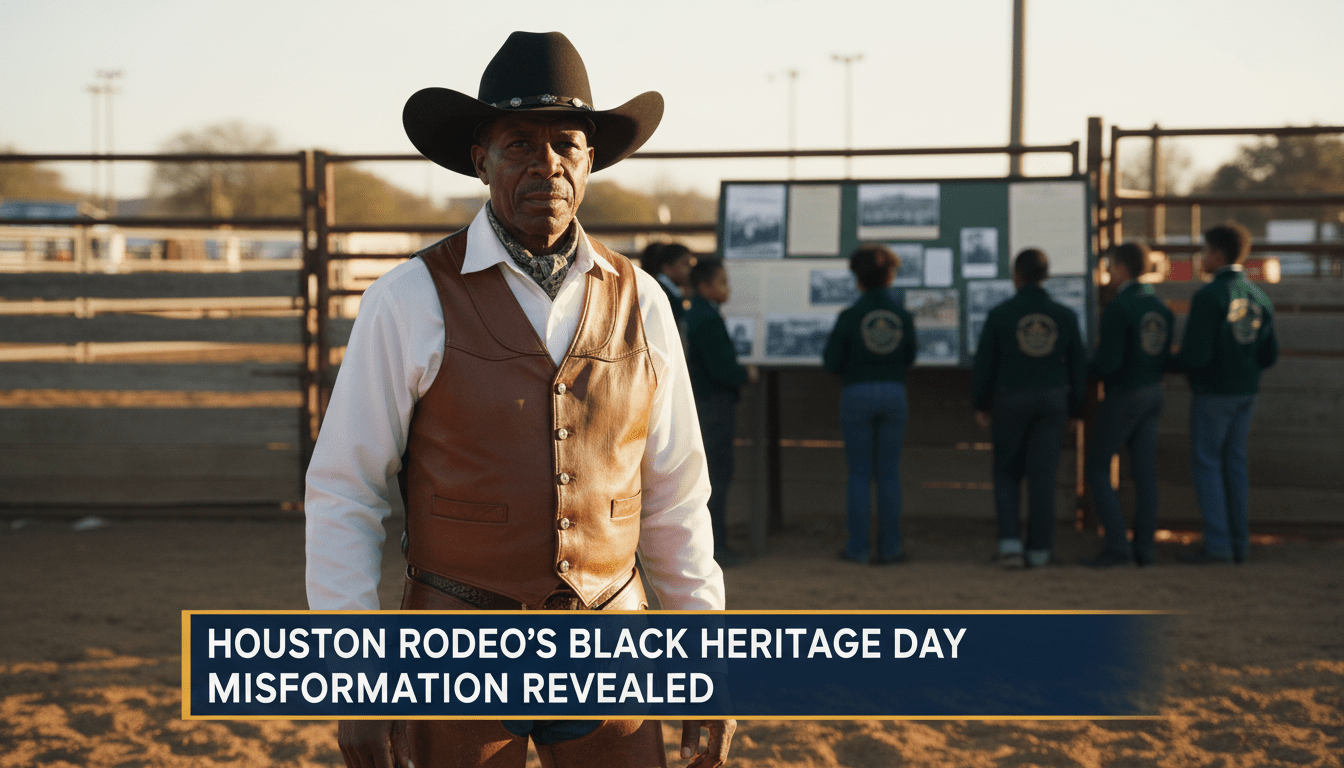
Houston Rodeo’s Black Heritage Day Misinformation Revealed
By Darius Spearman (africanelements)
Support African Elements at patreon.com/africanelements and hear recent news in a single playlist. Additionally, you can gain early access to ad-free video content.
The Digital Storm Surrounding Black Heritage Day
Social media platforms like TikTok and Threads are buzzing with excitement for the upcoming Houston Livestock Show and Rodeo. However, this excitement has created a wave of confusion regarding Black Heritage Day. Many viral posts describe the event as a multi-day festival of parties and clubbing. Community leaders in Texas are now working hard to correct these false narratives. They want to ensure the public understands the true purpose of this historic occasion (chron.com, chron.com).
The misinformation often labels the event as “Black Rodeo Weekend.” In reality, Black Heritage Day is a single designated day within the three-week rodeo schedule. For the 2026 season, that day falls on Friday, March 6. Leaders worry that the focus on “vibes” and concerts overshadows the agricultural roots of the event. This shift in perception threatens to erase the history of the Black cowboy. It also minimizes the educational opportunities that the day provides for young students (defendernetwork.com).
Projected Attendance Growth (2025-2026)
The Resistance of the Prairie View Trail Riders
The history of the Black cowboy in Houston is one of resilience and determination. In 1957, James Francies, Myrtis Dightman Sr., and Dr. Alfred Poindexter founded the Prairie View Trail Riders. This was the first all-Black group to join the “Go Texan Day” parade. At that time, the city of Houston was strictly segregated under Jim Crow laws. Consequently, the riders faced immense hostility and danger as they tried to claim their space in Western tradition (pvamu.edu, defendernetwork.com).
Because of the racial tensions of the era, the riders had to enter Memorial Park under armed guard protection. They were often forced to camp in separate areas and ride at the very back of the parade. Despite these obstacles, they persisted to ensure that Black history remained visible. This story reflects a larger threads of resilience that has defined the Black family in Texas for generations. Their journey was a mobile history lesson for all who watched (austincountynewsonline.com, pvamu.edu).
Bill Pickett and the Invention of Bulldogging
The rodeo events that spectators enjoy today owe a great deal to African American pioneers. Bill Pickett is perhaps the most famous figure in this history. Born in Texas in 1870, Pickett invented “bulldogging,” which is now known as steer wrestling. He developed a unique method of subduing cattle by biting the steer’s upper lip. This technique was inspired by watching how cattle dogs worked on the ranch (americacomesalive.com, britannica.com).
Pickett was a star of the Miller Brothers 101 Ranch Wild West Show for over twenty-five years. However, Jim Crow laws often prevented him from competing in white-only arenas. He sometimes had to identify as “Comanche” or other ethnicities just to be allowed on the dirt. His contributions were so significant that he became the first Black man inducted into the National Rodeo Hall of Fame. His legacy proves that Black cowboys were not just laborers but also innovators in Western sport (americacomesalive.com, blackpast.org).
Myrtis Dightman Sr. and the National Finals Rodeo
In the 1960s, Myrtis Dightman Sr. continued the fight for representation in professional rodeo. He is often called the “Jackie Robinson of Rodeo.” Dightman became the first Black cowboy to qualify for the National Finals Rodeo. He faced judging bias and social isolation, yet he consistently ranked among the best bull riders in the world. His success opened doors for many other athletes of color who followed in his footsteps (wikipedia.org, wikipedia.org).
Dightman was also a founding member of the Prairie View Trail Riders. He understood that professional success was only one part of the mission. He worked to promote interest in agriculture and animal science among Black youth. His life work connected the excitement of the arena with the practical needs of the community. Even today, the Myrtis Dightman Sr. legacy inspires young riders to pursue excellence in Western culture (pvamu.edu).
The Mission of the Black Heritage Committee
In 1993, the Houston Livestock Show and Rodeo took a formal step toward inclusion. Civil rights activist Howard J. Middleton led the formation of the Black Heritage Committee (BHC). It began with only fifty members who wanted to increase Black participation in the rodeo. Before this time, the rodeo was largely a segregated institution. The BHC aimed to ensure that Black communities received a generational investment from the event’s massive revenue (defendernetwork.com, defendernetwork.com).
The committee focuses on more than entertainment. Its primary goals are to promote Western heritage and provide scholarships for minority students. Since its inception, the BHC has helped the rodeo award millions of dollars in educational funding. This outreach has empowered students from underserved backgrounds to pursue degrees in agriculture and STEM fields. The growth of the committee to 200 volunteers in 2026 shows its lasting impact on the city of Houston (defendernetwork.com, defendernetwork.com).
Educational Impact (2026 Pledges)
The Commercialization of a Cultural Landmark
As the rodeo grows, some community members fear it is losing its soul. In January 2026, the rodeo held a lineup announcement in Times Square, New York City. This move frustrated many local leaders in Houston. They viewed it as a sign of the event prioritizing national commercial appeal over local roots. Some critics describe this as “trading boots for billboards” (chron.com, chron.com).
The current president, Donald Trump, has often emphasized national branding and commercial success. This atmosphere has encouraged large-scale marketing efforts that reach far beyond Texas. However, for many Houstonians, the rodeo is about more than just a big brand. It is a local tradition that supports Black-owned businesses and family legacies. The tension between global commerce and local heritage is a major point of debate in 2026 (chron.com, defendernetwork.com).
The Lizzo Controversy and Cultural Authenticity
The selection of Lizzo as the 2026 Black Heritage Day headliner has caused a stir. Lizzo is a Houston native who grew up attending the rodeo. However, her music is often categorized as “Pop.” Some traditionalists feel this is a departure from the R&B and Hip-Hop “Takeovers” of previous years. They argue that the daytime heritage events are being forgotten in favor of a pop-star spectacle (chron.com, houstonchronicle.com).
Bun B previously curated record-breaking shows that featured local legends like Drake. These performances were seen as deeply rooted in the specific culture of Black Houston. Critics of the Lizzo booking worry that the rodeo is moving away from cultural preservation. They fear the day is becoming a generic “party” for tourists rather than a celebration of Black Western history. This debate highlights the struggle to balance star power with community identity (houstoniamag.com, houstonchronicle.com).
Agriculture as the True Foundation
Despite the focus on music, agriculture remains the heart of Black Heritage Day. Leaders like Landre Boddy emphasize that the day is about education. The Black Heritage Committee hosts events like “Lunch and Learn” panels. These sessions introduce inner-city students to careers in animal science and ranching. They also showcase artifacts from the history of Black cowboys (defendernetwork.com, defendernetwork.com).
The erasure of these agricultural roots is a primary concern for community figures. When social media focuses only on the nighttime concert, it ignores the hard work of students in livestock shows. Nearly 4,000 students from sixty-five schools participated in the 2026 Talent Showcase. These young people are the future of the industry. Their participation honors the legacy of Black workers who fought for economic justice in the fields and on the ranches (defendernetwork.com, defendernetwork.com).
The Significance of Go Texan Day
Go Texan Day is the unofficial city-wide kickoff for the rodeo season. Held on the Friday before the event begins, it encourages all Houstonians to wear Western attire. It is a unifying celebration that signals the start of the trail rides. For many, it is the one day when the city truly embraces its cowboy identity. The tradition dates back to 1954 and remains a cornerstone of Houston culture (houstonchronicle.com, downtownhouston.org).
For the Black community, Go Texan Day is a reminder of how far things have come. In the past, Black participation was limited and often met with resistance. Today, the day is an opportunity to showcase the diversity of the Western experience. It sets the stage for Black Heritage Day by building excitement and honor for the riders who travel hundreds of miles on horseback. It is a day of pride for the entire city (downtownhouston.org, defendernetwork.com).
Black Cowboy Representation
Historians estimate that 1 in 4 cowboys in the American West were Black.
Scholarships and the Cycle of Success
The financial model of the Houston Rodeo is designed to turn entertainment into education. Every concert ticket sold for Black Heritage Day contributes to a massive scholarship fund. Since 1932, the rodeo has committed over $660 million to Texas students. In 2026 alone, the pledge reached $28 million. This funding is critical for students who might otherwise lack the resources to attend college (defendernetwork.com, defendernetwork.com).
The Black Heritage Committee uses its share of revenue to target minority and underserved communities. These scholarships do more than just pay for tuition. they create a pathway for generational wealth and professional achievement. By linking pop stars like Lizzo to agricultural funding, the rodeo ensures that “commercial” success serves a “social justice” goal. This cycle of success is the primary reason why community leaders defend the integrity of the day (defendernetwork.com).
The Partnership with HBCUs
Prairie View A&M University (PVAMU) and Texas Southern University (TSU) are vital partners in the rodeo’s mission. As a Land-Grant institution, PVAMU has a specific mandate to focus on agriculture and rural development. This makes the rodeo a natural extension of the university’s academic identity. The Prairie View Trail Riders were even founded by PVAMU alumni and staff (pvamu.edu).
During Black Heritage Day, these HBCUs host informational displays and drumline performances. These events ground the day in academic excellence and student achievement. The partnership provides career-readiness opportunities for students in animal science and leadership. It reinforces the idea that the Black cowboy legacy is not just about the past. It is about the professional future of the Black community in Texas (pvamu.edu, defendernetwork.com).
Combatting the “Party” Label
Community leaders are taking a multi-pronged approach to fight misinformation. Landre Boddy and Gina Goosby-Harris frequently appear in the media to remind the public of the day’s true meaning. They emphasize that Black Heritage Day offers much more than a headline performance. They use their platforms to explain the “Four Pillars” of the rodeo: Agriculture, Education, Entertainment, and Western Heritage (defendernetwork.com).
The “commercialized party” narrative is harmful because it shifts focus away from serious issues. If the public views the day as just a festival, the urgency of funding scholarships might decrease. Furthermore, an unofficial “party” atmosphere can create logistical and security strain for the city. Leaders are working to ensure that the 135,000 expected attendees understand they are participating in a heritage celebration, not just a clubbing weekend (chron.com, chron.com, defendernetwork.com).
The Enduring Legacy of the Black Cowboy
Black Heritage Day remains a vital part of the Houston experience. It serves as a bridge between the historical exclusion of the past and the inclusive opportunities of the future. While viral trends on social media may come and go, the foundation of the event is built on real people and real struggles. Figures like Bill Pickett and Myrtis Dightman Sr. paved the way for the students of today (blackpast.org, defendernetwork.com).
Correcting misinformation is not just about facts and dates. It is about protecting a cultural legacy from being diluted by commercial interests. By focusing on agriculture, education, and true Western history, Houston leaders are ensuring that Black Heritage Day continues to empower the community. The 2026 season marks another chapter in this ongoing story of resilience and excellence in the American West (defendernetwork.com, defendernetwork.com).
About the Author
Darius Spearman is a professor of Black Studies at San Diego City College, where he has been teaching for over 20 years. He is the founder of African Elements, a media platform dedicated to providing educational resources on the history and culture of the African diaspora. Through his work, Spearman aims to empower and educate by bringing historical context to contemporary issues affecting the Black community.
