


The Cost of Green Shorts: NYPD Mistaken Identity Lawsuit
By Darius Spearman (africanelements)
Support African Elements at patreon.com/africanelements and hear recent news in a single playlist. Additionally, you can gain early access to ad-free video content.
A Violent Arrest Over Green Shorts
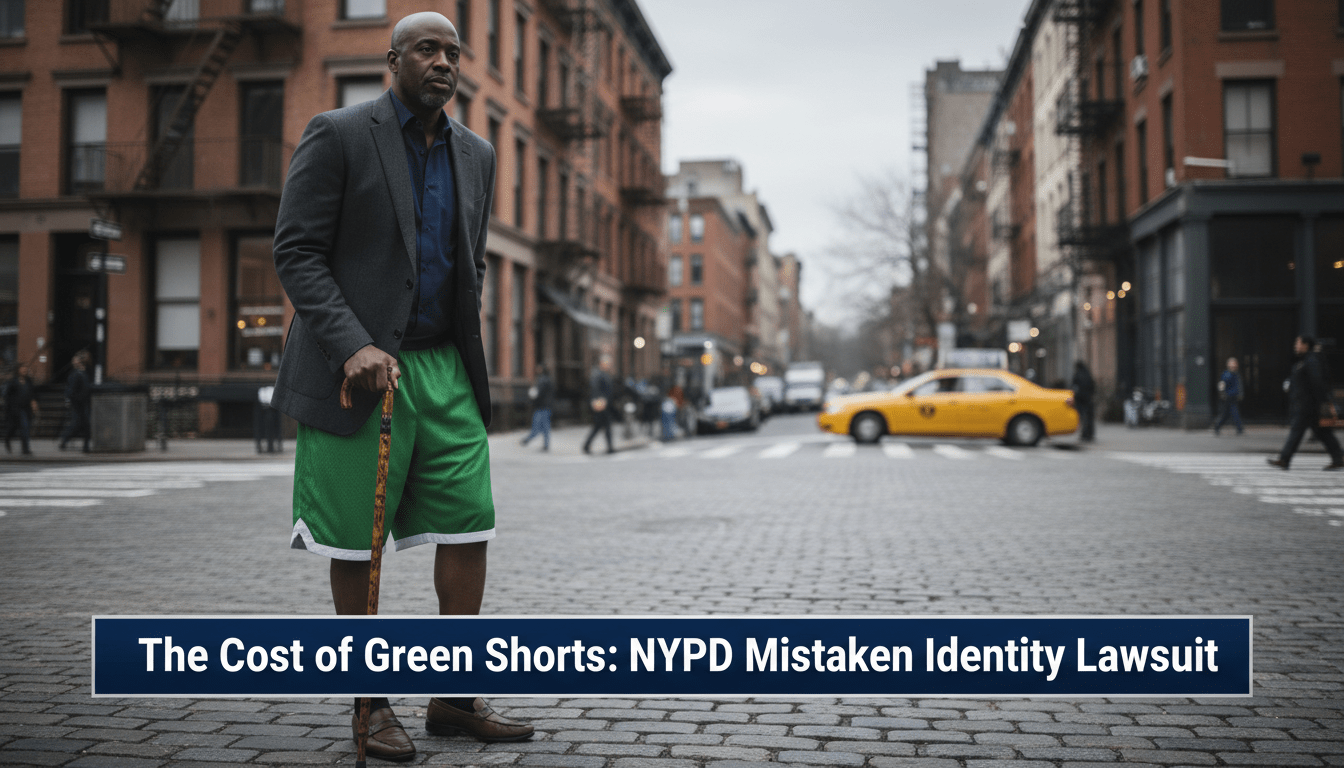
Timothy Brown is a 46-year-old Black man from Brooklyn. He recently announced a $100 million lawsuit against New York City. Brown alleges he suffered a brutal assault by New York Police Department officers. This incident occurred on April 14, 2026. The violent encounter stemmed from a clear case of mistaken identity. A bystander captured the entire ordeal on a viral cell phone video. The footage shocked communities across the nation. It showed plainclothes officers dragging Brown violently to the concrete. (cbsnews.com)
The officers targeted Brown for a very simple reason. He happened to wear green shorts that day. Detectives from the Brooklyn North Narcotics unit sought a drug suspect. They had a vague description of an accomplice. The description noted a turquoise hat, a white shirt, and green shorts. Brown entered a liquor store near the intersection of Hoyt and Baltic Streets. He had absolutely no connection to any drug sale. Police later admitted he was completely innocent. However, the mistaken identity left him with permanent leg injuries requiring 36 stitches. He now uses a cane to walk. He also suffers from traumatic brain injury symptoms, including severe headaches and blurred vision. (cbsnews.com, fox5ny.com)
The Problem with Plainclothes Policing
The officers who assaulted Brown operated in plainclothes. This specialized tactical approach has a long and troubled history in New York. Uniformed officers wear standard blue attire and deter crime through visibility. Plainclothes officers wear street clothes to blend in with the general public. They often focus on high-crime areas and utilize aggressive tactics. This lack of immediate visual identification creates extreme confusion during encounters. Civilians often believe criminals are attacking them rather than law enforcement. (wikipedia.org)
This dynamic mirrors a tragic historical pattern. The unit involved in the Brown case follows a lineage of disbanded squads. The Street Crime Unit was notorious for similar aggressive tactics. The city disbanded that unit in 2002 following a massive public outcry. That outrage stemmed from the tragic 1999 shooting of Amadou Diallo. Diallo was an unarmed Guinean immigrant living in the Bronx. Plainclothes officers mistook him for a dangerous rape suspect. They shot him 41 times as he reached into his pocket for his wallet. Both cases highlight the severe danger of aggressive plainclothes operations. (britannica.com, wikipedia.org)
Institutional Failures and Missing Footage
The incident involving Timothy Brown also highlights massive institutional failures. Detectives Volkan Maden and Michael Algerio were the primary officers named in the claim. Both men have deeply documented histories of misconduct. Maden has accumulated 12 complaints since 2016. Five of those complaints were fully substantiated. Algerio has faced eight complaints since 2013. He also has a history of substantiated abuse of authority claims. The Civilian Complaint Review Board found sufficient evidence that these past actions violated police guidelines. (50-a.org, nypdmonitor.org)
Furthermore, the officers failed to activate their body-worn cameras. A 2013 federal court mandate requires the consistent use of these cameras. According to the police patrol guide, failing to activate a camera is a serious procedural violation. This failure leaves critical encounters completely unrecorded by official sources. The public relies entirely on bystander footage to see the truth. Advocates argue that officers frequently use this omission to hide their initial actions. This makes it incredibly difficult to prove they lacked reasonable suspicion. Commissioner Jessica Tisch cited this specific failure as a major problem within the department. (nypdmonitor.org)
A Long Legacy of Wrongful Detentions
The situation reveals a deep systemic issue within law enforcement. Mistaken identity is a recurring nightmare for Black New Yorkers. The famous case of the Exonerated Five in 1989 serves as a prime example. Five young Black and Hispanic men were wrongfully convicted of a brutal assault. They spent years in prison before the actual perpetrator finally confessed. Their exoneration highlighted the tendency of police to target individuals simply for fitting a vague description. This practice disproportionately impacts and traumatizes communities of color. (innocenceproject.org)
The Mollen Commission of 1994 also exposed deep roots of police abuse. This investigative body revealed a culture of active criminality within the police force. They found that corruption was heavily concentrated in narcotics enforcement areas. Officers often felt they could abuse residents with total impunity. This history creates a heavy burden for the Black community. It reflects a heartbreaking history of abuse and systemic neglect. The Timothy Brown case shows that these historical patterns remain very present today. (wikipedia.org, nypdmonitor.org)
The Financial Burden of Police Misconduct
Police misconduct creates massive trauma for victims. It also places a staggering financial burden on taxpayers. New York City pays tens of millions of dollars every year to settle lawsuits. These settlements resolve claims of excessive force, wrongful conviction, and false arrest. Legal advocates point out a frustrating reality for citizens. The city seemingly prefers to spend taxpayer money rather than fix the broken culture. Statistics show a rapid upward trend in these financial payouts. (legalaidnyc.org)
In 2024, total misconduct settlements reached a record high of $206.4 million. In 2025, the city paid out another $117.2 million to resolve over one thousand cases. Wrongful conviction payouts accounted for $42 million of that total. Since 2019, cumulative payouts have surpassed $796 million. Meanwhile, excessive force complaints increased by 49 percent between 2022 and 2023. These numbers illustrate a system that continuously fails to hold individuals accountable. (legalaidnyc.org, nypdmonitor.org)
NYC Police Misconduct Settlements
Stop and Frisk and Constitutional Rights
The reliance on vague physical descriptions connects directly to the stop-and-frisk era. Police officers have the legal authority to briefly detain individuals. This procedure is legally known as a Terry Stop. However, officers must have reasonable suspicion that a crime is occurring. In 2013, a federal judge ruled in the case of Floyd v. City of New York. The court found that the police department applied stop-and-frisk in an unconstitutional manner. The practice systematically targeted Black and Hispanic residents based entirely on race. (quimbee.com)
The court ruling mandated strict reforms for the department. A court-appointed monitor currently oversees these mandated changes. The monitor audits police reports to ensure constitutional compliance across precincts. Despite these efforts, racial disparities remain deeply entrenched in the data. In 2021, records showed that police frisked Black people 62 percent of the time during stops. They frisked white people only 56 percent of the time. The monitor provides regular reports to the federal court. However, the monitor lacks the power to discipline individual officers directly. The ultimate authority remains with the police commissioner. (ccrjustice.org)
Likelihood of Being Frisked During a Stop (2021)
The Hurdle of Qualified Immunity
Holding individual officers accountable remains incredibly difficult for citizens. The legal doctrine of qualified immunity presents a massive roadblock. This rule protects government officials from personal liability in civil rights lawsuits. Plaintiffs must prove that an officer violated a clearly established right. They must point to a prior court case with almost identical facts. This creates an absolute shield for many abusive officers. The doctrine aggressively protects their personal assets and their pensions. (galipolaw.com)
Because of this immunity, the city ultimately pays the massive settlements. The individual officers face very little financial consequence for their actions. New York City passed local legislation in 2021 to limit this defense in state courts. Nevertheless, it remains a powerful hurdle in federal cases. This legal barrier is a major factor in ongoing fights over justice and civil rights. Victims like Timothy Brown must navigate this complex legal system to seek compensation. They fight a system designed to protect the institution. (quimbee.com, galipolaw.com)
Collateral Damage in Narcotics Sweeps
Timothy Brown was the most severely injured victim on April 14. However, he was definitely not the only innocent person targeted that day. His experience was part of a larger drug sweep by the Brooklyn North Narcotics module. A module is a small specialized sub-unit focused on specific neighborhoods. These units often operate with intense tactical flexibility. Unfortunately, this flexibility frequently leads to reckless and damaging enforcement operations. (nypdmonitor.org)
On the exact same day, officers wrongfully detained another man named Ronald Maxwell. He was peacefully ordering food at a deli near the same intersection. Officers dragged Maxwell out of the store in handcuffs. He did not even wear the green shorts they were supposedly seeking. Police eventually released him without charges through the back door of the 84th Precinct. This precinct covers neighborhoods with extreme economic and racial diversity. It includes public housing complexes situated very close to wealthy business districts. Low-income residents of color frequently face intense scrutiny near affluent zones. This disparity highlights the unequal application of justice. (urbanareas.net)
Disbanding Units Is Not Enough
The public reaction to the viral video of Brown was swift and angry. Police Commissioner Jessica Tisch and Mayor Zohran Mamdani took immediate action. They announced the disbanding of the Brooklyn North Narcotics module. This administrative step halts the operations of that specific team. However, critics argue that this is merely a temporary public relations move. History shows a clear pattern of repeating these exact steps. (cbsnews.com)
The city frequently disbands controversial units after highly publicized scandals. For instance, the Anti-Crime Units were disbanded in 2020 amid massive protests. Yet, the police department often re-forms very similar plainclothes entities under completely different names. The core personnel and aggressive culture generally remain intact. True reform requires more than just changing the name on a door. It demands an overhaul of the entire supervisory structure. Without deep structural change, the outcomes remain identical. (nypdmonitor.org, nypdmonitor.org)
Increase in Excessive Force Complaints
Between 2022 and 2023
The Future of Police Accountability
The lawsuit filed by Timothy Brown represents much more than one violent night. It exposes the ongoing consequences of systemic racial profiling. The current administration of President Donald Trump has historically emphasized aggressive law enforcement strategies. This national political climate heavily influences local policing practices. It emboldens the use of aggressive tactics in urban centers. Activists continue to demand genuine transparency and severe consequences for misconduct. (wikipedia.org)
Black communities have deep shared struggles against oppression with marginalized groups globally. The demand for accountability echoes across generations. True justice requires dismantling the culture of willful blindness. Supervisors must no longer ignore signs of corruption to maintain arrest statistics. Until the department prioritizes human rights over aggressive street sweeps, the cycle will inevitably continue. The cost of wearing green shorts should never be a lifetime of trauma. (ccrjustice.org)
About the Author
Darius Spearman is a professor of Black Studies at San Diego City College, where he has been teaching for over 20 years. He is the founder of African Elements, a media platform dedicated to providing educational resources on the history and culture of the African diaspora. Through his work, Spearman aims to empower and educate by bringing historical context to contemporary issues affecting the Black community.
