

Why the Somali Piracy Resurgence Threatens Global Trade Again
By Darius Spearman (africanelements)
Support African Elements at patreon.com/africanelements and hear recent news in a single playlist. Additionally, you can gain early access to ad-free video content.
A Troubling Return to the Seas
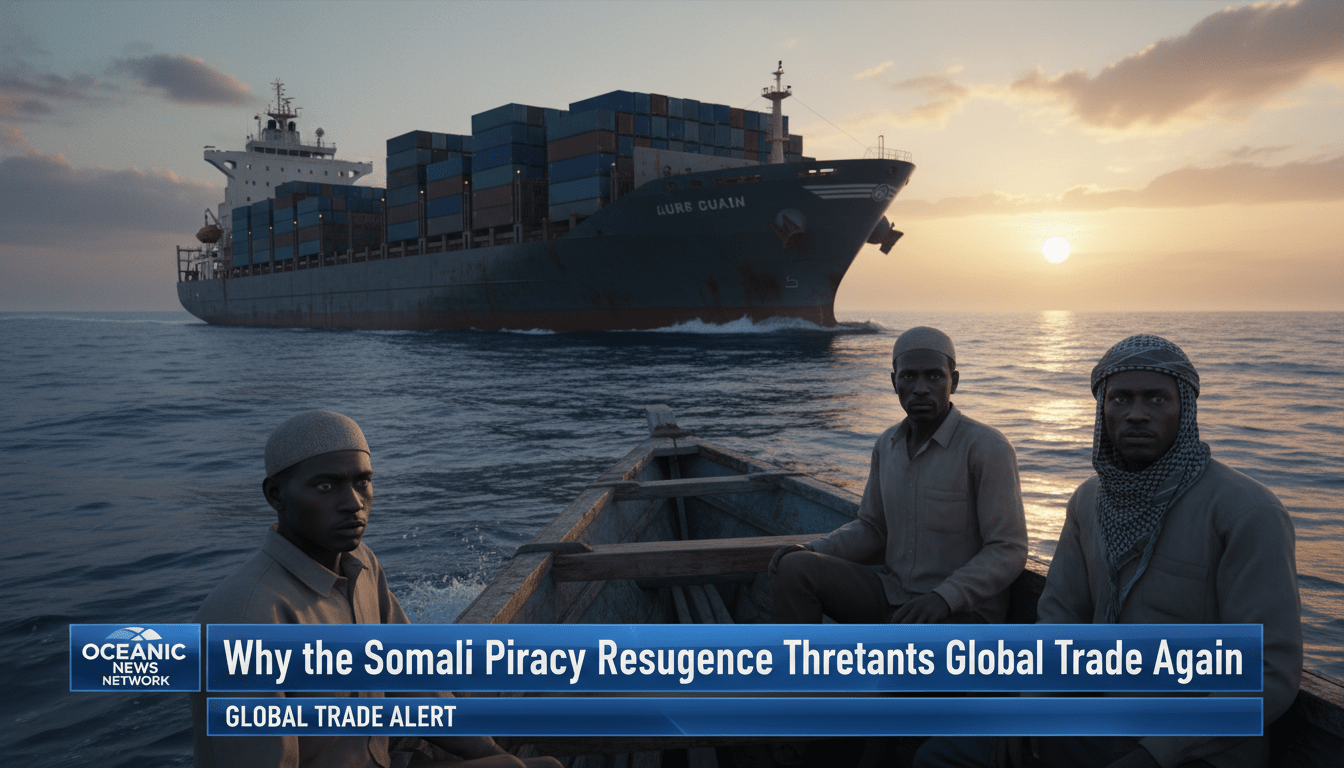
The recent hijacking of the MT Eureka changes everything in maritime security. Armed men boarded the Togo-flagged tanker near the coast of Yemen. They quickly steered the massive vessel toward the Somali coast. This event marks a troubling rise in regional maritime instability today. Global naval forces previously believed this specific threat had ended entirely. The Somali piracy wave seemed completely relegated to the distant past. However, recent dramatic events prove that maritime piracy has fully returned. This massive resurgence threatens local trade routes in very significant ways. It also threatens global economic security for countless nations worldwide.
Three major pirate strikes have occurred in just a few short weeks. Criminals previously seized the Honour 25 earlier during the month of April. They also captured the Sward during a highly coordinated maritime operation. These brazen attacks reveal a massive vulnerability within global shipping lanes. Consequently, security analysts express deep concern over these rapidly unfolding events. They note that current pirate tactics mirror past successful criminal strategies. Furthermore, the regional geopolitical environment continuously enables these highly dangerous operations. The hijacking represents the third major maritime strike in early 2026.
Global powers must deeply understand the history behind these terrifying headlines. The Gulf of Aden remains highly unpredictable and dangerous right now. Political leaders must acknowledge the severe complexities driving this oceanic violence. The MT Eureka serves as a very loud warning to international trade. Commercial shipping lanes require intense and continuous protection immediately. Otherwise, violent criminal syndicates will continually dominate these crucial global waterways (eunavfor.eu).
The Real Origins of the Pirate Trade
Modern piracy traces its roots directly back to massive political collapse. The Siad Barre government fell completely during the year 1991. Somalia lost its central government and its national defense forces entirely. Consequently, no central navy existed to patrol its extensive coastal waters. The nation possesses an incredible 3,300-kilometer coastline along the Indian Ocean. Foreign fishing fleets quickly invaded these completely unprotected marine territories. They exploited the sudden absence of any capable local guardians.
Local Somali fishermen watched foreign vessels steal their valuable natural resources. They desperately took up arms to drive away these massive foreign fleets. They proudly labeled themselves the Somali Volunteer Coast Guard initially. These fishermen utilized basic skiffs to chase away international commercial trawlers. Their original mission focused heavily on local maritime resource protection. They wanted to preserve the fishing grounds for their own struggling families.
However, these makeshift coast guards quickly discovered a much darker reality. They realized that seizing foreign ships for ransom paid incredibly well. It paid far more than traditional coastal fishing ever could. By 2008, piracy evolved into a highly sophisticated business model regionally. The operations centered heavily around the Puntland region of Somalia. Hubs like Eyl and Hobyo became massive centers for pirate activity. During January 2011, pirates held an astonishing 736 hostages simultaneously (wikipedia.org).
Environmental Racism on the African Coast
The origins of Somali piracy feature a horrific environmental tragedy. Following the 1991 government collapse, foreign entities exploited the unprotected shores. European and Asian firms used the Somali coastline very destructively. They turned these pristine waters into a cheap, illegal dumping ground. Ships discarded massive amounts of highly hazardous and radioactive nuclear waste. The devastating 2004 Indian Ocean tsunami brought this terror to land. Powerful waves washed up heavily rusted containers of toxic waste.
These damaged containers leaked dangerous substances directly onto local Somali shores. Investigations confirmed the presence of lead, mercury, and cadmium locally. Local coastal residents suffered from severe unexplained deaths and terrible skin rashes. They also suffered from respiratory infections and devastating birth defects continuously. Italian investigations suggested up to 35 million tons of waste arrived. Companies paid a mere $6.6 billion for this illegal disposal completely.
Legal disposal in Europe would have cost these corporations significantly more. Foreign companies frequently paid local warlords to secure these dumping contracts. Despite clear evidence of massive health impacts, legal action completely failed. Many dumping firms were completely fictitious companies designed to avoid liability. No international body has successfully held these corporate entities fully accountable. Furthermore, nobody has successfully provided proper restitution to the suffering victims. This situation clearly demands acknowledging and addressing historical racial injustices globally (theecologist.org, wikipedia.org).
The Devastating Impact of Illegal Fishing
Illegal fishing deeply wounded the local Somali coastal economy for decades. Illegal, Unreported, and Unregulated fishing represents a massive corporate theft. Foreign industrial fleets arrived in massive numbers to exploit the region. They utilized highly destructive methods that ruined local marine habitats entirely. These massive foreign ships drained billions of dollars from African waters. Somalia currently loses approximately $300 million annually to this continuous theft.
Across the continent, Africa loses up to $14 billion annually. These foreign fleets completely deplete local fish stocks at terrifying speeds. The fish simply cannot replenish fast enough to survive the onslaught. Artisanal fishers simply cannot compete locally against massive industrial foreign trawlers. Coastal communities experience terrible impoverishment and economic stagnation constantly today. This loss leaves local citizens with incredibly few viable economic options.
Desperate youth often face the terrifying reality of complete starvation locally. They see the ocean stripped bare by wealthy foreign nations daily. The international community entirely failed to protect these waters from exploitation. African workers who fought for economic justice struggled immensely against this intrusion. Consequently, these desperate young men view piracy as their only survival strategy. The original volunteer coast guard naturally morphed into dangerous criminal syndicates (hakaimagazine.com).
The Dark Side of Flags of Convenience
The recently hijacked MT Eureka flew a specific Togo flag visually. This specific detail reveals a deeply flawed global maritime business system. A Flag of Convenience allows shipowners to avoid their home regulations. They register immense commercial vessels in nations like Togo very cheaply. This widespread practice provides complete legal anonymity for massive wealthy corporations. It also provides incredibly low taxes and minimal regulatory labor oversight.
Shipowners use these foreign flags to bypass strict labor laws globally. This system leads to seafarers working in completely unacceptable conditions continuously. They continued to face involuntary servitude aboard these massive commercial vessels. Many workers suffer from incredibly low wages and terrible safety standards. Furthermore, illegal fishing vessels frequently use these specific flags of convenience. They use them to hide beneficial ownership from international law enforcement. They also use them to avoid prosecution for stealing African resources.
Registering in Togo makes seeking restitution nearly impossible for countless victims. Victims of maritime accidents cannot easily access civil or criminal courts. For a developing country like Togo, the financial stakes remain incredibly high. A single major fine could equal half of their fisheries income. Therefore, these smaller nations often ignore terrible corporate maritime violations completely. This dark system prioritizes corporate profit entirely over human life (policycenter.ma).
A Dangerous New Alliance Takes Shape
A terrifying geopolitical shift heavily fuels the current maritime piracy resurgence. Intelligence reports confirm an unlikely alliance between two dangerous militant groups. The Zaydi Shiite Houthis and Sunni extremist Al-Shabaab actively work together. Historically, these specific organizations are ideologically and theologically opposed to each other. However, a pragmatic marriage of convenience has violently emerged between them. They trade powerful weapons for piracy services to counter Western navies.
This massive alliance remains purely pragmatic rather than genuinely ideological today. Al-Shabaab acts as a major hub for weapons flowing into Africa. They recently requested advanced drones and surface-to-air missiles from the Houthis. This advanced weaponry heavily increases the deadly lethality of their operations. In return, Al-Shabaab actively escalates violent piracy within the Somali Basin. They operate sophisticated syndicates using captured dhows as massive mother ships.
These mother ships allow them to launch attacks far from shore. They travel hundreds of miles deep into the treacherous Indian Ocean. This strategy deeply distracts international naval attention from the Red Sea. Consequently, naval assets must redeploy away from the critical Bab el-Mandeb Strait. This dangerous cooperation successfully allows the Houthis to bypass international sanctions. It represents a massive proxy war affecting global maritime trade greatly (africacenter.org, newlinesmag.com).
How High Shipping Costs Hurt Everyday People
The massive piracy resurgence heavily damages the global consumer economy today. Ships must completely reroute around the massive Cape of Good Hope. This massive detour adds two weeks to standard commercial shipping journeys. It also adds six thousand nautical miles to every single trip. Shipping costs completely exploded from roughly $1600 to nearly $6000 recently. This massive spike triggers a devastating second wave of global inflation.
Massive fuel consumption drives these continuously rising corporate transportation expenses upward. Fuel accounts for over half of all standard commercial shipping costs. Shipping companies simply pass these massive fuel surcharges directly to consumers. Economists warn of a structural repricing of the standard household budget. Higher prices impact basic food, crucial medicine, and standard household goods. Grocery prices could easily increase by an additional three to four percent.
Low-income families suffer the highest financial burden during these inflationary periods. Higher diesel costs for delivery trucks manifest as a temporary tax. This tax heavily consumes the incredibly limited income of poor families. People face higher prices for plastic packaging and basic prescription bottles. The historical factors that have impacted the success of communities include systemic inflation. Working-class families simply cannot absorb these massive international corporate price hikes (businessinsider.com).
The Exploitation of Desperate Youth
The modern piracy machine heavily exploits the extreme desperation of youth. Pirate masterminds rarely take physical risks during these highly dangerous operations. These operations are managed by wealthy businessmen residing in foreign hubs. Many leaders live comfortably in locations like Dubai or London currently. They successfully finance the entire operation from a very safe distance. Meanwhile, they actively recruit completely desperate young men for the violence.
Recruits are often incredibly young men and highly vulnerable young boys. Some of these terrified foot soldiers are merely twelve years old. They severely lack basic schooling or any viable local employment options. The total destruction of the local fishing industry ruined their futures. The average Somali citizen earns roughly six hundred dollars per year. Extreme poverty makes these incredibly dangerous maritime missions seem somehow logical.
A single successful vessel seizure yields thousands of dollars for recruits. This represents a completely life-changing sum within a collapsed local economy. Therefore, massive ransom payouts offer incredibly powerful false hope to youth. Experts accurately categorize Somali piracy as a crime of extreme opportunity. The absence of a capable guardian created this massive maritime vacuum. Young people die frequently while rich men profit heavily from violence (allafrica.com, newlinesmag.com).
Political Instability Fuels the Crisis
Somalia still functions as an incredibly fragile political federal system today. High political tension remains constant across the entire eastern African region. The federal government in Mogadishu struggles deeply to maintain ultimate control. Semi-autonomous regions vigorously resist massive political overreach from the central government. For example, Puntland actively maintains its own distinct security forces completely. They adamantly refuse to hand over authority to leaders in Mogadishu.
In March 2024, Puntland announced a major separation from the government. They no longer recognize the authority of the Somali federal system. A massive constitutional crisis sparked this incredibly severe regional political division. Constitutional amendments recently attempted to centralize immense power within the presidency. Puntland leaders simply view these moves as blatant attempts at domination. They believe Mogadishu wants to steal their massive local natural resources.
Furthermore, deep clan divisions constantly hinder unified national security efforts locally. Unresolved disputes over vast oil and fishing rights create massive anger. The federal government recently signed a maritime security pact with Türkiye. However, regional states view these international agreements with incredibly deep suspicion. This continuous political chaos creates the absolute perfect conditions for piracy. Criminals easily thrive whenever political leaders fight constantly amongst themselves locally (policycenter.ma, heraldstaronline.com).
Looking Ahead for the Horn of Africa
The hijacking of the MT Eureka requires incredibly serious global attention. Naval patrols alone simply cannot stop this continuous violent maritime crisis. Global powers successfully reduced piracy to zero incidents roughly five years ago. They utilized international task forces like NATO Ocean Shield to succeed. However, military might only temporarily bandages a deeply bleeding regional wound. The incredibly severe root causes require massive and immediate economic intervention.
Wealthy international corporations must face massive penalties for illegal local fishing. Environmental dumping demands highly comprehensive international investigations and massive financial restitution. Furthermore, the completely flawed Flag of Convenience system requires strict overhaul. Seafarers genuinely need basic protection from incredibly greedy and negligent shipowners. Local Somali youth desperately require real educational opportunities and viable jobs. Otherwise, violent coastal piracy will always remain an incredibly attractive option.
Political stability within Somalia remains incredibly necessary right now for peace. The international community must heavily support true regional economic infrastructure development. Simply sending massive warships solves absolutely nothing over the long term. True justice requires holding major foreign corporations entirely accountable for exploitation. Without these incredibly vital changes, the Gulf of Aden remains highly dangerous. The history behind these headlines demands immediate and sweeping systemic change.
About the Author
Darius Spearman is a professor of Black Studies at San Diego City College, where he has been teaching for over 20 years. He is the founder of African Elements, a media platform dedicated to providing educational resources on the history and culture of the African diaspora. Through his work, Spearman aims to empower and educate by bringing historical context to contemporary issues affecting the Black community.
