

Why Senegal’s Revolutionary Alliance Collapsed
By Darius Spearman (africanelements)
Support African Elements at patreon.com/africanelements and hear recent news in a single playlist. Additionally, you can gain early access to ad-free video content.
The Dramatic Fall of the Political Twins
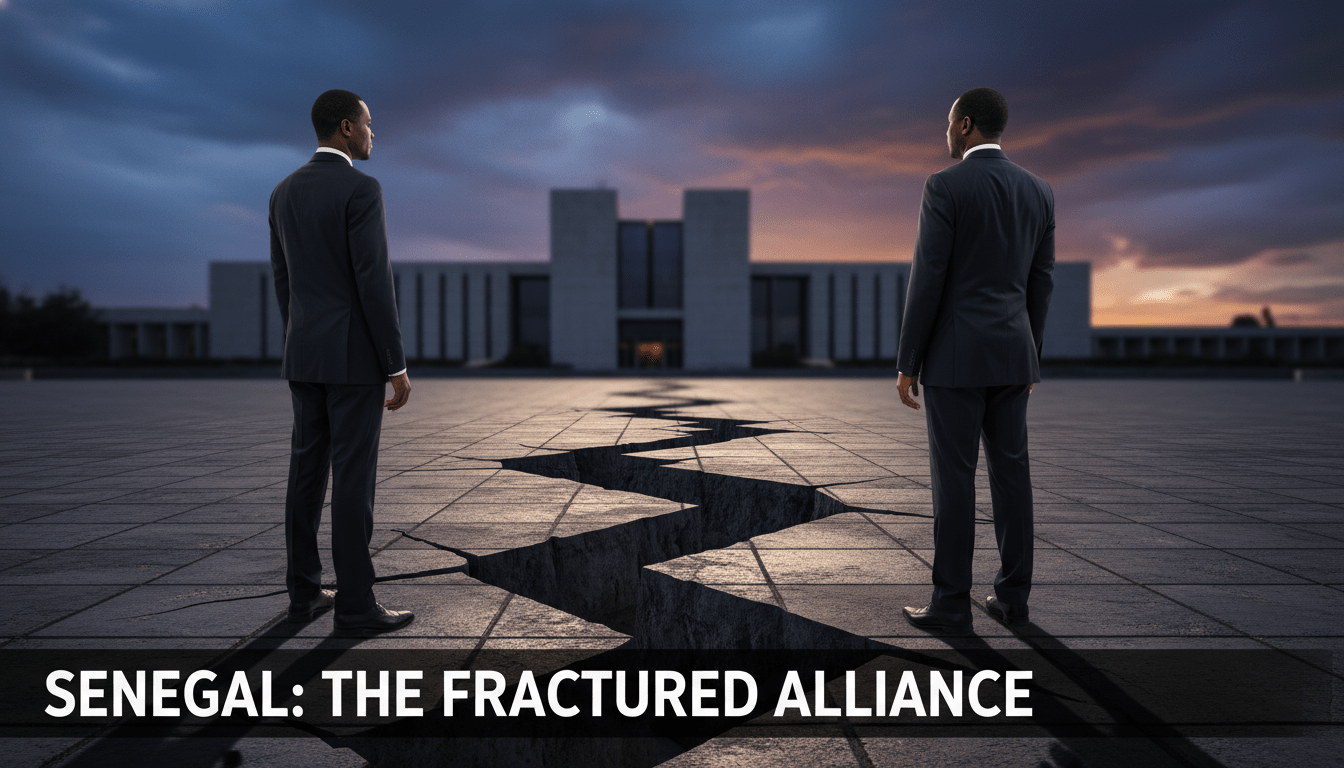
The political landscape of Senegal experienced a profound shock on Friday, May 22, 2026, when President Bassirou Diomaye Faye issued a presidential decree to dismiss Prime Minister Ousmane Sonko and dissolve the entire government cabinet (aljazeera.com, mountkenyatimes.co.ke). Only two days later, on Sunday, May 24, 2026, the Speaker of the National Assembly, El Malick Ndiaye, resigned from his position, citing a desire to preserve institutional harmony (aljazeera.com, apanews.net). This rapid sequence of events plunged one of the most stable democracies in West Africa into a deep constitutional crisis (aljazeera.com). It effectively shattered the political partnership that had successfully captured the presidency just two years prior (aljazeera.com).
During their rise to power, the two leaders presented themselves as an inseparable political force. They campaigned across the country hand in hand, popularizing the Wolof slogan “Diomaye mooy Sonko,” which translates to “Diomaye is Sonko” (aljazeera.com, africasacountry.com). This message signaled to voters that a vote for Faye was a vote for Sonko and their shared revolutionary platform (aljazeera.com). Yet, the immense challenges of governance and a severe fiscal crisis quickly eroded this unity. The split represents a classic historical pattern where the pressures of governing a state fracture even the closest revolutionary alliances.
The Rise of PASTEF and the Radical Platform
To comprehend the roots of this dramatic fallout, one must look back to January 2014, when Ousmane Sonko, a fiery tax inspector, founded the political party known as PASTEF (wikipedia.org, wikipedia.org). Sonko established the party on a platform of left-wing nationalism, anti-corruption, and pan-Africanism (aljazeera.com, africasacountry.com). He sought to appeal directly to the massive population of underemployed youth who felt abandoned by the traditional political class (aljazeera.com, africanews.com). PASTEF promised a radical break from the political status quo, arguing that Senegal had remained economically subservient to foreign powers (africasacountry.com, aljazeera.com).
This political ideology drew heavily from the concept of Pan-Africanism. In the context of PASTEF, Pan-Africanism represents a political, cultural, and economic movement that advocates for the unity, solidarity, and empowerment of African nations to counter historical colonial exploitation (africasacountry.com, thetricontinental.org). The party sought to challenge the neocolonial structures that continue to govern West African relations, particularly with France (africasacountry.com, aljazeera.com). This platform resonated deeply with young activists, who saw Sonko as a leader capable of reclaiming the country’s dignity (aljazeera.com). By framing their struggle within the broader history of continental liberation, PASTEF transformed local economic grievances into a revolutionary crusade.
The Quest for Economic Sovereignty
Alongside Pan-Africanism, PASTEF placed the pursuit of economic sovereignty at the very center of its political agenda (africasacountry.com, afronomicslaw.org). In post-colonial Senegal, economic sovereignty refers to the struggle of the nation to reclaim control over its own national resources, trade agreements, and monetary policies (africasacountry.com, afronomicslaw.org). Historically, these economic levers have been heavily compromised by agreements signed during the colonial era (africasacountry.com). Sonko and his supporters argued that true independence was impossible as long as foreign multinational corporations dictated the terms of Senegal’s oil, gas, and mineral wealth (africasacountry.com, internationalviewpoint.org).
For PASTEF, achieving economic sovereignty meant actively renegotiating these exploitative resource contracts to ensure that local communities benefited directly from national wealth (africasacountry.com). This policy challenged the traditional approach of post-colonial African states, which often prioritize foreign investor confidence over domestic redistribution (africasacountry.com, afronomicslaw.org). However, balancing these revolutionary nationalist ideals against the practicalities of global debt markets and international finance proved to be a monumental challenge (semafor.com, ft.com). This tension eventually became a major point of friction between the pragmatic president and the populist prime minister (semafor.com, ft.com).
PASTEF Electoral Trajectory
Percentage of vote share secured during pivotal national elections.
The CFA Franc and Monetary Neo-Colonialism
A central pillar of the debate over economic sovereignty in Senegal is the controversy surrounding the CFA Franc (africasacountry.com, internationalviewpoint.org). The CFA Franc is a colonial-era currency established in 1945 that is utilized by several West and Central African nations (africasacountry.com, wikipedia.org). Its value is pegged to the Euro, and it is historically guaranteed by the French Treasury (africasacountry.com, internationalviewpoint.org). Within Senegal’s political discourse, the currency is highly controversial because critics view it as a primary mechanism of modern financial neo-colonialism (africasacountry.com, internationalviewpoint.org). It severely restricts the monetary independence, export competitiveness, and overall economic development of African states (africasacountry.com, internationalviewpoint.org).
Critics point out that under the rules of the CFA Franc, member states have historically been forced to deposit a significant portion of their foreign exchange reserves into the French Treasury (africasacountry.com, internationalviewpoint.org). This arrangement strips these nations of their monetary sovereignty and prevents them from pursuing independent fiscal policies (africasacountry.com). During the 2024 campaign, PASTEF advocated for monetary reforms, including the potential exit from the CFA Franc regime and the introduction of a sovereign Senegalese currency (africasacountry.com, freiheit.org). This radical stance highlighted the ongoing debate regarding cultural nationalism versus political black nationalism, as the movement sought to define its identity through a complete break from colonial financial institutions.
Judicial Warfare and the “Corrupting Youth” Charge
The path to power for PASTEF was marked by intense state repression under the administration of President Macky Sall, who governed Senegal from 2012 to 2024 (britannica.com, britannica.com). The Sall administration frequently utilized a perceived politicized judiciary to systematically sideline key political rivals (aljazeera.com, africanews.com). In 2021, Sonko was arrested on controversial sexual assault charges, sparking nationwide riots that resulted in the deaths of at least 14 people (aljazeera.com, aljazeera.com). Although he was eventually cleared of the rape charges, he was convicted in June 2023 of the charge of “corrupting youth” (aljazeera.com, aljazeera.com).
Under Senegalese law, the charge of “corrupting youth” is a criminal offense defined as engaging in or encouraging immoral behavior toward an individual under the age of 21 (aljazeera.com, wikipedia.org). This conviction carried a two-year prison sentence, which legally disqualified Sonko from contesting the 2024 presidential election under the country’s strict electoral code (aljazeera.com, aljazeera.com). His supporters denounced the legal proceedings as a politically motivated attempt to keep him off the ballot (aljazeera.com, aljazeera.com). The resulting outrage fueled massive protests, further cementing Sonko’s status as a martyr of the anti-system movement (aljazeera.com, africanews.com).
Mobilizing the Base and the Wolof Identity
With Sonko legally barred from running, PASTEF pivoted strategically by selecting Bassirou Diomaye Faye, the general secretary of the party, as their presidential candidate (aljazeera.com, africanews.com). Faye had also been imprisoned in April 2023 for criticizing magistrates on social media, but he had no prior criminal convictions (aljazeera.com, africanews.com). Just ten days before the March 24, 2024 election, both Faye and Sonko were released from prison under a political amnesty act (aljazeera.com, africanews.com). They immediately embarked on a whirlwind campaign, mobilizing the electorate through powerful appeals to national pride and cultural identity (aljazeera.com, africanews.com).
A key element of their successful mobilization was the strategic use of the Wolof language (aljazeera.com, africasacountry.com). Wolof is the dominant native language and ethnic group in Senegal, representing approximately 40% of the population (wikipedia.org, britannica.com). By bypassing French, the official colonial language, and utilizing Wolof-language slogans and rallying cries, PASTEF directly engaged indigenous cultural identity (africasacountry.com). This linguistic strategy allowed the party to bypass the elitist, colonial legacy of the official state apparatus and connect directly with disaffected, working-class youth (africasacountry.com). This approach highlights how voting and political representation can be revolutionized when leaders communicate in the primary tongue of the masses. Faye ultimately secured a historic landslide victory, winning 54.28% of the vote in the first round (aljazeera.com, freiheit.org).
Senegal’s Sovereign Debt Shock
The dramatic gap between reported and actual central government debt (end-2023 figures).
*Uncovered liabilities equivalent to 25.3% of GDP were kept off-balance sheet by the previous administration.
The Uncovering of the Hidden Debt
Upon taking office on April 2, 2024, President Faye immediately appointed Ousmane Sonko as his Prime Minister (aljazeera.com, freiheit.org). However, the joy of victory was quickly overshadowed by a devastating fiscal discovery. A comprehensive government audit published in early 2025 revealed that the previous administration of Macky Sall had deliberately misreported public debt and fiscal deficits (semafor.com, ecofinagency.com, dailymaverick.co.za). The former administration concealed billions in public liabilities to project a healthy economy and borrow on favorable terms from international financial markets (semafor.com, dailymaverick.co.za).
The audit revealed that the average fiscal deficit was revised upward by 5.6 percentage points of GDP (semafor.com, imf.org). Furthermore, the central government debt for the end of 2023 was revised from the reported 74.4% to a staggering 99.7% of GDP (semafor.com, dailymaverick.co.za). By the end of 2024, Senegal’s total public debt had ballooned to 132% of GDP, amounting to over $43 billion (semafor.com, ecofinagency.com). In response to this systematic misreporting, the International Monetary Fund suspended its $1.8 billion lending program to Senegal, demanding immediate fiscal transparency and corrective reforms (semafor.com, imf.org). The Justice Ministry has since launched criminal investigations against several former officials to ensure legal accountability for this catastrophic mismanagement (semafor.com).
The Ideological Rift on International Finance
This catastrophic debt crisis created a profound ideological divide between President Faye and Prime Minister Sonko regarding how to manage relations with international financial institutions (semafor.com, ft.com). President Faye favored a pragmatic approach, advocating for constructive engagement with the International Monetary Fund to secure a new financial program and stabilize the economy (semafor.com, ft.com). Conversely, Sonko remained a steadfast populist, vehemently opposing any restructuring of the country’s external debt, which he argued was an infringement on national sovereignty (semafor.com, ft.com).
This divide directly influenced public perceptions of international lenders. The IMF is widely perceived by the Senegalese public and the PASTEF movement as an interventionist, neocolonial institution that prioritizes foreign creditors over local populations (africasacountry.com, internationalviewpoint.org). Sonko publicly rejected the IMF’s debt restructuring proposals, calling them a disgrace and accusing the organization of trying to place Senegal under external tutelage (semafor.com, ft.com). This split reflected the classic debate over state versus nation-centered power, as the presidency sought to maintain international credibility while the prime minister’s office prioritized revolutionary sovereignty.
Fuel Subsidies and Social Justice
The practical application of this ideological debate centered on the highly sensitive issue of fuel subsidies (semafor.com, ft.com). The International Monetary Fund pressured the government to reduce universal fuel subsidies, arguing that they are fiscally unsustainable and disproportionately benefit wealthier households (semafor.com, ft.com). However, the social justice impacts of cutting fuel subsidies are severe (ft.com, brettonwoodsproject.org). Removing these subsidies immediately spikes the cost of transportation, electricity, food, and other essential goods, disproportionately burdening the working class, students, and the poor (ft.com, brettonwoodsproject.org).
Finance Minister Cheikh Diba warned parliament that the country’s fuel subsidy bill was on track to exceed its budget allocation by 1.15 trillion CFA francs, which is equivalent to approximately $2 billion (semafor.com, ecofinagency.com, senenews.com). He argued that refusing to adjust domestic fuel prices was pushing Senegal toward complete financial ruin (semafor.com, ecofinagency.com). Despite these warnings, Sonko blocked efforts to raise fuel prices, asserting that protecting the population from inflation was a non-negotiable duty of the revolutionary government (semafor.com, ft.com). This direct insubordination to the executive’s fiscal planning accelerated the breakdown of the governing alliance (semafor.com).
The Budgetary Balance Standoff
The fiscal tension between the frozen IMF emergency program and the rising cost of fuel subsidies.
Sacking, Dissolution, and the Threat of Cohabitation
The escalating tensions reached their breaking point on May 22, 2026, when President Faye exercised his ultimate constitutional authority to dismiss Sonko and dissolve the government (aljazeera.com, mountkenyatimes.co.ke). Sonko responded defiantly on social media, indicating that he was prepared to return to the political trenches (aljazeera.com, mountkenyatimes.co.ke). The political battlefield immediately shifted to the National Assembly, where the resignation of the Speaker, El Malick Ndiaye, cleared the way for Sonko to run for the post of Speaker of the National Assembly (aljazeera.com, mountkenyatimes.co.ke).
This development raises the immediate threat of cohabitation (aljazeera.com). In a political context, cohabitation occurs when the office of the President and the legislative majority are held by rival political factions (aljazeera.com, wikipedia.org). In Senegal’s semi-presidential system, this dual-executive model requires the President to nominate a Prime Minister acceptable to the hostile parliamentary majority, often resulting in severe institutional gridlock (aljazeera.com, wikipedia.org). If Sonko secures the speaker seat and maintains his party’s majority, he will possess the legislative power to block Faye’s budgets, cabinet appointments, and policy reforms, potentially grinding the nation’s governance to a halt (aljazeera.com).
Youth Reaction and the Road Ahead
The sudden dismissal of Ousmane Sonko has deeply fractured the youthful activist base of PASTEF (aljazeera.com). Many young supporters, driven by an intense political devotion known as “Sonkomania,” reacted with deep disappointment and immediate mobilization (aljazeera.com, africanews.com). Hundreds of young people gathered at Sonko’s residence in Dakar to demonstrate their solidarity, while students launched street protests to voice their anger (aljazeera.com, africanews.com). These youths view Sonko’s dismissal as a capitulation by President Faye to the pressures of international financial elites and neocolonial forces (aljazeera.com, africanews.com).
However, other segments of the population have expressed fatigue with the constant political infighting, urging the government to prioritize economic stability and job creation over ideological battles (aljazeera.com). The future of Senegal’s democracy now hinges on how these two leaders navigate their newly adversarial relationship (aljazeera.com). As the nation prepares for potential legislative showdowns, the struggle of the Senegalese people to balance revolutionary ideals with the harsh realities of global economic dependency remains a central chapter in the ongoing fight for true African self-determination (aljazeera.com, africasacountry.com).
About the Author
Darius Spearman is a professor of Black Studies at San Diego City College, where he has been teaching for over 20 years. He is the founder of African Elements, a media platform dedicated to providing educational resources on the history and culture of the African diaspora. Through his work, Spearman aims to empower and educate by bringing historical context to contemporary issues affecting the Black community.
