

Why Geopolitical Pressure in the Caribbean Is Rising Now
By Darius Spearman (africanelements)
Support African Elements at patreon.com/africanelements and hear recent news in a single playlist. Additionally, you can gain early access to ad-free video content.
The Historical Root of Hegemony
The intense geopolitical pressure in the Caribbean is not a new issue. The roots of this tension go back to December 2, 1823. On that day, President James Monroe delivered his seventh annual address to Congress (wikipedia.org). He declared that the Western Hemisphere was closed to future European colonization (wikipedia.org). Furthermore, he established that the political systems of the Americas and Europe were completely distinct (wikipedia.org).
Any attempt by European powers to extend their influence into the hemisphere was viewed as a direct threat to peace and safety (wikipedia.org). This policy became known as the Monroe Doctrine (wikipedia.org). At the time, the United States did not have the military strength to enforce this rule (wikipedia.org). However, it laid the ideological groundwork for future intervention. It established the region as Washington’s exclusive geopolitical backyard (wikipedia.org).
The Roosevelt Corollary and Police Power
At the start of the twentieth century, President Theodore Roosevelt modified this doctrine (wikipedia.org). The change followed the Venezuela Crisis of 1902 and 1903 (wikipedia.org). During that event, European navies blockaded Venezuelan ports over unpaid debts (wikipedia.org). In response, Roosevelt issued his Roosevelt Corollary in December 1904 (wikipedia.org). He claimed that chronic wrongdoing in a Latin American country might force the United States to act as an international police power (veteranmuseum.net).
This declaration transformed a defensive stance into an offensive policy of gunboat diplomacy (wikipedia.org). It led directly to U.S. military occupations in Haiti from 1915 to 1934 and the Dominican Republic from 1916 to 1924 (novapublishers.com, veteranmuseum.net). These actions protected commercial interests and strategic shipping lanes (wikipedia.org). They established a pattern of unilateral control that would last for over a century.
Cold War Operations and Strategic Denial
During the Cold War, the focus shifted to stopping the spread of communism (wikipedia.org). The United States used new policies to justify secret and open interventions (afpc.org). Under the guise of strategic denial, the military acted across Central America (afpc.org). For example, the CIA helped overthrow the democratically elected leader of Guatemala in 1954 (wikipedia.org).
In 1965, the military invaded the Dominican Republic to prevent a left-wing government (wikipedia.org). Later, direct invasions occurred in Grenada in 1983 and Panama in 1989 (wikipedia.org, wikipedia.org). These maneuvers aimed to depose unfriendly rulers and control critical transit points (wikipedia.org). The strategic actions of this era cemented unilateral control over the entire region (afpc.org).
The Destabilization of Haiti and the Dominican Republic
The historical occupations of Haiti and the Dominican Republic caused deep, lasting harm to these majority-Black nations (novapublishers.com). In Haiti, military officials ruled under martial law (novapublishers.com). They dissolved the national congress and forced a new constitution that allowed foreign land ownership (novapublishers.com). This move systematically stripped citizens of their ancestral land rights.
Additionally, U.S. forces revived a system of forced labor called the corvée (novapublishers.com). This abusive practice caused numerous deaths and ignited peasant uprisings (novapublishers.com). To control labor on sugar plantations, officials moved thousands of Haitian workers to the Dominican Republic (novapublishers.com). This migration laid the groundwork for decades of racial hostility and modern border crises (novapublishers.com). Throughout these struggles for freedom, the concept of Black freedom was constantly suppressed by foreign powers.
Modern Securitization of the Border
After the Cold War, the reasons for intervention changed (everycrsreport.com). The emphasis shifted to the war on drugs and stopping migration (everycrsreport.com). Instead of direct invasions, the government set up regional security programs (everycrsreport.com). These initiatives externalized the security apparatus of the United States (everycrsreport.com, everycrsreport.com).
The Central America Regional Security Initiative focused on gang violence and drug transit (everycrsreport.com). Meanwhile, the Caribbean Basin Security Initiative began in 2010 (everycrsreport.com). It aimed to improve maritime policing and border security across thirteen Caribbean countries (everycrsreport.com). Critics pointed out that these programs militarized local police forces (afsc.org, lawg.org). They also shifted the duty of border control far to the south (afsc.org).
CBSI Funding Priorities (FY 2010 – 2024)
A comparison of U.S. security-first allocations versus community and social development programs (everycrsreport.com).
The Modern Trump Corollary
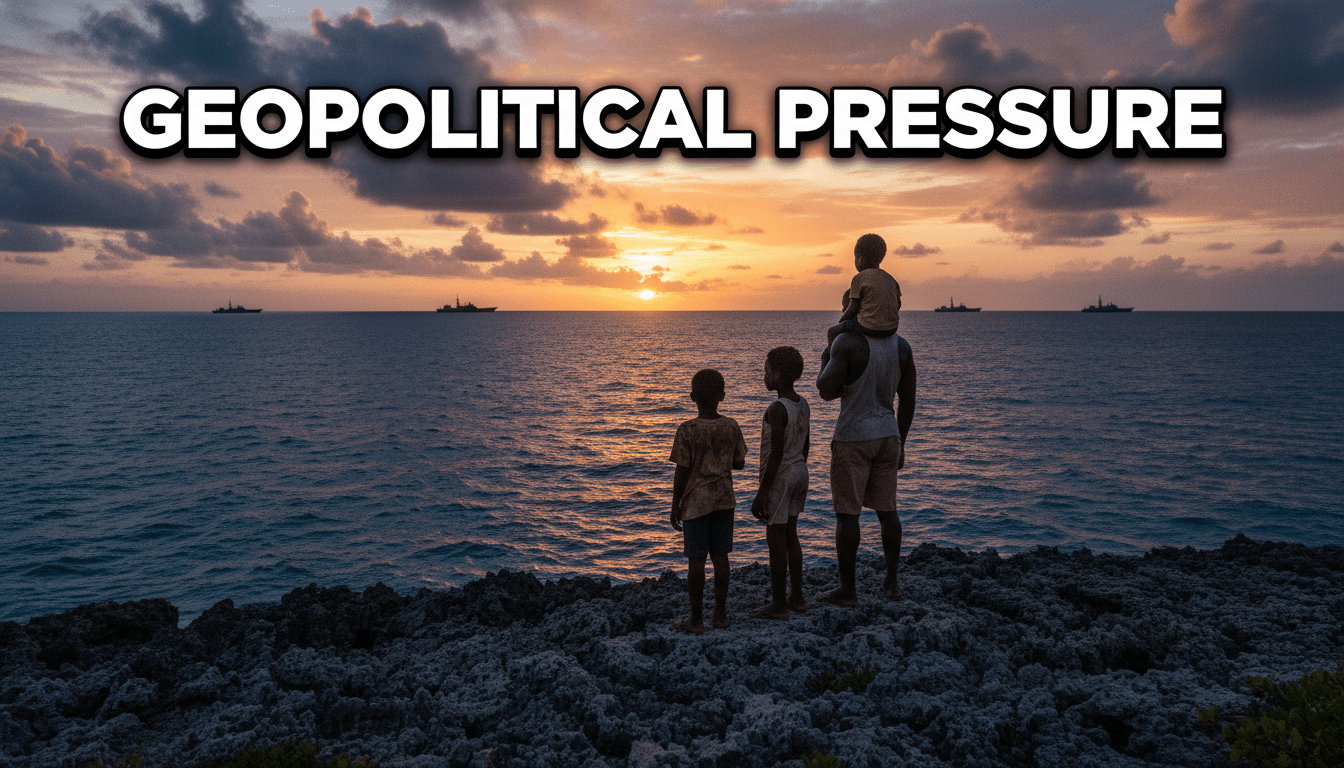
A new wave of geopolitical pressure in the Caribbean emerged in late 2025 (horacero.org, horacero.org). The White House updated its National Security Strategy to codify the Trump Corollary (horacero.org). This policy revived the Monroe Doctrine with aggressive language (horacero.org). It aimed to restore American dominance across the Western Hemisphere (horacero.org, horacero.org).
The strategy declared that foreign competitors would not control vital assets (horacero.org, horacero.org). Specifically, it targeted investments from China, Russia, and Iran (horacero.org, horacero.org). Under this system, Washington took control of regional transport points (horacero.org). They viewed Chinese port investments near the Panama Canal as a direct national security threat (horacero.org).
Operation Absolute Resolve and the Summit
In January 2026, the theoretical tenets of the updated doctrine became reality (horacero.org). U.S. special operations forces launched Operation Absolute Resolve (horacero.org). This mission targeted the Venezuelan capital of Caracas to abduct Nicolás Maduro (horacero.org). Supported by military aircraft and electronic warfare, troops disabled air defenses and took Maduro to stand trial (horacero.org).
To strengthen control, Washington hosted the Shield of the Americas Summit in March 2026 (horacero.org). The event occurred in Miami, gathering a dozen heads of state (horacero.org). They formed a standing military and law enforcement coalition (horacero.org). Instead of economic aid, the coalition focused on joint military operations against cartels and the containment of migrants (horacero.org, horacero.org).
The Vertical Border and Militarized Deterrence
Central American nations faced immense pressure to act as a vertical border (mixedmigration.org). Fearing sanctions, they implemented two harsh policies in late 2025 and 2026 (mixedmigration.org, mixedmigration.org). First, they established a system of rapid, forced returns (mixedmigration.org). This plan pushed travelers backward through transit routes (mixedmigration.org).
Second, they initiated Operation Ring of Fire (mixedmigration.org, mixedmigration.org). This militarized strategy placed heavily armed troops along borders (mixedmigration.org). It targeted asylum seekers from Venezuela, Cuba, and Haiti (mixedmigration.org, mixedmigration.org). It also focused on people coming from extra-continental nations (mixedmigration.org). These actions effectively turned regional travel routes into militarized traps (mixedmigration.org, lawg.org).
Safe Third Country MOUs as Outsourcing Tools
The United States has utilized Safe Third Country Memoranda of Understanding to outsource immigration responsibilities (aila.org). These bilateral agreements allow officials to deny asylum to travelers (aila.org). If an asylum seeker passes through a partner country first, they are forced to return there (aila.org). These deals are often modeled as Asylum Cooperative Agreements (aila.org).
They force vulnerable people to seek legal protections in developing transit states (lawg.org). These transit nations often lack the systems to process and support refugees (lawg.org). Scholars argue these agreements violate the core rules of international protection (lawg.org). They push people back into volatile environments with weak justice systems and high crime rates (aila.org, lawg.org).
Human Rights Cost and Non-Refoulement
These policies carry a high human cost and threaten international law (alianzaamericas.org). Under international standards, the principle of non-refoulement is a fundamental rule (ohchr.org). It prohibits any country from returning individuals to territories where they face torture or death (ohchr.org, refworld.org). It serves as the legal cornerstone of human rights protections (ohchr.org).
This principle is codified in Article 33 of the 1951 Refugee Convention (refworld.org). It applies to all migrants, regardless of their legal status (ohchr.org). However, the Safe Third Country agreements bypass these protections (alianzaamericas.org). They deny refugees a fair process and facilitate forced returns (alianzaamericas.org, ohchr.org). Human rights groups continue to oppose these policies on legal grounds (lawg.org, alianzaamericas.org).
Asylum Realities for Displaced Populations
The dramatic gap between displacement and legal integration pathways (unhcr.org).
The Struggle of Afro-Descendant and Haitian Migrants
Militarized border policies do not impact all groups equally (amnestyusa.org). They uniquely harm Afro-descendant travelers, particularly Haitian citizens (amnestyusa.org, amnestyusa.org). Black migrants face systemic racism, language barriers, and localized discrimination (amnestyusa.org). This traps them in dangerous transit cities where they experience physical abuse and extortion (amnestyusa.org, mixedmigration.org).
Furthermore, language differences isolate Haitian Creole speakers (amnestyusa.org). They are often unable to understand Spanish legal procedures (amnestyusa.org). Under economic pressure, countries like Mexico have restricted transit documents (mixedmigration.org). This traps Black families in impoverished border zones where they must perform low-wage informal work (mixedmigration.org, amnestyusa.org). This modern abuse reflects a historical pattern of state-backed control, similar to the systemic oppression that shaped mass incarceration in the United States.
Extra-Continental Migrants and Globalized Borders
The crisis is further complicated by arrivals from extra-continental nations (iom.int). This term refers to countries outside the Western Hemisphere, mostly in Africa and Asia (iom.int, iom.int). Because of barriers in Europe, these individuals fly to South America first (iom.int). They start their journey in nations with fewer visa limits (iom.int).
From there, they walk through the dangerous Darién Gap alongside local migrants (iom.int). This movement has forced transit countries to set up visa walls (mixedmigration.org). It has turned Central America into a heavily policed corridor (mixedmigration.org, lawg.org). This global flow shows that border enforcement is no longer a local issue (iom.int). It highlights how international policies impact people far beyond regional borders.
US Police Militarization and Afro-Caribbean Security
U.S.-funded security programs have harmed local populations directly (everycrsreport.com). The Caribbean Basin Security Initiative has prioritized tactical training and weapons over social programs (everycrsreport.com). This focus has militarized local police forces (afsc.org, lawg.org). It has led to an increase in police brutality and extrajudicial killings in Black neighborhoods (afsc.org).
For example, militarized units have treated low-income neighborhoods as combat zones (afsc.org). During emergency security operations, officers have committed severe abuses (afsc.org). In Jamaica, operations have resulted in high numbers of civilian deaths with no legal accountability (afsc.org). Funding military hardware instead of education and judicial reform suppresses civil liberties (afsc.org, lawg.org).
Domestic Economic Consequences of Aggressive Deterrence
Aggressive deterrence policies also harm domestic economies (cis.org, oxfordeconomics.com). Mass deportations and workplace raids have turned net migration negative (cis.org). This drop in the labor force directly harms industries like construction and agriculture (cis.org). It leads to severe labor shortages in key sectors (oxfordeconomics.com).
Factual labor studies show that immigrant workers complement domestic employees (cis.org). When the workforce shrinks, businesses must downsize, reducing jobs for native-born workers (cis.org, oxfordeconomics.com). This downturn slows consumer spending and reduces national GDP (oxfordeconomics.com). Historically, the struggle for economic justice has always been tied to the movement of labor across borders.
Deterrence-Only Economic Fallout
The systemic impact of sudden negative net migration on key domestic sectors (oxfordeconomics.com).
Non-Military Alternatives and the Path Forward
To address these crises, human rights groups demand non-military alternatives (afsc.org, partnersglobal.org). They urge a transition toward social-dialogue options (partnersglobal.org). This approach focuses on local economic resilience and sustainable development (partnersglobal.org). It also prioritizes protecting civic spaces over deploying troops (afsc.org, partnersglobal.org).
The European Union could act as a helpful counterweight (europa.eu). It has extensive experience in non-military security (europa.eu). This includes building judicial integrity and managing migration through local capacity (europa.eu). By investing in people instead of military hardware, the region can build lasting stability (europa.eu, partnersglobal.org). The resilience of families in these communities remains a vital source of strength during times of external intervention.
About the Author
Darius Spearman is a professor of Black Studies at San Diego City College, where he has been teaching for over 20 years. He is the founder of African Elements, a media platform dedicated to providing educational resources on the history and culture of the African diaspora. Through his work, Spearman aims to empower and educate by bringing historical context to contemporary issues affecting the Black community.
