

Unearthing the Timbuctoo Black Settlement History
By Darius Spearman (africanelements)
Support African Elements at patreon.com/africanelements and hear recent news in a single playlist. Additionally, you can gain early access to ad-free video content.
The Hidden Footprints of a Wilderness Sanctuary
In May and June of 2026, researchers made a groundbreaking historical discovery in the Adirondack Mountains of New York (lidarnews.com, etsu.edu). Using advanced drone technology, they mapped the physical boundaries of Timbuctoo (lidarnews.com, etsu.edu). This largely forgotten mid-nineteenth-century settlement was established to help free Black Americans secure their voting rights (lidarnews.com, etsu.edu). For nearly two centuries, the aggressive forest growth of the region hid the remains of these early homesteads (lidarnews.com, potsdam.edu). Today, modern science is uncovering these long-lost footprints of racial justice (etsu.edu, eurekalert.org).
The project brought together experts from East Tennessee State University, the State University of New York at Potsdam, and the Adirondack Experience museum (lidarnews.com, etsu.edu). By working together, they bypassed the heavy forest canopy to map the long-hidden foundations of early pioneer life (lidarnews.com, etsu.edu). This search was far more than a simple archaeological dig. It was an effort to restore a crucial chapter of Black agency to the broader American historical narrative (etsu.edu, eurekalert.org).
The Systemic Struggle for Black Suffrage
To appreciate the recent breakthroughs in the Adirondacks, one must examine the political climate of New York in the early nineteenth century. Following the gradual emancipation efforts of the state, slavery was fully abolished on July 4, 1827 (albanylawreview.org, northcountryundergroundrailroad.com). However, the white ruling class quickly took steps to limit the political influence of newly freed Black citizens (albanylawreview.org, nypl.org). During the state constitutional convention of 1821, lawmakers eliminated traditional property requirements for white male voters (albanylawreview.org, albanygovernmentlawreview.org). White men received universal suffrage, allowing them to vote regardless of their wealth (albanylawreview.org, albanygovernmentlawreview.org).
In stark contrast, the convention imposed severe financial restrictions on Black male voters (albanylawreview.org, albanygovernmentlawreview.org). Black men could not vote unless they owned at least two hundred and fifty dollars worth of real estate (newyorkalmanack.com, albanylawreview.org). In an era when most Black New Yorkers held low-paying jobs in cities, this massive financial barrier disenfranchised over ninety percent of the Black population (albanylawreview.org, nypl.org). By 1826, only a few hundred Black men were legally permitted to vote in the entire state (nypl.org, albanygovernmentlawreview.org). This legal barrier forced Black activists to seek creative ways to build Black political power through land ownership.
The Voter Exclusion Gap (New York, 1826)
Percentage of males eligible to vote under the 1821 constitution.
Gerrit Smith and the Dream of Land Ownership
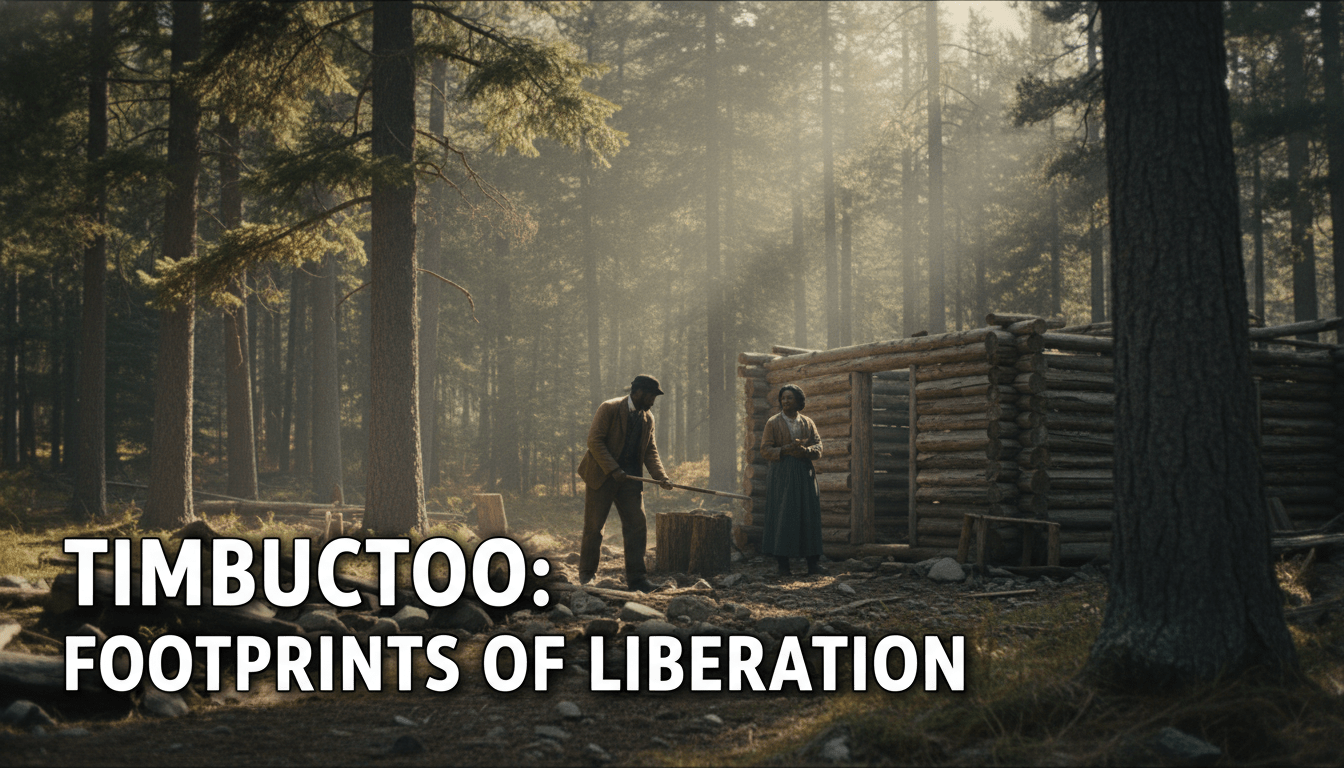
Frustrated by this voter suppression, a wealthy philanthropist and radical abolitionist named Gerrit Smith devised a bold plan in 1846 (theadkx.org, nystateparks.blog). Smith owned vast tracts of land across New York and decided to use his wealth to fight systemic racism (theadkx.org, nysed.gov). He pledged to donate one hundred and twenty thousand acres of his forest land in the Adirondacks to free Black men (adirondack.net, newyorkalmanack.com). He divided this territory into forty-acre plots and distributed them to three thousand Black residents (lidarnews.com, nystia.org). His goal was to make them landowners so they could bypass the discriminatory property requirement (etsu.edu, newyorkalmanack.com).
This action placed Smith among the most radical reformers of his day. Unlike moderate reformers, radical abolitionists demanded the immediate end of slavery and complete equal rights (nationalabolitionhalloffameandmuseum.org, johnstauffer.org). They rejected the popular concept of colonization, which aimed to send Black Americans back to Africa (nationalabolitionhalloffameandmuseum.org, johnstauffer.org). Instead, radicals believed that Black citizens should enjoy full political, social, and economic independence within the United States (nationalabolitionhalloffameandmuseum.org, johnstauffer.org). Smith collaborated with famous Black leaders, including Frederick Douglass, to recruit urban pioneers for this grand experiment (pbslearningmedia.org, nationalabolitionhalloffameandmuseum.org). This historical partnership shows how federalism and Black politics interacted during the struggle for basic rights.
The Pioneers and Supporters of the Settlement
Frederick Douglass used his newspapers and public lecture tours to promote the Timbuctoo settlement (pbslearningmedia.org, adirondacklife.com). He strongly urged Black Americans to leave the crowded, low-wage jobs in northern cities (pbslearningmedia.org, adirondacklife.com). Douglass believed that building independent farming communities in the wilderness was a path to self-determination and safety (pbslearningmedia.org, adirondacklife.com). Another crucial figure who supported this vision was John Brown, the legendary militant abolitionist (theadkx.org, wikipedia.org). Brown moved his family to North Elba in 1849 to actively assist the new Black settlers (wikipedia.org, adirondacklife.com).
John Brown bought land nearby, worked alongside the pioneers to clear the forests, and taught them essential farming techniques (wikipedia.org, adirondacklife.com). Among the families who persevered was the Lyman Epps family (saranaclake.com, adirondacklife.com). While many settlers struggled with the harsh climate, the Epps family lived in North Elba for nearly a century (saranaclake.com, adirondacklife.com). Lyman Epps built a home, helped establish a local church, and cut scenic hiking trails through the mountains (saranaclake.com, adirondacklife.com). His family also helped found a local school and the Lake Placid library, proving that these pioneers were central to the development of the region (saranaclake.com, adirondacklife.com).
The Blueprint of Liberation
Gerrit Smith’s massive 1846 land donation divided into equal plots.
The Extreme Obstacles of the Adirondack Frontier
Farming in the Adirondack Mountains was an incredibly difficult task. The wilderness was filled with dense evergreen forests, rocky soil, and suffered from very short growing seasons (saranaclake.com, adirondacklife.com). Most of the three thousand grantees were poor city workers from urban areas who had worked as cooks, barbers, and domestic servants (saranaclake.com, adirondacklife.com). They had no prior agricultural experience and lacked the money needed to travel to this remote region (saranaclake.com, adirondacklife.com). Buying heavy farming tools, building log cabins, and paying land taxes required capital that many did not have (adirondacklife.com, adirondacklife.com).
In addition, raw forest land carried almost no initial financial value (adirondacklife.com, uihleinfoundation.org). To meet the property requirement of the state, settlers had to invest intense physical labor to clear the trees, build homes, and cultivate fields (adirondacklife.com, uihleinfoundation.org). Only when the land was improved would its assessed value rise toward the two hundred and fifty dollar threshold (adirondacklife.com, uihleinfoundation.org). This legal reality meant that the free land was not a simple gift, but a heavy burden. It highlighted the elusive nature of freedom in Black and white during this difficult era.
Some dishonest surveyors also took advantage of the settlers by misdirecting them to swampy or worthless plots (adirondacklife.com, uihleinfoundation.org). Because of these immense hurdles, only a small fraction of the families managed to settle permanently (saranaclake.com, adirondacklife.com). The harsh conditions and lack of capital meant that the vast majority of grantees could not fulfill the strict requirements of the property law (adirondacklife.com, adirondacklife.com).
The $250 Land Value Assessment
How intense pioneer labor transformed raw wilderness into political power.
Assessed: ~$20 Improved Homestead
Required Value: $250
Resisting the Threat of Slave Catchers
The pioneers of Timbuctoo did not face environmental challenges alone. They also had to protect themselves from human predators. In pre-Civil War America, slave catchers roamed northern states to capture escaped enslaved people (wikipedia.org, adirondacklife.com). The passage of the Fugitive Slave Act of 1850 made this threat far more severe (adirondacklife.com, wikipedia.org). This federal law required all citizens and local officials in free states to assist in the capture and return of runaway Black Americans (wikipedia.org, wikipedia.org).
The law denied accused individuals the right to a jury trial or the right to testify in their own defense (wikipedia.org, wikipedia.org). This corrupt system made it easy for slave catchers to kidnap free Black people and sell them into Southern bondage (wikipedia.org, wikipedia.org). In response to this danger, John Brown and local settlers organized self-defense groups to guard their community (wikipedia.org, adirondacklife.com). These security measures ensured that Timbuctoo remained a safe sanctuary. This armed resistance challenges popular myths about emancipation in northern states, showing that Black freedom was constantly under siege.
How LiDAR Technology Revealed the Past
For generations, the actual physical remains of Timbuctoo were lost under the thick secondary forest of the Adirondacks (lidarnews.com, potsdam.edu). Traditional archaeological methods were slow and highly difficult due to the dense vegetation and rock-laden ground (potsdam.edu, potsdam.edu). In May and June of 2026, researchers changed the field of historical research (lidarnews.com, etsu.edu). Dr. Eileen G. Ernenwein and Steven Jones of East Tennessee State University led a drone-based survey over a two-hundred-acre tract near Lake Placid (lidarnews.com, etsu.edu).
The drone flew approximately three hundred and twenty-five feet above the forest canopy (lidarnews.com, etsu.edu). It carried a LiDAR sensor that fired one hundred and sixty thousand light pulses per second (lidarnews.com, etsu.edu). These laser beams penetrated the thick leaves to measure the exact elevation of the ground below (lidarnews.com, etsu.edu). Computers used these millions of data points to create accurate three-dimensional models of the forest floor, completely stripping away the vegetation (lidarnews.com, etsu.edu). This process revealed faint depressions, stone piles, and cabin foundations that were invisible to the naked eye, proving exactly where the pioneers lived (lidarnews.com, etsu.edu).
Reconnecting Descendants with Their Heritage
The drone survey in 2026 was a major scientific success, and it was also a deeply emotional journey for the local community (etsu.edu, eurekalert.org). Descendants of the original Timbuctoo settlers, including members of the Epps and Morehouse families, actively participated in the fieldwork (etsu.edu, eurekalert.org). They walked the rugged land that their ancestors had cleared nearly one hundred and eighty years ago (etsu.edu, eurekalert.org). Watching the real-time LiDAR imagery map out the exact footprints of ancestral homesteads offered an undeniable connection to their heritage (etsu.edu, eurekalert.org).
Today, none of the original deeded land remains in the hands of the settlers’ descendants (theadkx.org, uihleinfoundation.org). The historical tracts are now divided among public, private, and philanthropic owners (nystateparks.blog, uihleinfoundation.org). Some portions are protected within the state-owned Forest Preserve or the John Brown Farm State Historic Site (nystateparks.blog, uihleinfoundation.org). Other sections belong to the philanthropic Uihlein Foundation, which partners with universities for excavations (potsdam.edu, uihleinfoundation.org). Although the land has changed hands, the memory of Timbuctoo is being preserved. The digital models and physical artifacts will be showcased in a major new exhibit at the Adirondack Experience museum in the summer of 2027 (etsu.edu, etsu.edu).
About the Author
Darius Spearman is a professor of Black Studies at San Diego City College, where he has been teaching for over 20 years. He is the founder of African Elements, a media platform dedicated to providing educational resources on the history and culture of the African diaspora. Through his work, Spearman aims to empower and educate by bringing historical context to contemporary issues affecting the Black community.
