


/
RSS Feed
Why Malawian Families Flee South Africa’s June 30 Ultimatum
By Darius Spearman (africanelements)
The urgent flight of Malawian migrants from South African provinces is more than a fleeting news item. It represents the latest chapter in a deep, complicated story. Anti-immigrant ultimatums and the threat of vigilante violence have driven these families to choose extreme economic hardship at home over the immediate danger abroad (dailymaverick.co.za). An unofficial June 30 deadline has become a terrifying reality for many foreign nationals. This crisis reflects a long history of migration, economic struggle, and deep-seated prejudice within South Africa. This displacement is not merely a consequence of recent events. It is a harsh reminder of historical patterns. Understanding this ongoing tragedy requires looking back through the decades. It involves examining the colonial past, the complex legacy of apartheid, and the continuing challenges faced by modern South Africa (georgetown.edu). The headlines tell a story of immediate peril, but the roots of this problem run far deeper into the soil of southern Africa.Support African Elements at patreon.com/africanelements and hear recent news in a single playlist. Additionally, you can gain early access to ad-free video content.
A Century of Movement: Migration and its Consequences
For over a century, people have moved between Malawi and South Africa. This journey began in the late 1800s, driven by the discovery of diamonds and gold in South Africa (newcontree.org.za). Malawians, then living under British rule in Nyasaland, sought work in these mines. Opportunities were scarce at home, and South Africa offered higher wages (newcontree.org.za). This formal labor migration was organized by groups like the Witwatersrand Native Labour Association, often called Wenela (newcontree.org.za). Wenela was a powerful recruitment agency (newcontree.org.za). It brought vast numbers of African workers to the mines, mainly from neighboring countries (newcontree.org.za). Malawian workers were often seen as skilled and disciplined (newcontree.org.za). Even after Malawi gained independence in 1964 and renamed itself, it kept close ties with white-ruled South Africa until 1994 (newcontree.org.za). However, formal mine migration slowed in the 1970s and largely ended in the 1980s (newcontree.org.za). Still, people continued to migrate informally for jobs in various fields. This was especially true after Malawi faced economic difficulties following 1994 due to problems with bad governance (newcontree.org.za).The Shadow of Apartheid: A Legacy of Division
South Africa’s democratic dawn in 1994 brought hope for unity and pan-African solidarity. However, it also coincided with a noticeable increase in hostility towards foreign nationals (wikipedia.org, georgetown.edu). This rise in xenophobia stems from many interconnected factors. For instance, the system of apartheid created profound structural inequalities (georgetown.edu). It legally enforced racial separation from 1948 until the early 1990s (georgetown.edu). People were classified into racial groups: White, Black, Coloured, and Indian (georgetown.edu). This system gave the white minority all political and economic power, while systematically disadvantaging non-white populations (georgetown.edu). Apartheid fostered a specific culture of violence (georgetown.edu). The state used brutality to enforce segregation and suppress opposition, especially against Black South Africans (georgetown.edu). This institutionalized violence, along with deep inequalities, made aggression a normal way to control people (georgetown.edu). This left a lasting legacy of violence and social division. Many decades of segregation deeply entrenched these inequalities and a history of group conflict (georgetown.edu). The frustration in a society grappling with its post-apartheid challenges created a breeding ground for hostility towards those seen as “outsiders” (georgetown.edu). Even among different Black African groups, historical, ethnic, or regional biases contribute to xenophobia, showing that shared racial identity does not automatically prevent prejudice (georgetown.edu).Economic Struggles and Rising Tensions
High unemployment, widespread poverty, and struggles for basic services in South Africa have often led to foreign nationals being blamed for societal problems (georgetown.edu, dailymaverick.co.za). Locals frequently accuse migrants of taking jobs, overwhelming hospitals, monopolizing public aid, and being responsible for crime (georgetown.edu). This competition for economic power and business opportunities serves as a key spark for xenophobia (georgetown.edu). The country’s unemployment rate, which stands at over 43 percent, significantly fuels anti-immigrant sentiment (wikipedia.org). Despite these accusations, economic data suggests that removing migrant labor could actually worsen, not solve, South Africa’s economic problems (wikipedia.org). Migrant workers fill important labor gaps in sectors like agriculture and mining, often doing jobs that South Africans are reluctant to perform or for which there are not enough local skilled workers (georgetown.edu). Research indicates that these workers contribute to the economy through consumption, remittances, and entrepreneurial activities (georgetown.edu). A mass removal would disrupt supply chains, decrease output in key industries, and potentially lead to job losses for both migrants and citizens (georgetown.edu).Xenophobic Incidents and Displacements (1994-June 2026)
Source: Xenowatch, African Centre for Migration & Society (wikipedia.org)
A History of Violence: From “Buyelekhaya” to Modern Movements
Xenophobic violence became more intense and regular in South Africa from 2008 onwards (georgetown.edu). Before this, sporadic incidents occurred, but a turning point came in 1995 with the “Buyelekhaya” (go back home) campaign in Alexandra (wikipedia.org). During this event, Malawians, Zimbabweans, and Mozambicans were marched to police stations (wikipedia.org). The direct outcome for many individuals was detention and often deportation back to their home countries (georgetown.edu). This campaign was an early and significant sign of xenophobic sentiment turning into direct action against foreign migrants in post-apartheid South Africa (georgetown.edu). The 2008 riots marked a terrible peak in xenophobic violence (wikipedia.org, georgetown.edu). At least 62 people were killed, and around 150,000 were forced from their homes across the country (georgetown.edu). Significant outbreaks of attacks also happened in 2015, 2019, and 2021-2022 (georgetown.edu). These attacks often targeted specific groups like Somalis, Zimbabweans, and Nigerians (georgetown.edu). This consistent pattern of violence shows a failure in addressing the underlying issues.Political Exploitation and Governance Deficits
The South African government’s response to xenophobia has often faced criticism (georgetown.edu). It has been characterized by denial, a lack of political will, and a failure to hold perpetrators accountable (georgetown.edu). Political figures and public personalities have at times made inaccurate statements linking immigrants to crime (georgetown.edu). This only serves to worsen negative perceptions and fuel anti-immigrant sentiment (georgetown.edu). Anti-immigrant movements cleverly use socio-economic frustrations. They capitalize on the government’s perceived failures in delivering services and controlling borders (georgetown.edu). These movements advance their agendas, particularly during election seasons (georgetown.edu). They often operate by identifying and confronting foreign nationals, demanding their departure (georgetown.edu). Sometimes, these actions can escalate into violence, leading to accusations of vigilante behavior and xenophobia (georgetown.edu). This political exploitation makes it harder to find lasting solutions.South Africa’s Population Breakdown (Early 2026)
5.2% Migrants
Immigrants (5.2%)
Local Population (94.8%)
Source: Stats SA (wikipedia.org)
The June 30 Ultimatum and its Devastating Impact
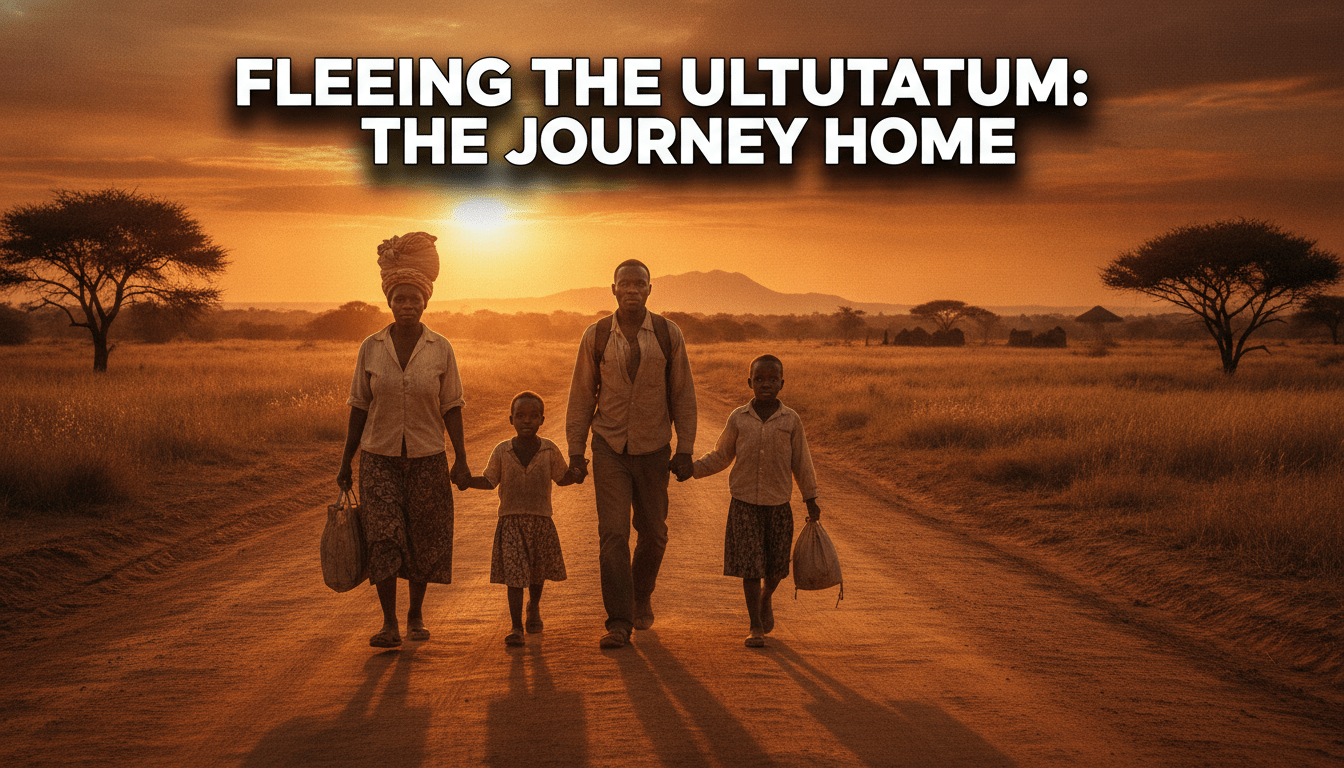
The current crisis centers around an unofficial June 30, 2026, deadline (dailymaverick.co.za). Anti-immigrant groups set this date for undocumented foreign nationals to leave South Africa (dailymaverick.co.za). This ultimatum, spread largely through social media and unofficial pamphlets, has caused widespread fear among migrant communities, including Malawians (dailymaverick.co.za). Groups like “March and March” and “Operation Dudula” are prominent in pushing for stricter immigration enforcement (georgetown.edu). These groups advocate for the removal of undocumented foreign nationals and express nationalist sentiments (georgetown.edu). They blame foreign nationals for various socio-economic problems (georgetown.edu). These movements have organized protests and, in some instances, engaged in violent acts (georgetown.edu). Recent weeks have seen homes of migrants burned (dailymaverick.co.za). On June 19, 2026, a 29-year-old Malawian man was stoned to death in Pietermaritzburg during an anti-immigration protest (dailymaverick.co.za). Reports also include the deaths of at least two Mozambicans (dailymaverick.co.za). Landlords have reportedly warned tenants to evict foreign nationals (dailymaverick.co.za). Some migrants have received direct threats to leave their homes (dailymaverick.co.za). In response, thousands of Malawian migrants, along with other African nationals, are actively fleeing South African provinces (dailymaverick.co.za). They prefer returning to the economic uncertainty in their home countries rather than facing immediate danger (dailymaverick.co.za). Many gather at temporary shelters and consulates, desperately seeking help for repatriation (dailymaverick.co.za). These circumstances underscore the extreme vulnerability of migrant workers.Government and International Reactions
The South African government has condemned the xenophobic violence (dailymaverick.co.za). It has explicitly called the June 30 deadline “fake,” stating it was designed to create panic (dailymaverick.co.za). President Cyril Ramaphosa has urged calm and acknowledged weaknesses in border control (dailymaverick.co.za). He stated that immigration enforcement is solely the government’s responsibility (dailymaverick.co.za). Authorities are increasing border controls (dailymaverick.co.za). They have deported over 100,000 people in the last two years (dailymaverick.co.za). Approximately 500,000 people have been intercepted at borders (dailymaverick.co.za). The government is also helping those who wish to return home through voluntary repatriations (dailymaverick.co.za). However, while the government condemns violence, a comprehensive, long-term strategy to address the root causes of xenophobia is still largely lacking (georgetown.edu). Efforts have often focused on law enforcement rather than promoting social cohesion or ensuring consistent protection for migrants (georgetown.edu). Critics argue that the government has been reactive, managing crises instead of proactively tackling the underlying socio-economic factors and historical legacies (georgetown.edu). The crisis has also led to diplomatic responses from several African countries (dailymaverick.co.za). Malawi, Zimbabwe, Mozambique, Ghana, Nigeria, Kenya, and the Democratic Republic of Congo are all organizing voluntary repatriation efforts for their citizens (dailymaverick.co.za). The United Nations has also voiced concern, calling for restraint and protection for vulnerable communities (dailymaverick.co.za). These international responses highlight the widespread impact of the current situation. The African workers fleeing South Africa are not just individuals; they are a part of a wider African diaspora.The Voluntary Repatriation Process
The voluntary repatriation process allows migrants to return to their home countries with assistance (georgetown.edu). International organizations like the UNHCR often work with host and home governments to facilitate this (georgetown.edu). The process starts with the individual’s free and informed decision to return, ensuring it is genuinely voluntary and safe (georgetown.edu). Assistance often includes travel documents, transportation, and financial or material support for immediate needs upon arrival (georgetown.edu). Reintegration assistance, such as help with housing or livelihoods, may also be offered (georgetown.edu). As of June 29, 2026, South African authorities stated that 15,162 Malawian nationals had been processed for deportation and repatriation (wikipedia.org). Malawi’s Department of Disaster Management Affairs estimated about 10,000 Malawians were in distress in South Africa (wikipedia.org). Earlier in June, 150 Malawians left under a voluntary repatriation effort (wikipedia.org). By June 18, 2026, 560 Malawians had left, with another 700 expected (wikipedia.org). A total of 18 buses were used (wikipedia.org). Durban alone saw 8,000 Malawian citizens depart by June 24, 2026 (wikipedia.org). By June 29, approximately 7,000 people had been transported to Limpopo for onward journeys (wikipedia.org). This massive movement shows the scale of the displacement.Conclusion: A Call for Dignity and Action
The displacement of Malawian nationals from South Africa highlights a persistent and critical issue. It is rooted in a long history of migration, economic difficulties, and a recurring pattern of xenophobic violence (dailymaverick.co.za). Economic hardships in Malawi push its citizens to seek opportunities elsewhere (newcontree.org.za). Yet, in South Africa, they often face hostility and violence (dailymaverick.co.za). This is especially true during periods of economic downturn and political unrest (dailymaverick.co.za). The current June 30 ultimatum, even though unofficial, has successfully instilled fear (dailymaverick.co.za). It has forced thousands to abandon their lives (dailymaverick.co.za). They return to uncertainty, highlighting the urgent need for a broad approach (dailymaverick.co.za). This approach must address the root causes of xenophobia. It must also ensure the protection and dignified treatment of all people, regardless of their nationality or status (dailymaverick.co.za). The resilience of African American families and other diasporic communities often provides inspiration, but dignity should not be a struggle. Only through sustained efforts can South Africa truly live up to the promise of its democratic beginnings for all who reside within its borders.About the Author
Darius Spearman is a professor of Black Studies at San Diego City College, where he has been teaching for over 20 years. He is the founder of African Elements, a media platform dedicated to providing educational resources on the history and culture of the African diaspora. Through his work, Spearman aims to empower and educate by bringing historical context to contemporary issues affecting the Black community.
