



Why Sikeston Missouri Police Custody Death Demands Unmask History
By Darius Spearman (africanelements)
Support African Elements at patreon.com/africanelements and hear recent news in a single playlist. Additionally, you can gain early access to ad-free video content.
Tragedy in Sikeston: A Cry for Accountability
On June 10, 2026, a fatal incident in Sikeston, Missouri, sparked severe public outrage across the Bootheel region (atlantadailyworld.com, ground.news). Lloyd Darniel Gilmore was a forty-four-year-old Black business owner who operated Rosie Auto Sales in the community (atlantadailyworld.com, youtube.com). Gilmore began experiencing severe mental health distress on that Tuesday morning (atlantadailyworld.com, youtube.com). Seeking a secure location, he asked his daughter to contact emergency services (atlantadailyworld.com, youtube.com). Gilmore then ran directly toward the municipal police facility, believing it offered protection during his crisis (atlantadailyworld.com, youtube.com).
Upon his arrival in the station parking lot, the interaction quickly escalated into physical force (atlantadailyworld.com, youtube.com). Officers reported that Gilmore spoke unintelligibly as he approached them (atlantadailyworld.com). Seven officers eventually became involved in attempting to control him during the thirty-minute encounter (atlantadailyworld.com, youtube.com). Responding officers deployed a Taser multiple times against Gilmore (atlantadailyworld.com, youtube.com). They also applied hobble restraints, binding his hands and feet behind his body (atlantadailyworld.com, youtube.com, youtube.com). Gilmore lost consciousness shortly afterward and died in police custody (atlantadailyworld.com, ground.news).
The death prompted immediate calls for answers from family members and local advocates (atlantadailyworld.com, kzimksim.com). The Missouri State Highway Patrol Division of Drug and Crime Control launched an independent investigation (atlantadailyworld.com, kzimksim.com). Meanwhile, a forensic autopsy was conducted alongside a second independent review ordered by the county coroner (atlantadailyworld.com). However, officials withheld the official cause of death pending complete toxicology results (atlantadailyworld.com). In July 2026, residents packed City Hall during a municipal meeting to demand full public transparency and policing reforms (atlantadailyworld.com, kzimksim.com).
The Roots of Mistrust: The 1942 Lynching of Cleo Wright
Understanding current community anger requires examining a long history of racial terror in Sikeston (atlantadailyworld.com, wikipedia.org). Distrust toward law enforcement stems from an eight-decade legacy of racial violence and state neglect (atlantadailyworld.com, worldchannel.org). On January 25, 1942, police officers arrested Cleo Wright, a twenty-six-year-old Black cotton mill worker (wikipedia.org, missouriencyclopedia.org). Wright faced accusations of attacking a white woman in her home (wikipedia.org, missouriencyclopedia.org). During the arrest, Wright allegedly resisted officers and produced a knife (wikipedia.org, missouriencyclopedia.org).
Police officers shot Wright four times and severely bludgeoned him before bringing him to jail (wikipedia.org, missouriencyclopedia.org). Officials denied Wright medical treatment due to his race as he lay suffering in his cell (wikipedia.org, missouriencyclopedia.org). Later that afternoon, a white mob broke into the city jail without police resistance (wikipedia.org, missouriencyclopedia.org). The mob seized Wright, dragged him through the streets, and lynched him publicly (wikipedia.org, missouriencyclopedia.org). This brutal murder exposed the reality of post-emancipation violence across rural southern communities.
The federal government attempted to intervene following national press coverage of the killing (wikipedia.org, usdoj.gov). The United States Department of Justice initiated its first federal prosecution of a lynching (usdoj.gov, justice.gov). Prosecutors utilized Reconstruction-era civil rights statutes codified at 18 U.S.C. §§ 51 and 52 (usdoj.gov, justice.gov). These laws are currently known as 18 U.S.C. §§ 241 and 242 (justice.gov, justice.gov). Federal officials argued that the mob conspired to deprive Wright of his constitutional right to a trial (usdoj.gov, justice.gov).
Despite federal efforts, an all-white grand jury refused to indict any members of the mob (wikipedia.org, missouriencyclopedia.org). The failure of the legal system silenced local Black residents for generations (worldchannel.org, pbs.org). Families adopted silence as a vital survival strategy to avoid further retaliation from authorities (worldchannel.org, pbs.org). That historical silence forged deep trauma while reinforcing resilience in Black families across the Bootheel region (worldchannel.org, pbs.org).
Unanswered Questions: Undraus Nabors and Denzel Taylor
The pattern of suspicious deaths and unpunished police violence continued in subsequent decades (atlantadailyworld.com, afro.com). In 1999, Undraus Nabors, a young Black man, left his home to pick up his white girlfriend (atlantadailyworld.com, afro.com). He disappeared mysteriously immediately following his departure (atlantadailyworld.com, afro.com). Months later, authorities discovered his remains hidden inside a local grain silo (atlantadailyworld.com, afro.com). The community suspected foul play, yet official investigations yielded no criminal charges (atlantadailyworld.com, afro.com). Suspicion of a law enforcement cover-up deepened historical community anger (atlantadailyworld.com, afro.com).
Two decades later, another deadly encounter shattered family trust in local police (atlantadailyworld.com, molawyersmedia.com). On April 28, 2020, Sikeston officers responded to a domestic dispute involving twenty-three-year-old Denzel Taylor (atlantadailyworld.com, molawyersmedia.com). Reports indicated Taylor had shot his father during an argument inside a residence (atlantadailyworld.com, molawyersmedia.com). When Taylor returned to the scene, three police officers confronted him in the street (atlantadailyworld.com, molawyersmedia.com). Officers instructed Taylor to display his hands as he walked toward them (atlantadailyworld.com, molawyersmedia.com).
Taylor raised only his left hand while keeping his right side turned (atlantadailyworld.com, molawyersmedia.com). Three officers immediately opened fire, discharging forty rounds within seconds (atlantadailyworld.com, molawyersmedia.com). Eighteen bullets struck Taylor, killing him instantly on the roadway (atlantadailyworld.com, molawyersmedia.com). Officers later confirmed that Taylor was completely unarmed when they shot him (atlantadailyworld.com, molawyersmedia.com). The shooting reflected long-standing political shifts in law enforcement tactics across minority neighborhoods.
Controversy surrounded the subsequent investigation into body camera evidence (atlantadailyworld.com, molawyersmedia.com). Police officers had wrapped yellow crime scene tape across the immediate area (atlantadailyworld.com, molawyersmedia.com). On the recording, a physical piece of police tape blocked the camera frame directly (atlantadailyworld.com, molawyersmedia.com). The tape obscured the view of Taylor’s unraised right hand during the crucial moment (atlantadailyworld.com, molawyersmedia.com). City officials defended the shooting, claiming officers feared for their safety (atlantadailyworld.com, molawyersmedia.com). However, the city settled an excessive force lawsuit with Taylor’s family for two million dollars in April 2024 (atlantadailyworld.com, molawyersmedia.com).
Systemic Failures: Hobble Restraints and Death Investigations
The force techniques used on Lloyd Gilmore have drawn intense national criticism from legal experts (atlantadailyworld.com, haddadandsherwin.com). Using hobble restraints, commonly known as hogtying, involves binding wrists and ankles together behind the back (haddadandsherwin.com, wikipedia.org). This maneuver forces the restrained individual into a facedown, prone position (haddadandsherwin.com, wikipedia.org). Medical studies demonstrate that prone positioning significantly impairs normal lung expansion (haddadandsherwin.com, wikipedia.org). Individuals restrained in this manner face a severe risk of death from positional asphyxia (haddadandsherwin.com, wikipedia.org).
The United States Department of Justice warned law enforcement agencies against hogtying suspects in 1995 (wikipedia.org). Multiple states have passed explicit statutory bans against prone restraint methods (king5.com, latimes.com). California enacted legislation banning police hogtying procedures in 2021 (latimes.com). Washington state instituted a comprehensive statewide prohibition on hobble restraints in 2024 (king5.com). Despite these documented safety warnings, numerous local departments continue to permit hobble devices during arrests (atlantadailyworld.com, haddadandsherwin.com).
Systemic flaws also plague the national medicolegal death investigation system (nationalacademies.org, nationalacademies.org). A landmark report released in late 2025 by the National Academies of Sciences, Engineering, and Medicine detailed these failures (nationalacademies.org, nationalacademies.org). The report concluded that custody death investigations lack uniform national standards and independent oversight (nationalacademies.org, nationalacademies.org). Investigative procedures remain fragmented across thousands of local jurisdictions (nationalacademies.org, nationalacademies.org). Consequently, official findings often fail to deliver objective determinations (nationalacademies.org, nationalacademies.org).
A primary structural problem involves the distinction between coroners and medical examiners (cookcountyil.gov, yourpathologygroup.com, washoecounty.gov). Coroners are frequently elected political officials who lack formal medical training (cookcountyil.gov, washoecounty.gov). In contrast, medical examiners are appointed physicians certified in forensic pathology (yourpathologygroup.com, washoecounty.gov). Furthermore, controversial diagnoses have historically masked excessive police force during custody deaths (kffhealthnews.org, kffhealthnews.org). Outdated concepts like “excited delirium” have been used by examiners to attribute deaths to internal factors rather than physical restraint (kffhealthnews.org, kffhealthnews.org). Major organizations, including the American Medical Association, have officially rejected and discredited the term (kffhealthnews.org, kffhealthnews.org).
- Elected administrative officials.
- No medical degree required.
- Contracts external autopsies.
- Potential political conflicts.
- Appointed medical doctors.
- Board-certified pathologists.
- Direct medical investigation.
- Standardized clinical protocols.
Mental Health Disconnect and the Retreat on Reforms
The death of Lloyd Gilmore highlights structural gaps in emergency response frameworks (atlantadailyworld.com, kffhealthnews.org). The Sikeston Department of Public Safety operates under a consolidated organizational model (sikeston.org). Officers within the department receive cross-training in law enforcement, fire protection, and emergency medical response (sikeston.org). Because the public safety facility houses medical first responders, individuals often view the building as a safe sanctuary during moments of acute crisis (atlantadailyworld.com, sikeston.org).
Sikeston established the Bootheel Area Crisis Intervention Team in 2016 to improve responses to psychiatric emergencies (mo.gov). A public safety captain serves as council chair for the regional program (mo.gov). The council conducts forty-hour training sessions to assist officers in de-escalating mental health crises (mo.gov, mo.gov). However, Sikeston lacks a co-responder model that deploys licensed mental health clinicians directly alongside officers (kffhealthnews.org). Consequently, armed law enforcement officers remain the sole responders during acute psychological distress calls (atlantadailyworld.com, kffhealthnews.org).
This tragic incident occurs alongside a national retreat from law enforcement oversight initiatives (journalists.org, chicagocrusader.com). Federal directives targeting diversity, equity, and inclusion programs have shifted national policy priorities (journalists.org, chicagocrusader.com). Civil rights advocacy groups report losing up to fifty percent of their operational funding (journalists.org, afro.com). Public health researchers studying racial profiling have similarly faced institutional pressures to alter their research topics (kffhealthnews.org, kffhealthnews.org). This funding collapse severely restricts independent monitoring of local police practices across rural communities (journalists.org, chicagocrusader.com).
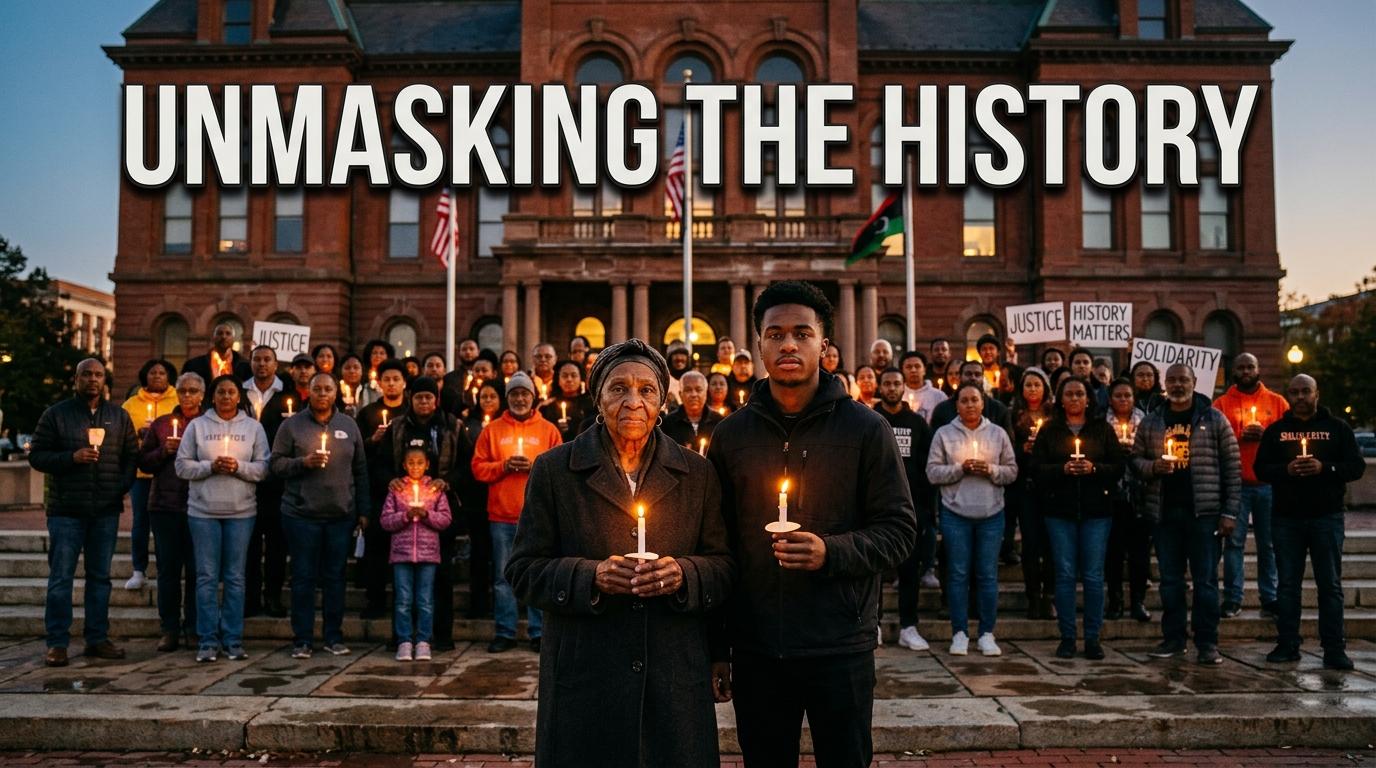
As national resources diminish, local residents must bear the primary burden of demanding administrative accountability (atlantadailyworld.com, journalists.org). Community leaders emphasize that seeking safety should never result in a death sentence for vulnerable citizens (atlantadailyworld.com, youtube.com). Relying on deep kinship networks, local organizers continue organizing rallies to dismantle generational patterns of violence (atlantadailyworld.com, kzimksim.com, worldchannel.org). The struggle in Sikeston underscores that true safety requires unyielding transparency, police reform, and independent oversight (atlantadailyworld.com, kzimksim.com).
About the Author
Darius Spearman is a professor of Black Studies at San Diego City College, where he has been teaching for over 20 years. He is the founder of African Elements, a media platform dedicated to providing educational resources on the history and culture of the African diaspora. Through his work, Spearman aims to empower and educate by bringing historical context to contemporary issues affecting the Black community.
