


How Automated License Plate Readers Track Black Drivers
By Darius Spearman (africanelements)
Support African Elements at patreon.com/africanelements and hear recent news in a single playlist. Additionally, you can gain early access to ad-free video content.
From Local Traffic Tools to High-Tech Dragnets
Automated License Plate Readers began as simple traffic monitoring tools in the United Kingdom during the late 1970s. United States police departments adopted the technology in the late 1990s to track stolen cars. Officers mounted cameras on police cruisers to scan passing cars against local stolen vehicle databases.
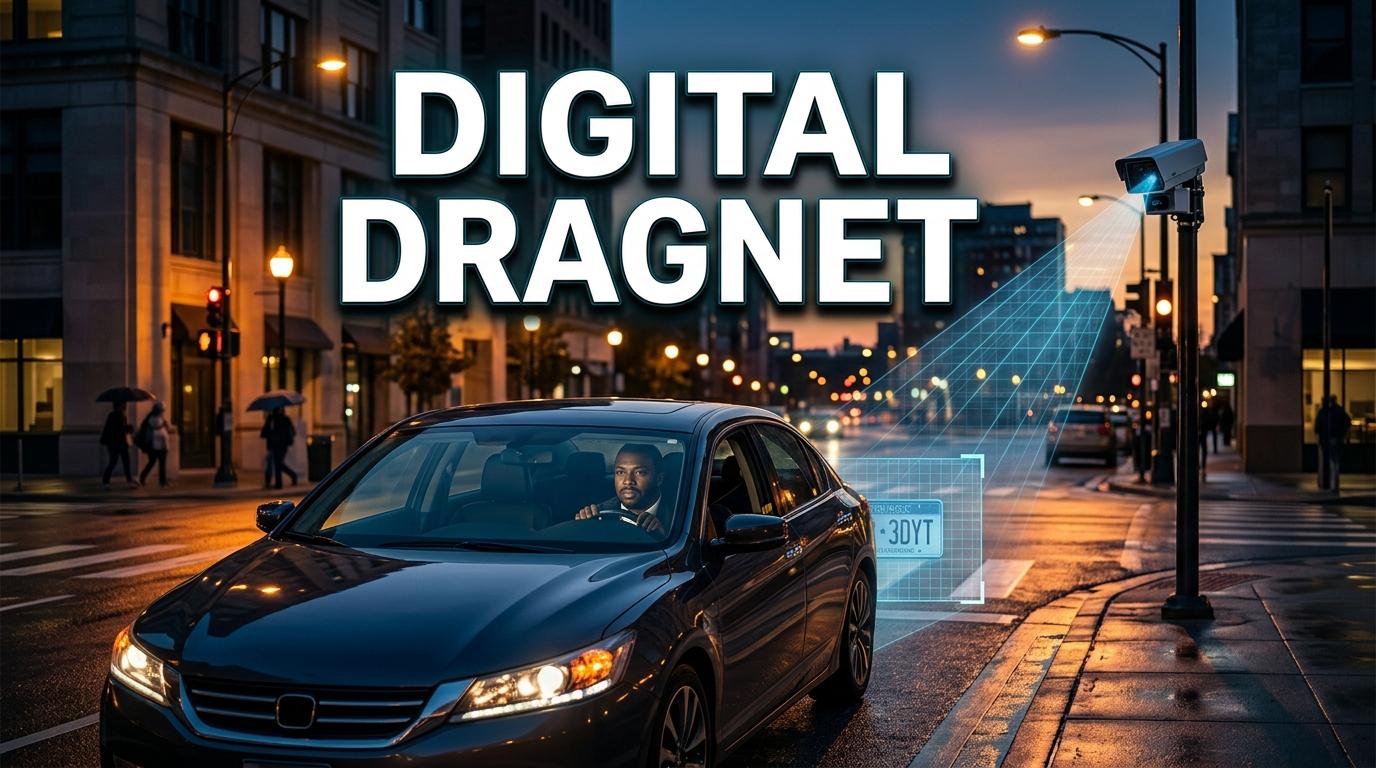
The technology changed dramatically during the 2010s. Commercial vendors like Vigilant Solutions and Flock Safety created nationwide cloud networks. These platforms do not merely read license plate numbers. Modern camera algorithms track vehicle make, model, color, bumper stickers, and precise location timestamps.
As private vendors aggregated millions of daily records, local traffic tools transformed into a nationwide dragnet (aclu.org). Civil rights groups began sounding alarms about this unchecked expansion (eff.org). They warned that mass tracking created a government surveillance dragnet operating without judicial oversight or public consent (eff.org). This evolution transformed simple police tools into powerful systems capable of monitoring everyday travel patterns across the country.
The Modern Pushback and Contract Cancellations
Across the country, communities are demanding an end to municipal contracts with private surveillance vendors. In July 2026, the Los Angeles Police Department let its contract with Flock Safety expire (sfist.com). Department leaders cited growing concerns over civil rights and private data ownership rather than budget limits (sfist.com, sfstandard.com). LAPD officials noted that third-party data sharing undermined public trust and state privacy laws.
The decision in Los Angeles reflects a rapidly growing national movement. Between August 2021 and May 2026, eighty-two municipal Flock contracts were canceled across twenty-eight states (eff.org). Thirty-nine of those cancellations occurred in the first five months of 2026 alone. Cities like El Cerrito, South Kingstown, and Binghamton voted to end vendor partnerships after strong community organizing (riaclu.org, wskg.org).
Legal defense funds are taking these challenges to court. In San Francisco Superior Court, class-action lawsuits allege that commercial vendors created illegal statewide tracking systems (classlawgroup.com, classlawgroup.com). Lawsuits reveal that local camera networks shared driver location records with out-of-state entities millions of times without user knowledge (classlawgroup.com). These legal battles highlight a broader struggle over anti-Black political strategies that prioritize high-tech policing over community investment.
Pretextual Traffic Stops and Algorithmic Bias
Opponents argue that license plate readers amplify racial profiling through pretextual traffic stops. Pretextual stops occur when police officers use minor administrative issues to detain motorists. Officers use automated alerts for expired registrations or missing front plates as an excuse to conduct intrusive searches (nclej.org, finesandfeesjusticecenter.org). These stops allow officers to investigate low-level infractions without reasonable suspicion of a violent crime.
Police departments frequently deploy stationary camera hardware in Black and brown communities. A study of camera placement in Buffalo, New York, revealed that two-thirds of monitored intersections were located in predominantly Black neighborhoods on the East Side and Lower West Side (ppgbuffalo.org). Departments rely on historical arrest data to decide where cameras belong (asanet.org). Because historical data reflects past over-policing, algorithms direct higher camera densities back into Black neighborhoods (cebcp.org).
Empirical audits confirm the troubling consequences of these feedback loops. An official evaluation in Oak Park, Illinois, examined police enforcement linked to Flock cameras (vanderbilt.edu). The audit revealed that eighty-four percent of drivers stopped during camera-triggered traffic stops were Black. Yet, Black residents made up less than twenty percent of the total local population. Policy analyses by civil rights groups demonstrate that restricting low-level pretext stops reduces racial disparities while improving overall public safety (finesandfeesjusticecenter.org, sentencingproject.org).
High-Risk Felony Stops and Machine Errors
Commercial camera networks generate significant technical misreads that put drivers in immediate physical danger. Audits conducted by privacy advocates show that automated readers misread state details on roughly one in ten scanned plates (aclu.org, aclu.org). Systemic optical errors frequently misidentify single characters, confusing numbers like seven with two or letters like H with M.
When automated readers misread license plates, innocent motorists face felony-style police stops. A felony stop is an aggressive tactical maneuver reserved for dangerous situations (aclu.org). Multiple police officers surround the vehicle with drawn firearms, shouting commands at the occupants (courthousenews.com). Drivers and young children are ordered onto the asphalt and handcuffed at gunpoint before officers verify the vehicle details.
Courts have recognized the severe danger of relying blindly on automated camera technology. In landmark legal decisions, judges ruled that officers must visually verify license plate details before executing high-risk detentions (dailyjournal.com). Despite these legal mandates, officers frequently execute gunpoint stops without checking camera images. These high-risk encounters inflict severe psychological trauma and create immediate risks of escalation (courthousenews.com). In addition, drivers face vehicle impound fees, lost work wages, and legal costs to clear inaccurate government records (finesandfeesjusticecenter.org).
Bypassing Sanctuary Laws and Constitutional Rights
Mass license plate tracking undermines local democracy and state sanctuary protections. State sanctuary laws prohibit local law enforcement agencies from using municipal resources to aid federal immigration enforcement (ca.gov, ca.gov). These laws ensure that immigrant communities can interact with local services without fear of deportation.
Vendor software networks regularly bypass these statutory guardrails through automated data sharing. System audits revealed that San Francisco Police Department Flock cameras were accessed by federal agencies over 1.6 million times in a seven-month period (classlawgroup.com, classlawgroup.com). Federal agencies, including ICE, purchase commercial access or use vendor portals to track residents across state lines without warrants (eff.org). State regulatory agencies emphasize that sending local camera data into national networks violates state sanctuary legislation (ca.gov, ca.gov).
Privacy scholars argue that persistent location tracking violates fundamental Fourth Amendment protections. Under Supreme Court precedent established in Carpenter v. United States, long-term tracking of individual movements constitutes an illegal search without a warrant (uscourts.gov, californialawreview.org). The Fourth Amendment protects citizens against arbitrary dragnet surveillance by requiring individualized suspicion (ij.org). Advocates emphasize that automated networks create permanent checkpoints across public roads without judicial oversight (eff.org). Understanding how jurisdictional boundaries operate helps communities challenge these privacy violations through arguments grounded in federalism and state power.
Grassroots Resistance and Black Digital Rights
Black-led organizations and digital justice advocates are at the forefront of the movement against surveillance expansion. Groups like the Stop LAPD Spying Coalition, MediaJustice, Oakland Privacy, and the Action Center on Race & the Economy are leading public campaigns (freedomtothriveop.com, acrecampaigns.org, knock-la.com, mediajustice.org). These organizations publish public records audits, hold community rallies, and educate local leaders on surveillance risks.
Coalitions have launched national initiatives like the “Get the Flock Out” campaign to empower local residents (eff.org, mediajustice.org). Activists use public records requests to map local camera placements and expose unauthorized data sharing (aclunorcal.org). These efforts demonstrate that grassroots pressure can defeat multi-million dollar vendor contracts and protect community safety (sfist.com).
Modern digital rights campaigns build directly upon historic struggles for Black liberation. Activists draw parallels between automated license plate readers and historical mechanisms of racial control that monitored Black mobility throughout American history. By challenging high-tech surveillance, community organizers are asserting self-determination and protecting constitutional rights. Much like grassroots Black power movements, contemporary digital rights activists insist that true community safety comes from economic investment rather than constant police oversight.
About the Author
Darius Spearman is a professor of Black Studies at San Diego City College, where he has been teaching for over 20 years. He is the founder of African Elements, a media platform dedicated to providing educational resources on the history and culture of the African diaspora. Through his work, Spearman aims to empower and educate by bringing historical context to contemporary issues affecting the Black community.
