


Mississippi Police Shooting Oversight: The Fatal Walmart Mystery
By Darius Spearman (africanelements)
Support African Elements at patreon.com/africanelements and hear recent news in a single playlist. Additionally, you can gain early access to ad-free video content.
The Fatal Walmart Encounter in Senatobia
A peaceful afternoon in Senatobia, Mississippi turned into a nightmare outside a commercial retail store. Officers converged on a vehicle in the parking lot following an alleged retail theft call. Moments later, gunfire shattered the car window and ended the life of one-year-old Kohen Wiley (theguardian.com). The infant died in his mother’s arms while sitting inside the parked family car (capitalbnews.org).
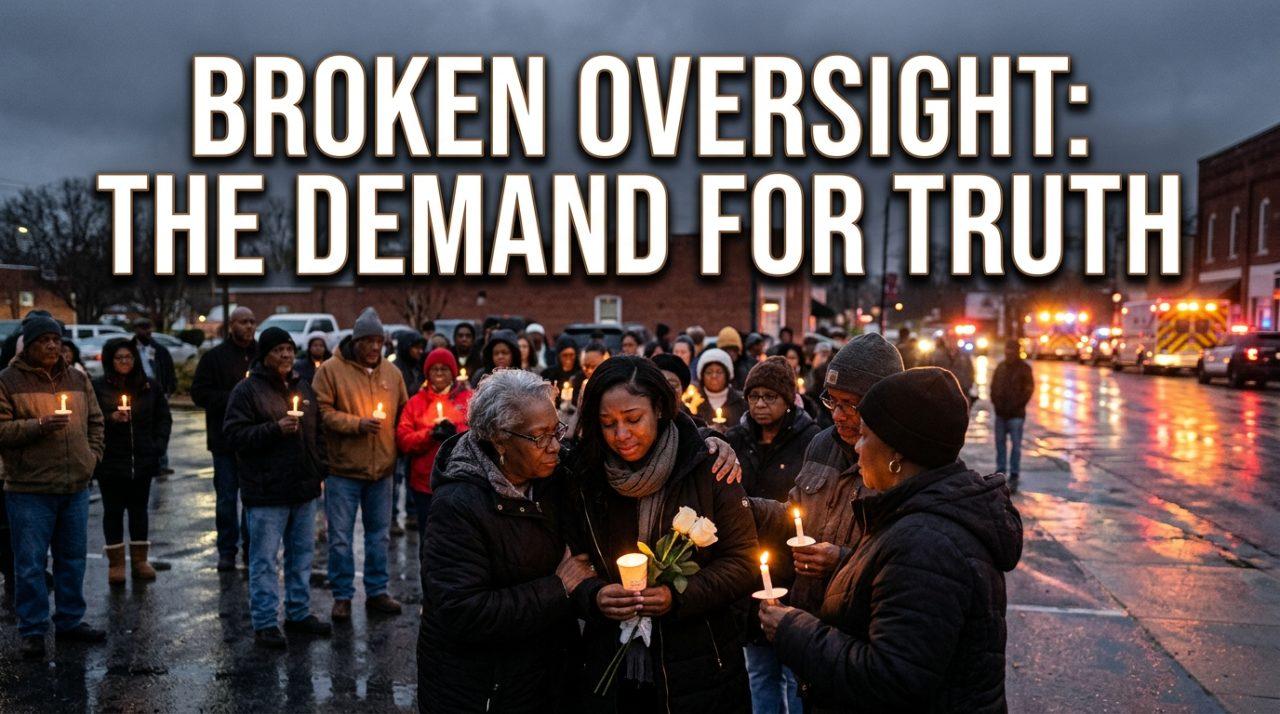
The sudden killing ignited immediate demonstrations across the rural community of eight thousand residents (bencrump.com). Community members demanded answers as local officials withheld the names of the officers involved (theguardian.com). In response, law enforcement deployed riot gear and tear gas against peaceful protesters (wsws.org). The community now demands systemic change and transparent accountability from local leadership (capitalbnews.org).
The tragedy highlights the persistent vulnerability that Black households face during routine interactions with law enforcement. Across generations, protecting their children from state violence has remained an enduring challenge (prisonlegalnews.org). The loss of baby Kohen has renewed grief across the state of Mississippi (bencrump.com).
A Disputed Shoplifting Call Turns Deadly
The fatal chain of events began with an accusation concerning a single box of diapers (theguardian.com). Store personnel claimed that shoplifting occurred, prompting a joint response from city police and county deputies (bencrump.com). However, civil rights attorneys assert that store receipts verify the infant supplies were paid for lawfully (bencrump.com).
Kohen’s mother, Vellesiya Wiley, sat in the passenger seat beside an adult female friend who drove (capitalbnews.org). Official statements from state investigators claimed the car drove toward an officer (theguardian.com). In contrast, family attorneys stated that the vehicle was backing away to exit the lot (bencrump.com). An officer opened fire into the moving car, striking both the driver and the child (theguardian.com, capitalbnews.org).
The adult driver suffered serious gunshot wounds to her arm and thigh during the shooting (theguardian.com). In spite of her injuries, she drove the bleeding infant directly to a local clinic (capitalbnews.org). Medical personnel transferred the baby to a regional hospital, where doctors pronounced the toddler dead (theguardian.com). The mother was not charged with any crime following the incident (capitalbnews.org).
Source: Independent Tracking Data on Police Encounters (mappingpoliceviolence.us).
Deep Roots: From Slave Patrols to Jim Crow
Modern law enforcement structures in Mississippi trace their origins to antebellum slave patrols (prisonlegalnews.org). These armed groups maintained white supremacy through violent surveillance and physical control of Black bodies (prisonlegalnews.org). Following the Civil War, state leaders established Black Codes to rebuild forced labor systems (wikipedia.org). County sheriffs arrested emancipated citizens under vague vagrancy statutes to populate convict lease camps (prisonlegalnews.org, wikipedia.org).
These practices transitioned into Jim Crow policing throughout the twentieth century (prisonlegalnews.org). Municipal officers strictly enforced racial segregation, sundown curfews, and social deference (prisonlegalnews.org). From 1956 until 1977, the Mississippi State Sovereignty Commission spied on civil rights workers (mississippifreepress.org, mississippifreepress.org). That state agency partnered directly with local police departments to suppress Black activism (mississippifreepress.org).
These historical systems established a deep culture of unchecked departmental authority. Communities endured decades of intimidation without any independent avenue for legal redress (prisonlegalnews.org). Historical traditions of aggressive enforcement continue to influence rural policing today (prisonlegalnews.org, mississippifreepress.org). The shooting of Kohen Wiley reflects this unresolved past (bencrump.com).
Modern Impunity and Small Town Realities
Rural sheriff departments and small-town police forces often operate without civilian oversight boards (mississippifreepress.org). Consequently, officers frequently face few internal consequences when misconduct occurs (prisonlegalnews.org, mississippifreepress.org). This lack of accountability created severe abuse in neighboring Rankin County (mississippifreepress.org). In that case, six officers tortured two Black men inside a private home (apnews.com, mississippifreepress.org).
Federal judges sentenced those Rankin County officers to decades in federal prison (apnews.com). Investigators discovered the rogue unit had operated without departmental supervision for nearly twenty years (mississippifreepress.org). Meanwhile, racial tensions had already reached a boiling point inside Senatobia (theguardian.com, theguardian.com). In 2023, local officers arrested a ten-year-old Black child for public urination (theguardian.com, theguardian.com).
The city court sentenced that young child to three months of criminal probation (theguardian.com). Furthermore, officers previously dragged a disabled Black motorist from her car in the same parking lot (theguardian.com). Such incidents reinforced public perceptions that local police view Black citizens with suspicion (theguardian.com, theguardian.com). The community now demands an end to this cycle of misconduct (bencrump.com).
Source: Legal analysis of Miss. Code Ann. § 25-61-12 and grand jury procedures (capitalbnews.org, cdispatch.com).
The Statutory Wall Concealing Vital Evidence
Following the shooting of baby Kohen, officials refused to release body camera recordings (theguardian.com). Authorities cited the investigative exemption under the Mississippi Public Records Act (cdispatch.com). This specific statute allows agencies to withhold files while an inquiry remains open (cdispatch.com). Consequently, grieving families must wait months or years to learn basic facts (capitalbnews.org, bencrump.com).
State agencies maintain that withholding video preserves the integrity of pending criminal proceedings (capitalbnews.org, cdispatch.com). However, justice advocates argue this secrecy primarily shields officers from public accountability (capitalbnews.org, bencrump.com). Without video, the public must rely entirely on statements released by law enforcement (capitalbnews.org). This dynamic creates widespread distrust between Black residents and local authorities (bencrump.com).
Community resilience has provided strength in the face of institutional silence and delays (bencrump.com). Longstanding traditions of Black family resilience help communities organize against legal hurdles (bencrump.com). Families continue to gather on street corners to demand the immediate release of unedited footage (bencrump.com). They refuse to let official silence erase the memory of baby Kohen (bencrump.com).
Grand Jury Secrecy and the No-Bill Trap
Once state investigators conclude their inquiries, files pass to local prosecutors (cdispatch.com). Prosecutors then present the evidence behind closed doors to a county grand jury (cdispatch.com). Mississippi law strictly forbids observers, media, or family members from entering the grand jury room (cdispatch.com). As a result, the public cannot observe how prosecutors present the facts (cdispatch.com).
Grand juries frequently return a disposition known as a no-bill in police shootings (capitalbnews.org, cdispatch.com). A no-bill means the grand jury found insufficient probable cause to issue an indictment (cdispatch.com). In 2023, an officer in Indianola shot eleven-year-old Aderrien Murry in the chest (capitalbnews.org). The grand jury returned a no-bill, and the court permanently sealed all video evidence (capitalbnews.org).
Because proceedings remain secret, citizens cannot tell if prosecutors pursued charges with vigor (cdispatch.com). This closed system allows local officials to avoid tough questions regarding deadly force (capitalbnews.org, cdispatch.com). Civil rights advocates argue that secret panels function as an administrative shield for law enforcement (capitalbnews.org). Community organizers insist that independent special prosecutors must replace local district attorneys (bencrump.com).
Prohibits firing at moving cars unless occupants use firearms.
Officers facing criminal charges nationwide following fatal shootings.
Source: Police Executive Research Forum (PERF) Guidelines and National Police Research (police1.com, mappingpoliceviolence.us).
Vehicle Policies Under Intense Scrutiny
National policing experts strongly caution against discharging firearms at moving automobiles (police1.com). The Police Executive Research Forum established clear guidelines regarding moving vehicles (police1.com). Their national policy strictly prohibits officers from firing unless an occupant uses deadly weapon fire (police1.com). Bullets rarely disable a moving vehicle and often cause the driver to lose control (police1.com).
Furthermore, rounds entering a vehicle frequently ricochet or strike innocent passengers (police1.com). National guidelines instruct officers to step out of the path of a moving automobile (police1.com). Despite these clear warnings, Senatobia lacked a strict policy prohibiting vehicle fire (theguardian.com, police1.com). The department relied on broad subjective guidelines regarding perceived threats (police1.com).
Advocates argue that this missing regulation directly caused the death of baby Kohen (theguardian.com, bencrump.com). If the officer had moved away instead of firing, the child would be alive (bencrump.com). Community members are demanding immediate municipal bans on shooting into moving cars (bencrump.com). Clear policies save lives and protect young children from reckless force (police1.com).
Leadership Turmoil and Community Demands
Public outrage intensified when investigative journalists exposed private text messages from the police chief (theguardian.com, theguardian.com). The reporting revealed that Chief Harold Vanderford used anti-Black racial slurs repeatedly (theguardian.com, theguardian.com). In September, the Senatobia Board of Aldermen voted unanimously to fire the chief (theguardian.com, theguardian.com). However, residents insist that firing one official does not solve structural departmental problems (bencrump.com).
The city of Senatobia is roughly forty percent Black, yet executive power remains predominantly white (theguardian.com, capitalbnews.org). In fact, the municipality has elected only three Black aldermen since 1860 (theguardian.com). Civil rights attorneys have petitioned the United States Department of Justice for a pattern-and-practice probe (bencrump.com). Organizers also point toward broader statewide conversations surrounding systemic reparations and structural accountability (capitalbnews.org, bencrump.com).
True justice requires establishing independent civilian oversight boards with full subpoena powers (bencrump.com). Communities must have legal authority to inspect internal disciplinary records and body camera footage (bencrump.com). Until Mississippi dismantles statutory secrecy, local police departments will continue operating without independent accountability (capitalbnews.org, cdispatch.com). The family of Kohen Wiley continues their fight to ensure no other child suffers this fate (bencrump.com).
About the Author
Darius Spearman is a professor of Black Studies at San Diego City College, where he has been teaching for over 20 years. He is the founder of African Elements, a media platform dedicated to providing educational resources on the history and culture of the African diaspora. Through his work, Spearman aims to empower and educate by bringing historical context to contemporary issues affecting the Black community.
