

Mississippi Hanging Death: Uncovering the Tasia Fortune Case
By Darius Spearman (africanelements)
Support African Elements at patreon.com/africanelements and hear recent news in a single playlist. Additionally, you can gain early access to ad-free video content.
A Tragic Discovery in Jackson
On August 3, 2026, residents in Jackson, Mississippi discovered a horrifying scene behind an abandoned house (facebook.com). Tasia Fortune, a twenty-nine-year-old Black mother of four, was found hanging from a tree (facebook.com, mississippifreepress.org). Her sudden death sent immediate shockwaves through the neighborhood and across social media platforms (facebook.com). Many community members expressed immediate grief, deep fear, and intense anger (facebook.com).
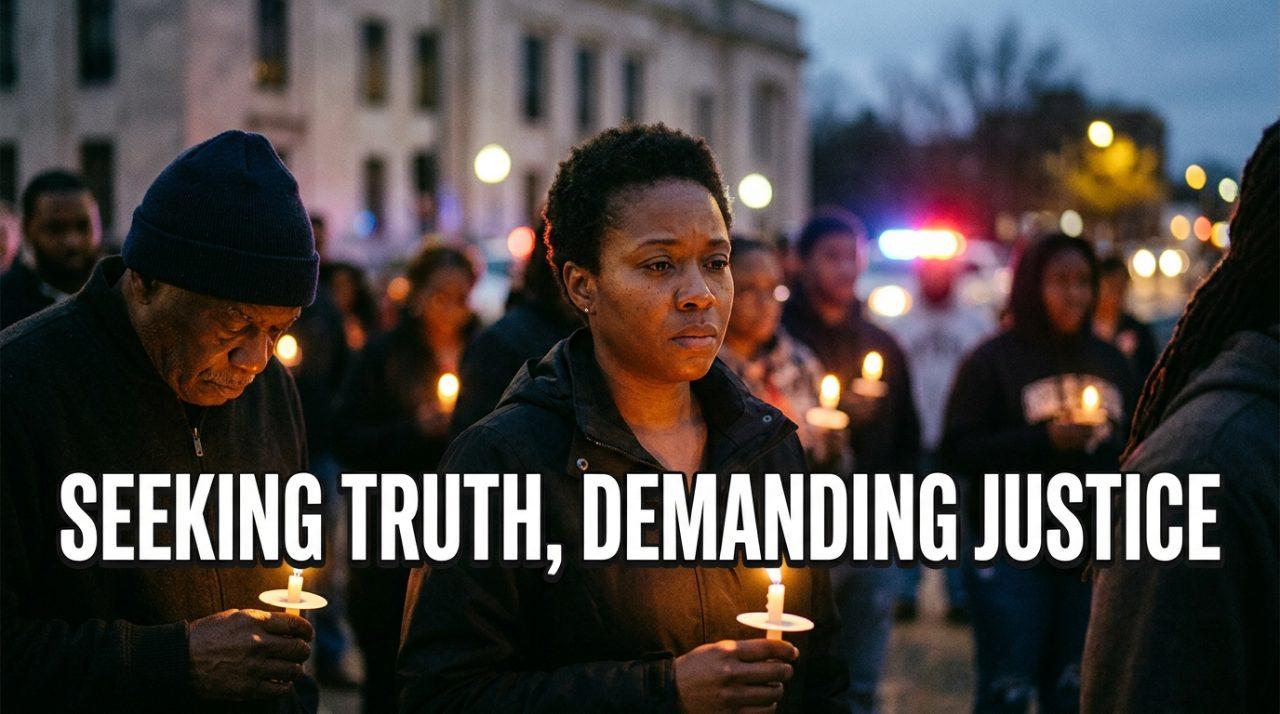
For more than five weeks, local law enforcement labeled the tragedy only as an active death investigation (facebook.com, mississippifreepress.org). Officers did not publicly confirm whether investigators suspected foul play (mississippifreepress.org). Christy Spivey, the mother of Tasia Fortune, released emotional public statements describing her agony (facebook.com). She stated that detectives provided few details during those painful weeks (facebook.com, facebook.com). Local organizers quickly mobilized to demand answers, transparency, and justice for the grieving family (facebook.com).
From Silence to a Homicide Arrest
The trajectory of the investigation shifted on September 10, 2026 (mississippifreepress.org). The Mississippi State Medical Examiner officially ruled the manner of death as a homicide (mississippifreepress.org). Jackson police moved swiftly once forensic examiners confirmed violent foul play (facebook.com). Within twenty-four hours, authorities arrested fifty-one-year-old Jarques Ratliff on Capitol Street (facebook.com, mississippifreepress.org). Prosecutors formally charged Ratliff with murder in connection to the death (mississippifreepress.org).
Jackson Police Chief RaShall Brackney explained that investigators conducted hundreds of investigative hours before the arrest (mississippifreepress.org). Detectives interviewed fifteen individuals while holding sealed warrants for the suspect (mississippifreepress.org). Brackney stated that Ratliff had an existing acquaintance with Fortune before her death (mississippifreepress.org). The police chief emphasized that the homicide probe remains open and active (mississippifreepress.org). Investigators expect to make additional arrests as technical forensic testing continues (facebook.com, mississippifreepress.org).
Cause Versus Manner of Death
The delay in charging a suspect highlights the distinct scientific difference between medical findings (dummies.com, washoecounty.gov). The medical cause of death explains the biological trauma that ended a life (texasautopsyservices.com). Examples include blunt force injuries, chemical poisoning, or mechanical asphyxiation (dummies.com, washoecounty.gov). The cause describes the physical events occurring within the human body (texasautopsyservices.com). Medical examiners must gather microscopic and toxicology samples before confirming those physiological details (washoecounty.gov).
Conversely, the manner of death explains the legal context of the fatality (dummies.com, texasautopsyservices.com). Forensic pathologists utilize five standard classifications: natural, accidental, suicide, homicide, and undetermined (dummies.com). The manner answers how the fatal injury occurred in the real world (texasautopsyservices.com, washoecounty.gov). Without an official determination of homicide, police cannot easily execute murder warrants (mississippifreepress.org, texasautopsyservices.com). That necessary forensic work often creates excruciating delays for grieving family members (facebook.com, mississippifreepress.org).
The Heavy Shadow of Mississippi History
To understand the public reaction in Jackson, observers must examine Southern historical terror (eji.org, eji.org). In the American Deep South, a hanging body immediately evokes racial violence (eji.org). Following the Civil War, white supremacists used public hangings to enforce systemic domination (eji.org, eji.org). White mobs weaponized violence as newly freed people resisted involuntary servitude after emancipation across rural plantations (eji.org, eji.org).
Mississippi recorded more racial terror lynchings than any other American state (eji.org, eji.org). Historians at the Equal Justice Initiative document at least 654 lynchings in Mississippi (eji.org). NAACP historical archives confirm nearly six hundred documented mob murders in the state (naacp.org, naacp.org). These killings were public spectacles staged to terrify entire Black communities (eji.org, eji.org). Consequently, any hanging in Mississippi carries deep historical trauma and immediate suspicion (theguardian.com, theguardian.com).
Coroner Juries and Institutional Cover-Ups
Modern distrust of death rulings has deep roots in historic municipal practices (eji.org, wikipedia.org). In the post-Reconstruction South, local coroners were elected officials without medical backgrounds (wikipedia.org). Coroners frequently impaneled all-white coroner juries consisting of local male residents (eji.org, wikipedia.org). These juries investigated mysterious deaths and violent fatalities in their rural jurisdictions (wikipedia.org). White jurors routinely shielded perpetrators who committed racial lynchings (eji.org, eji.org).
Coroner inquests regularly ruled that lynching victims died at the hands of unknown parties (eji.org, eji.org). In many cases, coroners even declared blatant murders to be suicides (eji.org, eji.org). Ida B. Wells-Barnett exposed these corrupt legal proceedings in groundbreaking investigative journalism (wikipedia.org). Born in Holly Springs, Mississippi, Wells exposed how officials protected murderers (wikipedia.org). Her reporting in pamphlets like The Red Record demonstrated that Southern law enforcement routinely tolerated racial terror (eji.org, wikipedia.org).
Unanswered Questions in Modern Hangings
The tragedy in Jackson also stirred painful memories of recent controversial deaths (theguardian.com, theguardian.com). In 2000, seventeen-year-old Raynard Johnson was found hanging from a tree in Kokomo, Mississippi (theguardian.com, theguardian.com). Civil rights organizations questioned early police claims that the teenager took his own life (theguardian.com). Community members suspected Johnson was murdered for dating young white women (theguardian.com). Although state and federal investigations closed the case as suicide, suspicion persisted (theguardian.com, theguardian.com).
Fifteen years later, fifty-four-year-old Otis Byrd was found hanging in Claiborne County (cbsnews.com, cbsnews.com). Federal authorities and state investigators initiated a joint civil rights inquiry (cbsnews.com, justice.gov). Investigators ultimately determined Byrd died by suicide, but community organizers expressed deep skepticism (cbsnews.com, theguardian.com). In these difficult moments, communities lean on Black family resilience to confront administrative silence (mississippifreepress.org, theguardian.com). Many Black Mississippians remain wary whenever authorities investigate suspicious hangings (mississippifreepress.org, cbsnews.com).
The Erasure of Vulnerable Black Women
The public outcry surrounding Tasia Fortune also addresses gender-based vulnerability (facebook.com, cbc.ca). Sociological studies prove that Black women experience homicide at disproportionate rates (cbc.ca, now.org). Federal statistics confirm Black women face murder rates nearly three times higher than white women (now.org, american.edu). Despite these elevated risks, crimes against women of color receive less national attention (cbc.ca, mije.org).
Journalist Gwen Ifill named this media disparity Missing White Woman Syndrome in 2004 (mije.org, unk.edu). News networks often prioritize investigations involving young, affluent white women (mije.org, unh.edu). Conversely, missing or murdered Black women often encounter minimal press interest (cbc.ca, mije.org). Mobilization from local (facebook.com, mississippifreepress.org). Community members refused to let officials ignore Fortune’s tragic death (facebook.com, facebook.com).
The Reality of Homicide Clearance Rates
The sluggish initial pace of the Jackson case connects to national clearance patterns (reason.org, fbi.gov). In criminology, a clearance rate measures the proportion of crimes marked as solved (reason.org). Police clear a murder through physical arrest or exceptional closure methods (reason.org, fbi.gov). Exceptional clearance occurs when investigators identify a killer who cannot be arrested (reason.org, fbi.gov). Crucially, a clearance does not require a formal court conviction (reason.org).
Across the United States, homicides involving Black victims are solved at significantly lower rates (reason.org). Studies demonstrate a ten to fifteen percent gap in clearance outcomes (reason.org). Many urban police departments lack adequate resources or struggle with profound community distrust (reason.org). Activists note that addressing intersectional oppression requires equal investigative diligence for every victim (cbc.ca, now.org). Public pressure often determines whether cases receive proper forensic resources (mississippifreepress.org, reason.org).
Sustaining the Movement for Accountability
Jackson Police Chief RaShall Brackney explicitly acknowledged the historical burden carried by her department (mississippifreepress.org). She stated that officials understand the desire for answers given Mississippi’s painful past (mississippifreepress.org). Brackney affirmed that investigators view this homicide through a serious historical lens (mississippifreepress.org). However, she insisted that police must ensure statements are supported by physical evidence (mississippifreepress.org). The arrest of Jarques Ratliff brought initial relief to the Jackson community (facebook.com, mississippifreepress.org).
Nevertheless, community leaders and civil rights activists insist their advocacy will not stop (facebook.com, facebook.com). Organizers demand complete transparency regarding possible co-conspirators and personal motives (mississippifreepress.org, facebook.com). Activists argue that true accountability requires protecting vulnerable women long before tragedies occur (cbc.ca, now.org). Tasia Fortune was a mother, daughter, and neighbor whose life had immense value (facebook.com, mississippifreepress.org). Jackson residents will continue organizing until the legal system delivers complete justice (facebook.com, facebook.com).
About the Author
Darius Spearman is a professor of Black Studies at San Diego City College, where he has been teaching for over 20 years. He is the founder of African Elements, a media platform dedicated to providing educational resources on the history and culture of the African diaspora. Through his work, Spearman aims to empower and educate by bringing historical context to contemporary issues affecting the Black community.
