



Death of Tasia Fortune: The Dark History Behind the Arrests
By Darius Spearman (africanelements)
Support African Elements at patreon.com/africanelements and hear recent news in a single playlist. Additionally, you can gain early access to ad-free video content.
A Grim Discovery on Road of Remembrance
On August 3, community members in west Jackson stumbled upon a horrific scene that immediately shook the neighborhood. Behind an overgrown, abandoned house on the 500 block of Road of Remembrance, the body of twenty-nine-year-old Tasia Fortune was found suspended from a tree (cbsnews.com, 10tv.com). Fortune was a young Black mother of four children, originally from Kentucky, who had recently experienced periods of homelessness (10tv.com, localmemphis.com). The shocking sight instantly revived historical anxieties across Mississippi and stirred deep anguish among local residents (the-independent.com, chicagocrusader.com).
Because of the tragic nature of the scene and the state of Mississippi’s painful legacy of racial violence, public concern spread swiftly (capitalbnews.org, chicagocrusader.com). Many community members feared that an extrajudicial killing or hate crime had occurred in their city (the-independent.com). Jackson Police Chief RaShall Brackney urged the public to remain patient while forensic investigators conducted their work (cbsnews.com, the-independent.com). Following detailed examinations, the Mississippi State Medical Examiner officially ruled Fortune’s death a homicide, confirming that her life was violently taken (cbsnews.com, localmemphis.com).
The Arrests of Earnest Lloyd Jr. and Jarques Ratliff
The homicide investigation moved forward in mid-September when Jackson police arrested fifty-one-year-old Jarques “Joc” Ratliff and charged him with murder (cbsnews.com, the-independent.com). Chief Brackney confirmed to the public that Ratliff shared a previous association with Fortune (cbsnews.com). Ratliff entered a plea of not guilty at his court hearing, and a judge ordered him held without bond as the case developed (cbsnews.com, wpxi.com).
Shortly thereafter, investigators took a second suspect into custody (cbsnews.com). Authorities arrested twenty-five-year-old Earnest Lloyd Jr. and formally charged him with murder in Fortune’s death (cbsnews.com, localmemphis.com). According to court testimony from investigators, witnesses reported that Lloyd engaged in a physical altercation with Fortune shortly before she died (cbsnews.com, wpxi.com). Police allege that Lloyd and co-defendants used a black electrical cord to hang Fortune behind the vacant property (wpxi.com, localmemphis.com). A judge denied bond to Lloyd during his initial court appearance (cbsnews.com, localmemphis.com). Police also issued an arrest warrant for a third suspect, handing the warrant to the United States Marshals Service to assist in the manhunt (cbsnews.com, wpxi.com).
The Deep Shadow of Mississippi Lynchings
To understand why the community reacted with immediate terror to the sight of Fortune’s body, one must confront the soil of Mississippi (capitalbnews.org, chicagocrusader.com). For generations, Mississippi stood as the primary center of racial violence against Black Americans (capitalbnews.org). Historical documentation by the Equal Justice Initiative reveals that white mobs committed at least 654 racial terror lynchings in Mississippi between 1877 and 1950 (capitalbnews.org, pbs.org). Furthermore, NAACP historical archives confirmed that the state recorded 581 lynchings between 1882 and 1968, the highest count of any American state (washingtoninformer.com, chicagocrusader.com).
During the Jim Crow era, white supremacists turned public killings into deliberate spectacles designed to terrorize Black communities (capitalbnews.org). Hangings were used to silence political ambition, suppress economic autonomy, and maintain racial subjugation (capitalbnews.org). The imagery of human bodies hanging from trees became etched into the cultural memory of Black America, immortalized in the haunting verses of the song “Strange Fruit” (capitalbnews.org, pbs.org). When a Black body is discovered suspended from a tree today, that collective memory reopens old wounds before any official police report is published (capitalbnews.org).
Historical Skepticism and Suspicious Hangings
The intense suspicion surrounding Fortune’s case stems directly from a long history of official cover-ups across the American South (capitalbnews.org, pbs.org). Historically, coroners and local sheriffs routinely dismissed suspicious hanging deaths of Black individuals as suicides (capitalbnews.org, pbs.org). By quickly labeling violent deaths as self-inflicted, authorities avoided launching real investigations and protected violent perpetrators from prosecution (capitalbnews.org, pbs.org). This widespread institutional neglect shattered trust between Black citizens and the southern legal system (capitalbnews.org).
That inherited distrust remains vibrant because questionable rulings still occur in contemporary times (capitalbnews.org, pbs.org). Civil rights attorneys and grassroots advocates frequently point to instances where local law enforcement ruled hangings as suicides without securing the crime scenes (capitalbnews.org, pbs.org). Detectives often failed to collect footprint evidence, tire marks, or third-party DNA from tree branches (capitalbnews.org). Consequently, when local leaders demand federal intervention, they are responding to decades of documented institutional failure in the pursuit of racial justice (capitalbnews.org, chicagocrusader.com).
The Investigations of JULIAN and Modern Civil Rights
Modern advocacy groups have organized systematically to challenge these suspicious findings (capitalbnews.org, pbs.org). The civil rights legal organization JULIAN, founded by attorney Jill Collen Jefferson, has stood at the center of this battle (capitalbnews.org, pbs.org). The organization released a comprehensive investigative study titled A Crimson Record, which took its inspiration from Ida B. Wells and her famous 1895 anti-lynching publication A Red Record (capitalbnews.org). The report documented more than seventy suspected modern-day hangings across seven southern states between 2000 and 2025 (capitalbnews.org, pbs.org).
More than twenty of those documented cases took place in Mississippi alone (capitalbnews.org). In numerous instances, local authorities closed the files in less than twenty-four hours, concluding the deceased individuals took their own lives (capitalbnews.org). Families often discovered that investigators took no fingerprints from surrounding fences and ignored signs of struggle (capitalbnews.org). This ongoing history of dismissive policing explains why civil rights leaders mobilized so quickly when Fortune’s body was recovered in Jackson (capitalbnews.org, chicagocrusader.com).
The Emmett Till Antilynching Act and Federal Law
Following intense national outcry over suspicious deaths, national leaders demanded federal intervention (washingtoninformer.com, capitalbnews.org). In September, nearly sixty members of Congress, led by Representative Ayanna Pressley, formally petitioned the Department of Justice (washingtoninformer.com, capitalbnews.org). The lawmakers called upon federal prosecutors to enforce the Emmett Till Antilynching Act of 2022 to investigate outdoor hangings of Black people across the country (washingtoninformer.com, chicagocrusader.com). President Joe Biden signed that landmark bill into law, establishing a penalty of up to thirty years in prison for federal lynching offenses (washingtoninformer.com, capitalbnews.org).
However, the statute carries strict legal parameters that distinguish it from community speech (washingtoninformer.com). Codified under Title 18, Section 249 of the United States Code, the law functions strictly as a hate crime enhancement (washingtoninformer.com). Federal prosecutors must demonstrate that the perpetrators targeted their victim because of race, religion, or national origin (washingtoninformer.com). Because Jackson police arrested Black acquaintances of Fortune—Lloyd and Ratliff—the legal elements of a federal hate crime do not apply (cbsnews.com). Instead, the legal charges remain state-level murder stemming from an interpersonal dispute (cbsnews.com, wpxi.com).
Double Jeopardy: Housing Insecurity and Violence Against Black Women
While historical fears initially guided the public discussion, the specific facts of Fortune’s murder reveal an urgent modern crisis (washingtoninformer.com, capitalbnews.org). That crisis involves the severe physical vulnerability confronting unhoused Black women in neglected neighborhoods (washingtoninformer.com, capitalbnews.org). Studies from public health organizations and the Centers for Disease Control and Prevention confirm that Black women face homicide rates nearly three times higher than white women (washingtoninformer.com, capitalbnews.org). Furthermore, research shows that over forty percent of Black women experience physical violence from an acquaintance or partner during their lives (washingtoninformer.com, capitalbnews.org).
Fortune struggled with unstable housing and lived in a section of west Jackson that has experienced decades of economic justice challenges and abandoned infrastructure (10tv.com, localmemphis.com). Vacant properties and overgrown yards frequently become dangerous spaces where vulnerable individuals face predatory behavior away from help (10tv.com). Activists have long pointed out that society regularly overlooks the acute dangers that impact unhoused women (capitalbnews.org). This persistent neglect reflects the historical patterns of intersectional oppression that continue to imperil marginalized Black women across urban America.
Remembering Tasia Fortune Beyond the Headlines
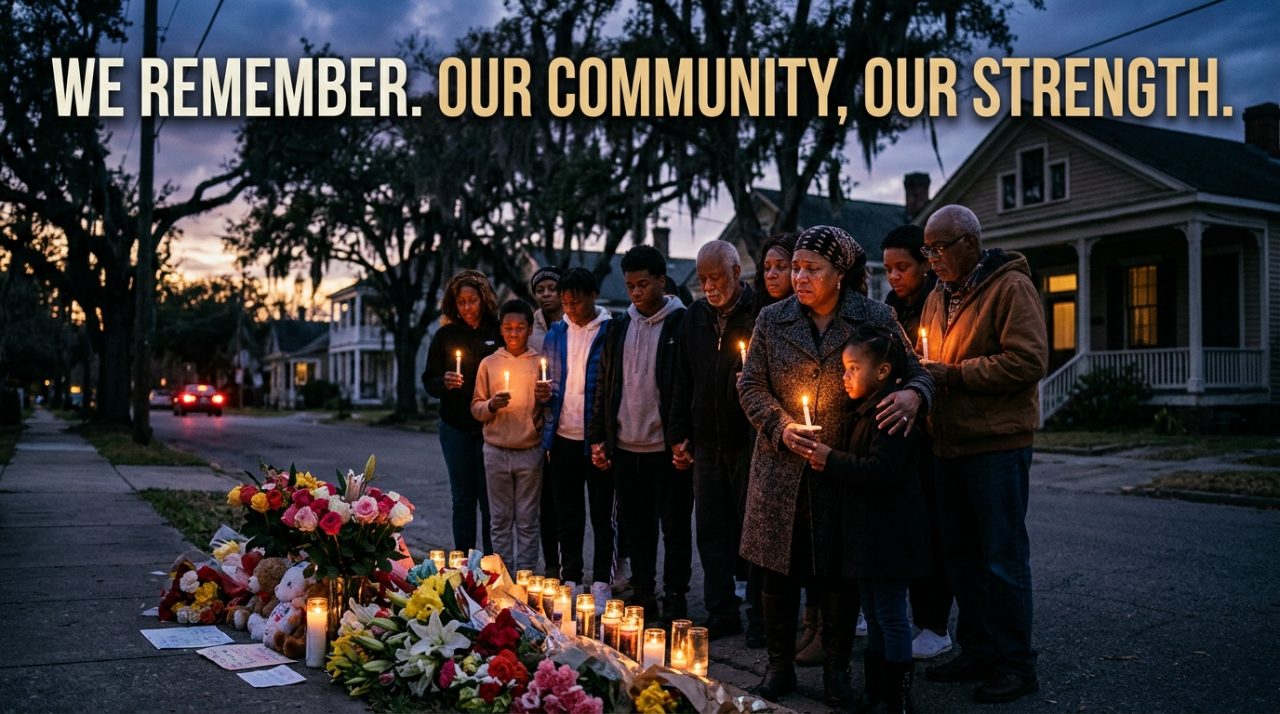
Behind the national headlines and legal technicalities stands a grieving family coping with an unbearable loss (10tv.com, localmemphis.com). Christy Spivey, Fortune’s mother, expressed profound sorrow while speaking about her daughter’s life and personal struggles (10tv.com, localmemphis.com). She noted that her daughter battled housing instability but remained a cherished mother and daughter (10tv.com, localmemphis.com). Spivey remarked to reporters that her family is not the only household suffering from urban violence, though her daughter can never return (10tv.com, localmemphis.com).
The community continues to organize memorial gatherings and demand comprehensive safety measures throughout Jackson (capitalbnews.org, chicagocrusader.com). Residents insist that public officials must demolish abandoned properties and protect vulnerable citizens from interpersonal abuse (capitalbnews.org). The tragic murder of Tasia Fortune illustrates how past trauma shapes immediate reactions to contemporary violence (capitalbnews.org). Even when the perpetrators are acquaintances rather than a white supremacist mob, the image of a Black woman hanging from a Mississippi tree inevitably awakens a painful national memory that refuses to sleep (capitalbnews.org, chicagocrusader.com).
About the Author
Darius Spearman is a professor of Black Studies at San Diego City College, where he has been teaching for over 20 years. He is the founder of African Elements, a media platform dedicated to providing educational resources on the history and culture of the African diaspora. Through his work, Spearman aims to empower and educate by bringing historical context to contemporary issues affecting the Black community.
