

Why Mali Violence Surges Despite Russia Africa Corps Deal
By Darius Spearman (africanelements)
Support African Elements at patreon.com/africanelements and hear recent news in a single playlist. Additionally, you can gain early access to ad-free video content.
A Deadly Rebranding in the Sahel
Amnesty International has sounded an urgent alarm about ongoing atrocities in Mali. Russian military contractors operating alongside the Malian armed forces continue to commit severe human rights violations against innocent civilians (amnesty.org, amnesty.org). These abuses persist despite the Kremlin rebranding the infamous Wagner Group as the state-controlled Africa Corps (amnesty.org).
For Black communities worldwide observing developments across Africa, this crisis resonates deeply. Sovereignty and self-determination remain vital principles for continental liberation. Yet the substitution of one foreign armed force for another has not produced safety for ordinary people. Instead, rural populations in central and northern Mali bear the brunt of severe military operations (amnesty.org, amnestyusa.org).
Civilian Fatalities in Mali Military Sweeps (2024)
The 2012 Uprising and International Intervention
The contemporary conflict in Mali began over a decade ago. In early 2012, secular Tuareg rebels launched an insurgency under the banner of the National Movement for the Liberation of Azawad. These fighters had recently returned from Libya after the fall of Muammar Gaddafi. They brought sophisticated desert warfare tactics and heavy stockpiles of military weaponry (acleddata.com).
Hardline Islamist factions quickly hijacked the separatist uprising. Extremist groups took control of northern cities like Gao, Kidal, and Timbuktu. These militias imposed strict interpretations of religious law upon the local populations. When insurgents advanced toward the southern capital of Bamako in 2013, the Malian government appealed to France for military assistance (acleddata.com, thedefensepost.com).
France launched Operation Serval, which later expanded into Operation Barkhane across the central Sahel. The United Nations also established a major stabilization mission known as MINUSMA. More than 13,000 international peacekeepers deployed across the country. However, these foreign deployments struggled to contain mobile insurgencies in rural regions (acleddata.com).
The Broken Promise of the Algiers Accord
To end the recurrent northern insurgencies, the Malian government signed the Algiers Peace Agreement in 2015. Mediated by Algeria, the pact aimed to reconcile northern separatist coalitions with the central state. The agreement guaranteed regional administrative autonomy for the northern territory of Azawad. It also established a dedicated development fund to rebuild local infrastructure (acleddata.com, berkeley.edu).
The agreement also outlined a disarmament, demobilization, and reintegration program to absorb former rebels into the national army. Yet the Malian military leadership increasingly viewed regional autonomy as a threat to national sovereignty. Following two coups, the military junta abandoned political compromise in favor of armed reconquest (acleddata.com).
The pact unraveled completely in late 2023. Malian troops and Russian mercenary auxiliaries launched an offensive against northern strongholds. They captured the symbolic rebel capital of Kidal in November 2023 (acleddata.com). By January 2024, the military authorities formally dissolved the Algiers Accord. The government declared the agreement dead and reignited direct warfare against northern rebel groups (acleddata.com, facebook.com).
Historical Roots of Pastoralist Profiling
The violence in central Mali exposes deep intercommunal fractures. Semi-nomadic pastoralists, especially members of the Fulani community, face pervasive profiling by state forces. This tension stems from historical competition over pasture, water access, and livestock corridors. Prolonged climate shocks and severe droughts have exacerbated conflicts with sedentary farming groups like the Dogon and Bambara (acleddata.com).
Central state authorities historically neglected pastoralist populations in legal and land disputes. Corrupt local forestry agents routinely imposed arbitrary fines on Fulani herders (acleddata.com). Much like the systemic injustices detailed in studies of punitive state policies, marginalized communities in Mali faced constant institutional prejudice from judicial authorities.
Islamist extremist organizations exploited these long-standing grievances. The Katiba Macina movement, established by Fulani preacher Amadou Kouffa, framed armed struggle as liberation from state exploitation (acleddata.com). Consequently, the national army and communal self-defense militias began viewing the entire Fulani ethnic group with automatic suspicion. This dangerous conflation has led to devastating retaliatory raids against pastoralist settlements (acleddata.com).
Post-MINUSMA Escalation in Civilian Targeting
The Coups and the Severing of Regional Ties
Widespread popular outrage over persistent rural insecurity provoked sweeping political upheaval. In August 2020, Colonel Assimi Goïta led a military overthrow of the civilian government. Goïta executed a second consolidation of power in May 2021, establishing an entrenched military junta (adf-magazine.com).
The Economic Community of West African States attempted to enforce a rapid return to constitutional rule. Established in 1975, ECOWAS works to foster economic integration and preserve regional security across fifteen member nations. When the Malian junta postponed democratic elections, ECOWAS enacted strict sanctions. The regional bloc closed borders, enacted trade embargoes, and froze sovereign state assets (adf-magazine.com, berkeley.edu).
The junta condemned these penalties as foreign interference. Malian officials claimed the regional bloc served external Western interests rather than African populations. Consequently, Mali severed historical ties with ECOWAS in January 2024. Alongside military regimes in Niger and Burkina Faso, Mali formed the Alliance of Sahel States, breaking away from traditional regional diplomatic frameworks (adf-magazine.com, berkeley.edu).
The Wagner Precedent and the Moura Massacre
To replace departing French troops, the military leadership signed agreements with Russian military contractors. The Wagner Group arrived in Mali late in 2021. The mercenary organization operated with complete disregard for international humanitarian laws, relying on sheer brutality to suppress rural dissent (acleddata.com, adf-magazine.com).
This aggressive doctrine culminated in the horrific massacre at the central village of Moura in March 2022. Malian soldiers and Russian mercenaries cordoned off the market town for five days. Joint forces systematically detained, interrogated, and executed over 500 individuals, many of whom were civilians (acleddata.com). The incident remains the deadliest atrocity documented in Mali’s modern conflict.
Similar to how communities historically resisted historical cycles of exploitation, rural populations found themselves trapped between violent insurgent extortion and brutal state crackdowns. Independent rights monitors recorded continuous atrocities across central Mali as joint sweeps expanded (acleddata.com, amnesty.org).
Documented Civilian Death Tolls in Key Incidents
The Africa Corps: Cosmetic Rebranding of Violence
Following the death of Wagner leader Yevgeny Prigozhin, the Russian government moved to reorganize its operations in the Sahel. The Russian Ministry of Defence assumed direct management of foreign mercenary assets. Moscow created the Africa Corps to serve as a state-controlled military entity (adf-magazine.com, adf-magazine.com).
The Malian junta presented this adjustment as a transition toward formal bilateral cooperation. However, human rights investigators found that the tactical reality on the ground remained entirely unchanged. Thousands of former Wagner personnel simply signed contracts with the Russian Ministry of Defence (adf-magazine.com). These forces retained the same command structures and combat practices.
The fundamental operational framework of the Africa Corps mirrors that of its private predecessor. Joint units continue to execute aggressive sweeps without civilian oversight. Russian personnel enjoy total legal immunity within the Malian judicial system (amnesty.org, amnesty.org). The state-directed rebranding has provided diplomatic protection while preserving institutional impunity.
Amnesty International Exposes Systematic Terror
The latest report from Amnesty International confirms that serious abuses continue unchecked under the Africa Corps. Joint military patrols have carried out extrajudicial killings against non-combatants, particularly across communities bordering Mauritania (amnesty.org). Entire villages have endured arbitrary punishment based solely on the ethnic identities of the residents (amnesty.org).
The investigation uncovered systematic torture inside major Malian military facilities, including the camps at Léré and Nampala. Survivors described severe physical abuses conducted by foreign operatives and Malian troops. Detainees faced simulated drowning, electric shocks, and prolonged beatings with iron bars (amnesty.org). Malian personnel served as armed guards and translators while denying prisoners access to medical aid or judicial representation (amnesty.org, amnesty.org).
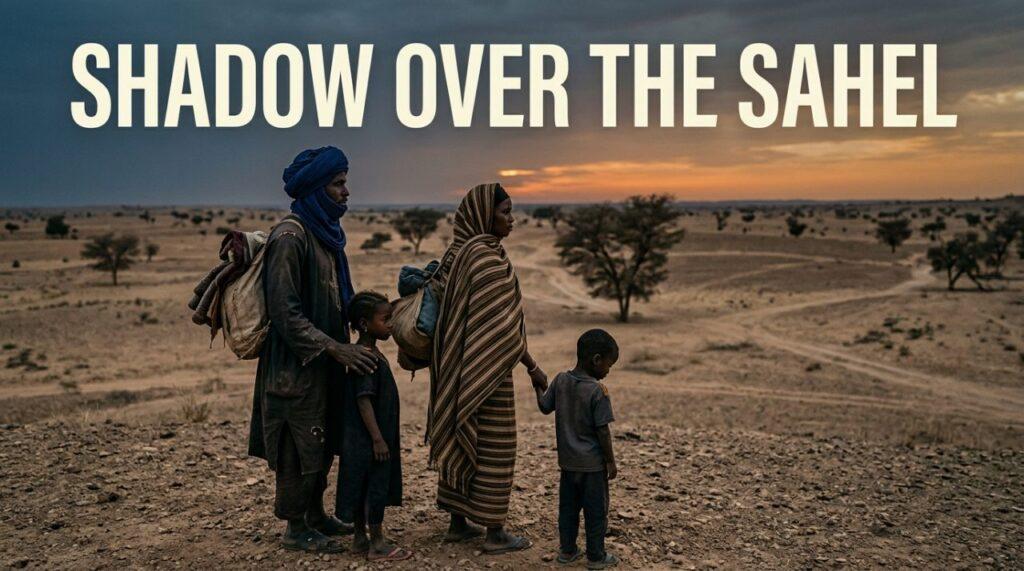
Furthermore, the increased use of armed aerial drones has wrought havoc on rural settlements. Strikes carried out in areas like Ejdeir and Tangata struck bustling outdoor markets and residential compounds. These strikes killed dozens of women and children without any legitimate military targets nearby (amnesty.org, amnestyusa.org). Tens of thousands of traumatized villagers have fled across the desert into refugee camps in southeastern Mauritania (amnesty.org).
Sovereignty, Accountability, and the Road Ahead
The ongoing crisis in Mali underscores the painful contradictions facing modern African governance. African people have long debated sovereignty and political independence through various nationalist movements. True liberation, however, cannot rely on the violent suppression of vulnerable citizens. Swapping Western military missions for Russian state fighters has not dismantled colonial models of extraction and state violence.
By treating pastoralist and nomadic populations as automatic enemies, the Malian military risks driving marginalized youths straight toward insurgent groups. Impunity inevitably feeds further radicalization and cyclical violence. True security requires legal accountability, regional solidarity, and respect for civilian life (amnesty.org, acleddata.com).
Mali stands at a critical historical crossroads. Sustainable peace in the Sahel will not come from foreign forces or military rebrands. It requires addressing the underlying historical causes of land disputes, ethnic disenfranchisement, and political isolation. Only by prioritizing human dignity can the Malian state build enduring peace for all its people.
About the Author
Darius Spearman is a professor of Black Studies at San Diego City College, where he has been teaching for over 20 years. He is the founder of African Elements, a media platform dedicated to providing educational resources on the history and culture of the African diaspora. Through his work, Spearman aims to empower and educate by bringing historical context to contemporary issues affecting the Black community.
