

Why Black Voter Engagement Is Breaking Old Party Ties
By Darius Spearman (africanelements)
Support African Elements at patreon.com/africanelements and hear recent news in a single playlist. Additionally, you can gain early access to ad-free video content.
As early voting sites open across the United States, a major shift is unfolding among Black voters. A comprehensive national study released by the NAACP shows an electorate that refuses to offer unconditional party loyalty (naacplosangeles.org). Instead, Black citizens are evaluating candidates through concrete policy platforms and measurable criminal justice protections (naacp.org).
Mainstream political analysts frequently treat African American voters as a monolithic voting bloc. Yet, this contemporary push for systemic accountability is nothing new. It reflects a long, proud tradition of strategic negotiation in Black political life. African Americans have repeatedly reassessed their political allegiances when institutions failed to protect their lives and livelihoods.
From Lincoln to the New Deal: The First Realignments
To comprehend modern political behavior, one must examine early electoral struggles. Following the Civil War, the ratification of the Fifteenth Amendment in 1870 granted Black men the constitutional right to vote. Newly emancipated voters immediately mobilized. They aligned themselves with the Republican Party, known then as the party of Abraham Lincoln. During Reconstruction, Black citizens elected more than 1,500 public officials across the South, including two United States Senators.
However, that early progress faced intense white supremacist resistance. The Compromise of 1877 withdrew federal troops from former Confederate states. White politicians quickly established Jim Crow laws to eliminate Black political power. Southern states implemented poll taxes, literacy tests, and violent intimidation. When newly emancipated people faced convict leasing and sharecropping, national political leaders largely ignored their plight. Consequently, Black voters found themselves abandoned by both dominant political parties.
Historical Black Presidential Vote Realignment
The Great Migration shifted millions of Black families into northern urban centers. When the Great Depression struck, African American communities endured devastating economic hardship. Unemployment rates approached nearly fifty percent among urban Black workers. Although a majority backed Herbert Hoover in 1932, conditions demanded change. The transactional nature of Black politics became evident during Franklin Delano Roosevelt’s presidency.
By 1936, roughly seventy-one percent of Black voters backed Roosevelt. This dramatic shift was not driven by romantic partisan loyalty. Rather, it emerged because federal agencies offered direct relief and jobs. Activists organized relentlessly while workers fought for economic justice within major industrial hubs. The vote served as a collective bargaining tool for group survival.
The Civil Rights Movement and the Partisan Inversion
During the early twentieth century, legal warfare became essential for securing basic constitutional rights. Founded in 1909, the NAACP systematically dismantled white supremacist election statutes. In Guinn v. United States (1915), the organization helped strike down grandfather clauses. Later, in Smith v. Allwright (1944), legal strategist Thurgood Marshall invalidated the discriminatory all-white primary system.
These legal victories paved the way for massive grassroots civil rights protests. The pressure culminated when President Lyndon B. Johnson signed the Civil Rights Act of 1964 and the Voting Rights Act of 1965. In the 1964 election, an overwhelming ninety-four percent of Black voters supported Johnson. That decisive moment fractured the conservative white Southern wing of the Democratic Party.
Conservative white Southern Democrats quickly defected to the Republican Party. Republican leaders deployed their deliberate “Southern Strategy” to appeal to racial resentments using coded rhetoric like “states rights.” Over the following decades, conservative Southern politicians swapped parties entirely. Consequently, African American voters became the most reliable pillar of the national Democratic Party. Yet, community organizers consistently warned against giving any political faction unconditional support.
Criminal Justice as a Modern Litmus Test
The contemporary focus on justice reform stems directly from decades of mass incarceration. During the 1970s and 1980s, federal politicians initiated the War on Drugs. That policy push culminated in the punitive 1994 Crime Bill. Harsh mandatory minimum sentences, aggressive policing, and discriminatory drug laws disrupted Black families across the country.
Today, the consequences of those policies remain evident in official data. Black Americans are incarcerated in state prisons at five times the rate of white Americans. Furthermore, Black men are five times more likely to be stopped by police officers without cause. These systemic disparities make legal accountability an urgent community demand rather than an abstract discussion (naacp.org).
Racial Disparities in the Legal System
The modern calls for statutory oversight follow high-profile deaths of unarmed Black citizens at the hands of law enforcement. Communities demand concrete reforms like the George Floyd Justice in Policing Act. In addition, voters want an end to qualified immunity, a legal doctrine that shields government officials from personal civil liability in federal civil rights lawsuits. Without specific statutory changes, excessive force cases face dismissal before reaching a jury.
Because municipal and county officials manage most policing practices, Black voters are paying close attention to local ballots (naacp.org). Citizens are focusing on elected district attorneys, county sheriffs, and trial judges. By engaging down-ballot, communities are working to eliminate cash bail practices and remove abusive officers from neighborhoods.
The Generational Divide and New Mobilization Strategies
A notable finding in current civic research involves an ideological divide across generations. Young Black adults between eighteen and thirty-five years old express rising skepticism toward traditional party rhetoric (capitalbnews.org). Many young men in particular are registering as political independents. They refuse to grant automatic support without concrete commitments on jobs, housing, and civil liberties (naacp.org).
This dynamic challenges older organizing frameworks that relied heavily on party loyalty alone. Historically, debates around the value of Black representation have questioned whether traditional voting brings genuine liberation. Today, Black audiences bypass mainstream media in favor of independent digital platforms. Voters want detailed policy answers rather than symbolic campaign visits to local churches before Election Day.
Key Issues Driving Voter Engagement
Economic concerns stand alongside civil rights as top priorities for modern voters (naacp.org). High costs for groceries, fuel, and housing hit working families directly. Civic surveys indicate that over fifty-three percent of surveyed voters prioritize constitutional protections, closely followed by concerns over living expenses (naacp.org). Consequently, broad slogans fail to satisfy communities navigating serious financial hurdles.
Furthermore, this insistence on accountability echoes early radical community movements. Organizations like the Black Panther Party addressed day-to-day community survival through direct breakfast programs and local oversight. Today, grassroots campaigns use modern organizing tools to ensure that political involvement yields measurable, material benefits.
Battling Modern Voter Suppression Tactics
While the Black electorate demands greater accountability, structural barriers continue to complicate ballot access across several states. In 2013, the Supreme Court handed down its controversial decision in Shelby County v. Holder. That ruling gutted Section 4(b) of the Voting Rights Act of 1965, dismantling federal preclearance requirements for jurisdictions with records of discrimination.
The elimination of federal oversight triggered a wave of restrictive election statutes. States quickly closed polling places in predominantly Black districts, enacted strict photo identification laws, and purged voter rolls. Later, in Brnovich v. Democratic National Committee (2021), the Supreme Court weakened Section 2 protections as well. These judicial rulings made challenging discriminatory state election laws significantly more difficult.
Civil rights groups have responded with coordinated mobilization efforts (naacp.org). More than 34 million Black Americans are eligible to vote nationwide, representing roughly fourteen percent of the total electorate. Their concentration in key battleground states like Georgia, North Carolina, and Michigan means minor turnout shifts can decide national elections. Therefore, voter protection teams and volunteer legal hotlines operate continuously to safeguard early voting rights (naacp.org).
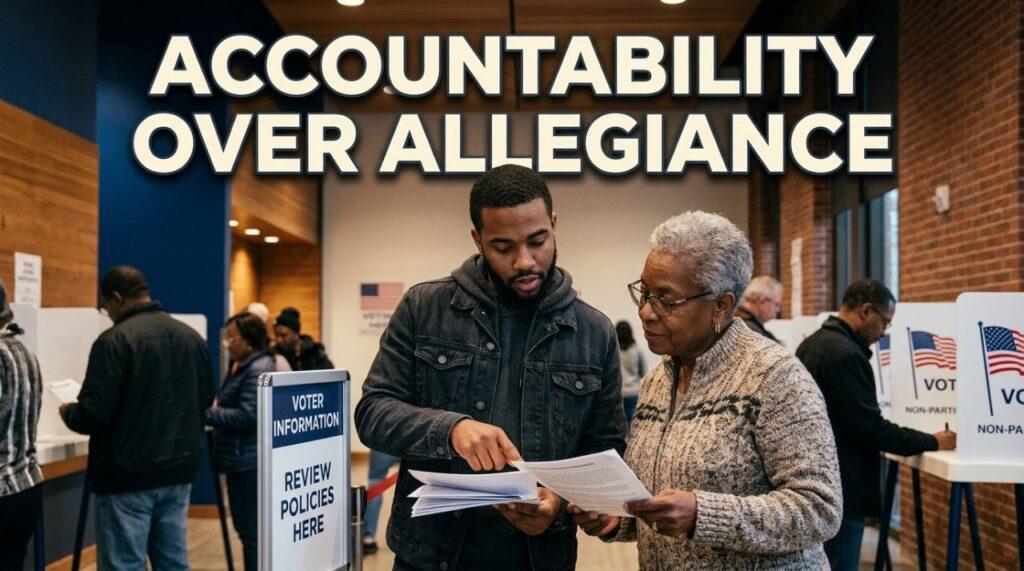
Accountability Over Allegiance: The Path Forward
The findings from the NAACP report demonstrate that the African American vote remains dynamic and discerning (naacplosangeles.org). The Black community has never functioned as a passive constituency waiting for campaign instructions. Instead, voters understand that political power requires active leverage.
As election season approaches, both major political parties must recognize this political reality. Empty promises and symbolic gestures no longer secure community backing. From Reconstruction to the New Deal, and through the civil rights movement, Black voters have repeatedly wielded their ballots to demand tangible progress. Today, that enduring legacy continues as voters make clear that accountability matters far more than brand loyalty.
About the Author
Darius Spearman is a professor of Black Studies at San Diego City College, where he has been teaching for over 20 years. He is the founder of African Elements, a media platform dedicated to providing educational resources on the history and culture of the African diaspora. Through his work, Spearman aims to empower and educate by bringing historical context to contemporary issues affecting the Black community.
