

Supreme Court Takes Aim at Middle School Admissions Policy
By Darius Spearman (africanelements)
Support African Elements at patreon.com/africanelements and hear recent news in a single playlist. Additionally, you can gain early access to ad-free video content.
A New Battleground in the Nation’s Highest Court
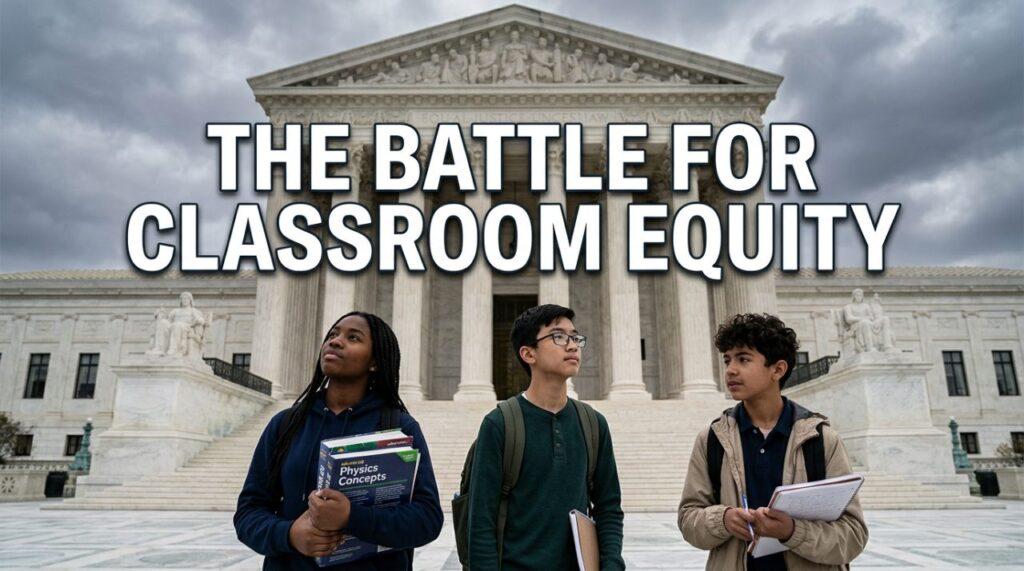
The fight over educational access in the United States has reached the steps of the Supreme Court once again. On October 19, 2026, the high court agreed to hear Association for Education Fairness v. Montgomery County Board of Education (supremecourt.gov, supremecourt.gov). This decisive move brings a fierce fight over selective public middle school programs into national focus (dailysignal.com). The justices will decide whether school districts can use geographic and socioeconomic criteria to broaden student diversity (pacificlegal.org, supremecourt.gov).
At the center of this dispute is Montgomery County Public Schools, the largest public school system in Maryland (montgomeryschoolsmd.org). A parent coalition known as the Association for Education Fairness filed the lawsuit with backing from conservative legal foundations (pacificlegal.org, mocoshow.com). The petitioners argue that the district altered its magnet admissions to deliberately decrease Asian American representation (washingtontimes.com, pacificlegal.org). Meanwhile, civil rights leaders argue that the reforms merely eliminated systemic hurdles for historically excluded Black and Latino children (naacpldf.org, naacpldf.org).
This landmark case forces the high court to confront modern efforts toward educational equity. The core legal controversy surrounds the idea of facially race-neutral policies and proxy discrimination (pacificlegal.org, fedsoc.org). The central question asks whether district leaders violate the Equal Protection Clause when they seek racial balance through race-blind criteria (supremecourt.gov, meltzercenter.org). The eventual ruling will alter the landscape for specialized academic programs across the entire country (fordhaminstitute.org, heritage.org).
The Birth of Magnet Schools as Desegregation Remedies
Modern magnet school debates cannot be separated from the historical legacy of the civil rights movement. In 1954, the Supreme Court handed down its monumental decision in Brown v. Board of Education (wikipedia.org). That ruling declared racial segregation in public schools unconstitutional and ordered districts to integrate (wikipedia.org). Southern districts engaged in massive resistance, while Northern and suburban districts relied on residential redlining to maintain segregated classrooms (wikipedia.org, justice.gov).
Federal courts eventually demanded aggressive desegregation plans during the late 1960s and early 1970s. Mandatory busing programs sparked severe racial backlash and accelerated white flight from urban public systems (wikipedia.org, brookings.edu). In response, school districts pioneered specialized magnet programs as voluntary integration tools (wikipedia.org). These schools offered innovative curricula in science, technology, and the performing arts to attract students across racial boundaries (wikipedia.org, montgomeryschoolsmd.org).
Montgomery County embraced this voluntary strategy four decades ago to prevent demographic isolation in its schools (montgomeryschoolsmd.org, montgomeryschoolsmd.org). The school system established a premier math and science magnet center at Takoma Park Middle School (montgomeryschoolsmd.org). Later, the county expanded magnet offerings to Roberto Clemente and Eastern Middle Schools (montgomeryschoolsmd.org). District leaders intentionally established these centers to foster learning environments that brought diverse racial groups together (naacpldf.org, montgomeryschoolsmd.org).
When Integration Tools Became Engines of Exclusion
Over several decades, the primary mission of magnet programs shifted dramatically. Policies that began as remedies for systemic exclusion gradually evolved into hyper-competitive sorting machines (fordhaminstitute.org, davidsongifted.org). During the late 1990s, federal courts placed strict limits on explicit racial considerations in student assignments (cornell.edu, justia.com). The Fourth Circuit ruled in 1999 that Montgomery County could not use race-based transfer policies to maintain racial balance (justia.com).
Barred from using race directly, districts adopted competitive standardized testing to determine specialized program admissions (naacpldf.org, fordhaminstitute.org). Families with substantial financial means began investing heavily in private tutoring, test preparation, and selective enrichment programs (naacpldf.org, brookings.edu). Consequently, admission to centers like Takoma Park turned into an exclusive competition that rewarded wealth and privilege (naacpldf.org, meltzercenter.org). These shifting standards echoed systemic racial barriers that historically limited Black achievement.
By the 2010s, Montgomery County’s selective middle school classrooms no longer reflected the broad diversity of the county (fordhaminstitute.org, montgomeryschoolsmd.org). Black and Latino students comprised a growing majority of overall district enrollment (montgomeryschoolsmd.org). Yet, these students found themselves almost entirely locked out of the county’s flagship STEM pipelines (naacpldf.org, naacpldf.org). The programs established to promote racial integration had transformed into isolated enclaves of academic privilege (naacpldf.org, wikipedia.org).
MCPS District Makeup vs Historical Magnet Access
The Metis Report and the Push for Reform
Faced with growing community criticism, the Montgomery County Board of Education commissioned an independent equity study in 2015 (naacpldf.org, fordhaminstitute.org). The research consultancy Metis Associates released its comprehensive findings in March 2016 (fordhaminstitute.org). The report exposed glaring racial imbalances within the district’s flagship middle school programs (naacpldf.org, fordhaminstitute.org). The data showed that children from lower-income and minority neighborhoods were systematically screened out (naacpldf.org, naacpldf.org).
The Metis study revealed that Black students comprised over twenty-one percent of total district enrollment (naacpldf.org). Despite those numbers, Black students held eight percent or fewer of available magnet seats (naacpldf.org, naacpldf.org). In stark contrast, Asian American children accounted for nearly half of the admitted classes at Takoma Park (fordhaminstitute.org, pacificlegal.org). The researchers pointed out that single cognitive entrance exams privileged students whose families purchased private test preparation (naacpldf.org, fordhaminstitute.org).
To eliminate these inequities, Metis recommended overhauling the district admissions architecture (naacpldf.org, fordhaminstitute.org). The report urged school leaders to evaluate children against peers within their local elementary schools (fordhaminstitute.org, naacpldf.org). Furthermore, the researchers recommended replacing single test cutoffs with universal screening and holistic assessments (naacpldf.org, fordhaminstitute.org). The Montgomery County school board voted to implement these recommendations between 2017 and 2020 (fordhaminstitute.org, pacificlegal.org).
Anatomy of the Revised Admissions Policy
The district introduced structural revisions designed to assess high potential within every neighborhood elementary school (naacpldf.org, fordhaminstitute.org). First, the district implemented universal screening for all fifth-grade students using the Cognitive Abilities Test (naacpldf.org, davidsongifted.org). Rather than using a single countywide cutoff score, the district adopted local norming (fordhaminstitute.org, pacificlegal.org). Under local norming, student performance was benchmarked against school peers from similar socioeconomic backgrounds (fordhaminstitute.org, pacificlegal.org).
Second, Montgomery County introduced an academic peer group evaluation standard (pacificlegal.org, fedsoc.org). This metric evaluated whether an applicant already had twenty or more high-achieving peers in their home middle school (pacificlegal.org, americancivilrightsproject.org). The district asserted that children in enriched local schools already possessed adequate educational resources (pacificlegal.org). Conversely, students lacking high-performing peers at home were prioritized for magnet slots (pacificlegal.org, americancivilrightsproject.org). The policy did not collect or consider individual racial classifications (naacpldf.org, findlaw.com).
Finally, the district incorporated socioeconomic criteria and qualified lotteries during the global pandemic (pacificlegal.org, mslegal.org). These holistic mechanisms sought to ensure that children from high-poverty communities secured equal opportunities (naacpldf.org, naacpldf.org). These changes aimed to dismantle persistent barriers, addressing the historic success of African American students across diverse learning environments. The revised policy transformed enrollment numbers almost overnight (naacpldf.org, fordhaminstitute.org).
Takoma Park STEM Magnet Enrollment Shifts
Concrete Gains and Immediate Community Fallout
The revised policy produced tangible shifts in representation across the district’s elite centers (naacpldf.org, fordhaminstitute.org). In the 2018–2019 admissions cycle, Black student offers at Takoma Park nearly doubled from 7.4 percent to 13.9 percent (naacpldf.org, naacpldf.org). Latino enrollment also expanded substantially across middle school programs (naacpldf.org, fordhaminstitute.org). For many working-class families of color, the overhaul provided long overdue access to specialized math and science instruction (naacpldf.org, naacpldf.org).
However, the policy changes ignited fierce backlash from affected communities (fordhaminstitute.org, pacificlegal.org). Asian American enrollment at Takoma Park dropped from 45.6 percent to 31.5 percent (fordhaminstitute.org, pacificlegal.org). In Upcounty middle school programs like Roberto Clemente and Martin Luther King Jr., Asian American admissions dropped by roughly half (pacificlegal.org, washingtonpost.com). Parents argued that high-achieving children were denied admission solely because of the school they attended (pacificlegal.org, mocoshow.com).
Critics argued that the academic peer group rule punished students who lived in neighborhoods with top schools (pacificlegal.org, americancivilrightsproject.org). They contended that the board selected geographic criteria to deliberately depress Asian American numbers (washingtontimes.com, pacificlegal.org). This contentious climate prompted frustrated parents to form the Association for Education Fairness (pacificlegal.org). They partnered with the Pacific Legal Foundation to challenge the policy in federal court (pacificlegal.org, mocoshow.com).
Understanding “Proxy Discrimination” Under the Constitution
The constitutional debate in this case centers on the concept of proxy discrimination (pacificlegal.org, fedsoc.org). Opponents argue that school boards cannot use race-neutral mechanisms as stand-ins to achieve racial engineering (pacificlegal.org, americancivilrightsproject.org). They assert that targeting school poverty or neighborhood zones with the intent to alter racial balance violates the Fourteenth Amendment (pacificlegal.org, mslegal.org). From their perspective, the Equal Protection Clause protects individuals rather than racial groups (pacificlegal.org, americancivilrightsproject.org).
Civil rights defenders reject this interpretation as a dangerous distortion of equal protection history (naacpldf.org, naacpldf.org). The NAACP Legal Defense Fund argues that school boards possess broad legal authority to eliminate systemic gatekeeping (naacpldf.org, naacpldf.org). Considering socioeconomic context and local elementary opportunities allows districts to assess talent fairly without classifying students by race (naacpldf.org, findlaw.com). School boards have long used race-neutral tools to foster equal educational opportunity (meltzercenter.org, cornell.edu).
This conflict reflects broader tensions within modern civil rights law and political dynamics in the Black community. Challengers insist that any policy motivated by racial awareness is constitutionally suspect (pacificlegal.org, fedsoc.org). In contrast, advocates emphasize that eliminating structural advantages for privileged groups is the core purpose of civil rights legislation (naacpldf.org, naacpldf.org). That philosophical divide now sits squarely before the Supreme Court (dailysignal.com, supremecourt.gov).
The Legal Pipeline: From Thomas Jefferson to Montgomery County
The road to the Supreme Court wound through multiple federal decisions (justia.com, findlaw.com). In 2020, the Association for Education Fairness filed its lawsuit in federal district court (justia.com, pacificlegal.org). U.S. District Judge Paula Xinis dismissed the complaint in 2022 (justia.com). The court ruled that the plaintiffs failed to prove discriminatory intent or adverse impact (justia.com, findlaw.com). The decision emphasized that Asian American children continued to secure admission at healthy rates (justia.com, findlaw.com).
On February 3, 2026, the Fourth Circuit Court of Appeals affirmed the dismissal (findlaw.com, findlaw.com). The appellate court relied heavily on its prior decision in Coalition for TJ v. Fairfax County School Board (findlaw.com, findlaw.com). In that case, the Fourth Circuit upheld race-neutral reforms at Thomas Jefferson High School in Virginia (findlaw.com, washingtonpost.com). The court held that plaintiffs could not prove disparate impact because Asian American students still earned admissions exceeding their share of the applicant pool (findlaw.com, findlaw.com).
When the Supreme Court declined to review the Coalition for TJ case in 2024, Justice Samuel Alito authored a blistering dissent (dailysignal.com, supremecourt.gov). Joined by Justice Clarence Thomas, Alito condemned the Fourth Circuit’s arithmetic rule as completely untenable (dailysignal.com, supremecourt.gov). Alito argued that deliberately reducing admissions for any group constitutes an unconstitutional injury, regardless of total population share (dailysignal.com, supremecourt.gov). That dissent laid the groundwork for the court’s decision to grant review in Montgomery County (supremecourt.gov, supremecourt.gov).
The Legal Disparate Impact Threshold
The Higher Education Shadow and K-12 Desegregation
The high court will evaluate this middle school dispute under the long shadow of its recent affirmative action rulings (pacificlegal.org, supremecourt.gov). In 2023, the court decided Students for Fair Admissions v. Harvard, effectively ending race-conscious college admissions (pacificlegal.org, meltzercenter.org). Chief Justice John Roberts warned that universities could not bypass constitutional restrictions through indirect racial proxies (pacificlegal.org, meltzercenter.org). Conservative litigants now seek to extend that doctrine into K-12 public education (pacificlegal.org, heritage.org).
This ongoing legal campaign directly threatens longstanding precedents that permit race-conscious policy goals (naacpldf.org, meltzercenter.org). In the 2007 Parents Involved case, Justice Anthony Kennedy provided the controlling legal rationale (cornell.edu). Kennedy confirmed that while explicit racial quotas were unconstitutional, districts could use race-neutral mechanisms to address inequality (cornell.edu). These permissible tools included drawing attendance boundaries and targeting resources toward disadvantaged neighborhoods (meltzercenter.org, cornell.edu).
If the Supreme Court strikes down Montgomery County’s admissions framework, it will close the door opened by Justice Kennedy (naacpldf.org, meltzercenter.org). Such a ruling could restrict public school boards from considering systemic disadvantage entirely (naacpldf.org, naacpldf.org). This debate connects directly to the historical conversation surrounding racial inequality in education. When race-neutral solutions face judicial attack, the pathway toward public school equity narrows significantly (naacpldf.org, meltzercenter.org).
What the Case Means for the Future of Public Education
The stakes in AFEF v. Montgomery County Board of Education extend far beyond middle school classrooms in Maryland (fordhaminstitute.org, heritage.org). School boards nationwide rely on geographic factors, feeder-school limits, and socioeconomic criteria to cultivate balanced student populations (meltzercenter.org, brookings.edu). A ruling against Montgomery County could expose thousands of local school policies to constitutional challenges (naacpldf.org, meltzercenter.org). Districts might be forced to rely strictly on standardized test scores, returning to exclusionary admissions models (naacpldf.org, fordhaminstitute.org).
For Black families, the implications are severe (naacpldf.org, naacpldf.org). Decades of historical evidence prove that standardized testing without holistic context reproduces racial stratification (naacpldf.org, brookings.edu). When Montgomery County accounted for school resources and peer environments, qualified Black students earned life-changing academic opportunities (naacpldf.org, naacpldf.org). Stripping school districts of the ability to correct for historical inequities threatens to lock another generation out of advanced educational pipelines (naacpldf.org, meltzercenter.org).
The Supreme Court will hear oral arguments and deliver its decision in 2027 (supremecourt.gov, supremecourt.gov). The justices will resolve whether local school districts have the right to broaden opportunity for all children (naacpldf.org, naacpldf.org). As the case unfolds, it represents the latest chapter in a century-long struggle over who gets to learn in America’s best classrooms (wikipedia.org, brookings.edu). The history behind these headlines confirms that the fight for equal access remains urgent and unresolved (naacpldf.org, wikipedia.org).
About the Author
Darius Spearman is a professor of Black Studies at San Diego City College, where he has been teaching for over 20 years. He is the founder of African Elements, a media platform dedicated to providing educational resources on the history and culture of the African diaspora. Through his work, Spearman aims to empower and educate by bringing historical context to contemporary issues affecting the Black community.
