

Javits Frimpong Shooting: Bronx Outcry Over Teen’s Death
By Darius Spearman (africanelements)
Support African Elements at patreon.com/africanelements and hear recent news in a single playlist. Additionally, you can gain early access to ad-free video content.
The Echoes of Justice for Javits Frimpong
On the morning of October 29, 2026, fifteen-year-old Javits Frimpong walked out of his family home in the Claremont section of the South Bronx (fox5ny.com, bxtimes.com). He was on his way to classes at DreamYard Preparatory School (cbsnews.com, news12.com). The teenager had lived in the United States for only one year (jbrepublic.com, nacionale.com). He had traveled from Ghana to join his father and pursue his goal of becoming a doctor (modernghana.com, punchng.com). Near the corner of East 171st Street and Crotona Place, three masked individuals chased him along the sidewalk (cbsnews.com, fox5ny.com). A single bullet struck Javits in the abdomen before he collapsed on the pavement a block away (cnn.com, cbsnews.com). Emergency personnel rushed him to St. Barnabas Hospital, where medical staff pronounced him dead hours later (cbsnews.com, fox5ny.com).
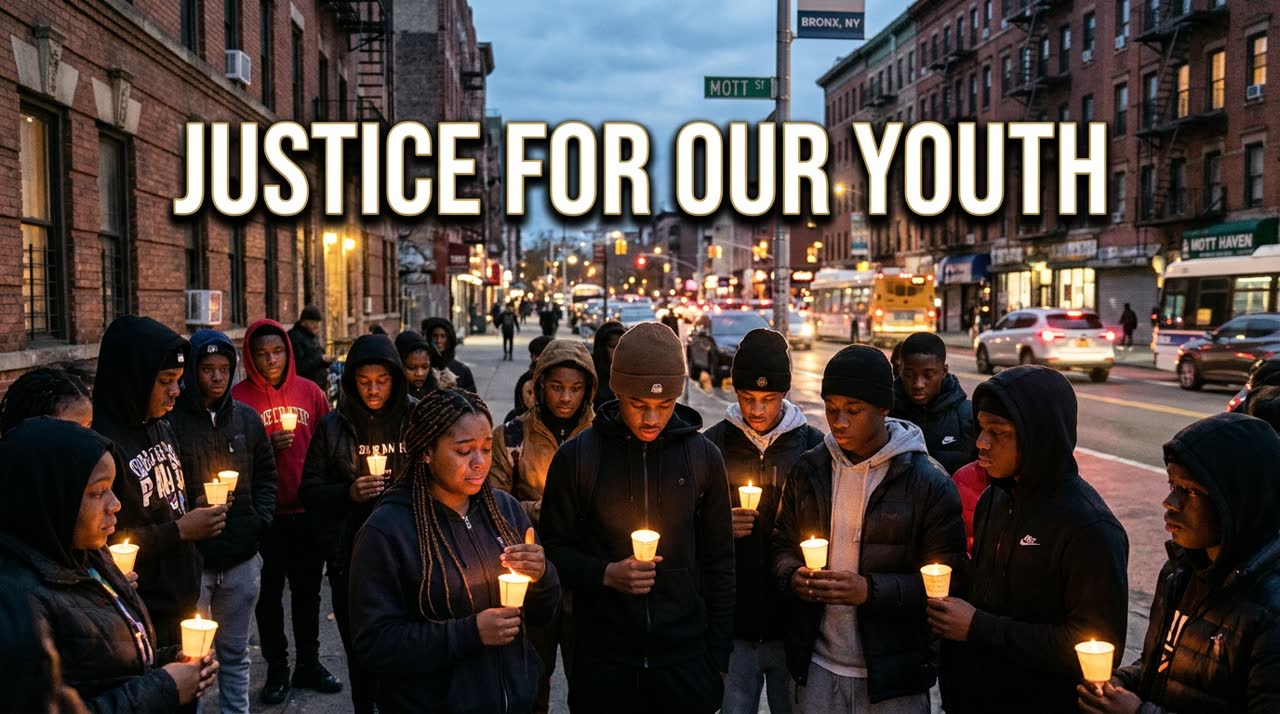
The tragedy immediately sparked collective grief across New York City (nacionale.com, bxtimes.com). Hundreds of high school students walked out of classrooms carrying signs demanding accountability (nacionale.com, news12.com). The call for community action resonated across diaspora networks on both sides of the Atlantic (modernghana.com, punchng.com). His mother remained thousands of miles away in Ghana when the attack occurred (nacionale.com, punchng.com). She faced complex consular obstacles to enter the United States to claim his body (modernghana.com, jbrepublic.com). Municipal officials intervened to secure an expedited humanitarian visa (modernghana.com, nacionale.com). Meanwhile, the Ghanaian national government pledged public funds to assist with travel and burial expenses (modernghana.com, ghanacitizenship.com). The demand for Justice for Javits Frimpong highlights the intersection of modern street violence and the immigrant journey.
Ghanaian Immigrant Population Distribution
Building Little Kumasi: The Bronx Ghanaian Community
To understand the depth of this tragedy, one must examine how West African settlement expanded across the South Bronx (africasacountry.com, fordham.edu). Ghanaian intellectuals and political dissidents first settled in New York during the 1960s and 1970s (africasacountry.com). However, mass migration accelerated following severe economic reforms in West Africa during the late 1980s (africasacountry.com, migrationpolicy.org). The passage of the U.S. Immigration Act of 1990 created the Diversity Immigrant Visa Program (wikipedia.org). This federal policy opened legal pathways for thousands of families seeking stability in the United States (wikipedia.org, migrationpolicy.org). New arrivals gravitated toward neighborhoods like Claremont, Highbridge, Morrisania, and Concourse Village (fordham.edu, africanvibes.com).
Over three decades, these neighborhoods transformed into a cultural hub often called “Little Kumasi” (fordham.edu, africanvibes.com). The massive Tracey Towers residential complex on Mosholu Parkway earned the local name “Ghana House” due to its concentration of families (norwoodnews.org). Approximately 223,000 Ghanaian-born residents live nationwide, with roughly 36,000 located in New York State (migrationpolicy.org). The Bronx holds approximately 20,000 Ghanaian residents, representing almost half of the borough’s African immigrant population (fordham.edu, migrationpolicy.org). These residents built churches, tribal councils, and commercial businesses while working demanding shifts in healthcare and public transit (norwoodnews.org, fordham.edu). Many faced persistent historical racial injustices that have shaped urban residential segregation for generations.
The Frimpong family utilized a common strategy known as staggered migration (modernghana.com, nacionale.com). Thomas Frimpong, aged 60, moved to New York first to establish housing and employment (jbrepublic.com, nacionale.com). His son remained behind in Ghana until consular paperwork cleared in late 2025 (nacionale.com, bxtimes.com). Transnational families frequently endure years of physical separation to pursue educational goals (fordham.edu, migrationpolicy.org). When violence cuts this journey short, national borders compound the family trauma (modernghana.com, punchng.com). Consular barriers often prevent mothers and fathers from reaching the hospital bedsides of their children (modernghana.com, jbrepublic.com). The sudden death of Javits Frimpong exposed the profound vulnerabilities that define this diaspora corridor (nacionale.com, bxtimes.com).
Classroom Tensions and DreamYard Prep Bullying
Following the deadly gunfire, Thomas Frimpong revealed that his son had faced persistent harassment at school (nacionale.com, cbsnews.com). Javits attended DreamYard Preparatory School, an arts-focused public secondary school in the South Bronx (cbsnews.com, news12.com). The father stated that older students regularly tormented the quiet teenager in corridors and the lunchroom (cbsnews.com, bxtimes.com). Only three days before the fatal shooting, school administrators had suspended two students for one week following an altercation involving Javits (cbsnews.com, fox5ny.com). Investigators immediately explored whether the street ambush was an act of retaliation (cbsnews.com, fox5ny.com).
The fatal encounter renewed scrutiny over how city institutions respond to schoolyard harassment (bxtimes.com, dancehallmag.com). Following the incident, law enforcement officials noted procedural delays in obtaining school disciplinary files (fox5ny.com, bxtimes.com). The New York City Department of Education operates under strict legal guidelines regarding student privacy (cbsnews.com, fox5ny.com). Under the federal Family Educational Rights and Privacy Act (FERPA), student disciplinary documents represent protected education records (fox5ny.com). Handing over internal student files without parental consent requires a formal judicial order or grand jury subpoena (fox5ny.com). The emergency exceptions to FERPA apply strictly to imminent, real-time safety threats rather than post-incident investigations.
Municipal chancellor regulations also mandate that administrative teams route law enforcement requests through centralized legal counsel (fox5ny.com, bxtimes.com). While these measures protect constitutional rights, the procedural wall fueled public frustration among community members seeking immediate answers (nacionale.com, bxtimes.com). Community advocates argue that earlier intervention by school staff could have defused the conflict before it spilled onto neighborhood streets (cbsnews.com, bxtimes.com). Protecting vulnerable youth requires balancing legal privacy with immediate physical security across urban school systems (bxtimes.com, news12.com).
Youth Firearm Homicide Rates (Per 100k)
Roots of African Immigrant Youth Bullying in Urban Schools
The harassment Javits experienced is rooted in historical and cultural tensions documented across New York City schools for decades (bxtimes.com, dancehallmag.com). In 2009, investigative reporting documented how newly arrived West African students routinely faced verbal and physical abuse from domestic peers (bxtimes.com, fordham.edu). Insults targeted accents, clothing, and traditional foods (bxtimes.com, fordham.edu). These tensions stem from historical miseducation, media stereotypes, and competition within underfunded urban schools (africasacountry.com, fordham.edu). Western entertainment long circulated disparaging caricatures depicting the African continent as impoverished and backward (africasacountry.com). Domestic youth socialized by these portrayals often directed xenophobic taunts at newly arrived peers (bxtimes.com, africasacountry.com).
Structural neglect within inner-city schools worsens these social divisions (bxtimes.com, fordham.edu). In crowded facilities lacking bilingual counselors, social status often requires strict adherence to dominant neighborhood youth culture (fordham.edu). Immigrant children who speak French, Wolof, Twi, or accented English stand out immediately (bxtimes.com, fordham.edu). Furthermore, divergent racial frameworks create mutual misunderstanding (africasacountry.com, fordham.edu). Native-born Black students have been shaped by domestic civil rights struggles and systemic inequality (africasacountry.com). Conversely, voluntary West African immigrants often arrive from majority-Black nations where identity centers on nationality or ethnicity (africasacountry.com, fordham.edu). This cultural disconnect can lead to mutual suspicion in the absence of intentional school mediation.
Prominent cultural figures raised their voices as news of the killing spread (dancehallmag.com). Bronx-born recording artist Cardi B observed that foreign-born children from Africa face intense hostility without adequate administrative protection (dancehallmag.com). Hip-hop pioneer Fat Joe echoed those sentiments, calling on school leaders to intervene when students report threats (dancehallmag.com). Historical debates surrounding the success of African American students show that institutional support remains critical for all youth. When school systems ignore escalating bullying, interpersonal friction can quickly turn deadly outside school boundaries (cbsnews.com, bxtimes.com).
Disinvestment and Bronx Teen Gun Violence
The street where Javits collapsed sits inside the 42nd Police Precinct (cbsnews.com, fox5ny.com). This geographic corridor has endured decades of structural disinvestment, discriminatory redlining, and municipal neglect (bxtimes.com, fordham.edu). During the 1970s, severe municipal budget reductions and building abandonment created widespread economic distress across the borough (fordham.edu). While community rebuilding efforts transformed portions of the neighborhood, poverty rates near Crotona Park and the Cross Bronx Expressway remain high (bxtimes.com, fordham.edu). These socioeconomic conditions create an environment where street-level conflicts often intersect with deadly weapons (bxtimes.com, arcgis.com).
Public health data reveals the severe toll firearm violence inflicts on adolescents (americashealthrankings.org, everystat.org). Nationwide, firearm homicide represents the leading cause of death among youth ages 15 to 19 (americashealthrankings.org, everystat.org). In the New York metropolitan region, Black youth experience a firearm homicide rate of 6.2 per 100,000 residents (americashealthrankings.org). An analysis of regional crime data indicates that thousands of shootings occurred within 500 yards of K-12 school buildings over the past decade (arcgis.com). Daily commutes through these transit corridors force young students to navigate street risks simply to access education (news12.com, arcgis.com).
The Frimpong case recalls other Bronx tragedies that mobilized public grief (bxtimes.com, news12.com). At community vigils, neighbors stood beside Leandra Feliz, whose 15-year-old son Lesandro “Junior” Guzman-Feliz was murdered nearby in 2018 (bxtimes.com). Both cases involved teenagers killed just blocks from school and home (cbsnews.com, bxtimes.com). The lingering trauma of these incidents highlights how public space remains contested for working-class youth (bxtimes.com, news12.com). Communities continue to challenge policies from the era of mass incarceration that prioritized police containment over sustained neighborhood investment.
Sources of Crime Guns Recovered in NY
Interstate Smuggling and Iron Pipeline Gun Trafficking
New York State enforces some of the strictest gun control laws in the nation (everystat.org). Yet local statutes cannot prevent the arrival of illegal handguns smuggled from outside state borders (fox5ny.com, everystat.org). This interstate transit route is widely recognized as the “Iron Pipeline” (fox5ny.com). Federal trace data confirms that roughly 70 to 85 percent of firearms recovered at New York crime scenes originate out of state (everystat.org). Weapons flow north along Interstate 95 from southern jurisdictions with permissive purchasing regulations (fox5ny.com, everystat.org). States like Georgia, Florida, Virginia, and the Carolinas do not mandate universal background checks or limit bulk firearm purchases.
Trafficking syndicates frequently employ straw purchasers to acquire handguns legally at retail shops or regional gun shows (fox5ny.com, everystat.org). These individuals have clean criminal backgrounds, allowing them to purchase multiple weapons quickly (everystat.org). Smugglers transport the inventory into urban markets, reselling firearms on the underground market at markups exceeding 300 percent (fox5ny.com, everystat.org). State governments lack domestic border checkpoints to inspect interstate highway traffic without individual reasonable suspicion (everystat.org). Consequently, state-level gun control measures face structural limits against interstate commerce loopholes (everystat.org).
The weapon used to kill Javits Frimpong reflects this ongoing regulatory failure (cbsnews.com, fox5ny.com). In response to the tragedy, international networks rallied around the family (nacionale.com, bxtimes.com). More than 23,000 donors contributed over $750,000 through an online campaign to assist with legal fees and funeral costs (nacionale.com, bxtimes.com). Grassroots mobilization demonstrated that community solidarity remains resilient despite systemic obstacles (nacionale.com, news12.com). Addressing the crisis requires federal intervention against interstate gun smuggling alongside robust protections for immigrant youth in public schools (bxtimes.com, everystat.org).
| Dimension | Documented Details |
|---|---|
| Incident Location | East 171st St and Crotona Place, Claremont, South Bronx (42nd Precinct) |
| Diaspora Population | Bronx houses ~20,000 of New York’s ~36,000 Ghanaian-born residents |
| School Context | DreamYard Prep student; chronic bullying reported; two students suspended days earlier |
| Legal Constraints | FERPA and Chancellor’s rules require subpoenas for student disciplinary records |
| Weapons Pipeline | 70% to 85% of New York crime firearms originate from out-of-state I-95 corridors |
The loss of Javits Frimpong demonstrates how global migration, educational equity, and urban violence collide in the South Bronx (bxtimes.com, fordham.edu). For West African families who rebuild their lives abroad, the tragedy represents a painful disruption of the immigrant promise (nacionale.com, africasacountry.com). Parents leave their home countries believing their children will find safety and upward mobility in American classrooms (africasacountry.com, fordham.edu). Until public institutions confront school bullying and stop the flow of illegal firearms, urban corridors will continue to present severe risks for commuting students (bxtimes.com, arcgis.com).
About the Author
Darius Spearman is a professor of Black Studies at San Diego City College, where he has been teaching for over 20 years. He is the founder of African Elements, a media platform dedicated to providing educational resources on the history and culture of the African diaspora. Through his work, Spearman aims to empower and educate by bringing historical context to contemporary issues affecting the Black community.
