

Data Center Energy Bill Sparks NAACP Environmental Backlash
By Darius Spearman (africanelements)
Support African Elements at patreon.com/africanelements and hear recent news in a single playlist. Additionally, you can gain early access to ad-free video content.
On November 10, the national leadership of the NAACP issued a condemnation of federal energy policy (naacp.org). The civil rights organization spoke out after the United States Senate advanced the Bipartisan American Affordability and Jobs Act of 2026, also known as BAAJA (naco.org, senate.gov). The four-hundred-page legislative package aims to accelerate environmental reviews for large infrastructure projects (bipartisanpolicy.org, legis1.com). Congressional leaders argued that these statutory changes are necessary to feed the soaring energy appetite of artificial intelligence and cloud computing centers (spglobal.com, c2es.org). However, civil rights advocates warn that fast-tracking energy infrastructure removes vital community protections (naacp.org, naacp.org).
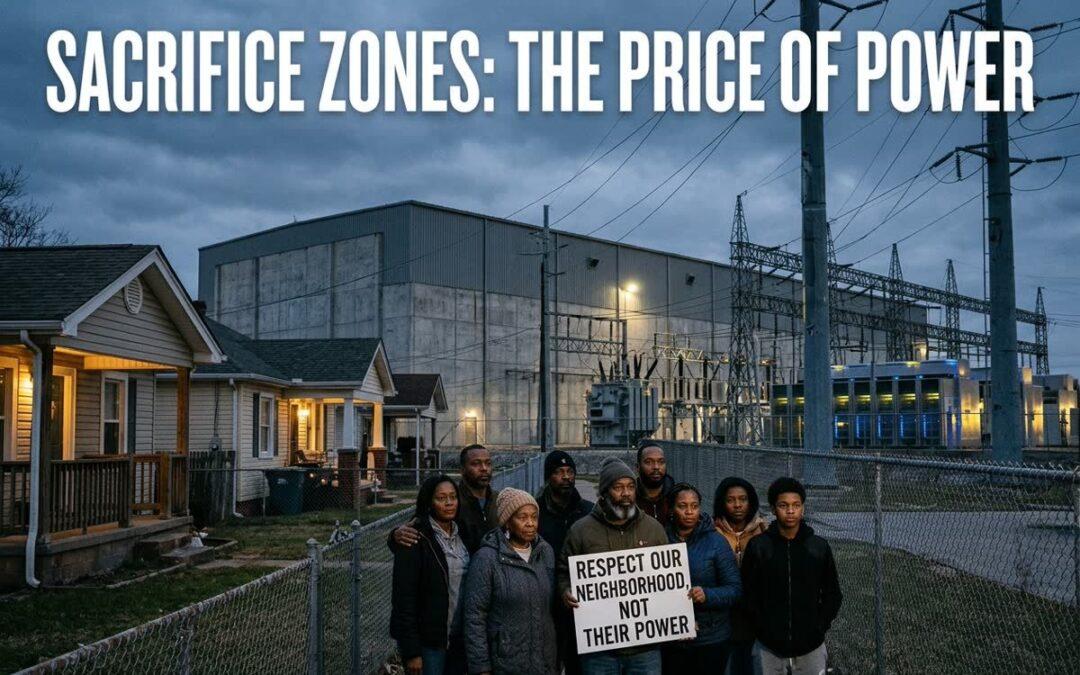
Abre Conner, the director of the NAACP Center for Environmental and Climate Justice, warned that the proposal creates modern sacrifice zones in neighborhoods populated by people of color (naacp.org). Lawmakers who support the measure say regulatory shortcuts will modernize the electric grid and preserve national competitiveness (bipartisanpolicy.org, bipartisanpolicy.org). Yet the controversy surrounding the data center energy bill reflects a clash with deep historical roots. The struggle highlights how public officials have repeatedly sacrificed Black neighborhoods to facilitate rapid industrial development (berghahnjournals.com, csu.edu). Understanding this latest dispute requires examining five decades of environmental justice activism (uab.edu, ncejn.org).
Senate Permitting Reform and the Modern Tech Rush
The legislative package moving through Capitol Hill represents an ambitious overhaul of federal infrastructure rules (naco.org, senate.gov). Negotiated by members of the Senate Environment and Public Works Committee and the Energy and Natural Resources Committee, BAAJA seeks to clear project backlogs across the nation (bipartisanpolicy.org). Proponents of Senate permitting reform maintain that prolonged environmental reviews delay electric transmission lines, nuclear power projects, and heavy industrial facilities (c2es.org, bipartisanpolicy.org). They point out that a standard federal environmental study now averages between four and seven years to complete (everycrsreport.com, columbia.edu).
To eliminate these administrative delays, the proposed statute imposes strict statutory deadlines on federal agencies (crowell.com, legis1.com). The legislation mandates that full environmental impact studies finish within two years, while basic environmental assessments must conclude within one year (bipartisanpolicy.org). Furthermore, Title IV of the measure establishes project certainty provisions (crowell.com). These provisions severely restrict federal regulators from altering, suspending, or revoking industrial permits once private developers secure initial approval (earthjustice.org). The policy prevents authorities from intervening even when newer scientific data reveals localized health dangers (biologicaldiversity.org, earthjustice.org).
Civil rights attorneys argue that these speed-up rules shift the institutional balance of federal power toward private utilities at the expense of local communities (naacp.org, earthjustice.org). By compressing the public consultation timeline, the legislation curtails the ability of residents to review technical engineering proposals (commondreams.org). Communities that lack engineering consultants cannot easily challenge rushed filings within sixty-day public windows (naacp.org). Consequently, the NAACP argues that BAAJA prioritizes commercial interests over the physical well-being of vulnerable populations (naacp.org, naacp.org).
Environmental Racism History from Warren County to the UCC Study
The public outcry against BAAJA draws directly from decades of civil rights struggles (csu.edu, uab.edu). The documented environmental racism history in the United States began to gain national prominence in 1982 in Warren County, North Carolina (berghahnjournals.com). State officials designated a landfill in a rural, predominantly Black farming community to bury sixty thousand tons of soil contaminated with toxic polychlorinated biphenyls, or PCBs (uab.edu). Residents recognized that the state bypassed wealthier white regions to dump hazardous materials in their backyards (ncejn.org).
In response, community organizers launched weeks of nonviolent direct action (berghahnjournals.com). More than five hundred marchers, civil rights workers, and local clergy were arrested for blocking chemical transport trucks with their bodies (uab.edu). Although state authorities forced the toxic landfill into Warren County, the protests gave birth to a unified national movement (csu.edu, ncejn.org). The campaign proved that the historic fight for Black freedom encompassed the fundamental right to clean air, safe soil, and pure water (naacp.org).
Federal and academic investigations soon confirmed the legitimacy of these demonstrations (berghahnjournals.com). In 1983, the United States General Accounting Office surveyed hazardous commercial waste landfills across eight southeastern states (everycrsreport.com). The federal report found that Black Americans made up a clear majority of the population in three out of four surrounding communities (everycrsreport.com, csu.edu). Four years later, in 1987, the United Church of Christ Commission for Racial Justice issued a landmark sociological study titled Toxic Wastes and Race in the United States (berghahnjournals.com). Led by research director Charles Lee and civil rights leader Reverend Doctor Benjamin Chavis, the study examined waste facilities nationwide (csu.edu, ncejn.org).
Doctor Chavis coined the term “environmental racism” during this national research campaign (berghahnjournals.com, ncejn.org). The data demonstrated that race was the single most dominant statistical variable predicting where companies placed commercial toxic facilities (berghahnjournals.com). Race proved more predictive than household income, educational achievement, or local property values (csu.edu). Decades later, federal studies continue to reflect these racial inequities (ehn.org, ncrc.org).
How the Environmental Justice Movement Built Legal Defenses
The discoveries published in the 1987 report pushed neighborhood groups to organize coalitions across the South and Midwest (berghahnjournals.com, ncejn.org). Community organizers recognized that environmental burdens were not accidental market outcomes (csu.edu). They were the direct result of policy decisions made in corporate boardrooms and state capitols without community oversight (naacp.org). Activists united under the banner of the environmental justice movement to construct strong legal defenses (uab.edu).
Grassroots pressure produced significant federal policy changes over the following decade (tulane.edu, nrc.gov). In February 1994, President Bill Clinton signed Executive Order 12898 (tulane.edu). The directive required every federal agency to incorporate environmental justice into its core mission (nrc.gov). Government officials had to assess the disproportionately high adverse health impacts of their programs on low-income and minority populations (tulane.edu). The executive order established official recognition of environmental civil rights across the federal bureaucracy (nrc.gov).
These legal safeguards gave working-class families enforceable tools to defend their living spaces (naacp.org). Generations of citizens who previously demanded economic justice in manufacturing centers turned their attention to local land-use decisions (csu.edu). They used civil rights statutes, public hearings, and administrative petitions to hold chemical plants and energy corporations accountable (earthjustice.org, selc.org). These procedural defenses transformed technical utility reviews into public forums for civil rights enforcement (earthjustice.org).
NEPA Environmental Reviews Under Legislative Threat
The primary legal barrier protecting frontline neighborhoods has long been the National Environmental Policy Act of 1969 (everycrsreport.com, columbia.edu). Enacted along with the Clean Air Act of 1970, the law established NEPA environmental reviews as a mandatory procedure before federal agencies could fund or permit major projects (columbia.edu, crowell.com). The statute requires agencies to draft an Environmental Impact Statement to evaluate cumulative toxic exposure and study cleaner alternatives (everycrsreport.com, earthjustice.org). It also mandates formal notice-and-comment periods for the public (columbia.edu, earthjustice.org).
Before these federal environmental laws existed, state highway departments and municipal commissions routinely routed multi-lane interstates and chemical facilities directly through Black commercial corridors (csu.edu, ncrc.org). Community members possessed no formal legal mechanism to stop these destructive infrastructure initiatives (naacp.org). The National Environmental Policy Act changed that dynamic by granting neighborhoods procedural standing to demand judicial intervention (columbia.edu, earthjustice.org).
The Bipartisan American Affordability and Jobs Act seeks to weaken these essential procedural tools (earthjustice.org, commondreams.org). The legislation broadens categorical exclusions, which allow high-impact developments to bypass comprehensive reviews altogether (bipartisanpolicy.org, crowell.com). Even more concerning to civil rights lawyers, the bill curtails citizen-suit injunctive remedies (earthjustice.org, earthjustice.org). Under these new provisions, federal courts would be forced to use remand without vacatur (crowell.com). This rule means judges cannot halt construction while agencies fix illegal environmental reviews (biologicaldiversity.org). Builders could complete a polluting facility before an affected neighborhood finishes its court challenge (naacp.org, earthjustice.org).
Fence Line Communities and the Burden of Heavy Industry
The term fence line communities refers to residential areas bordering industrial corridors, petrochemical complexes, and power plants (environmentalhealthproject.org). Decades of deliberate municipal planning forced these populations against toxic facilities (ncrc.org). During the twentieth century, the federal Home Owners Loan Corporation drew color-coded residential security maps (csu.edu). These redlining policies officially labeled Black neighborhoods as hazardous investment risks (ncrc.org). The government systematically denied mortgage capital and business loans to these areas (csu.edu).
Municipal planners paired financial disinvestment with discriminatory industrial zoning (ncrc.org). Local zoning boards deliberately directed waste incinerators, asphalt plants, and fuel depots into redlined neighborhoods (berghahnjournals.com, csu.edu). They protected white suburban enclaves with protective residential codes while converting Black districts into commercial dumping grounds (naacp.org). Over several generations, depressed land values and cumulative toxic burdens created permanent sacrifice zones (naacp.org, environmentalhealthproject.org). These neighborhoods became the default locations for unwanted, hazardous facilities (berghahnjournals.com).
Modern data center developers have followed this same pattern (wordinblack.com, capitalbnews.org). High-density computing clusters require massive power and millions of gallons of cooling water (mashable.com, thenetworkinstallers.com). Rather than building in affluent suburbs, companies seek out industrial zones next to working-class Black neighborhoods (selc.org, selc.org). These sites offer low land prices and existing high-voltage transmission lines (brookings.edu, spglobal.com). They also feature local governments eager to offer major tax incentives (thecooldown.com, howdengroupholdings.com). As a result, the physical consequences of the virtual internet concentrate in vulnerable neighborhoods (naacp.org, capitalbnews.org).
AI Data Center Emissions and the Memphis xAI Battleground
The nationwide struggle over AI data center emissions became concrete in the historic community of Boxtown in Southwest Memphis, Tennessee (wordinblack.com, earthjustice.org). Formerly enslaved people founded Boxtown after the Civil War, building homes out of salvaged railroad cargo crates (wordinblack.com). Despite this remarkable history, city leaders gradually surrounded Boxtown with heavy industry (selc.org). Today, the area contains an oil refinery, sewage treatment works, and eighteen major manufacturing plants (earthjustice.org, selc.org). Cancer rates in the area are four times higher than the national average, and local children suffer from severe asthma rates (earthjustice.org, capitalbnews.org).
In 2024, artificial intelligence company xAI constructed its Colossus supercomputing data center directly beside Boxtown (mashable.com, wordinblack.com). Because the local public electrical grid could not meet the facility’s massive power demand, the company acted quickly (earthjustice.org, capitalbnews.org). xAI brought in dozens of methane gas combustion turbines without obtaining standard preconstruction Clean Air Act permits (earthjustice.org, selc.org). Local residents noticed thick industrial plumes and constant turbine noise within hundreds of yards of their homes (wordinblack.com, reddit.com).
In response, the national NAACP joined the Southern Environmental Law Center and Earthjustice to file an enforcement lawsuit (earthjustice.org, selc.org). The legal complaint detailed that operating forty-six gas turbines released massive pollution into the surrounding air (earthjustice.org, selc.org). The installation possessed the capacity to emit over seventeen hundred tons of smog-forming nitrogen oxides and substantial volumes of fine particulate matter annually (selc.org). This civil lawsuit made Memphis a central national test case regarding environmental law and digital expansion (wordinblack.com, naacp.org).
The Memphis litigation illustrates why the NAACP strongly opposes the pending Senate bill (naacp.org, naacp.org). If BAAJA becomes federal law, corporate developers could rely on broad categorical exclusions to deploy emergency turbines without extensive public review (bipartisanpolicy.org, crowell.com). In addition, restrictions on citizen-suit injunctions would make it harder for community groups to pause unpermitted pollution sources (earthjustice.org, earthjustice.org). The deep resilience of Black communities has repeatedly been tested by toxic facilities (csu.edu, uab.edu). This recent legislative struggle demonstrates that the modern cloud computing network still relies on physical machinery, fossil fuels, and real-world sacrifice zones (naacp.org, capitalbnews.org).
About the Author
Darius Spearman is a professor of Black Studies at San Diego City College, where he has been teaching for over 20 years. He is the founder of African Elements, a media platform dedicated to providing educational resources on the history and culture of the African diaspora. Through his work, Spearman aims to empower and educate by bringing historical context to contemporary issues affecting the Black community.
