

Abiemnom Massacre: Why UN Peacekeepers Failed to Stop It
By Darius Spearman (africanelements)
Support African Elements at patreon.com/africanelements and hear recent news in a single playlist. Additionally, you can gain early access to ad-free video content.
On November 12, 2026, Amnesty International released an exhaustive investigative report detailing catastrophic civilian abandonment in South Sudan (amnestyusa.org). The findings centered on the Abiemnom Massacre, a dawn assault on March 1, 2026, that claimed over two hundred lives (amnestyusa.org, amnestyusa.org). More than 230 homes and public buildings were burned to ashes across Abiemnom town (amnestyusa.org). The town serves as the administrative headquarters of the Ruweng Administrative Area (info-res.org, radiotamazuj.org).
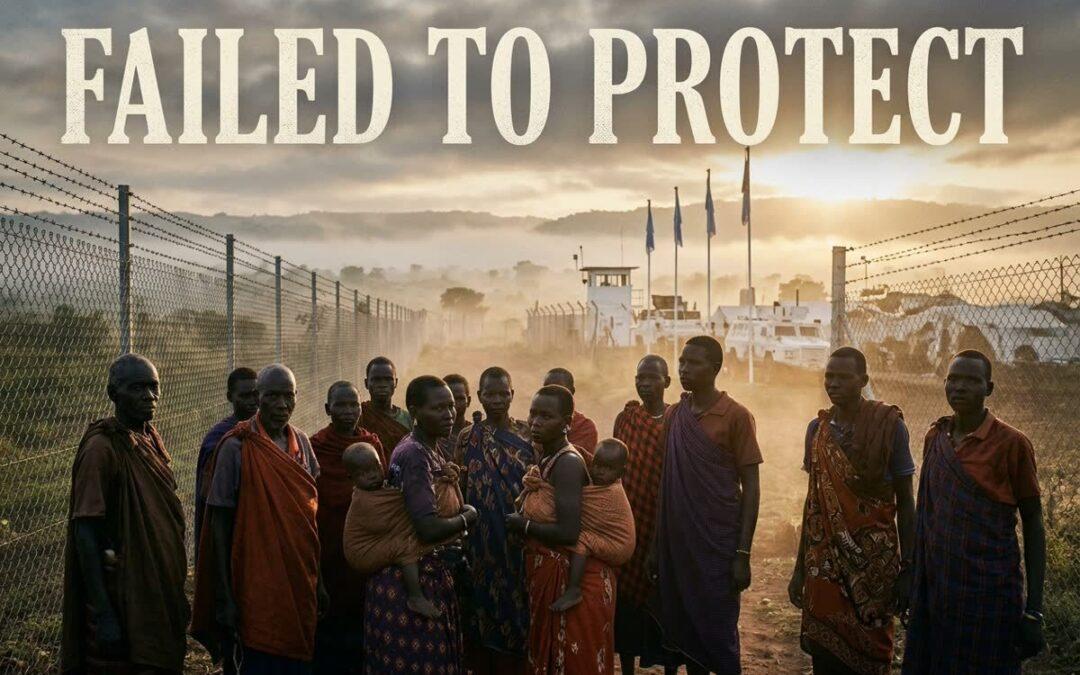
The report revealed that both the United Nations Mission in South Sudan (UNMISS) and local government officials possessed clear advance intelligence weeks before the attack occurred (amnestyusa.org, amnesty.org.au). Despite explicit warnings that armed fighters were assembling, authorities failed to dispatch defensive reinforcements (amnestyusa.org, washingtonpost.com). UNMISS peacekeepers remained behind their fortified base walls while civilians were systematically executed outside (amnestyusa.org, amnestyusa.org). Understanding this tragedy requires looking beyond the immediate violence into the long history of land division, oil politics, and state-sponsored militias in the region.
Mayom County Youth Militias and the March 1 Dawn Raid
Between 4:00 AM and 4:30 AM on Sunday, March 1, 2026, an estimated force of 1,000 to 1,500 armed fighters crossed into Abiemnom from neighboring Unity State (amnestyusa.org, info-res.org). The attackers belonged to Bul Nuer youth factions and elements of the Terchuong militia (amnestyusa.org, smallarmssurvey.org). Armed with automatic rifles, heavy machine guns, and rocket-propelled grenades, the assailants encircled the sleeping town and initiated a four-hour assault (amnestyusa.org, sudanspost.com).
The attackers moved house to house, dragging terrified residents from under beds and shooting them at close range (amnestyusa.org, amnestyusa.org). County Commissioner Paulino Wal Monychikat and Executive Director Mawien Majith were killed while attempting to organize local defense forces (amnestyusa.org, sudanspost.com). In total, at least 213 individuals were killed, including 130 local civilians, 76 territorial security personnel, and seven foreign workers (amnestyusa.org). Over 100 survivors sustained severe gunshot wounds (amnestyusa.org, amnesty.org.au). On March 2, emergency teams buried 169 victims in collective mass graves across the ruined town (amnestyusa.org, sudanspost.com).
The destruction of physical property was comprehensive. Attackers systematically burned more than 230 residential homes, leveled the central market, and ransacked the county hospital, destroying critical surgical supplies and cold-chain equipment (amnestyusa.org, amnestyusa.org). Similar patterns of total community destruction have occurred throughout history when racial or ethnic minorities faced coordinated attacks without state intervention, mirroring the tragic aftermath seen in the Rosewood Massacre of 1923. In Abiemnom, the physical devastation left thousands without shelter, clean water, or medical attention (amnestyusa.org, africanews.com).
Abiemnom Massacre Toll & Impact
Advance Warnings and UNMISS Peacekeeping Failures
The core finding of the Amnesty International investigation is that this violence was entirely predictable (amnestyusa.org). In mid-February 2026, two weeks prior to the massacre, residents in Mayom County began alerting their relatives in Abiemnom that youth fighters were gathering munitions (amnestyusa.org, washingtonpost.com). Government administrators in both Unity State and the Ruweng Administrative Area confirmed receiving actionable reports of an impending offensive (amnestyusa.org). Yet, national army garrisons were not reinforced (amnestyusa.org, sudanspost.com).
Forty-eight hours before the assault, the threat became unmistakable. On February 28, approximately 1,000 frightened civilians gathered directly outside the gates of the UNMISS Temporary Operating Base on the outskirts of Abiemnom (amnestyusa.org). These families sought emergency sanctuary because community leaders knew an attack was imminent (amnestyusa.org, amnestyusa.org). Despite this clear warning, the UN command did not send extra soldiers or armored vehicles from larger bases in Bentiu or Wau (amnestyusa.org, diplomacyandlaw.com).
When the assault began, only thirty-six UN peacekeepers were stationed at the outpost (amnestyusa.org). The peacekeepers did not step beyond their perimeter fence during the four hours of active gunfire (amnestyusa.org, amnestyusa.org). While approximately 2,500 people eventually found refuge inside the compound, at least seven civilians were shot and killed directly outside the base rear gate while trying to escape pursuing fighters (amnestyusa.org). UNMISS leadership stated that the garrison was too small to deploy patrols without compromising the base security (amnestyusa.org, unmissions.org). However, critics pointed out that the mission operates under a Chapter VII mandate from the UN Security Council, which authorizes the use of all necessary force to protect civilians under imminent physical danger (ohchr.org, odihpn.org).
Force Disparity During March 1 Assault
Oil Wealth and Ruweng Unity State Border Disputes
The roots of the violence in Abiemnom stretch deep into the political geography of northern South Sudan (csrf-southsudan.org). Abiemnom County is populated primarily by the Alor community of the Padang Dinka (amnestyusa.org, csrf-southsudan.org). The area sits along an ecological and economic border that contains some of the richest oil reserves on the African continent (csrf-southsudan.org, ethz.ch). The oilfields around Heglig and the Greater Pioneer Operating Company blocks have produced billions of dollars in revenue over past decades (smallarmssurvey.org, ethz.ch).

African History Series • Volume II • Anti-Colonial Resistance & Sovereignty
Africa Reclaimed: Overcoming the Legacies of the Colonial Machine
By Professor A. Darius Spearman • 353 Pages • ISBN: 979-8-9924836-4-2
Colonialism in Africa was never passively endured—and its extractive machinery did not simply vanish when independence flags were raised. Professor A. Darius Spearman traces the unbroken arc of African political power from 19th-century indigenous statecraft and mid-20th-century liberation wars to contemporary battles against neo-colonial debt and resource imperialism.
Historically, Abiemnom and neighboring Pariang were administered as northern counties of Unity State, where the ethnic majority is Nuer (wikipedia.org, csrf-southsudan.org). Local Padang Dinka leaders argued that state revenues and employment were unfairly monopolized by administrators in the state capital of Bentiu (csrf-southsudan.org). In response, President Salva Kiir issued executive decrees in 2015 and 2017 that dismantled South Sudan’s ten historical states, replacing them with twenty-eight and later thirty-two states (wikipedia.org). These decrees carved out Ruweng as an autonomous state specifically for the Dinka population (wikipedia.org, csrf-southsudan.org).
This administrative engineering deepened regional tensions. When the government returned to a ten-state model in February 2020, Ruweng was preserved as a special administrative area directly under the national presidency (wikipedia.org, csrf-southsudan.org). While celebrated by local Dinka residents, the new border separated Unity State from key commercial corridors to Sudan (csrf-southsudan.org). Bul Nuer leaders in Mayom County asserted that historic communal grazing lands and oil-producing territories were being seized without local consent (csrf-southsudan.org, smallarmssurvey.org). Administrative decrees altered local balances of power without addressing underlying resource rights (csrf-southsudan.org).
State Arms and the Padang Dinka Bul Nuer Conflict
The conflict between the Padang Dinka and Bul Nuer is not an ancient tribal rivalry. Instead, national political figures in Juba deliberately armed and mobilized these groups during the civil war that erupted in December 2013 (smallarmssurvey.org, smallarmssurvey.org). When the national leadership fractured along ethnic lines between President Salva Kiir and Vice President Riek Machar, northern Unity State became a critical battleground (smallarmssurvey.org, aljazeera.com).
To defend northern oil infrastructure, national authorities recruited local Bul Nuer commanders to fight against opposition forces (smallarmssurvey.org, smallarmssurvey.org). Leaders such as former Unity State Governor Joseph Nguen Monytuil and military commanders formed the Terchuong militia (smallarmssurvey.org). The national military provided this militia with modern assault rifles, machine guns, and ammunition (smallarmssurvey.org, smallarmssurvey.org). This support turned local cattle-herding youth into an organized paramilitary strike force operating across county borders (smallarmssurvey.org).
Over the subsequent decade, these armed networks gained operational independence (smallarmssurvey.org, smallarmssurvey.org). The widespread introduction of military weaponry replaced traditional intercommunal dispute mechanisms and elder councils (smallarmssurvey.org). When cattle raids or local border clashes took place, youth factions responded with military-grade firepower (sudanspost.com, smallarmssurvey.org). In April 2025, armed youth from Mayom launched a raid on Abiemnom that left twenty-seven people dead, setting off a cycle of revenge that culminated in the March 2026 massacre (amnestyusa.org, radiotamazuj.org).
Civilians Seeking Refuge at UNMISS Base
Impunity and the Stalled South Sudan R-ARCSS Peace Deal
The failure of state security institutions in Abiemnom highlights the larger stagnation of the 2018 Revitalized Agreement on the Resolution of the Conflict in South Sudan (R-ARCSS) (updm-rss.org, ohchr.org). Under Chapter II of the peace agreement, the national government and opposition factions agreed to integrate their combatants into an 83,000-strong national army known as the Necessary Unified Forces (updm-rss.org, ethz.ch). This integration was designed to break the cycle of parallel military command structures and disarm irregular ethnic militias (updm-rss.org).
Years after the agreement was signed, the process remains stalled (ohchr.org). Thousands of soldiers sent to joint cantonment sites were left without food, salaries, or medicine, leading many fighters to desert back to their local ethnic communities (updm-rss.org, ohchr.org). Furthermore, repeated postponements of national democratic elections have created a political environment where elites preserve regional armed militias as negotiating leverage (updm-rss.org, ohchr.org). Similar failures to deliver structural security and legal protection were seen when unresolved post-war reconstruction left vulnerable communities undefended against paramilitary violence.
In South Sudan, this structural inaction has created a culture of total legal impunity (amnestyusa.org, ohchr.org). After the March 2026 massacre, government officials announced investigative committees, but no commanders or political organizers have been arrested or prosecuted (amnestyusa.org, sudanspost.com). This absence of legal accountability echoes past struggles where victims faced decades of institutional denial, much like the quest for justice pursued by survivors of racial terror in Tulsa. Until transitional institutions disarm regional militias, secure disputed administrative boundaries, and hold perpetrators accountable, early warning networks will remain useless safeguards for vulnerable populations (amnestyusa.org, ohchr.org).
About the Author
Darius Spearman is a professor of Black Studies at San Diego City College, where he has been teaching for over 20 years. He is the founder of African Elements, a media platform dedicated to providing educational resources on the history and culture of the African diaspora. Through his work, Spearman aims to empower and educate by bringing historical context to contemporary issues affecting the Black community.
