

400 Mawozo Gang Stronghold Demolished in Haiti Joint Raid
By Darius Spearman (africanelements)
Support African Elements at patreon.com/africanelements and hear recent news in a single playlist. Additionally, you can gain early access to ad-free video content.
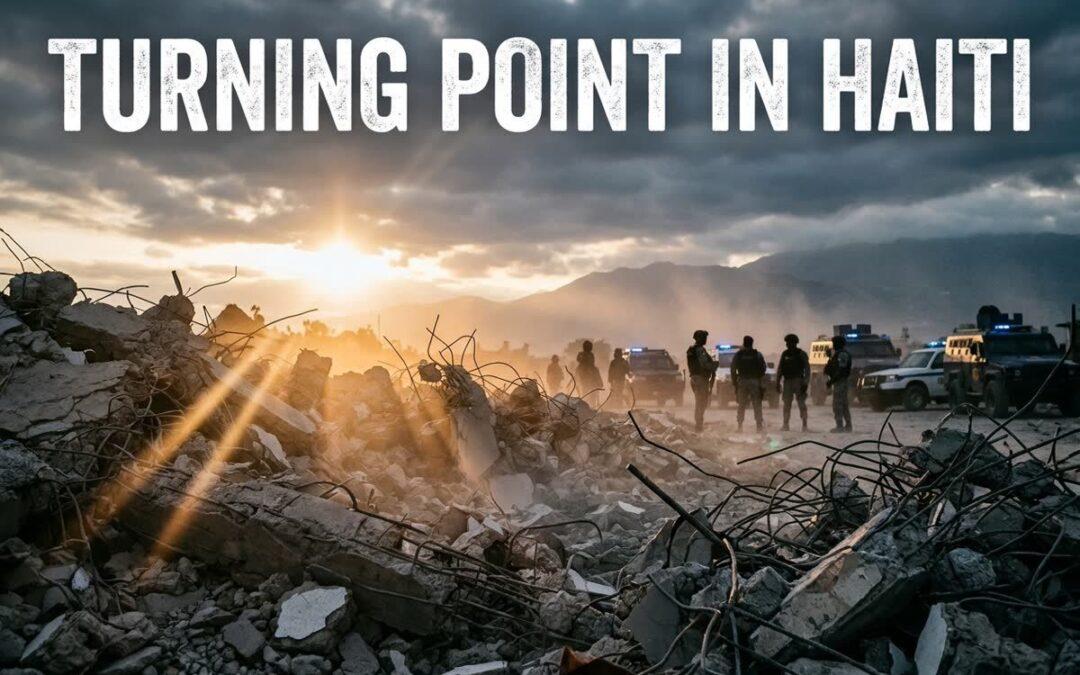
A major joint security offensive in Port-au-Prince reached a violent turning point in November 2026. Specialized units of the Haitian National Police, operating alongside heavily armed Salvadoran forces, systematically destroyed the fortified headquarters of the 400 Mawozo gang (miamiherald.com). The target was the sprawling compound of Wilson Joseph, widely known by the street alias Lanmò San Jou (insightcrime.org, fbi.gov). The pre-dawn ground raid followed precise aerial bombardments and loitering drone strikes across the Croix-des-Bouquets district (miamiherald.com, militarnyi.com).
International news outlets described the demolition as a critical blow against criminal impunity in the Caribbean nation. However, the raid represents far more than an isolated tactical victory (miamiherald.com). The confrontation exposes the culmination of severe institutional decay, foreign intervention, and the flow of illicit American firepower. To understand the ongoing Port-au-Prince security offensive, observers must examine the deep historical currents that transformed neighborhood street crews into heavily armed insurgencies (insightcrime.org, unodc.org).
The Historical Rise of 400 Mawozo and Territorial Control
The criminal faction known today as 400 Mawozo did not emerge overnight. Around 2016, a loose band of young men formed a small criminal outfit called “Texas” in the communes of Croix-des-Bouquets and Ganthier (insightcrime.org). In its earliest stages, the group engaged in low-level rural theft, cattle rustling, and roadside extortion of motorcycle drivers (insightcrime.org). Over time, the organization adopted the moniker 400 Mawozo, an expression in Haitian Creole translating roughly to “400 untrained men” (insightcrime.org).
The structure of the organization altered permanently following the arrest and 2022 U.S. extradition of its founder, Germine Joly, known as Yonyon (insightcrime.org, justice.gov). Command of the gang then passed to Wilson Joseph, known as Lanmò San Jou (insightcrime.org). Joseph transformed the group from a disorganized band into a disciplined militia equipped with automatic weapons and tactical field gear (insightcrime.org, fbi.gov). The gang seized total control of Route Nationale 8 (insightcrime.org). This highway is the vital economic artery connecting Port-au-Prince to the Malpasse border crossing into the Dominican Republic (insightcrime.org).
This geographic expansion reflected long-standing historical practices across the republic. Historically, Haitian political and business factions utilized armed neighborhood groups as private enforcement tools during elections and labor strikes (insightcrime.org, democracynow.org). The roots of this dynamic stretch back through generations of elite fragmentation that followed the Haitian Revolution, when competing factions repeatedly vied for regional dominance. When state institutions disintegrated, these armed proxies broke free from their political patrons (insightcrime.org, democracynow.org). They established independent revenue systems through kidnapping, commercial hijacking, and highway customs tolls (insightcrime.org, unodc.org).
Gang Territory in Port-au-Prince (2021-2026)
State Collapse and the Viv Ansanm Gang Alliance
The turning point in Haiti’s security environment arrived on July 7, 2021, when President Jovenel Moïse was assassinated inside his residence (wikipedia.org). The assassination shattered executive authority and threw the judicial branch into deep disarray (genocidewatch.com, democracynow.org). Without an elected president or functioning parliament, constitutional governance broke down entirely (genocidewatch.com, democracynow.org). Street gangs moved quickly to fill the administrative void across Port-au-Prince (insightcrime.org, un.org).
In October 2021, 400 Mawozo drew worldwide condemnation after abducting 17 Christian missionaries from the United States and Canada (wikipedia.org, fbi.gov). Joseph demanded a ransom of one million dollars per captive, threatening execution in widely circulated online videos (wikipedia.org, fbi.gov). The mass kidnapping prompted federal indictments in Washington and a one million dollar FBI bounty on Joseph’s head (fbi.gov, justice.gov). Rather than retreating, the gangs continued consolidating control over transportation routes and municipal centers (insightcrime.org, un.org).
By early 2024, the capital witnessed an unprecedented strategic alignment among formerly warring criminal cartels (newscord.org, washingtonpost.com). Bitter rivals—including Jimmy “Barbecue” Chérizier’s G9 coalition and the competing G-Pèp confederacy—formed a unified pact known as the Viv Ansanm gang alliance (newscord.org, washingtonpost.com). Viv Ansanm launched synchronized assaults against police stations, major prisons, and the international airport (newscord.org, washingtonpost.com). This armed federation brought an estimated 80 to 90 percent of the metropolitan area under criminal control (un.org, washingtonpost.com).
The Florida Weapons Pipeline Haiti and Border Contraband
Despite United Nations arms embargoes, Haitian gangs maintain access to military-grade firearms (unodc.org, unodc.org). UN reports and U.S. federal indictments confirm that the bulk of these arsenals originates from the United States (unodc.org, justice.gov). This illicit supply chain, known as the Florida weapons pipeline Haiti, exploits loose domestic firearm regulations (unodc.org, wlrn.org). Gunrunners rely on domestic straw-purchasing schemes across gun shops and private shows in Florida (unodc.org, justice.gov).
Straw buyers acquire heavy weaponry, including Barrett .50-caliber sniper rifles and high-capacity drum magazines (unodc.org, fox13news.com). The weapons are concealed inside commercial shipping containers, vehicle engines, and hollowed-out household cargo (unodc.org, unodc.org). Vessels departing maritime hubs along the Miami River transport this deadly freight into Haiti (unodc.org, wlrn.org). Because customs agencies inspect only a minute fraction of outbound American commercial cargo, the trafficking network operates with significant consistency (unodc.org, unodc.org).
This dynamic illustrates a glaring enforcement asymmetry. The United States government expends substantial Coast Guard resources to interdict and deport Haitian migrants arriving by sea (democracynow.org). Concurrently, outbound maritime interdiction efforts targeting lethal weapons leaving American docks remain markedly limited (unodc.org, democracynow.org). Once unloaded at gang-dominated wharves or rural airstrips, these imported weapons outmatch the standard sidearms of local police (unodc.org, unodc.org). This massive firepower empowers gang leaders to fortify expansive regional estates (insightcrime.org, unodc.org).
Estimated Origins of Illegal Firearms in Haiti
Salvadoran Troops in Haiti and Foreign Intervention Precedents
The international intervention strategy altered dramatically in late 2026. Initially, foreign assistance relied upon a limited United Nations-backed mission led by Kenyan police officers (un.org, aa.com.tr). However, the operational tempo shifted following an ambush on October 18, 2026 (wsws.org). Four Salvadoran military aviation technicians disappeared after their armored transport vehicle was bombed in Croix-des-Bouquets (wsws.org). The attack took place within contested territory controlled by 400 Mawozo (insightcrime.org, wsws.org).
Salvadoran President Nayib Bukele responded by transforming his country’s presence into an offensive expeditionary force (wsws.org, tomorrowsaffairs.com). Surging past an initial logistical cadre, Bukele deployed more than 2,000 elite soldiers and attack helicopters (wsws.org). This deployment exported the domestic Bukele doctrine directly to the Caribbean (americasquarterly.org, tomorrowsaffairs.com). In El Salvador, this strategy relied upon widespread arrests, suspension of due process, and prolonged detention without formal trials (americasquarterly.org, tomorrowsaffairs.com).
Applying this militarized policing model in densely populated Haitian urban centers raises severe human rights concerns (genocidewatch.com, democracynow.org). Similar heavy-handed practices mirror the punitive philosophies examined during the era of mass incarceration in the United States. Furthermore, the intervention lacks explicit authorization from an elected Haitian parliament (democracynow.org). The deployment revives historical memories of previous foreign occupations (historianspeaks.org). The brutal 1915–1934 United States occupation and the civilian abuses of the 2004–2017 UN MINUSTAH mission left deep public skepticism regarding outside military interventions (genocidewatch.com, historianspeaks.org).
Haiti Police Drone Strikes Reshape Urban Combat
For years, gang factions exploited the dense architecture of Port-au-Prince to repel ground assaults (insightcrime.org). Narrow streets, concrete barricades, and elevated sniper nests frequently trapped state tactical units in deadly crossfires (insightcrime.org). To overcome these tactical disadvantages, security forces introduced weaponized loitering drones and aerial surveillance platforms (miamiherald.com, militarnyi.com). These technological additions removed the defensive perimeter advantages that gang redoubts long enjoyed (miamiherald.com).
During the weekend operation preceding the demolition, security forces launched precision aerial assaults across Cité Soleil and the Cul-de-Sac plain (miamiherald.com). The strikes targeted reinforced command bunkers, mortally wounding Mathias Saintil, a prominent gang commander allied with Viv Ansanm (miamiherald.com). Shortly after, aerial munitions struck the compound of Wilson Joseph at three in the morning (miamiherald.com). The precision strikes destroyed outer fortifications and opened direct pathways for advancing ground teams (miamiherald.com).
While precision strikes deliver short-term tactical advantages, human rights groups document profound civilian hazards (genocidewatch.com, democracynow.org). Port-au-Prince neighborhoods are among the most densely populated urban sectors in the Western Hemisphere (un.org). Shrapnel and collapsing structures routinely imperil impoverished working-class families trapped inside active combat zones (genocidewatch.com, democracynow.org). Displaced residents frequently must rely on historical patterns of community survival when fleeing the destructive urban warfare (genocidewatch.com, un.org).
Key Deployed Forces in Haiti Offensive (2026)
The Demolition of the Lanmo San Jou Stronghold
Following the conclusion of the aerial bombardment, armored bulldozers and tactical breaching units pushed into the heart of Croix-des-Bouquets (miamiherald.com). Joint forces flattened the multi-story compound belonging to Wilson Joseph (miamiherald.com). The demolition was designed to strip the gang of its fortified bastion and dismantle an enduring symbol of criminal control (miamiherald.com, insightcrime.org). For years, Joseph had operated from this compound with complete disregard for state authority (insightcrime.org, fbi.gov).
Despite the physical ruin of his base, Joseph evaded capture during the raid (miamiherald.com). In the aftermath of the assault, 400 Mawozo issued official letters to United Nations Secretary-General António Guterres and national disarmament officials (miamiherald.com). Branding themselves as the “Gwoup Rebel 400,” the gang proposed an immediate ceasefire and demanded international mediation (miamiherald.com). The correspondence illustrated an attempt by criminal leadership to secure political recognition and avoid extradition to the United States (miamiherald.com, insightcrime.org).
The demolition exposes the recurring strategic dilemma facing security forces in Haiti: the distinction between clearing territory and holding it (insightcrime.org, un.org). The Haitian National Police possesses fewer than ten thousand active personnel to secure a nation of twelve million citizens (un.org). Historically, when security operations destroy rural or peri-urban strongholds, gang combatants melt into nearby hills (insightcrime.org). They frequently reoccupy the territory as soon as foreign forces return to their main bases (insightcrime.org, un.org).
Demolishing concrete headquarters removes operational nerve centers, but it cannot repair absent municipal institutions (un.org, democracynow.org). True regional stability requires establishing permanent police stations, reviving the domestic judicial system, and restoring lawful economic opportunities across the Plaine du Cul-de-Sac (un.org, unodc.org). Until the Haitian state reclaims basic sovereign functions and stem foreign weapon imports, the destruction of gang compounds remains an opening chapter rather than a definitive conclusion (un.org, unodc.org).
About the Author
Darius Spearman is a professor of Black Studies at San Diego City College, where he has been teaching for over 20 years. He is the founder of African Elements, a media platform dedicated to providing educational resources on the history and culture of the African diaspora. Through his work, Spearman aims to empower and educate by bringing historical context to contemporary issues affecting the Black community.
