

Democratic Party Underinvestment Sparks Outcry in South
By Darius Spearman (africanelements)
Support African Elements at patreon.com/africanelements and hear recent news in a single playlist. Additionally, you can gain early access to ad-free video content.
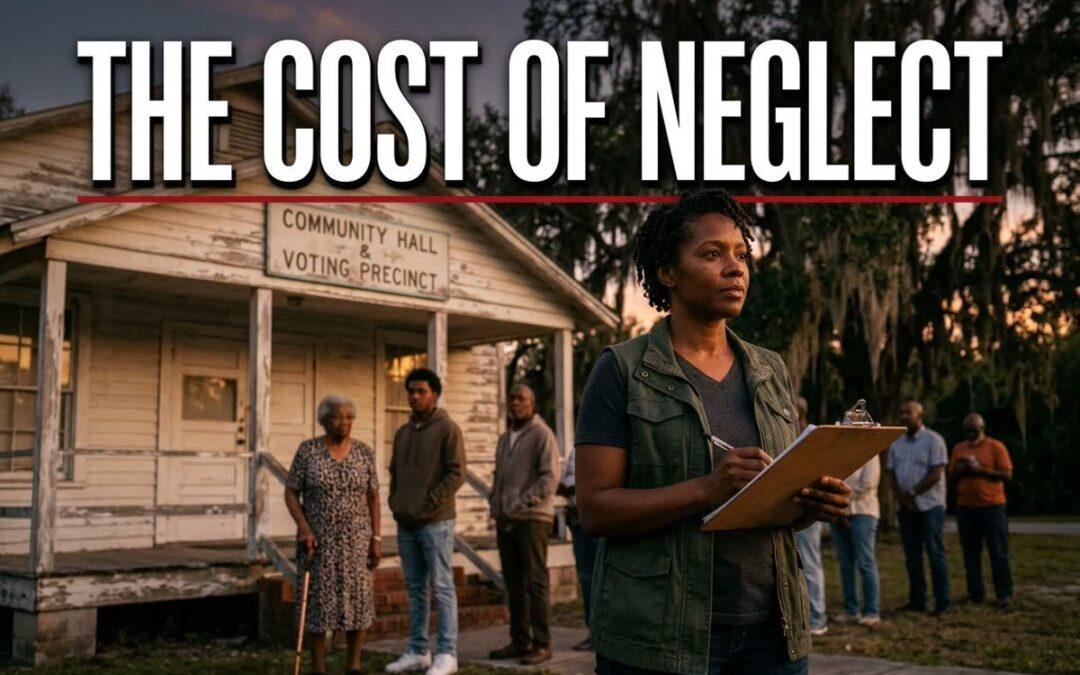
A post-midterm investigation published on November 12 has sparked widespread debate across the American political landscape (capitalbnews.org). The report revealed that national Democratic campaign committees withheld critical late-stage financial resources from competitive Black Senate nominees in the Deep South (capitalbnews.org, capitalbnews.org). Grassroots leaders argue that this selective spending cost the party viable victories in Louisiana and Florida while reinforcing a decades-long pattern of structural neglect (capitalbnews.org).
The findings exposed deep frustration regarding Democratic party underinvestment among voting rights advocates and civic organizers (capitalbnews.org). In Louisiana, third-generation farmer Jamie Davis lost by only 1.7 percentage points (capitalbnews.org, bossierpress.com). In Florida, state Representative Angie Nixon fell short by fewer than three percentage points (capitalbnews.org). These narrow deficits occurred even as high Black voter turnout propelled down-ballot candidates and broke legislative supermajorities (capitalbnews.org, washingtoninformer.com). Organizers argue that national strategists continue to treat Southern Black voters as an electoral firewall while refusing to fund the candidates who inspire them (capitalbnews.org, salon.com).
Reconstruction to the DLC: Southern Political Triage History
The contemporary abandonment of Southern battlegrounds is rooted in a long Southern political triage history (berkeley.edu, salon.com). During Reconstruction, Black Americans built unprecedented political power across the South (berkeley.edu). Louisiana made history when P.B.S. Pinchback became the first Black governor in United States history in 1872 (berkeley.edu). Pinchback later won election to both the United States House of Representatives and the United States Senate (berkeley.edu). However, white conservative politicians in Washington refused to seat him, signaling the limits of national political commitment (berkeley.edu). Following the Civil War, formerly enslaved people transformed rural networks into civic engines, even as sharecropping and legal violence sought to re-impose subjugation (berkeley.edu).
The Compromise of 1877 withdrew federal troops from the South, abandoning Black citizens to reactionary state governments (berkeley.edu). Southern white Democrats constructed the “Solid South” through violent suppression, poll taxes, and literacy tests (berkeley.edu). For nearly a century, national party leaders treated the South as a white conservative fiefdom (berkeley.edu). National party institutions routinely compromised Black civil rights to preserve congressional majorities (berkeley.edu, salon.com).
This dynamic evolved during the 1980s and 1990s with the rise of the Democratic Leadership Council (DLC) (salon.com). Led by figures such as Bill Clinton and strategist James Carville, the DLC pushed the party toward centrist policies (salon.com). DLC architects argued that winning national elections required courting suburban, non-college-educated white swing voters (salon.com). Consequently, national committees treated Black voters as “captured” constituents who had no other political alternative (salon.com). The party established a routine pattern: rely on Southern Black voter mobilization on election day, but starve local party organizations of permanent infrastructure between cycles (capitalbnews.org, salon.com).
Late-Stage Senate Ad Spending Comparison
Independent analysis by Wesleyan Media Project & AdImpact
Civil Rights Realignment and Southern Black Voter Mobilization
The modern era of Southern Black voter mobilization emerged out of direct resistance to party gatekeepers (berkeley.edu, time.com). At the 1964 Democratic National Convention in Atlantic City, civil rights leader Fannie Lou Hamer led the Mississippi Freedom Democratic Party (berkeley.edu). She challenged the credentials of the state’s all-white, segregationist delegation (berkeley.edu). National party officials offered the delegation two non-voting, at-large seats to avoid angering white conservatives (berkeley.edu). Hamer rejected the token gesture, establishing that Black political demands could not be bought off with symbolic inclusion (berkeley.edu).
Following the passage of the Voting Rights Act of 1965, the Southern strategy realignment orchestrated by the Republican Party shifted millions of conservative white voters away from Democrats (berkeley.edu). Simultaneously, Black citizens in the South built powerful grassroots operations centered on churches, civic clubs, and civil rights networks (berkeley.edu, time.com). In the academic discipline of Black Studies and political thought, scholars note that independent organizing has always been essential for community advancement (berkeley.edu). Activists have repeatedly questioned the value of traditional alliances, fueling ongoing debates on voting and representation within national party structures (salon.com).
Modern campaigns have repeatedly reproduced this historical tension (salon.com, wfae.org). In recent election cycles, prominent Black statewide candidates across the South encountered early donor skepticism and late-stage funding withdrawals (wfae.org). Candidates such as Mike Espy in Mississippi and Cheri Beasley in North Carolina operated without parity in party resources (wfae.org). National party leadership routinely shifted money toward Midwestern battlegrounds (capitalbnews.org, wfae.org). The Capital B News investigation demonstrated that this extractive approach remains deeply entrenched in national campaign finance operations (capitalbnews.org).
Seven Votes Per Precinct: The Jamie Davis Louisiana Senate Contest
The Jamie Davis Louisiana Senate race provides a clear example of missed electoral opportunity (capitalbnews.org, bossierpress.com). Jamie Davis, a third-generation farmer from Tensas Parish, mounted a grassroots bid for the open Senate seat (capitalbnews.org, bossierpress.com). Facing well-funded Republican Representative Julia Letlow, Davis rejected corporate PAC donations and built a coalition across rural farming communities and urban wards (capitalbnews.org, bossierpress.com). Louisiana had not elected a Black senator since the Reconstruction era (berkeley.edu). National forecasters classified the state as unwinnable, pointing to past presidential voting margins (capitalbnews.org, bossierpress.com).
Despite receiving minimal outside attention, Davis closed the margin dramatically on election night (capitalbnews.org). He lost to Letlow by approximately 25,000 votes, a deficit of only 1.7 percentage points (capitalbnews.org, bossierpress.com). Louisiana contains 3,722 voting precincts (capitalbnews.org). A shift of merely seven votes per precinct would have flipped the seat to Democratic control (capitalbnews.org). Advertising tracking from AdImpact revealed that national Democratic committees spent exactly zero dollars on television advertisements for Davis during the final weeks of the race (capitalbnews.org).
Interviews conducted by Capital B News across Baton Rouge and New Orleans showed that thousands of reliable voters entered the voting booth unaware of Davis’s platform (capitalbnews.org). Black Belt voting power generated high baseline turnout, yet the campaign lacked the capital to broadcast television or digital messages in media markets like Shreveport and Monroe (capitalbnews.org, time.com). Strategists noted that a multi-million-dollar investment in the final month could have established the name recognition necessary to secure the remaining seven votes per precinct (capitalbnews.org).
Final Deficit in Underfunded Senate Races
Vote margin percentages separating nominees from victory
Coalition Power and Resistance: The Angie Nixon Florida Senate Campaign
In Florida, the Angie Nixon Florida Senate challenge exposed internal ideological resistance from establishment gatekeepers (capitalbnews.org, youtube.com). State Representative Angie Nixon entered the race against incumbent Republican Ashley Moody following significant Democratic setbacks in 2022 and 2024 (capitalbnews.org). National committees had effectively written off the state as non-competitive (capitalbnews.org). Instead, party leadership redirected funding toward Senate campaigns in Iowa, Ohio, and Alaska (capitalbnews.org). National spending in Iowa outpaced spending in Florida by a ratio of ten to one (capitalbnews.org).
Nixon, an unapologetic progressive organizer, ran a campaign focused on labor protections, tenant rights, and reproductive freedom (capitalbnews.org, youtube.com). Her candidacy drew sharp public criticism from traditional party figures (capitalbnews.org, salon.com). Veteran consultant James Carville publicly described Nixon as uninspiring, dismissing her potential across statewide media (capitalbnews.org, salon.com). Despite this lack of institutional support, Nixon mounted a formidable challenge (capitalbnews.org). She flipped Miami-Dade County, secured strong turnout in Duval County, and broke the Republican legislative supermajority in Tallahassee (capitalbnews.org).
Nixon lost by less than three percentage points (capitalbnews.org). In a post-election interview with Roland Martin, Nixon condemned the refusal of national committees to invest in Southern Black candidates (capitalbnews.org, youtube.com). She stated that party institutions routinely write off Southern battlegrounds while expecting grassroots organizers to perform miracles without money (capitalbnews.org, youtube.com). Nixon observed that gatekeepers actively undercut Black progressive leadership to maintain control over party strategy (capitalbnews.org, youtube.com).
“Black candidates in Southern states were dismissed as unwinnable, denied timely resources, and forced to fight entrenched systems even as they mobilized voters on the ground… There was some sabotage, too.” (capitalbnews.org, youtube.com)
Legal Rollbacks and the Shelby County v Holder Impact
The financial starvation of Southern campaigns coincided with severe legal voter suppression, compounding the Shelby County v Holder impact (berkeley.edu). In its 2013 decision, the Supreme Court struck down the preclearance coverage formula in Section 4 of the Voting Rights Act (berkeley.edu). This ruling stripped the federal government of authority to review changes to election laws in jurisdictions with documented histories of discrimination (berkeley.edu). Free from federal oversight, Southern state legislatures moved quickly to restrict ballot access (berkeley.edu).
Following the decision, state and county election boards closed more than one thousand polling places across the South (berkeley.edu). These closures fell disproportionately upon majority-Black counties and rural communities in the Black Belt (berkeley.edu, time.com). Voters in these areas faced multi-hour lines, increased transit costs, and reduced early voting hours (berkeley.edu). In addition, states enacted strict government-issued photo identification rules and aggressive registration purges (berkeley.edu). When national committees withhold funding, grassroots campaigns cannot deploy the field teams, legal observers, and transportation networks required to overcome these barriers (capitalbnews.org, berkeley.edu).
This dynamic reinforces what organizers term an extractive campaign strategy (capitalbnews.org). National consultants enter Southern communities weeks before election day, purchase expensive media time, and exit immediately after the polls close (capitalbnews.org). They extract votes without investing in lasting civic capacity (capitalbnews.org). Organizers stress that multi-cycle funding is required to dismantle the voter suppression apparatus established after 2013 (capitalbnews.org, berkeley.edu). Without sustained support, close losses will continue to be mischaracterized as voter apathy rather than systemic resource deprivation (capitalbnews.org).
Black Voter Support for House Democrats
National midterm polling data rebound
The razor-thin losses of Jamie Davis and Angie Nixon demonstrate that the pathway to a sustainable Senate majority runs directly through the American South (capitalbnews.org). Nationwide, 91% of Black voters backed Democratic candidates in House races, demonstrating a ten-point rebound from recent presidential figures (washingtoninformer.com). The votes were present, but the financial backing was absent (capitalbnews.org). Had party institutions shifted ten to fifteen percent of their advertising budgets from failed Midwestern campaigns into Louisiana and Florida, both seats could have flipped (capitalbnews.org). The post-midterm investigation makes clear that until national leadership commits real resources to Black candidates in the South, the party will continue to forfeit its own majorities (capitalbnews.org, salon.com).
About the Author
Darius Spearman is a professor of Black Studies at San Diego City College, where he has been teaching for over 20 years. He is the founder of African Elements, a media platform dedicated to providing educational resources on the history and culture of the African diaspora. Through his work, Spearman aims to empower and educate by bringing historical context to contemporary issues affecting the Black community.
