



Why Did Federal Agents Raid Rep Ilhan Omar Home?
By Darius Spearman (africanelements)
Support African Elements at patreon.com/africanelements and hear recent news in a single playlist. Additionally, you can gain early access to ad-free video content.
A Dawn Raid That Stunned Capitol Hill
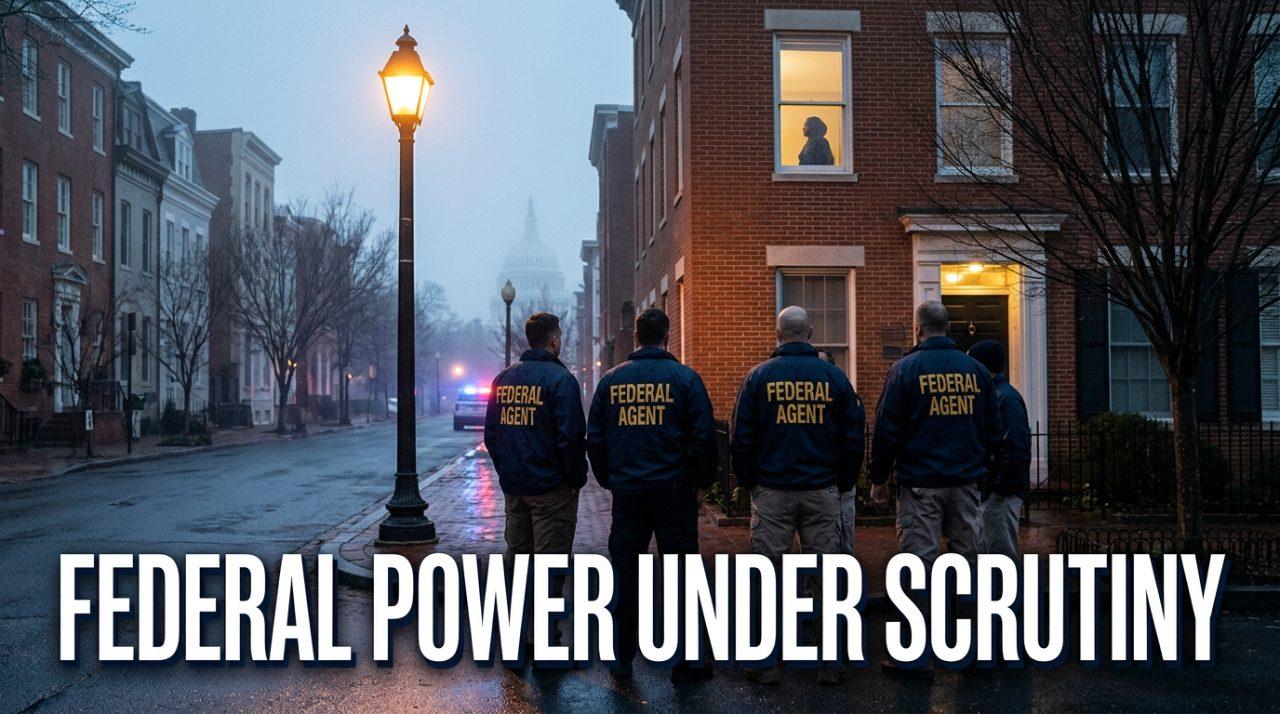
Armed federal agents arrived unannounced at dawn. Investigators from Homeland Security Investigations conducted a search of Representative Ilhan Omar’s Washington, D.C., home (cbsnews.com, washingtonpost.com). The Department of Justice confirmed an active criminal inquiry (cbsnews.com). The probe centers on entry paperwork filed thirty years ago by her late father when she arrived as a child refugee (washingtonpost.com).
The political reaction was swift and fierce. Representative Omar stated that she refused to be intimidated by federal overreach (cbsnews.com). House Democratic leaders swiftly condemned the search as an abuse of power (house.gov, house.gov). Meanwhile, the Congressional Black Caucus convened an emergency session to issue a formal defense (house.gov, house.gov). For Black lawmakers, this action crossed a dangerous constitutional line (house.gov).
Critics noted the timing of the search warrant. The raid took place less than one month before general elections (washingtonpost.com, lawfaremedia.org). Federal rules generally bar overt actions close to elections to avoid improper political influence (lawfaremedia.org, justice.gov). Yet federal authorities chose to breach that norm against an outspoken immigrant lawmaker (cbsnews.com, washingtonpost.com).
Election Window vs Federal Search Timing
The Emergency Stand of the Congressional Black Caucus
The Congressional Black Caucus responded with moral clarity and political urgency. CBC Chair Yvette D. Clarke labeled the raid a political sham (house.gov, house.gov). She stated the action aimed to manufacture suspicion before voters cast ballots (house.gov). The caucus warned that weaponizing federal law enforcement endangers democracy itself (house.gov).
House Minority Leader Hakeem Jeffries joined the CBC statement. He described the search as a rogue abuse of power (house.gov). Democratic leaders argued that federal power was deployed to intimidate an elected official (house.gov, house.gov). This shared outrage reflects an understanding of Black politics under ongoing scrutiny.
The CBC acts as an early warning system against executive overreach. The caucus recognizes how selective prosecutions target minority lawmakers (house.gov, sdvoice.info). Its rapid mobilization demonstrates that an injury to one member affects the entire body (house.gov). Black leaders viewed the search as a direct attack on their collective voice (house.gov, sdvoice.info).
Historical Precedents: Federal Power and Black Dissent
Federal scrutiny of Black leadership is an old story in American history. During the twentieth century, the Federal Bureau of Investigation operated COINTELPRO. That counterintelligence program monitored civil rights groups and elected officials. Agents used wiretaps, character assassination, and manufactured leaks to disrupt Black organizations.
Leaders like Martin Luther King Jr. faced constant surveillance from federal agencies. Law enforcement gathered personal files to undermine civil rights work. These historical operations created enduring skepticism of federal motives among African Americans. Today, Black lawmakers remain watchful when federal agencies target progressive leaders.
Historical struggles also reveal how the state divided communities. In debates over conflicting ideologies, external authorities often exploited internal tensions to weaken advocacy. Federal surveillance aimed to neutralize effective Black political power. Consequently, current federal actions against Representative Omar revive memories of that painful past.
The 1971 Founding: The Conscience of the Congress
The Congressional Black Caucus arose directly from the Civil Rights Movement. In 1969, nine African American representatives formed an informal legislative group. Following the 1970 midterm elections, thirteen Black lawmakers formally established the CBC in 1971 (house.gov, sdvoice.info). The Voting Rights Act of 1965 made their historic elections possible.
Founding members included visionary leaders like Shirley Chisholm, John Conyers, and Charles Rangel. They nicknamed their organization the Conscience of the Congress. In 1971, the group boycotted President Richard Nixon’s State of the Union address. They demanded meaningful policies to combat poverty, discrimination, and police misconduct.
The founders understood that Black communities required institutional protection in Washington. The federal government had often enforced discrimination rather than dismantling it. The ongoing tension between state and federal authority shaped their mission. As explored in discussions of nation-centered power, federal power can either protect civil rights or suppress them.
Congressional Black Caucus Membership Growth
The Evolution of the African Diaspora in Congress
The modern Congressional Black Caucus represents a broader coalition than it did five decades ago. The passage of the Immigration and Nationality Act of 1965 opened new pathways from the African continent. Over subsequent decades, thousands of African and Caribbean families arrived in the United States. Today, the CBC represents over eighty-two million Americans, including eighteen million Black citizens (house.gov).
Representative Omar embodies this modern diaspora migration. Born in Somalia, she fled a brutal civil war as a young child. She spent four years in a refugee camp in Kenya before arriving in America. In 2018, she became the first Somali American elected to the United States Congress. Her presence reflects an expanding definition of Black political representation.
Because of this diversity, the CBC champions immigrant rights alongside domestic civil rights. The caucus recognizes that attacks on naturalized citizens threaten all minority communities. When federal agencies scrutinize an African refugee turned lawmaker, the CBC views it as a diaspora issue. Defending Representative Omar protects the political rights of all new Americans.
Legal Realities: Statutes of Limitations and Denaturalization
The legal justification for the federal search raises serious questions among defense experts. Executing a criminal search warrant requires establishing probable cause under Federal Rule of Criminal Procedure 41. Investigators must present evidence that an unexpired federal crime occurred. However, immigration fraud statutes carry clear time restrictions.
Under 18 U.S.C. § 3291, criminal naturalization fraud has a strict ten-year statute of limitations (justice.gov, cornell.edu). Paperwork filed thirty years ago by a parent cannot independently support criminal charges (cornell.edu). The government must prove ongoing violations or false statements made within the last ten years (justice.gov, cornell.edu). Additionally, minors cannot easily be held liable for entries submitted by deceased parents.
Civil denaturalization under 8 U.S.C. § 1451(a) does not have a statute of limitations (cnvisalaw.com, cornell.edu). Yet civil revocation cases do not justify pre-dawn raids by armed criminal agents. In Maslenjak v. United States (2017), the Supreme Court ruled that minor misstatements do not justify stripping citizenship (cornell.edu). The government must prove that a misrepresentation directly influenced the original immigration decision (cornell.edu).
Rising Threats and Targeted Hostility
The raid on Representative Omar occurred within a dangerous climate for minority lawmakers. Hostility directed at elected officials has climbed sharply across the nation (uscp.gov). Data from the United States Capitol Police demonstrates a significant surge in targeted threat investigations (uscp.gov). Outspoken women of color frequently absorb the heaviest volume of harassment (19thnews.org, brennancenter.org).
Capitol Police Threat Investigations Surge
Representative Omar has faced years of public vilification. Campaign rallies have featured hostile chants demanding her expulsion from the country. When federal agencies deploy aggressive tactics against her, they amplify those existing public tensions. The CBC emphasized that such government actions place lawmakers in genuine physical danger (house.gov).
Studies reveal that Black female officeholders receive disproportionate threats of violence (19thnews.org, brennancenter.org). The raid reinforces racist tropes regarding foreignness and criminality. For the CBC, protecting Omar means confronting a broader culture of intimidation directed at Black women leaders (house.gov, 19thnews.org).
The Erosion of Institutional Guardrails
The Justice Department’s traditional sixty-day rule serves as an essential institutional safeguard (lawfaremedia.org, justice.gov). It prevents prosecutors from tipping elections through theatrical investigative steps (lawfaremedia.org). By executing an overt search three weeks before election day, the agency damaged its appearance of neutrality (cbsnews.com, washingtonpost.com, lawfaremedia.org).
Selective enforcement erodes public trust in federal institutions. When government power targets political dissidents, democratic norms collapse quickly. The Congressional Black Caucus recognized this danger instantly (house.gov). Its emergency declaration aimed to stop the normalization of weaponized law enforcement (house.gov, house.gov).
Ultimately, the raid on Representative Ilhan Omar is not an isolated event. It reflects deep historical continuities of state surveillance and racialized hostility. The Congressional Black Caucus continues to stand on the front lines of that struggle. By invoking its historic role as the Conscience of the Congress, the CBC insists that federal power must never serve partisan vendettas.
About the Author
Darius Spearman is a professor of Black Studies at San Diego City College, where he has been teaching for over 20 years. He is the founder of African Elements, a media platform dedicated to providing educational resources on the history and culture of the African diaspora. Through his work, Spearman aims to empower and educate by bringing historical context to contemporary issues affecting the Black community.
