

Why the Supreme Court May Ban Race-Neutral Admissions
By Darius Spearman (africanelements)
Support African Elements at patreon.com/africanelements and hear recent news in a single playlist. Additionally, you can gain early access to ad-free video content.
The United States Supreme Court has agreed to review a major civil rights challenge that could redefine public education (ballotpedia.org, supremecourt.gov). On October 19, 2026, the high court announced it will hear Association for Education Fairness v. Montgomery County Board of Education (ballotpedia.org, supremecourt.gov). The announcement immediately mobilized civil rights organizations, legal defense funds, and public school advocates across the country (davisvanguard.org, naacpldf.org). Groups such as the NAACP Legal Defense and Educational Fund (LDF), Asian Americans Advancing Justice, and LatinoJustice PRLDEF quickly rallied to defend policies designed to ensure equal access (davisvanguard.org, naacpldf.org).
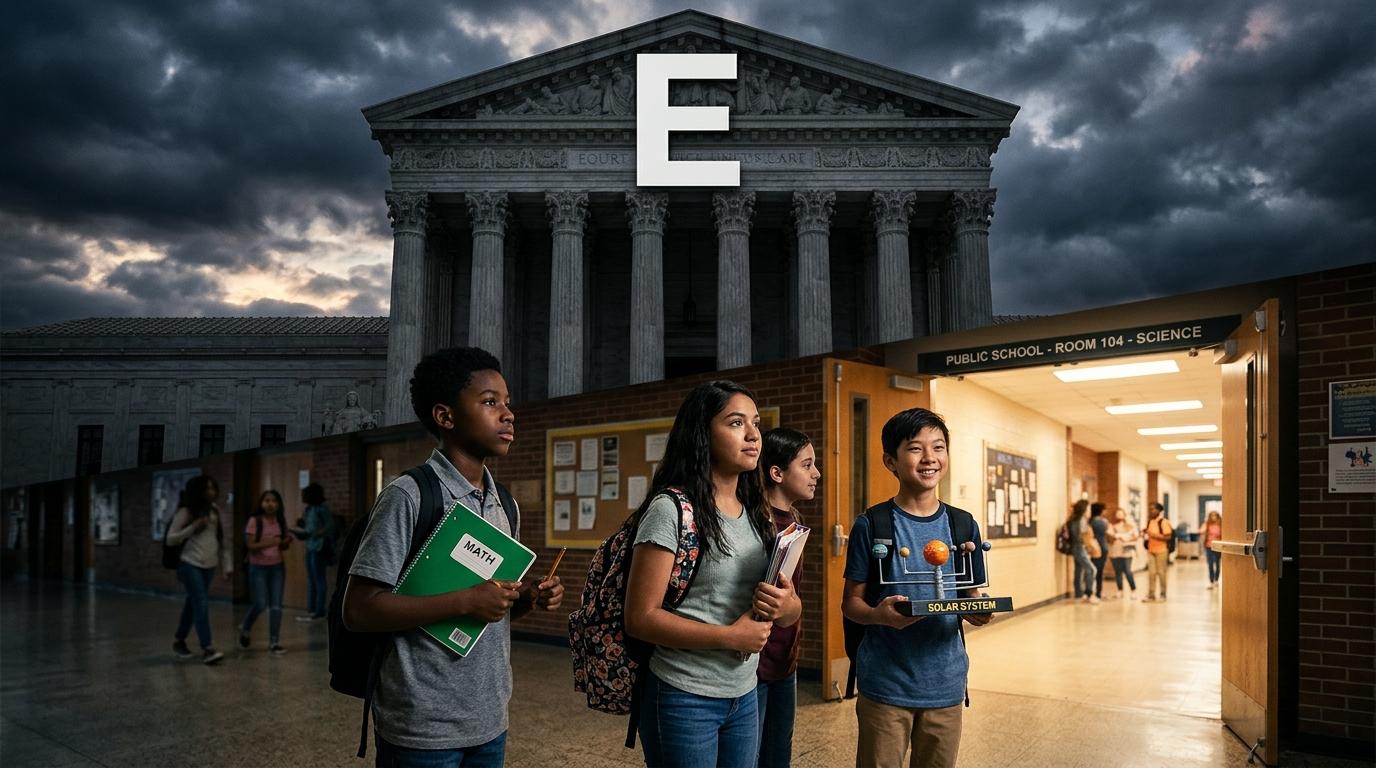
The lawsuit challenges admissions reforms enacted at selective magnet middle schools in Montgomery County, Maryland (davisvanguard.org, pacificlegal.org). Conservative legal organizations argue that even when school districts do not use racial criteria, policy changes aimed at expanding access can constitute illegal racial discrimination (pacificlegal.org, washingtonexaminer.com). The case arrives three years after the conservative supermajority struck down race-conscious admissions in higher education in Students for Fair Admissions v. Harvard (naacpldf.org, jurist.org). Today, the battleground has shifted from college campuses to public middle school classrooms (davisvanguard.org, courthousenews.com).
Reconstruction Foundations: Caste Versus Classification
To understand the current legal clash, one must examine the Reconstruction era. Following the Civil War, the United States amended its Constitution to integrate formerly enslaved African Americans into full civic life (africanelements.org). During this period, the nation confronted deep structural inequalities as newly emancipated Blacks continued to face severe systemic barriers (africanelements.org). The Reconstruction Congress ratified the Fourteenth Amendment in 1868, establishing the Equal Protection Clause to eradicate state-enforced racial caste (davisvanguard.org, naacpldf.org).
A central debate today concerns two competing theories of the Fourteenth Amendment: anti-subordination and anti-classification. The anti-subordination principle holds that equal protection exists to dismantle racial caste systems and remedy historical subjugation. Legal scholars note that the 39th Congress enacted race-conscious remedies, including the Freedmen’s Bureau Acts, alongside the Fourteenth Amendment. Those lawmakers recognized that targeted action was necessary to elevate a group that had been held in bondage. In contrast, modern conservative jurisprudence promotes the anti-classification doctrine (ballsandstrikes.org, nationalreview.com). This theory insists that the Constitution requires strict colorblindness, treating any policy aware of racial disparities as constitutionally suspect (ballsandstrikes.org, nationalreview.com).
Black Student Representation Milestones
For decades after Reconstruction, Southern states nullified constitutional protections through Jim Crow laws and segregation (africanelements.org). In 1954, the landmark decision in Brown v. Board of Education declared racially segregated educational facilities inherently unequal (davisvanguard.org, naacpldf.org). That ruling launched two decades of federal intervention to dismantle dual school systems (davisvanguard.org, naacpldf.org). However, during the 1970s, conservative legal challenges shifted judicial doctrine toward formal procedural neutrality rather than corrective justice, a development analyzed in affirmative action and racial inequality legal assessments (davisvanguard.org, naag.org).
The Origins of Second-Generation Segregation
The origins of selective magnet schools and academic tracking programs trace directly to desegregation battles of the 1960s and 1970s. As federal courts ordered cities to integrate through mandatory busing, white resistance intensified. To discourage affluent white families from abandoning urban districts, school systems created specialized magnet programs with enriched curricula in mathematics, science, and humanities.
These specialized academies successfully retained suburban students, yet they also created what historians describe as second-generation segregation. Even within racially diverse public school buildings, gifted tracks and magnet programs operated as separate racial enclaves. Entrance systems relied on parent nominations, teacher referrals, and commercial cognitive testing instruments, including the Cognitive Abilities Test. These gatekeeping measures privileged families with greater financial resources and private test preparation, leaving Black and lower-income students systematically excluded.
In 2007, the Supreme Court addressed K-12 integration in Parents Involved in Community Schools v. Seattle School District No. 1 (davisvanguard.org, jurist.org). A divided court prohibited school districts from using individual racial classifications to balance schools (davisvanguard.org, jurist.org). However, Justice Anthony Kennedy wrote a controlling opinion affirming that school boards possess a compelling interest in avoiding racial isolation (davisvanguard.org, jurist.org). Kennedy explicitly approved race-neutral methods, including strategic school siting, targeted recruitment, and drawing attendance zones based on socioeconomic neighborhood data (davisvanguard.org, jurist.org).
The Montgomery County Admissions Imbalance
Montgomery County Public Schools, located just outside Washington, D.C., educates more than 160,000 students (davisvanguard.org, naacpldf.org). It is celebrated as one of the most racially diverse and academically competitive school districts in the nation (davisvanguard.org, naacpldf.org). Despite the district’s diversity, its elite middle school magnet programs reflected persistent racial isolation for decades (davisvanguard.org, naacpldf.org). In 2015, the local school board commissioned an independent study by Metis Associates to examine admissions into selective gifted programs (davisvanguard.org, naacpldf.org).
The Metis study revealed extreme disparities (davisvanguard.org, naacpldf.org). During the 2013–2014 school year, Black and Latino children accounted for 47.4 percent of the district’s overall student body (davisvanguard.org, naacpldf.org). However, Black and Latino students secured only 13.5 percent of the seats across the county’s four selective magnet middle schools (davisvanguard.org, naacpldf.org). In contrast, Asian American students comprised 14.5 percent of total district enrollment but occupied 49 percent of the magnet seats (davisvanguard.org, naacpldf.org).
2013-2014 Demographic Composition
The Metis report documented that the referral system functioned as an institutional barrier (davisvanguard.org, naacpldf.org). Many qualified low-income and minority students were never nominated for screening by their teachers (davisvanguard.org, naacpldf.org). Consequently, hundreds of capable students were denied the opportunity to demonstrate their academic potential (davisvanguard.org, naacpldf.org). The findings prompted community mobilization, with advocacy groups demanding an overhaul of the selection process (davisvanguard.org, naacpldf.org).
The Overhaul and Changing Classrooms
Between 2017 and 2020, the Montgomery County Board of Education phased in structural admissions reforms (davisvanguard.org, naacpldf.org). First, the district implemented universal testing, evaluating all fifth-grade students automatically (davisvanguard.org, naacpldf.org). This replaced parent and teacher referrals entirely (davisvanguard.org, naacpldf.org). Second, the district adopted local peer-group norming (davisvanguard.org, naacpldf.org). Under this system, academic performance was evaluated relative to students attending schools with similar socioeconomic conditions (davisvanguard.org, naacpldf.org). Finally, qualified candidates scoring at or above the 85th percentile entered a lottery for final seat assignment (davisvanguard.org, naacpldf.org).
The results transformed student demographics across the magnet middle schools (davisvanguard.org, naacpldf.org). Universal screening expanded the evaluation pool tenfold, uncovering exceptional academic talent among low-income students who had previously been ignored (davisvanguard.org, naacpldf.org). In entering cohorts, Black and Latino representation rose substantially (davisvanguard.org, naacpldf.org). By 2021, combined Black and Latino enrollment surged to 33 percent at Martin Luther King Jr. Middle School and reached 41 percent at Roberto Clemente Middle School (davisvanguard.org, naacpldf.org).
Despite these gains, conservative legal groups mobilized against the changes (davisvanguard.org, pacificlegal.org). Represented by the Pacific Legal Foundation, a coalition calling itself the Association for Education Fairness filed a federal lawsuit in 2020 (davisvanguard.org, pacificlegal.org). The plaintiffs argued that the school district intentionally engineered the policy to reduce the proportion of Asian American students (pacificlegal.org, washingtonexaminer.com). They claimed that socioeconomic norming operated as an unconstitutional racial proxy, punishing qualified Asian American applicants based on their geographic concentration (pacificlegal.org, washingtonexaminer.com).
The Circuit Split and the Proxy Question
The Fourth Circuit Court of Appeals rejected the lawsuit, affirming that the admissions policy did not violate the Equal Protection Clause (davisvanguard.org, courthousenews.com). The court emphasized that Asian American students continued to receive magnet school offers at rates equal to or exceeding their percentage share of the overall applicant pool (davisvanguard.org, courthousenews.com). Because the group suffered no aggregate statistical disadvantage relative to its population, the Fourth Circuit held that plaintiffs failed to demonstrate an actionable disparate impact (davisvanguard.org, courthousenews.com).
That ruling created a direct conflict with other federal appellate decisions (ballotpedia.org, courthousenews.com). Other circuits have indicated that if government officials alter selection criteria with the subjective aim of changing racial demographics, an equal protection violation occurs regardless of group-wide success rates (ballotpedia.org, courthousenews.com). This doctrinal divide is what the Supreme Court agreed to resolve when granting certiorari (ballotpedia.org, supremecourt.gov).
Black and Latino Magnet Admissions Gains
The high court framed the issue around a specific constitutional question: must a plaintiff establish aggregate disparate impact relative to applicant share when challenging a facially neutral policy? (ballotpedia.org, supremecourt.gov). Civil rights defenders argue that equating race-conscious reforms with unconstitutional discrimination undermines decades of integration efforts (davisvanguard.org, naacpldf.org). They assert that school districts must have authority to eliminate gatekeeping mechanisms that shut out marginalized youth (davisvanguard.org, naacpldf.org).
The Broader Threat to Public School Integration
The implications of this litigation extend far beyond Montgomery County (davisvanguard.org, courthousenews.com). If the Supreme Court rules for the challengers, race-neutral diversity efforts across the United States could face constitutional challenges (davisvanguard.org, jurist.org). Public school districts commonly rely on geographic zoning, socioeconomic criteria, and universal screening to ensure fair opportunities for all neighborhoods (davisvanguard.org, jurist.org). An adverse ruling could invalidate these efforts, labeling any policy designed to broaden access as illegal proxy discrimination (davisvanguard.org, washingtonexaminer.com).
Higher education programs could experience similar disruptions (courthousenews.com, jurist.org). Following the 2023 decision banning race-conscious college admissions, universities turned to socioeconomic outreach and geographic guarantees to maintain diversity (courthousenews.com, jurist.org). Programs like the Texas Top 10 Percent Plan, which admits top-ranking high school graduates regardless of standardized test results, could be targeted under an expanded anti-proxy doctrine (jurist.org). This legal offensive represents an effort to dismantle structural equity initiatives across all levels of American education (davisvanguard.org, ballsandstrikes.org).
Historical precedent reveals that equal educational opportunity has never been self-executing (africanelements.org). From early Black educational leaders like Anna Julia Cooper to twentieth-century desegregation litigators, marginalized communities have consistently had to organize against institutional exclusion. The ongoing mobilization led by civil rights groups emphasizes that removing structural obstacles remains an essential legal responsibility under the Fourteenth Amendment (davisvanguard.org, naacpldf.org). As the Supreme Court prepares for oral argument, the nation faces a defining decision regarding whether public education can actively cultivate opportunity for every child (davisvanguard.org, supremecourt.gov).
About the Author
Darius Spearman is a professor of Black Studies at San Diego City College, where he has been teaching for over 20 years. He is the founder of African Elements, a media platform dedicated to providing educational resources on the history and culture of the African diaspora. Through his work, Spearman aims to empower and educate by bringing historical context to contemporary issues affecting the Black community.
