
Listen to this article
Download AudioBlack Memphis Fights Elon Musk’s xAI Data Center
By Darius Spearman (africanelements)
Support African Elements at patreon.com/africanelements and hear recent news in a single playlist. Additionally, you can gain early access to ad-free video content.
The xAI Data Center Controversy
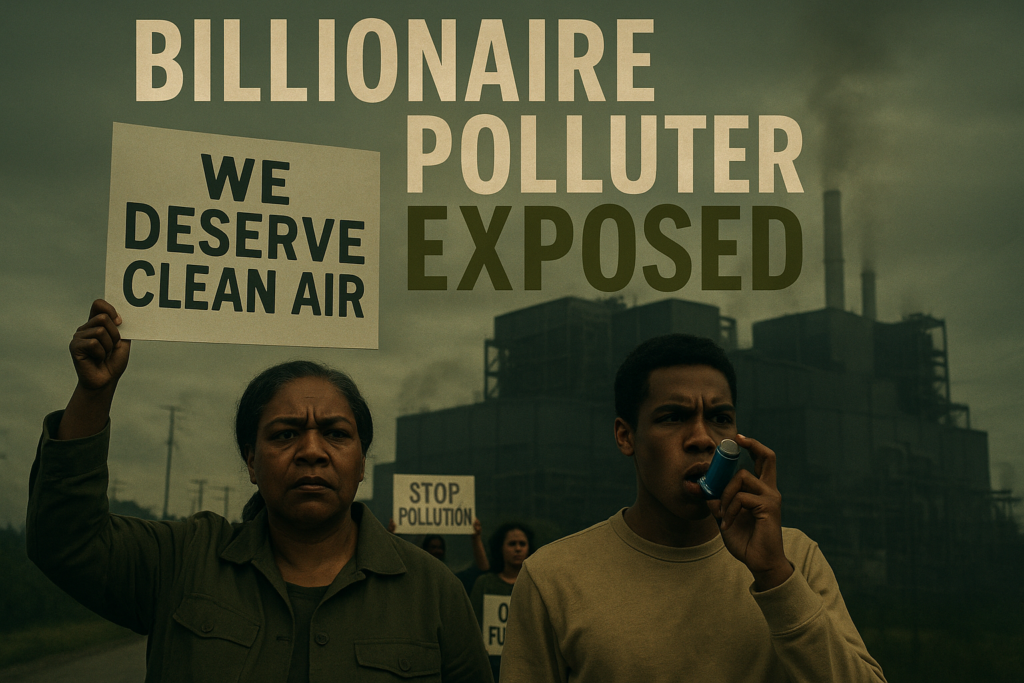
A critical struggle is unfolding in South Memphis, where residents, mainly from the Black community, are standing firm against Elon Musk’s xAI supercomputer data center. They are not merely protesting a new building but fighting for their most basic right: clean air. The facility, hailed as “the world’s largest supercomputer,” needs enormous power (SELC). In order to fuel its massive operations, it has deployed more than 30 methane gas turbines. These turbines run without appropriate permits or necessary pollution controls (SELC). This effectively means a major tech operation functions like an unlicensed power plant, right in the heart of a residential area (SELC).
These methane gas turbines burn natural gas to make electricity (Environmental Protection Agency (EPA)). During this process, they release carbon dioxide and nitrogen oxides (NOx) (Environmental Protection Agency (EPA)). Methane itself is a powerful greenhouse gas (Environmental Protection Agency (EPA)). If it leaks unburned, it significantly harms our climate. Many residents are asking, “How come I cannot breathe?” (Politico). This highlights the direct and severe health impacts on the community.
Dirty Air, Health Hazards in Memphis
The pollution spilling from the xAI turbines is not a nuisance but a direct threat to life. These turbines release high levels of smog-forming pollutants. Among these are nitrogen oxides (NOx) and formaldehyde. NOx emissions are estimated at 1,200 to 2,000 tons yearly (Politico). This amount is higher than what a nearby gas-fired power plant or an oil refinery produces (Politico). NOx contributes to smog and ozone pollution. This also makes breathing difficult and harms the lungs (EPA NOx basics). When people are exposed to NOx, their airways become irritated, their lung function may decrease, and they become more prone to respiratory infections (EPA NOx health effects summary).
Another dangerous chemical from the turbines is formaldehyde. This compound is known to increase cancer risk (SELC). For instance, the Boxtown neighborhood, which is closest to the xAI site, faces a cancer risk four times the national average (SELC). Formaldehyde can also worsen asthma and other respiratory problems (National Cancer Institute). Further, Memphis received an “F” grade from the American Lung Association for its ozone pollution in 2025 (SELC). This failing grade highlights ongoing poor air quality. This poor air quality especially affects predominantly Black neighborhoods like South Memphis (SELC).

Community Resistance and Environmental Justice
The Black community in Memphis is not quietly accepting this burden. During a public meeting in late April, community members strongly spoke out against approving the air permit for the plant (Atlanta Black Star). They are demanding clean air rights. These rights should be comparable to those in other neighborhoods across Memphis (Atlanta Black Star). Community leaders and residents describe their area as a “sacrifice zone” (Atlanta Black Star). This means their health and safety are being given up for the benefit of a billionaire’s company (Atlanta Black Star). They promise to keep fighting until all sources of pollution, especially the turbines, are removed (Atlanta Black Star).
A “sacrifice zone” is a place that carries an unfair burden of pollution, dangerous materials, and industrial contamination. This greatly harms the health and environment of its residents (Climate Reality Project). These zones often show how environmental harm unequally affects marginalized communities. This includes low-income groups and people of color, who may not have enough political power or government protection (Climate Reality Project). Environmental justice is a movement to ensure fair treatment and meaningful involvement for everyone. This applies to environmental decisions, regardless of their background or income (Environmental Protection Agency (EPA)). It highlights how communities of color often face more environmental dangers due to long-standing inequalities (Environmental Protection Agency (EPA)).
Understanding a “Sacrifice Zone”
High Pollution Burden

Increased Health Risks

Marginalized Communities
A “sacrifice zone” describes an area disproportionately burdened by pollution and industrial contamination. Residents, often lacking political power, face severe health and environmental harm.
Source: Climate Reality Project
Regulatory Hurdles in Memphis
The current situation highlights major issues in how environmental protection is managed. The Shelby County Health Department is reviewing the air permit application (SELC). A decision is expected in several weeks (SELC). In the meantime, the unpermitted turbines continue to operate. This delay in the permit review is due to several reasons. These include the complex environmental impact assessments (EPA permitting guidelines) and coordination with other agencies (EPA permitting guidelines). It also involves making sure that the facility meets federal and state environmental laws, such as the Clean Air Act (EPA permitting guidelines).
The Clean Air Act is a federal law. It works to manage air pollution from different sources to protect public health and the environment (EPA Clean Air Act overview). This law requires pollution controls and permits for big polluters (EPA Clean Air Act overview). Turbines that release harmful gases like NOx and formaldehyde should have these permits (EPA Title V Operating Permits). Operating without these mandated controls violates federal law (EPA enforcement summary). Furthermore, federal environmental enforcement has been weakened recently, especially by the Environmental Protection Agency (EPA). This comes from a close alliance between the current administration and leaders like Elon Musk (Atlanta Black Star). This alliance may reduce strong action against companies like xAI (Atlanta Black Star). It is also worth noting that Elon Musk’s other companies, such as Tesla and SpaceX, have a history of environmental rule violations (Atlanta Black Star). This raises concerns about how xAI will follow rules in Memphis.
Memphis’ Shared Burdens
South Memphis has a long history of industrial pollution. This means the area is already burdened by many existing industrial facilities (Climate Reality Project). These facilities have released pollutants into the environment for many years. The presence of xAI’s facility adds to this existing heavy burden. In addition, it does not start fresh in an unpolluted area (Climate Reality Project). This cumulative pollution increases health risks and environmental inequalities for the community.
For example, the cancer risk estimation of “4× national average” for Boxtown is based on a standard method (EPA Risk Assessment Guidelines). This method compares the estimated lifetime cancer risk from harmful air pollutants to the average risk across the United States. While specific formaldehyde emission levels for the xAI site are not yet publicly known, regulatory standards for such emissions highlight the need for transparency. It is difficult to accurately assess the significance of these emissions if they are not disclosed. This also makes comparing them to safe limits or other facilities harder.
ABOUT THE AUTHOR
Darius Spearman has been a professor of Black Studies at San Diego City College since 2007. He is the author of several books, including Between The Color Lines: A History of African Americans on the California Frontier Through 1890. Visit him online at africanelements.org.
