

Listen & Share
Cameroon’s Crisis: A Neglected Humanitarian Battle
By Darius Spearman (africanelements)
Support African Elements at patreon.com/africanelements and hear recent news in a single playlist. Additionally, you can gain early access to ad-free video content.
Deep within the heart of Africa, a profound human tragedy unfolds, largely hidden from global headlines. Cameroon, a nation rich in cultural heritage and natural beauty, is grappling with a displacement crisis that has pushed millions to the brink. This struggle affects our African family deeply, reminding us of the interconnectedness of Black communities across continents.
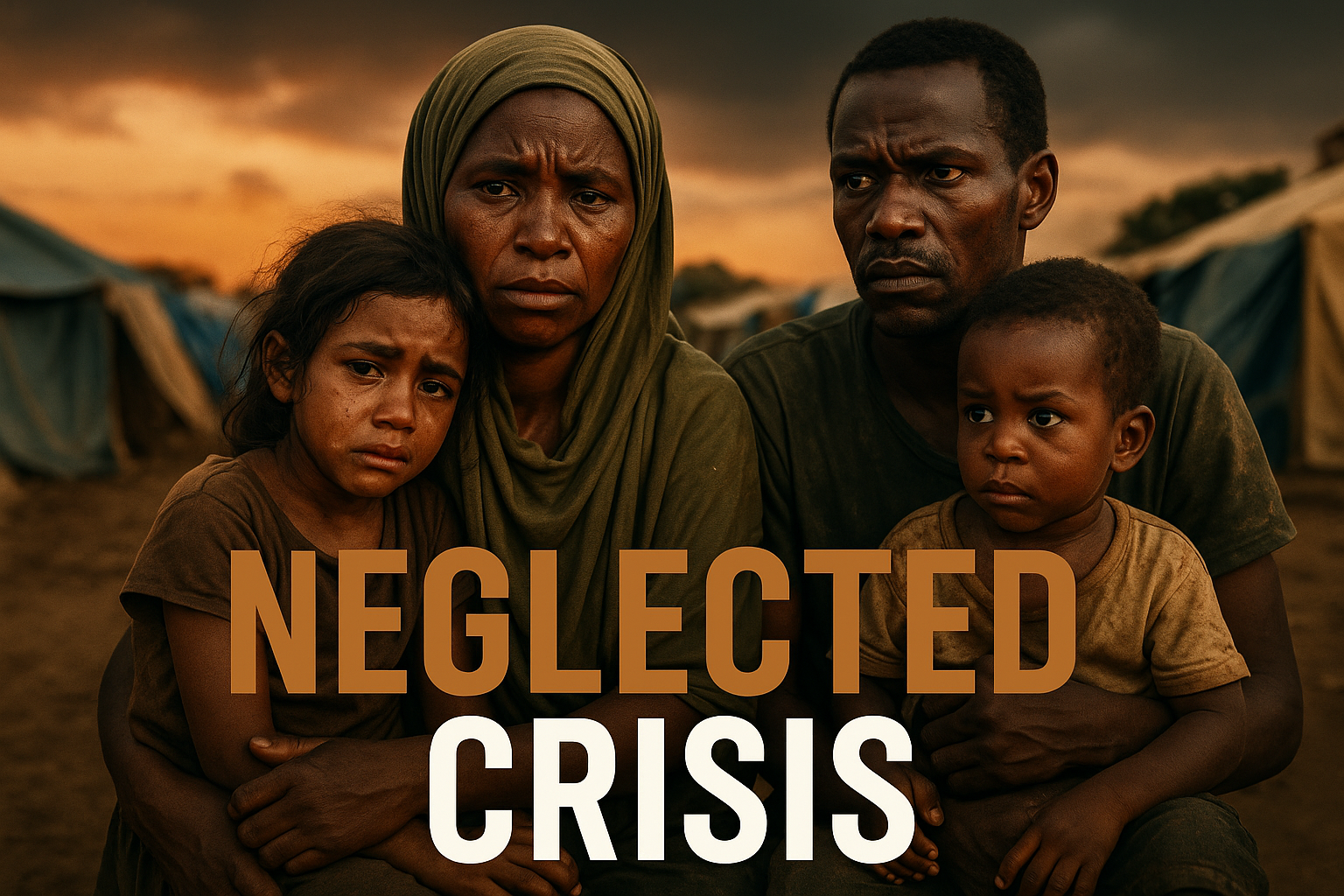
The situation in Cameroon now stands as the world’s most neglected displacement crisis, a stark testament to the lack of international focus despite overwhelming needs on the ground (Africanews). Furthermore, over 3.3 million individuals will need immediate humanitarian aid in 2025 (European Commission). Access to these vulnerable populations remains severely hampered by insecurity, poor infrastructure, and devastating floods. This crisis demands our attention, for the suffering of our kin is a burden we all share.
The Overlooked Plight of Millions
The scale of human suffering in Cameroon is immense. Approximately 909,000 people were living in displacement within Cameroon by the end of 2024 due to ongoing conflict and violence (Internal Displacement Monitoring Centre (IDMC)). This means almost one million people have been forced from their homes, seeking safety wherever they can find it.
In addition to this staggering number of internally displaced persons (IDPs), Cameroon also hosts about half a million refugees from neighboring countries (OCHA). Moreover, about half a million returnees, individuals who have tried to go back to their homes, are also navigating instability. This complex web of displacement, return, and refugeehood creates an urgent need for coordinated humanitarian action.
Cameroon’s Humanitarian Challenge (2024-2025 Projections)
Multiple Crises, One Nation
Cameroon is not facing just one challenge; it is battling several complex crises simultaneously, each contributing to the rampant displacement and pressing humanitarian needs (ReliefWeb). One major flashpoint is the protracted conflict in the Lake Chad Basin, particularly impacting the Far North region. This area has long suffered from the brutal activities of Boko Haram, a militant Islamist group known for its violence. The group’s activities have led to widespread death and displacement, making life unbearable for thousands of families.
Additionally, the crisis in the North-West and South-West (NWSW) regions, often referred to as the Anglophone conflict, has become a significant driver of displacement. This conflict stems from historical post-colonial divisions and deep-seated systemic marginalization of English-speaking populations within the predominantly French-speaking country. As a result, the crisis has fueled demands for greater autonomy or even independence, pushing communities caught in the crossfire to flee their homes.
The nation also bears the enormous burden of hosting hundreds of thousands of refugees from the Central African Republic (CAR), a country itself plagued by conflict. Cameroon currently hosts nearly 422,000 refugees and asylum seekers in total, including roughly 281,000 from CAR and over 124,000 from Nigeria (ReliefWeb). This immense influx of people puts an extraordinary strain on Cameroon’s already limited resources, intensifying the humanitarian challenge.
In 2025, an estimated 3.3 million individuals will require humanitarian and protection assistance (ReliefWeb). This includes a staggering one million displaced persons and 700,000 returnees recorded as of September 2024 (ReliefWeb). The complex interplay of these crises creates a cycle of displacement and vulnerability, leaving countless individuals, many of whom are fellow Africans, in desperate need of aid.
A Climate of Fear and Escalating Violence
The humanitarian situation in Cameroon is further complicated by escalating violence and pervasive insecurity. The first trimester of 2025 saw a distressing 2,098 security incidents reported in conflict-affected areas, an increase of 339 incidents compared to the same period in 2024 (European Commission). Furthermore, a total of 7,035 security incidents were reported throughout 2024 alone, painting a grim picture of daily life for too many communities (European Commission).
The conflict in the North-West and South-West regions alone has forcibly displaced over 580,000 people since 2017 (European Commission). Moreover, more than 76,000 individuals from these regions have fled across the border into Nigeria, seeking refuge from the violence (European Commission). This large-scale displacement highlights the severe impact of the Anglophone conflict on the lives of ordinary Cameroonians.
In the Far North region, the devastation caused by Boko Haram is equally profound. Over 3,000 people have been killed by the group (Global Centre for the Responsibility to Protect). In 2024 alone, at least 720 incidents and 780 fatalities were directly linked to militant Islamists (Global Centre for the Responsibility to Protect). These figures underscore the brutal reality faced by communities in the region, where the threat of violence is a constant shadow.
Security Incidents in Cameroon (2024-2025)
Human Rights in Peril and Growing Hunger
Beyond the conflict statistics, the human cost is measured in severe suffering and daily human rights violations. The North-West and South-West regions, in particular, are hotbeds of abuse, including disturbing reports of kidnapping, sexual and gender-based violence, and targeted killings (European Commission). These brutalities create a climate of profound fear, especially impacting women and children in affected communities.
The crisis has also led to a sharp increase in food insecurity and malnutrition. Over 2.5 million people in crisis-affected regions are facing acute food insecurity, categorized at “Crisis” (Phase 3) and “Emergency” (Phase 4) levels (ReliefWeb). This represents a worrying 9% increase compared to 2023 (ReliefWeb). Children are particularly vulnerable; a staggering 390,000 children between 6 and 59 months old are suffering from acute malnutrition and urgently require treatment (ReliefWeb).
Daily life for displaced communities is further disrupted by widespread banditry, looting, and property destruction. Tax extortions, movement restrictions (including the destruction of bridges), and the presence of improvised explosive devices contribute to a pervasive sense of insecurity (European Commission). These factors make it incredibly challenging for people to access basic services, farm their lands, or find safe passage, trapping them in a desperate struggle for survival. The resilience of our people, even in the face of such adversity, continues to inspire, yet their suffering demands more than quiet admiration.
Food Insecurity and Malnutrition in Cameroon
A Plea for Greater Global Compassion
The tragedy in Cameroon is deepened by the inadequate response from both its government and the international community. The Cameroonian government has often denied the severity of the crisis, leading to a visible lack of meaningful action to end the conflicts or address their underlying causes (Global Centre for the Responsibility to Protect). This denial hinders proper assessment of needs and slows the delivery of aid to those who need it most.
Furthermore, the international community’s engagement has been shockingly limited. While appeals for aid have been made, they have seen little substantive follow-through (Global Centre for the Responsibility to Protect). Consider this: the UN Security Council, the world’s most powerful body for maintaining peace and security, has held only one informal meeting, known as an Arria-formula meeting, on Cameroon, and that was in 2019 (Global Centre for the Responsibility to Protect). This reflects a disturbingly low level of global engagement with a crisis that impacts millions of lives, predominately Black lives, and threatens regional stability.
This neglect has dire implications. Inadequate international action means prolonged suffering for displaced populations, increased regional instability, and a higher risk of conflict escalation. If left unaddressed, the crisis in Cameroon could have wider consequences for neighboring countries, already struggling with their own challenges due to an influx of refugees. The time for the global community to step up and show true compassion for our African brothers and sisters is long overdue.
ABOUT THE AUTHOR
Darius Spearman has been a professor of Black Studies at San Diego City College since 2007. He is the author of several books, including Between The Color Lines: A History of African Americans on the California Frontier Through 1890. You can visit Darius online at africanelements.org.
