

Listen to this article
Download AudioCaster Semenya: A Champion’s Fight for Fairness
By Darius Spearman (africanelements)
Support African Elements at patreon.com/africanelements and hear recent news in a single playlist. Additionally, you can gain early access to ad-free video content.
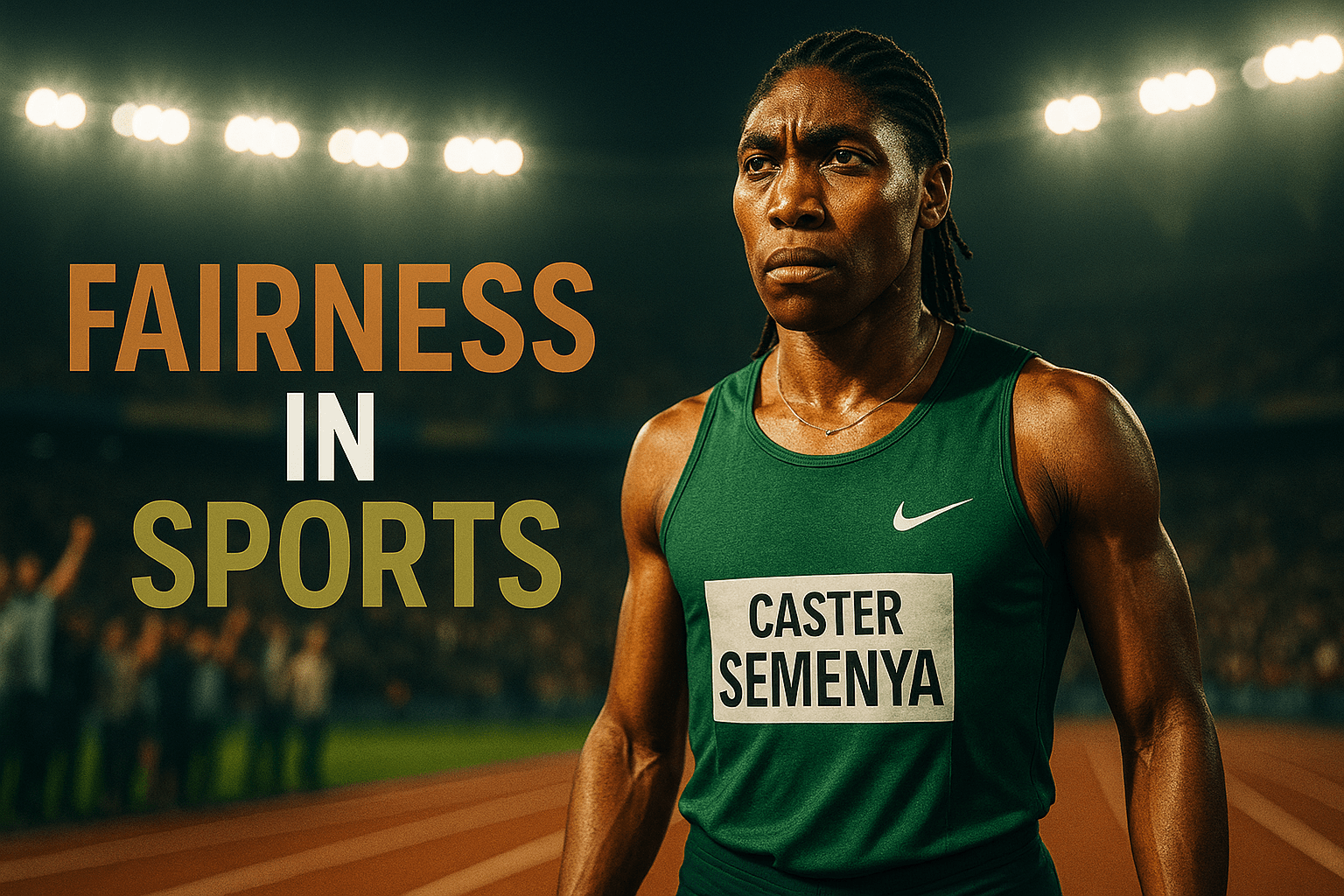
The journey of Caster Semenya, a two-time Olympic gold medalist from South Africa, has been a powerful testament to resilience in the face of complex challenges. Her long-standing legal battle against World Athletics’ testosterone regulations reached a significant milestone with a recent victory at the European Court of Human Rights (ECHR). This decision marks a pivotal moment, not only for Semenya but also for the broader conversation about fairness, human rights, and inclusion in sports.
For years, Semenya has been at the center of a global debate concerning her natural testosterone levels, which are higher than typical for women due to a medical condition. This situation has led to regulations that have effectively barred her from competing in her preferred events unless she undergoes medical intervention. The ECHR’s ruling, while not immediately overturning World Athletics’ rules, brings renewed hope and scrutiny to these controversial policies.
Caster Semenya’s Enduring Fight
Caster Semenya’s legal odyssey against World Athletics’ regulations has been a long and arduous one, spanning over seven years. Her fight began in earnest when World Athletics introduced rules requiring female athletes with naturally high testosterone levels to reduce them to compete in certain women’s events. Semenya, who has hyperandrogenism, refused to take testosterone-reducing medication, a stance that has prevented her from competing internationally in her signature 800m event since 2018 (cnn.com).
Previously, Semenya had sought justice through other legal avenues. She lost appeals to the Court of Arbitration for Sport (CAS) in April 2019 and the Swiss Federal Tribunal (SFT) in September 2020 (aljazeera.com). The ECHR’s recent decision found that Semenya had not been afforded sufficient institutional and procedural safeguards in Switzerland to allow her complaints of discrimination to be effectively examined (cnn.com). This ruling means her case could return to the Swiss federal court (apnews.com).
Understanding the Science: Hyperandrogenism and DSD
At the heart of Caster Semenya’s case are the scientific and medical concepts of hyperandrogenism and Differences of Sex Development (DSD). Hyperandrogenism is a medical condition characterized by elevated levels of androgens, which are male hormones like testosterone, in the body. For female athletes, this condition has become a contentious issue due to the perceived performance advantage that higher testosterone levels might provide (SEMENYA v. SWITZERLAND).
Differences of Sex Development (DSD) are conditions where there is a discrepancy between external genitalia, internal reproductive organs, or chromosomal sex. In sports, DSDs are particularly relevant because some conditions can lead to naturally elevated testosterone levels, which sports governing bodies regulate in female categories. The regulations impacting Caster Semenya, specifically the XY DSD regulation, were designed to address athletes with DSDs who have testosterone levels in the male range (What You Need to Know From the 163-Page Caster Semenya vs. IAAF CAS Decision Testosterone is a hormone that increases muscle mass, strength, and hemoglobin, all of which impact endurance (aljazeera.com).
Understanding Hyperandrogenism

Hyperandrogenism: A medical condition characterized by naturally elevated levels of androgens (male hormones like testosterone) in the body. In sports, it raises questions about fairness due to the perceived performance advantage in female categories.
Source: SEMENYA v. SWITZERLAND
World Athletics’ Stance and Regulations
World Athletics, the global governing body for track and field, maintains that its DSD regulations are “a necessary, reasonable and proportionate means of protecting fair competition in the female category” (bbc.com. These rules mandate that athletes with differences in sexual development (DSDs) and high testosterone levels must lower them to those of “a healthy woman with ovaries” to compete in women’s events between 400m and one mile (aljazeera.com). The DSD regulations suggest methods for lowering testosterone, including contraceptive pills, monthly injections, or surgery to remove testes (aljazeera.com).
Caster Semenya has consistently argued that her natural testosterone levels are a “genetic gift” and that she should not be forced to alter her body to compete (apnews.com). Her refusal to comply with these regulations has directly impacted her career, preventing her from defending her 800m crown at the Tokyo 2021 Olympics (cnn.com). Despite the ECHR ruling, Semenya’s ability to compete without medication remains uncertain unless World Athletics changes its stance or is compelled to do so (bbc.com).
The ECHR’s Landmark Decision
The European Court of Human Rights (ECHR) is an international court established by the European Convention on Human Rights, ensuring states uphold the rights outlined in the Convention. Individuals can bring complaints against states for alleged human rights violations (SEMENYA v. SWITZERLAND). In Semenya’s case, the ECHR found that Switzerland had failed to protect her from discrimination when its Supreme Court upheld the Court of Arbitration for Sport’s (CAS) decision, which had supported World Athletics’ rules (bbc.com).
Semenya’s appeal to the ECHR relied on several articles of the European Convention on Human Rights. Article 14 prohibits discrimination in the enjoyment of rights, and Semenya argued that the DSD regulations were discriminatory based on her sex characteristics (SEMENYA v. SWITZERLAND). Furthermore, Article 8, which protects an individual’s right to respect for their private life, was invoked because the regulations require medical interventions and disclosure of private medical information, seen as an intrusion into her bodily integrity (SEMENYA v. SWITZERLAND). Article 13, guaranteeing an effective remedy, was also central to her argument, suggesting that previous legal avenues did not provide a sufficient process to challenge the regulations (SEMENYA v. SWITZERLAND). The ECHR’s ruling does not immediately overturn World Athletics’ DSD regulations, but it does set a significant precedent regarding human rights in sports governance.
Key Human Rights Articles in Semenya’s ECHR Case
Health and Human Rights Concerns
The requirement for athletes like Caster Semenya to undergo testosterone-reducing treatments raises significant health and human rights concerns. Testosterone-reducing treatments, often involving hormone therapy or surgery, can carry various potential health risks. These include side effects from medications, impacts on bone density, cardiovascular health, and psychological well-being (SEMENYA v. SWITZERLAND). Semenya’s consistent refusal to take such medication highlights the profound personal and health considerations involved in these mandates.
The debate around hyperandrogenism rules often involves arguments about fairness and the “protected class” of women athletes, with some arguing that regulations are necessary to maintain a level playing field (What You Need to Know From the 163-Page Caster Semenya vs. IAAF CAS Decision. However, critics argue that these rules can perpetuate prescribed standards of femininity and disproportionately scrutinize athletes who do not conform to conventional feminine appearances (The Controversy Around Caster Semenya Explained). This perspective is particularly relevant for Black women athletes, who often face heightened scrutiny regarding their bodies and perceived “natural” advantages, echoing historical biases within sports.
The Path Forward for Semenya and Sports
The ECHR ruling in Caster Semenya’s favor could significantly influence future sports regulations concerning DSD athletes. It sets a precedent that human rights considerations must be more thoroughly integrated into sports governance and arbitration (The International Sports Law Journal). A ruling against Switzerland could compel sports bodies to re-evaluate their DSD regulations to ensure they are proportionate and respect athletes’ human rights, particularly concerning privacy, non-discrimination, and bodily integrity.
This decision might also lead to increased scrutiny of the Court of Arbitration for Sport’s (CAS) decisions. It could potentially require national governments to establish mechanisms for a more comprehensive review of CAS awards (Entertainment and Sports News Journal). If the ECHR’s decision is upheld and interpreted as a binding requirement for states to ensure human rights in sports, it could pressure World Athletics to revise its DSD regulations. Semenya’s legal team would likely leverage any favorable ECHR ruling to challenge the DSD regulations directly with World Athletics or through further legal avenues (SEMENYA v. SWITZERLAND. The broader implications of the ECHR ruling on the sports justice system could lead to a re-evaluation of how human rights are balanced with competitive fairness, potentially opening new pathways for athletes with DSD (Entertainment and Sports News Journal).
Impact on Caster Semenya’s Olympic Career
Caster Semenya’s fight is far from over, but her victory at the ECHR provides a powerful new tool in her ongoing quest for justice and the right to compete as her authentic self. Her unwavering commitment to fighting for the human rights of female athletes (cnn.com) resonates deeply within the African Diaspora, where issues of bodily autonomy, identity, and systemic discrimination are keenly felt. Her case continues to challenge the very definitions of gender, fairness, and inclusion in the world of elite sports.
ABOUT THE AUTHOR
Darius Spearman has been a professor of Black Studies at San Diego City College since 2007. He is the author of several books, including Between The Color Lines: A History of African Americans on the California Frontier Through 1890. You can visit Darius online at africanelements.org.
