

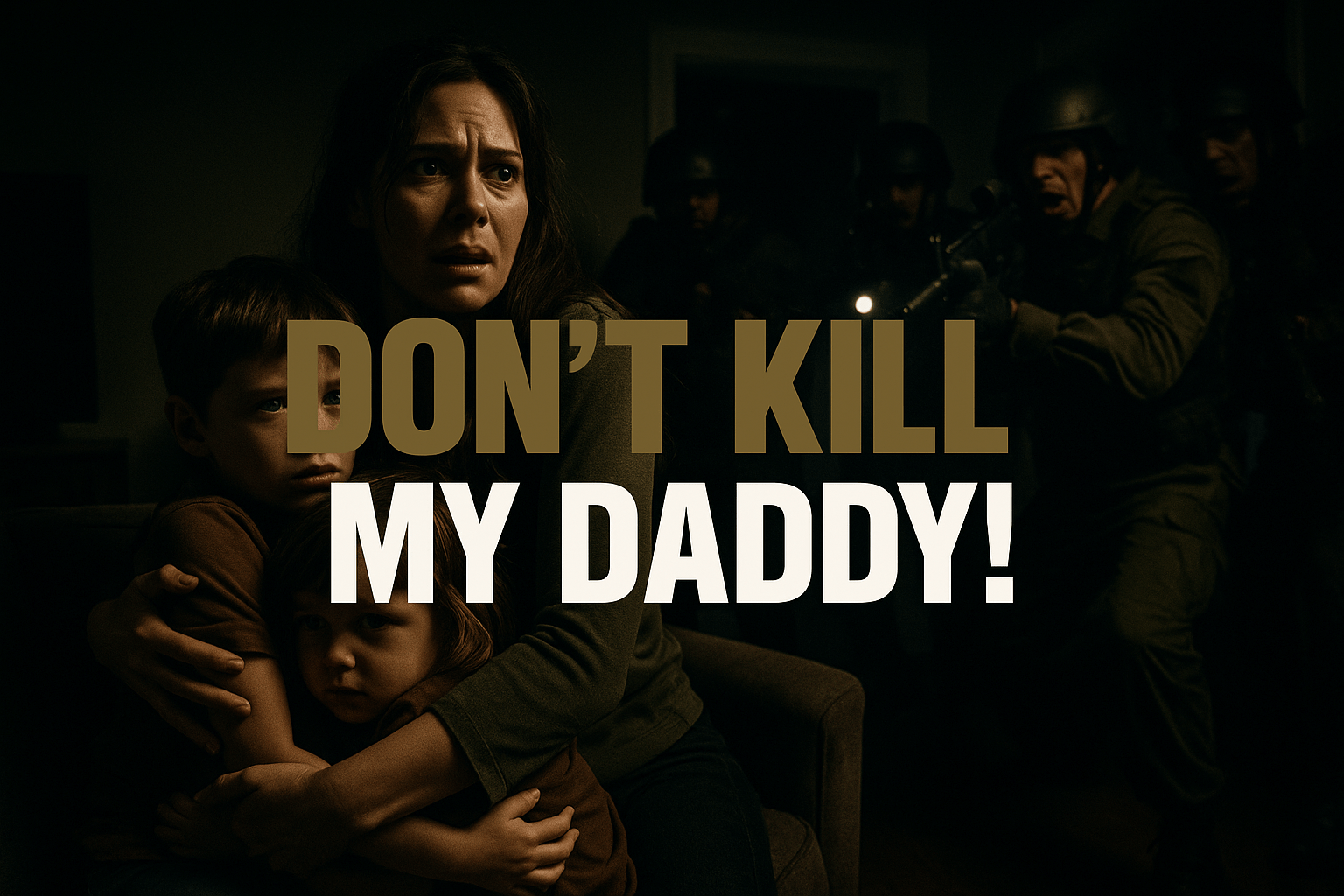
 Chicago police botched 2017 Mendez family raid, resulting in $2.5M settlement and $712K legal fees, exposing systemic police misconduct and accountability gaps. (AI Generated Image)
Chicago’s Botched Raid: A Family’s Nightmare
By Darius Spearman (africanelements)
Support African Elements at patreon.com/africanelements and hear recent news in a single playlist. Additionally, you can gain early access to ad-free video content.
A Home Invaded: The Mendez Family’s Ordeal
On November 7, 2017, at 6:45 p.m., the Mendez family experienced a shocking and traumatic event that forever changed their lives. Chicago police officers, acting on a no-knock warrant, burst into their home, mistaking it for the apartment of intended suspects, Curtis Roberts and Patricka Cavazos (Atlanta Black Star). Gilbert and Hester Mendez, along with their two young sons, Peter, five, and Jack, nine, were suddenly confronted by armed officers (CBS News).
Hester Mendez immediately informed the officers that they had the wrong apartment. However, the search continued, escalating the terror for the family (WTTW News). The children were particularly traumatized, as officers pointed guns at them during the raid (CBS News). This incident is not an isolated one. It highlights a troubling pattern of wrong raids and the use of force by Chicago police on children within our communities (CBS News).
The Cost of Error: Legal Fees and Settlements
The aftermath of the botched raid has come with significant financial consequences for the city of Chicago. The Mendez family is set to receive a substantial $2.5 million settlement, acknowledging the profound trauma and disruption they endured (WTTW News). However, this figure only represents a portion of the total cost to taxpayers.
The city has also spent over $712,000 on legal fees to defend the Chicago Police Department in this case (CBS News). These substantial legal costs underscore the broader financial implications of police misconduct. They also reveal how much public funds are diverted to defending these actions, rather than investing in community safety and welfare. This incident has also prompted a wider investigation into similar occurrences involving the Chicago Police Department (CBS News).
Mendez Case Financials
Accountability and Reform: A Step Forward
The Civilian Office of Police Accountability (COPA), a municipal agency tasked with overseeing the Chicago Police Department (CPD), determined that seven officers involved in the raid violated CPD rules (WTTW News). COPA is an independent body that investigates allegations of police misconduct. It is funded as part of the city’s budget by the City Council (City of Chicago). The Civilian Office of Police Accountability ensures transparency and accountability in police actions. It examines excessive force, coercion, bias-based verbal abuse, and improper search and seizure (The Police Forum).
Former Police Superintendent David Brown recommended suspensions for the involved officers, ranging from three to sixty days (WTTW News). However, it remains unclear if these suspensions were served. All officers involved are still active-duty members of the Chicago Police Department (WTTW News). In response to incidents like this, Governor JB Pritzker signed a bill requiring police to receive training on how children experience trauma. This bill also requires the utilization of de-escalation tactics (WTTW News).
Officers Involved in the Raid
(Status Unclear)
Status of the seven officers involved in the Mendez family raid. Source: (WTTW News)
The Ripple Effect: Broader Implications
The Mendez family’s experience sheds light on the critical need for improved practices within law enforcement, especially concerning search warrants. A no-knock warrant, a contentious tactic allowing officers to enter without announcing their presence, carries significant risks (Atlanta Black Star). The potential for violence and mistaken identity is high, leading to public debate and concern. Furthermore, such incidents underscore the challenges faced by civilians when confronting law enforcement. They highlight the vulnerability of families when incorrect intelligence leads to a botched raid.
The long-term psychological impact on children exposed to such force, as Peter and Jack Mendez were, is profound. This trauma can manifest in various ways and requires specialized support. The mandate for trauma-informed training for police officers and the emphasis on de-escalation tactics are vital steps. This training helps officers understand the emotional and psychological states of individuals. It allows for more empathetic responses, thereby preventing harm and building trust within the community. These changes are crucial for the well-being of our community and for restoring faith in the institutions meant to protect us.
ABOUT THE AUTHOR
Darius Spearman has been a professor of Black Studies at San Diego City College since 2007. He is the author of several books, including Between The Color Lines: A History of African Americans on the California Frontier Through 1890. You can visit Darius online at africanelements.org.
