

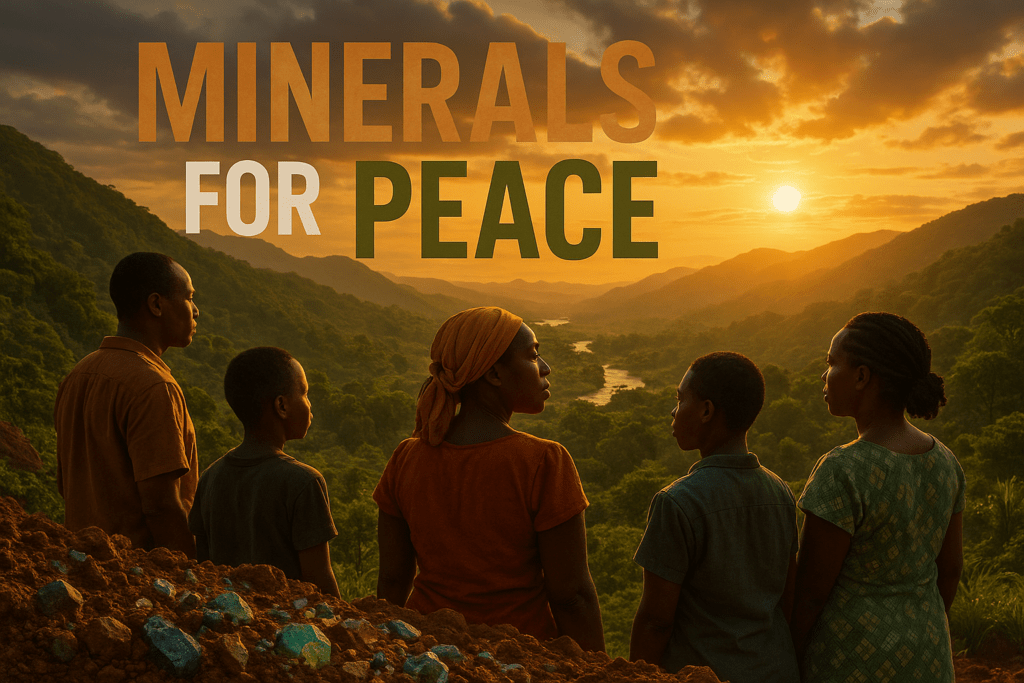
DRC Peace Deal: Minerals, Militias, and Lasting Peace
By Darius Spearman (africanelements)
Support African Elements at and hear recent news in a single playlist. Additionally, you can gain early access to ad-free video content.
The Democratic Republic of Congo (DRC) and Rwanda recently signed a peace deal, an agreement many hope will bring an end to years of conflict in Congo’s eastern regions. This significant accord, brokered by the United States, represents a complex interplay of security concerns, economic interests, and geopolitical maneuvering. For people of African descent, particularly those in the Diaspora, understanding this deal is crucial. It highlights how the pursuit of vital resources often intertwines with the stability and well-being of African nations, impacting millions of lives.
The United States became involved in brokering this deal after Kinshasa, the capital of the DRC, presented a “minerals-for-security” offer (cbs8.com). This arrangement grants the US access to critical minerals such as coltan, cobalt, and copper (cbs8.com). The agreement was formally signed in Washington by the foreign ministers of both African countries (reuters.com). While the deal offers a glimmer of hope, the path to lasting peace remains uncertain due to the involvement of numerous armed groups and proxy forces.
A Deal Forged in Washington
The recent peace deal between the Democratic Republic of Congo and Rwanda marks a pivotal moment for the Great Lakes region of Africa. The agreement, signed in Washington, D.C., by the foreign ministers of both nations, was brokered directly by the United States (reuters.com). This high-level diplomatic engagement underscores the strategic importance of the region, particularly its vast mineral wealth.
The accord contains several key provisions designed to foster stability. It includes stipulations for “respect for territorial integrity and a prohibition of hostilities” (edition.cnn.com). Furthermore, the agreement outlines processes for “disengagement, disarmament, and conditional integration of non-state armed groups” (edition.cnn.com). Other important aspects of the deal address humanitarian concerns, such as the “facilitation of the return of refugees and internally displaced persons, as well as humanitarian access” (edition.cnn.com). Additionally, it aims to establish a “regional economic integration framework” that could attract significant US investments into both Rwanda and the DRC (edition.cnn.com).
The Value of Critical Minerals
A significant driver behind the US involvement in this peace deal is the Democratic Republic of Congo’s immense reserves of critical minerals. The DRC possesses the world’s largest cobalt reserves and substantial copper deposits (worldpoliticsreview.com). These minerals are not merely commodities; they are essential for modern technologies, including electric vehicles, renewable energy systems, and advanced electronics (worldpoliticsreview.com). The US interest in securing access to these resources is driven by a desire to fortify its supply chains, lessen its dependence on dominant suppliers like China, and bolster its technological and defense industries (worldpoliticsreview.com).
The “minerals-for-security” offer from Kinshasa directly links the DRC’s mineral wealth to its security needs (cbs8.com). This arrangement grants the United States access to vital minerals like coltan, cobalt, and copper (scmp.com). The US is leveraging its diplomatic engagement to stabilize the Great Lakes region while simultaneously securing access to these critical minerals (worldpoliticsreview.com). This strategy is a clear effort to challenge China’s significant influence in global critical mineral supply chains (worldpoliticsreview.com).
Strategic Importance of Critical Minerals
The DRC holds the world’s largest cobalt reserves, a vital component for electric vehicle batteries and advanced electronics.
Significant copper deposits in the DRC are crucial for electrical wiring, renewable energy infrastructure, and various industrial applications.
This mineral is essential for capacitors in mobile phones, laptops, and other high-tech devices, linking directly to global technology supply chains.
The Persistent Shadow of Armed Groups
Despite the signing of the peace deal, a lasting solution to the conflict remains uncertain. This is largely due to the continued involvement of numerous armed groups and proxy forces (cbs8.com). The peace deal is not expected to end the conflict quickly (cbs8.com), a reality that deeply concerns those who have endured decades of instability.
The M23 (March 23) rebel group stands out as the most prominent armed group in the conflict, widely reported to be backed by Rwanda (cbs8.com). The M23 militia, a Rwanda-backed rebel group, captured major Congolese cities like Goma and Bukavu earlier this year (atlanticcouncil.org). The rebel coalition Alliance Fleuve Congo (AFC), of which M23 is a key member, stated that it did not participate in the US-brokered peace process (edition.cnn.com). Instead, the AFC is committed to a separate negotiation process mediated by Qatar (edition.cnn.com). This exclusion of key non-state actors from the Washington agreement raises significant questions about its long-term effectiveness.
Rwanda’s Stance and Regional Security
Rwanda’s role in the conflict is a contentious issue. Despite overwhelming evidence, Rwanda denies supporting the M23 rebel group (bbc.com). Rwanda insists that its military presence in the region is a defensive measure against threats posed by armed groups like the FDLR (bbc.com). The FDLR (Democratic Forces for the Liberation of Rwanda) is a rebel militia primarily composed of ethnic Hutus, some of whom are linked to the 1994 Rwandan genocide (bbc.com). Understanding the FDLR’s history and composition is crucial for grasping the complex regional security dynamics and the justifications provided by Rwanda for its involvement in the DRC conflict.
A major point of contention in the peace negotiations was the presence of Rwandan troops on Congolese soil. Congo had pushed for an immediate withdrawal of Rwandan soldiers (bbc.com). However, Rwanda, which maintains at least 7,000 troops in the DRC, refused this demand (bbc.com). This refusal highlights a significant challenge for the peace deal’s enforcement, as the agreement includes “provisions on respect for territorial integrity and a prohibition of hostilities” (bbc.com). The success of the agreement hinges on the implementation of these provisions, which will require robust enforcement mechanisms and sustained international pressure.
Key Armed Groups in the DRC Conflict
A prominent Rwanda-backed rebel group that did not participate in the US-brokered peace deal, posing a significant threat to its implementation. They have captured major Congolese cities.
A rebel coalition that includes M23, also not part of the US-brokered deal, pursuing separate negotiations mediated by Qatar.
A rebel militia composed of ethnic Hutus, some linked to the 1994 Rwandan genocide, cited by Rwanda as a justification for its military presence in the DRC.
The Dire Humanitarian Crisis
The protracted conflict in the Democratic Republic of Congo has led to one of the most severe humanitarian crises on Earth. The scale of displacement is staggering, with 7 million people displaced within Congo (cbs8.com). This makes it “one of the most protracted, complex, serious humanitarian crises on Earth” (cbs8.com). The human cost of this conflict is immense, marked by widespread suffering, loss of life, and the destruction of livelihoods.
The peace accord includes provisions for the “facilitation of the return of refugees and internally displaced persons, as well as humanitarian access” (edition.cnn.com). However, the practicalities of managing the return of millions of displaced individuals are daunting. Ensuring their safety, providing adequate resources, and rebuilding communities will require massive coordinated efforts from international organizations and local authorities. The challenges include securing areas from armed groups, providing essential services, and addressing the trauma of displacement.
US Strategic Interests and Geopolitics
The United States’ prominent role in brokering this peace deal is driven by a combination of strategic interests that extend beyond simply fostering peace. Washington’s involvement reflects the strategic importance of Kinshasa’s mineral wealth (worldpoliticsreview.com). The US is leveraging its diplomatic engagement to stabilize the Great Lakes region of Africa while also securing access to the critical minerals that power next-generation technology, electric vehicles, and weapons systems (worldpoliticsreview.com).
This deal is also a clear bid to challenge China’s dominance in critical minerals supply chains (worldpoliticsreview.com). The agreement promises “significant investments … facilitated by the U.S. government and private sector” (worldpoliticsreview.com), indicating a long-term economic engagement. The DRC is offering the United States access to its mineral resources in an effort to ensure peace and stability in the country, against the backdrop of US-China competition over critical minerals (carnegieendowment.org). This geopolitical dimension adds another layer of complexity to the peace process, as the interests of global powers intersect with local conflicts.
Humanitarian Crisis in the DRC
Challenges to Lasting Peace
Achieving lasting peace in the DRC, given the complex web of proxy forces and armed groups, presents significant challenges beyond the initial agreement. The peace deal faces a significant hurdle in addressing the ongoing presence and influence of armed groups like M23 and AFC, as these groups were not party to the agreement (atlanticcouncil.org). While the deal aims to cease hostilities between the DRC and Rwanda, the continued activity of these non-state actors, particularly the Rwanda-backed M23, could undermine the peace process.
The agreement’s effectiveness will depend on how it facilitates the disengagement, disarmament, and potential integration of these groups, which remains a complex and unresolved issue. Successful implementation of the peace deal will depend on all parties fully committing to the long-term work that is needed for lasting peace (atlanticcouncil.org). The continued presence and influence of non-signatory armed groups, and the underlying issues that fuel their existence, mean that the prospects for long-term stability will require comprehensive strategies beyond the current accord, including addressing the root causes of conflict and ensuring the disarmament and integration of all armed elements.
The Path Forward for Congo
The peace deal between the DRC and Rwanda, while a positive step, is merely the beginning of a long and arduous journey toward true stability. The agreement’s success hinges on its ability to transcend the high-level diplomatic tables and impact the lives of ordinary Congolese citizens. This includes ensuring the safe and voluntary return of the millions displaced, providing humanitarian access, and addressing the root causes of conflict, such as economic disparities and historical grievances.
For the African Diaspora, this situation serves as a stark reminder of the ongoing struggles for self-determination and resource control on the continent. The “minerals-for-security” arrangement highlights the continued exploitation of Africa’s wealth, even as it offers a potential pathway to peace. The international community, especially the United States, must ensure that its strategic interests align with the genuine needs of the Congolese people for peace, justice, and sustainable development. The eyes of the world, particularly those who share ancestral ties to the continent, will be watching to see if this deal truly ushers in an era of lasting peace and prosperity for the Democratic Republic of Congo.
Prospects for Lasting Peace
Lasting peace requires full commitment from all involved parties to the long-term work needed for stability, beyond the initial agreement.
The continued presence and influence of armed groups like M23, who were not part of the deal, pose a significant challenge to its success.
Sustainable peace will necessitate comprehensive strategies to address the underlying issues that fuel armed groups and conflict in the region.
ABOUT THE AUTHOR
Darius Spearman has been a professor of Black Studies at San Diego City College since 2007. He is the author of several books, including Between The Color Lines: A History of African Americans on the California Frontier Through 1890. You can visit Darius online at africanelements.org.
