

Federal Presence in Minneapolis: Behind the Metro Surge Tension
By Darius Spearman (africanelements)
Support African Elements at patreon.com/africanelements and hear recent news in a single playlist. Additionally, you can gain early access to ad-free video content.
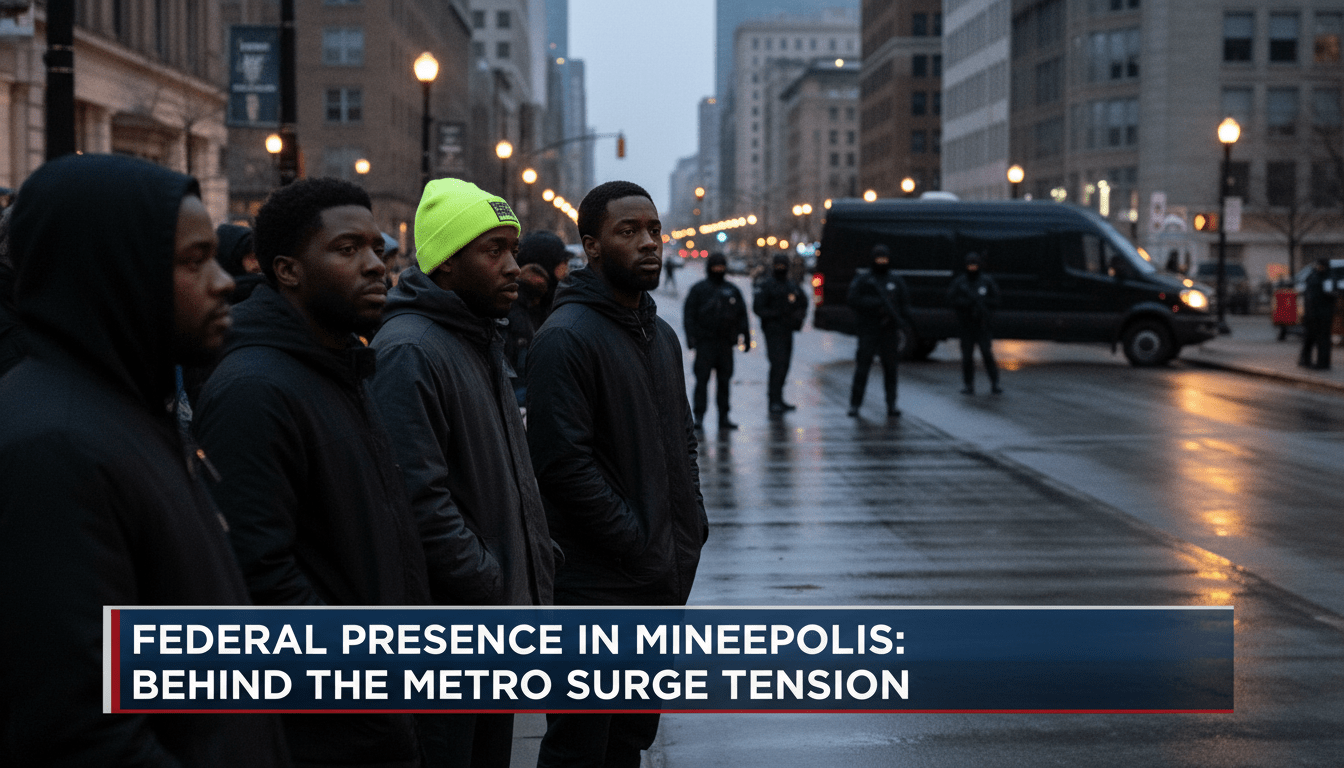
The streets of Minneapolis and Portland are currently filled with a tension that feels both new and very old. In January 2026, federal agents used chemical spray on protesters at a hotel in Minneapolis. This action followed the fatal shooting of Alex Pretti, a thirty-seven-year-old nurse. He worked at the local Veterans Affairs hospital. While federal officials claim he was a threat, witness videos tell a different story. These events are part of a massive operation called Operation Metro Surge. It has brought three thousand federal agents into a single metropolitan area (latimes.com).
This situation highlights a long history of how the government uses its power. People in the community are asking why the border patrol is in the middle of a Midwestern city. The answer lies in the way federal agencies have grown over the last twenty years. The current administration under President Donald Trump has increased these deployments. This has led to a major conflict between state leaders and Washington. Governor Tim Walz has even called the federal presence “organized brutality.” He is demanding that the agents leave the state (latimes.com).
The Tragic Case of Alex Pretti
Alex Pretti was an ICU nurse and a United States citizen. On January 24, 2026, he was shot and killed by Border Patrol agents in Minneapolis. The federal government quickly labeled him a “domestic terrorist” and an “assassin.” Federal officials, including Border Patrol Commander Gregory Bovino, claimed Pretti was armed with a handgun. They argued he intended to massacre agents during a raid (cbsnews.com, latimes.com). However, the community and legal observers provide a different account of that night.
Bystander video shows agents using pepper spray on Pretti. He was then pinned to the ground. Witnesses say he was acting as a Good Samaritan or a legal observer. Some reports indicate he was disarmed of a legally permitted firearm before he was shot multiple times while immobilized (latimes.com). This contradiction has caused deep anger. It reminds many people of the long history of medical experimentation and systemic violence that has historically targeted people of color. The loss of a nurse who served veterans has made the situation even more painful for the city.
Escalating Fatalities: CBP Interactions
Total deaths reported in CBP-related incidents
The Roots of Federal Overreach
To understand why Border Patrol is in Minneapolis, one must look at the Homeland Security Act of 2002. This law was passed after the September 11 attacks. It combined twenty-two different federal agencies into the Department of Homeland Security (DHS). This included the creation of U.S. Immigration and Customs Enforcement (ICE) and U.S. Customs and Border Protection (CBP). While these agencies were meant to focus on the borders, the law gave them broad powers that reach deep into the country (wikipedia.org).
One specific power is the “100-mile border zone.” Federal law allows agents to stop and search vehicles without a warrant within 100 air miles of any U.S. border or coastline. This zone covers two-thirds of the American population. Major cities like Minneapolis, Chicago, and Portland all fall within this area (aclu.org). This legal “loophole” allows federal agents to set up checkpoints and conduct roving patrols far from any international boundary. It creates a different set of rules for people living in these zones compared to the rest of the country.
This expansion of power often creates a conflict in the sharing of power between the state and the national government. When federal agents operate in cities, they do not always follow local laws or policies. This has been a major point of contention in Minneapolis. State investigators from the Bureau of Criminal Apprehension were blocked from the Pretti crime scene by federal agents. They had a state warrant, but the federal agents ignored it. This led to a lawsuit and a temporary restraining order from a federal judge to protect evidence (latimes.com).
BORTAC: The Tip of the Spear
The Border Patrol Tactical Unit, known as BORTAC, is the elite force often seen in these headlines. It was created in 1984 to handle riots in detention centers. Since then, its mission has grown significantly. BORTAC agents receive training that is very similar to military special forces. They are experts in high-risk operations and riot control (wikipedia.org, wikipedia.org). However, using military-style units for domestic policing has raised many concerns about social justice and civil rights.
BORTAC was used during the 1992 Los Angeles riots and the 2000 raid to retrieve Elian Gonzalez. A major shift happened in 2020 during the George Floyd protests in Portland. For the first time, these units were deployed on a large scale to protect federal property in cities. They used “street-force” tactics, such as wearing tactical gear without clear names or using unmarked vans to detain people (wikipedia.org). These same tactics are being used today in Operation Metro Surge. They often cause confusion and fear because residents cannot tell the difference between law enforcement and kidnappers.
The 100-Mile Border Zone Impact
Of U.S. Population lives within this zone
People subject to warrantless searches
The Science and Danger of Chemical Sprays
During the hotel protest in Minneapolis, agents used chemical irritants to disperse the crowd. Law enforcement often describes these as “less-lethal” weapons. However, they can cause serious injury. There are two main types used: OC spray and CS gas. OC spray, or pepper spray, is made from chili peppers. It causes the eyes to swell shut and makes it very hard to breathe for up to ninety minutes (phr.org). It is a physical inflammatory agent.
CS gas, often called tear gas, is a synthetic chemical. It irritates the mucous membranes in the eyes, nose, and mouth. It can cause a feeling of suffocation and even chemical burns on the skin. Health experts warn that using these chemicals in crowded urban areas is dangerous. It can hurt bystanders who are not part of the protest. People with asthma or other breathing problems are at a much higher risk (phr.org). While these chemicals are banned in international war, they remain legal for police to use against American citizens.
The use of these chemicals is often a last resort, but many organizers say they are being used too quickly. In Portland, marchers protesting deportation raids were met with tear gas and flash bangs. Organizers claim that the federal response is a form of intimidation. They believe it is meant to stop people from exercising their right to protest. This struggle over public space is a key part of the modern history of disenfranchisement and suppression that continues to affect marginalized communities today.
AI Tools and the Training Crisis
One of the most surprising reasons for the recent violence involves a computer error. In 2025, the government wanted to hire ten thousand new agents very quickly. To do this, they used an Artificial Intelligence (AI) tool to screen resumes. This tool was supposed to find experienced law enforcement officers. However, the AI made a huge mistake. It flagged people as “experienced” if they had keywords like “officer” in their history. This included people who were “compliance officers” or “security guards” (cato.org, police1.com).
Because the AI thought they were experienced, these new recruits did not get the full training. Instead of the usual eight-week in-person course, they took a four-week online class. This means hundreds of agents were sent into high-pressure situations without knowing how to properly use their firearms or manage crowds. Federal reports show that this error was not discovered for over a month (cato.org, police1.com). Many of these poorly trained agents were sent to Minneapolis for Operation Metro Surge. This lack of training may explain why there has been such a high number of deaths and use-of-force incidents in 2026.
Operation Metro Surge: Economic Toll
Source: Business reports during federal checkpoints (latimes.com)
The High Cost of the Federal Surge
The impact of Operation Metro Surge is not just measured in arrests and violence. It is also measured in the daily lives of people. In South Minneapolis, businesses have reported a huge drop in customers. Some stores say their revenue has gone down by fifty to eighty percent. This is because people are afraid to leave their homes. They want to avoid federal checkpoints and roving patrols that might stop them for no reason (latimes.com). The presence of masked agents has created a climate of fear in immigrant and Black-owned business districts.
Even major companies have noticed the disruption. Over sixty CEOs in Minnesota, including leaders from Target and Best Buy, signed a letter to the government. They stated that the surge is hurting the state economy and causing widespread fear (latimes.com). When parents are afraid to send their children to school and residents are afraid to go grocery shopping, the whole community suffers. This is why the political battle is so intense. Governor Walz and other leaders are trying to protect their citizens from what they see as a federal invasion.
The Role of Legal Observers
In the middle of these protests, you will often see people wearing bright neon green hats. These are Legal Observers. They are volunteers trained by the National Lawyers Guild (NLG). Their job is to be the “eyes and ears” of the legal system. They do not participate in the protest. Instead, they write down everything the police and federal agents do. They record arrests and the use of force. This documentation is used later in court to hold the government accountable (nlg.org, nlgchicago.org).
The Legal Observer program was started in 1968. It was created to support the civil rights and anti-war movements. Since federal agents are rarely held responsible for their actions, these observers are very important. They provide an independent record of what happens when the cameras are not rolling. In the case of Alex Pretti, legal observers are part of the effort to find the truth behind the conflicting stories (nlg.org, nlg.org). Their work ensures that the stories of those on the ground are not erased by the official federal narrative.
The conflict in Minneapolis is a reminder that the history of American policing is still being written. The move from border security to interior enforcement has changed how cities function. As the current administration continues Operation Metro Surge, the debate over federal power and human rights will only grow louder. The people of Minneapolis and Portland are at the center of a national struggle for safety, justice, and the right to live without fear (latimes.com).
About the Author
Darius Spearman is a professor of Black Studies at San Diego City College, where he has been teaching for over 20 years. He is the founder of African Elements, a media platform dedicated to providing educational resources on the history and culture of the African diaspora. Through his work, Spearman aims to empower and educate by bringing historical context to contemporary issues affecting the Black community.
