

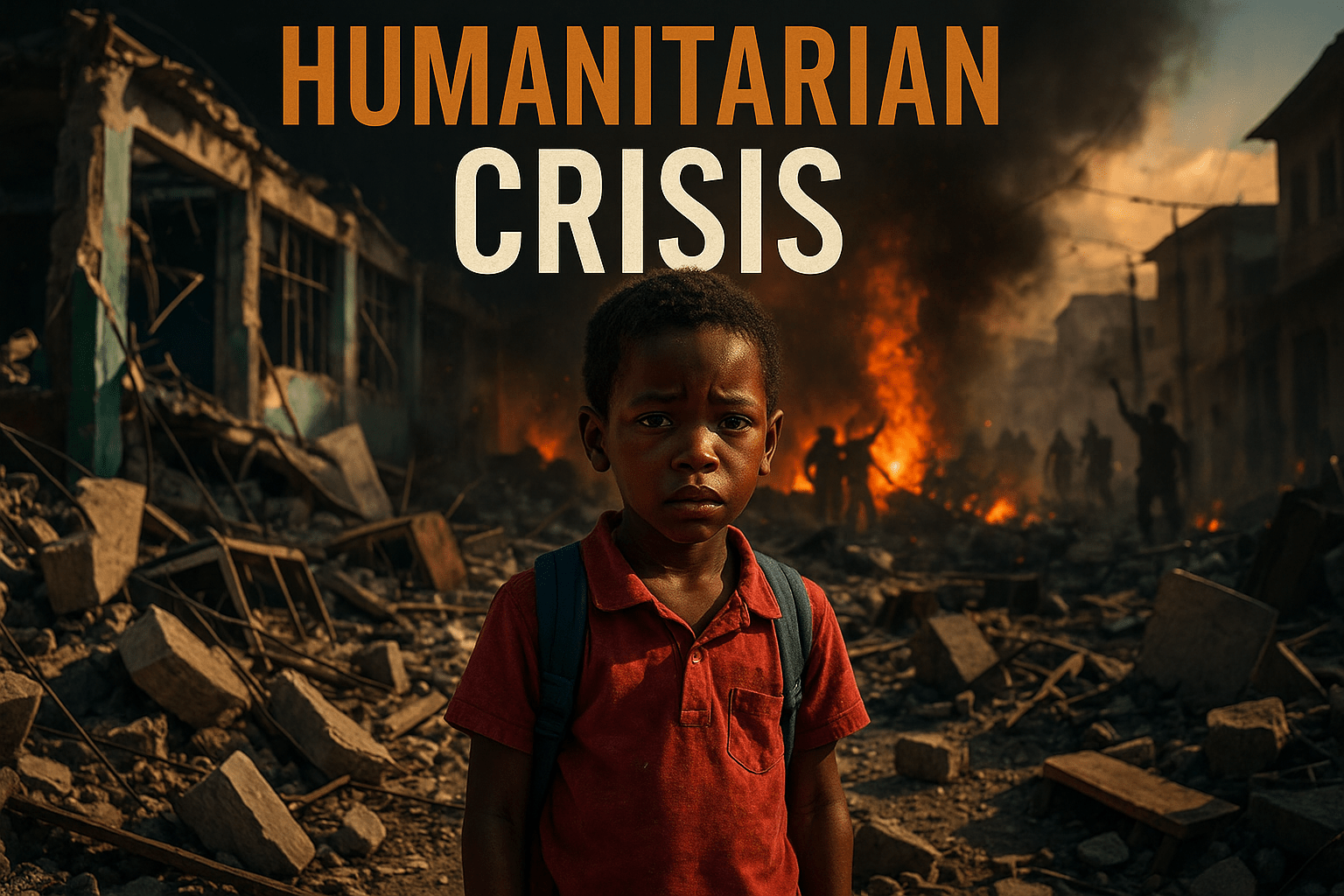
Haiti's Gang Crisis: A Deep Dive
By Darius Spearman (africanelements)
Support African Elements at patreon.com/africanelements and hear recent news in a single playlist. Additionally, you can gain early access to ad-free video content.
Haiti's Escalating Violence
Haiti is grappling with an escalating crisis of gang violence, leading to a devastating loss of life and widespread displacement. The capital, Port-au-Prince, and its surrounding areas have been particularly hard hit. Between October 2024 and June 2025, a staggering 4,864 people were killed due to this worsening violence (reuters.com). More than 1,000 of these deaths occurred specifically in Port-au-Prince and its immediate vicinity (reuters.com).
The violence shows no signs of abating. Between the beginning of April and the end of June 2025, armed violence in Haiti claimed 1,520 lives and left 609 injured (news.un.org). In 2024 alone, gang violence was responsible for the deaths of 5,601 people (press.un.org). These figures paint a grim picture of the daily reality for many Haitians, as communities are torn apart by relentless conflict.
Haiti Gang Violence: Death Tolls by Period
Gang Control and Paralysis
Gangs have significantly expanded their control across Haiti, overwhelming local security forces and causing widespread paralysis. This has particularly impacted the capital, Port-au-Prince. The United Nations estimates that these gangs now control at least 85% of Port-au-Prince (news.un.org). In recent months, their influence has stretched even further, reaching into the Centre and Artibonite departments (news.un.org).
The capital city has been described as “paralysed and isolated” (news.un.org). This is largely due to the ongoing suspension of international commercial flights into the international airport. The delay in police response to gang attacks, such as the five-hour gap during assaults in Kenscoff and Pétion-Ville, further highlights a critical lack of strategic planning and coordination among police forces (miamiherald.com). Both Haitian authorities and multinational forces are outmatched by these gangs, who are increasingly well-equipped and can control vast swathes of territory (warontherocks.com).
Understanding Gangs in Haiti

In Haiti, “gangs” refer to organized armed groups that exert control over territory, often through violence and intimidation. While specific names like G9 and Gpèp are prominent, they are characterized by their ability to outmatch authorities and perpetrate widespread atrocities, including sexual violence and trafficking. Their origins are often tied to political instability, such as the 2021 assassination of President Jovenel Moïse, and are enabled by underlying political corruption. Source: warontherocks.com, binuh.unmissions.org, news.un.org
Humanitarian Crisis Deepens
The escalating violence has profoundly impacted Haiti's humanitarian situation. It has led to mass displacement and the severe disruption of essential services and livelihoods. More than 1 million people have been internally displaced due to gang violence (press.un.org). This widespread insecurity and humanitarian crisis are unraveling the social fabric, pushing thousands into overcrowded and unsafe shelters (binuh.unmissions.org).
The impact on children is particularly dire. Approximately 300 schools have been destroyed, leaving nearly 60,000 children without access to education (press.un.org). The healthcare system, already fragile, has been further crippled. Hospitals, including the crucial University Hospital of Mirebalais, have closed due to insecurity (reuters.com). Furthermore, the violence has forced farmers to abandon their lands, severely crippling agriculture in affected areas (africanews.com). Access to essential services, including medical and psychological support for survivors, remains severely limited (binuh.unmissions.org).
International Response and Challenges
The international community is urged to strengthen its support for Haitian authorities and implement measures to curb the illicit flow of arms (reuters.com). The UN Security Council has taken action to curb the illicit flow of arms and ammunition into Haiti. Member States are urged to redouble efforts to fully implement the arms embargo (press.un.org). The Council also authorized the deployment of the Multinational Security Support (MSS) Mission to help the Haitian National Police re-establish stable security (press.un.org).
Despite these efforts, challenges persist. The Caribbean Community (CARICOM) has urged the international community to take urgent action to support Haitian authorities (hrw.org). The full deployment of the MSS mission to reinforce Haitian national security forces, alongside the enforcement of UN Security Council sanctions aimed at crippling gang operations, has never been more urgent (binuh.unmissions.org). However, the MSS mission has been underfunded, under-resourced, and poorly coordinated (warontherocks.com). So far, concrete steps to increase international support for the MSS or to implement the UN secretary-general’s recommendations have been lacking (hrw.org).
Internal Displacement in Haiti
- Over 1 Million People Internally Displaced
- Represents a significant portion of the population
Root Causes and Victim Demographics
The crisis in Haiti is deeply rooted in complex factors. The assassination of President Jovenel Moïse in 2021 triggered widespread gang violence, particularly in Port-au-Prince (news.un.org). It is also suggested that underlying political corruption enables gangs to thrive (warontherocks.com). Without addressing this corruption, any foreign intervention is likely to fail.
While overall casualty figures are available, detailed demographics of victims, such as age, gender, or social status, are not explicitly specified in the reports. However, the nature of the violence is described as widespread atrocities perpetrated by armed gangs. This includes conflict-related sexual violence and trafficking for the purposes of sexual exploitation (binuh.unmissions.org). This highlights the brutal and dehumanizing tactics employed by these groups.
Pathways to Long-Term Solutions
While the immediate focus remains on security measures and humanitarian aid, there is a recognized need for long-term strategies to restore stability, justice, and development in Haiti. This includes addressing the profound mental health impact of the violence. Mental health professionals can lead community support groups and provide training for religious and community leaders. This training would focus on recognizing post-traumatic disorders, providing psychological first aid, and offering information on mental healthcare resources (pmc.ncbi.nlm.nih.gov).
Strengthening local support systems is crucial for sustainable recovery. The international community's efforts must extend beyond immediate security interventions to foster a resilient society. This involves supporting Haitian institutions and empowering local communities to rebuild and heal from the trauma of prolonged violence. The path forward requires a comprehensive approach that tackles both the symptoms and the root causes of the crisis.
Impact on Education in Haiti
ABOUT THE AUTHOR
Darius Spearman has been a professor of Black Studies at San Diego City College since 2007. He is the author of several books, including Between The Color Lines: A History of African Americans on the California Frontier Through 1890. You can visit Darius online at africanelements.org.
