


Haiti’s Human Rights Crisis Deepens
By Darius Spearman (africanelements)
Support African Elements at patreon.com/africanelements and hear recent news in a single playlist. Additionally, you can gain early access to ad-free video content.
Escalating Violence in Haiti
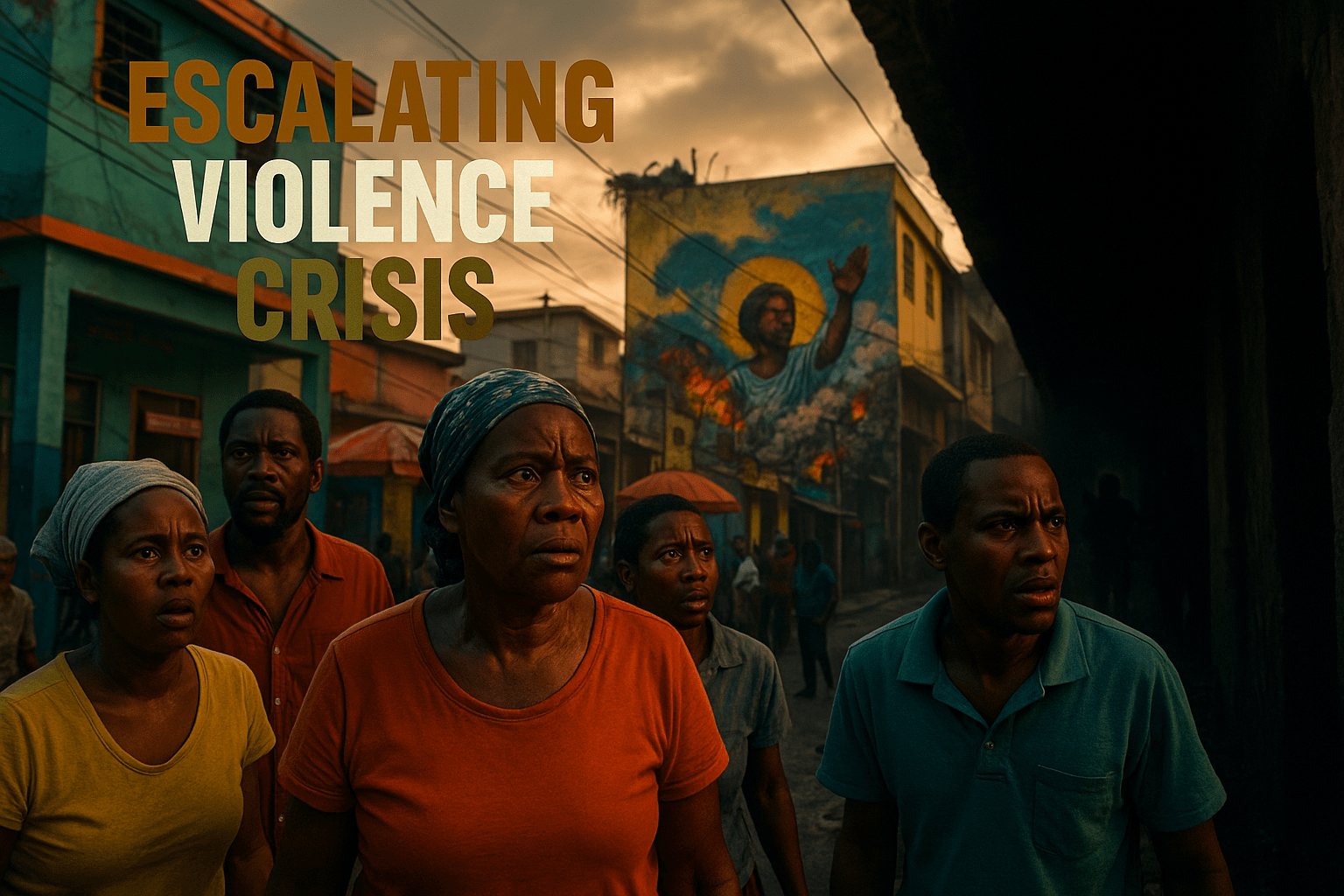
The human rights situation in Haiti is “extremely worrying” due to escalating gang violence (news.un.org). Between April and June 2025, armed violence resulted in 1,520 deaths and 609 injuries (news.un.org). This alarming increase in fatalities highlights the severe impact of the ongoing conflict on the Haitian population. The United Nations estimates that gangs control at least 85% of Port-au-Prince and are expanding their influence into the Centre and Artibonite departments (news.un.org). This territorial control has effectively paralyzed and isolated the capital city, Port-au-Prince, with international commercial flights suspended (news.un.org).
The violence is not confined to the capital. In fact, it is spreading rapidly beyond Port-au-Prince, reaching areas where the state's presence is extremely limited (reuters.com). This expansion of gang territorial control poses a major risk of spreading violence and increasing transnational trafficking in arms and people (ohchr.org). The illegal flow of weapons and ammunition into Haiti, most notably from the United States, remains unaddressed, even as it fuels the present violence (reliefweb.int). This influx of weaponry exacerbates the already dire situation, making it harder for any form of stability to take root.
Gang Violence and its Devastating Toll
Gang violence has led to a significant number of fatalities and other human rights abuses. Between October 2024 and June 2025, 4,864 people were killed due to worsening gang violence nationwide (reuters.com). In the first quarter of 2025 alone (January 1 to March 31), at least 1,617 people were killed and 580 injured in violence involving gangs, self-defense groups, or security forces (news.un.org). These numbers paint a grim picture of the daily reality for many Haitians.
Human rights abuses documented include mass killings, abductions, and sexual violence (news.un.org). These terms describe horrific acts that strip individuals of their dignity and safety. Mass killings refer to the indiscriminate slaughter of large groups of people, often in targeted attacks on communities. Abductions involve the unlawful seizure and detention of individuals, frequently for ransom. Sexual violence encompasses a range of acts, including rape, that are used as tools of terror and control. At least 161 kidnappings for ransom were recorded in the first quarter of 2025, with 63% occurring in the Artibonite department (news.un.org). These kidnappings not only inflict trauma on victims and their families but also destabilize communities and undermine any sense of security. The scale of these abuses underscores the urgent need for intervention and protection for the Haitian people.
Human Rights Impact in Haiti (Oct 2024 – June 2025)
Actors in the Conflict
The situation in Haiti is exacerbated by the involvement of various actors, including self-defense groups and security forces. Human rights abuses by self-defense groups have increased (ohchr.org). These groups, often formed by communities seeking to protect themselves in the absence of effective state protection, operate outside formal legal frameworks. Their legitimacy is often debated, and their actions can sometimes blur the lines between self-preservation and vigilantism. As law enforcement atrophies and cases of vigilantism increase, the United Nations Security Council authorized a multinational-backed security force led by Kenya to assist the Haitian police in countering gang violence (cfr.org).
Furthermore, summary executions involving Haitian security forces have been committed against individuals accused of supporting gangs (ohchr.org). This means that individuals suspected of gang affiliation are being killed without due process, further eroding the rule of law. The Haitian people are caught between horrific violence perpetrated by gangs and human rights violations from security forces, as well as abuses by self-defense groups (ohchr.org). This complex web of violence leaves civilians with few safe havens. The Multinational Security Support (MSS) mission, which continues to struggle with adequate funding and deployment, has not been able to stop the armed groups’ advance and faces an uncertain future (reliefweb.int). Donations for the multinational mission have fallen far short of what was expected, and not all the promised 2,500 officers and materiel have arrived (crisisgroup.org).
The Political Vacuum and its Consequences
The assassination of President Jovenel Moïse in 2021 triggered widespread gang violence (news.un.org). This event created a significant political vacuum and exacerbated existing instability. For almost three years following Moïse’s assassination, many Haitians have cried out for a government that could build on broad public support to quell rising violence (crisisgroup.org). Haiti has not held general elections in almost a decade, contributing to a profound lack of legitimate governance. This prolonged political crisis has allowed gangs to consolidate power and expand their control.
Haiti’s weak political institutions have facilitated corruption and impunity (cfr.org). The country's vulnerability to natural disasters has further exacerbated poverty and inequality, making it the poorest country in the Western Hemisphere (cfr.org). Haiti’s history is marked by multiple coups, dictatorial regimes, and foreign interventions, which have collectively undermined the development of strong, stable institutions (cfr.org). The failure to define the crisis in precise terms has led to fragmented and ineffective responses from Haiti’s state leaders, as well as a number of powerful state actors and international organizations (warontherocks.com). This situation has reached a tragic stalemate, leaving the Haitian people in a precarious position.
Factors Contributing to Haiti's Political Instability
The Humanitarian Crisis and International Response
The escalating violence has profound humanitarian consequences for civilians. Desperately needed and already chronically under-funded humanitarian assistance has been precipitously cut, mostly due to the U.S. dismantling its overseas aid (reliefweb.int). This reduction in aid further compounds the suffering of a population already facing immense challenges. The lack of detailed information on displacement, access to healthcare, food security, and education disruptions paints an incomplete picture of the daily struggles faced by Haitian families. However, it is clear that these vital services are severely impacted, leaving many vulnerable.
The international response to Haiti’s crisis has been muddled (reliefweb.int). Foreign policies have enabled political actors responsible for Haiti’s current challenges (reliefweb.int). Donations for the multinational mission have fallen far short of what was expected (crisisgroup.org). The UN Security Council is considering turning the Kenyan-led force into a blue-helmet peacekeeping operation, which would help address the mission’s funding shortfall (crisisgroup.org). Earlier this year, UN Secretary-General António Guterres ruled out deploying a formal peacekeeping force despite a request from Haiti’s Transitional Presidential Council (miamiherald.com). Instead, he recommended that the mission be modified, with the UN picking up some of the costs and providing logistics support (miamiherald.com). To adequately address the political-criminal crisis, international actors, including the UN Security Council, the United States, Canada, France, and the Caribbean Community, should assume a new approach (warontherocks.com). This approach should focus on improving coordination between Haitian authorities and existing multinational forces to temper violence, improving intelligence sharing to reduce the flow of weapons into the country, and empowering Haiti’s judicial institutions to prosecute gang leaders and their supporters (warontherocks.com).
Challenges in International Response to Haiti
The Path Forward for Haiti
Addressing the crisis in Haiti requires a multi-faceted approach that tackles both the immediate violence and the underlying systemic issues. A critical step involves understanding the nature of the gangs themselves. These are not simply disorganized groups; they are often complex networks with varying structures, motivations, and origins. Some may be rooted in political affiliations, others in economic desperation, and some are simply criminal enterprises. Their control over large parts of Port-au-Prince and other departments is a result of the state's diminished capacity and the lucrative opportunities presented by illicit activities, including the illegal flow of weapons into the country (reliefweb.int).
Furthermore, the role of self-defense groups needs careful consideration. While they may emerge from a genuine desire for protection, their lack of accountability can lead to human rights abuses. Clarifying their relationship with the state and establishing mechanisms for oversight are crucial. Ultimately, a sustainable solution for Haiti must involve strengthening its political institutions, combating corruption, and addressing the deep-seated economic and social inequalities that fuel the crisis (cfr.org). This includes ensuring that judicial institutions are empowered to prosecute those responsible for human rights violations, regardless of their affiliation. The international community has a vital role to play in supporting these efforts, not just through financial aid but also through coordinated diplomatic efforts and intelligence sharing to stem the flow of illicit arms and provide sustained humanitarian assistance.
The human rights situation in Haiti is a stark reminder of the devastating impact of political instability and unchecked violence on a population. The ongoing crisis, marked by widespread gang control, rampant human rights abuses, and a struggling international response, demands immediate and sustained attention. The assassination of President Jovenel Moïse in 2021 served as a catalyst, plunging the nation into deeper turmoil and highlighting the fragility of its institutions. The lack of general elections for nearly a decade has created a power vacuum that gangs have readily exploited, expanding their influence beyond Port-au-Prince into critical regions like Artibonite and Centre departments (news.un.org). This territorial expansion not only increases violence but also facilitates transnational trafficking, further destabilizing the region (ohchr.org).
The human cost of this crisis is immense. Between October 2024 and June 2025, nearly 5,000 people were killed due to gang violence (reuters.com). Beyond the fatalities, thousands have been injured, abducted, and subjected to sexual violence, with kidnappings for ransom becoming a terrifyingly common occurrence (news.un.org). The emergence of self-defense groups, while sometimes born out of community desperation, has also contributed to the cycle of violence, with reports of increased human rights abuses (ohchr.org). Even more concerning are the allegations of summary executions committed by Haitian security forces against those accused of gang affiliation, placing civilians in an impossible position between warring factions (ohchr.org).
The international community's response has been criticized for being fragmented and insufficient. Despite the authorization of a Multinational Security Support (MSS) mission, it faces significant funding shortfalls and has yet to fully deploy, hindering its ability to curb the violence (reliefweb.int). The debate over whether to deploy a formal UN peacekeeping force continues, even as the humanitarian situation deteriorates and essential aid is cut (crisisgroup.org). For Haiti to move forward, there must be a concerted effort to strengthen its governance, address the root causes of poverty and inequality, and ensure accountability for human rights violations. This requires a unified and robust international strategy that goes beyond temporary measures and focuses on long-term stability and justice for the Haitian people.
ABOUT THE AUTHOR
Darius Spearman has been a professor of Black Studies at San Diego City College since 2007. He is the author of several books, including Between The Color Lines: A History of African Americans on the California Frontier Through 1890. You can visit Darius online at africanelements.org.
