



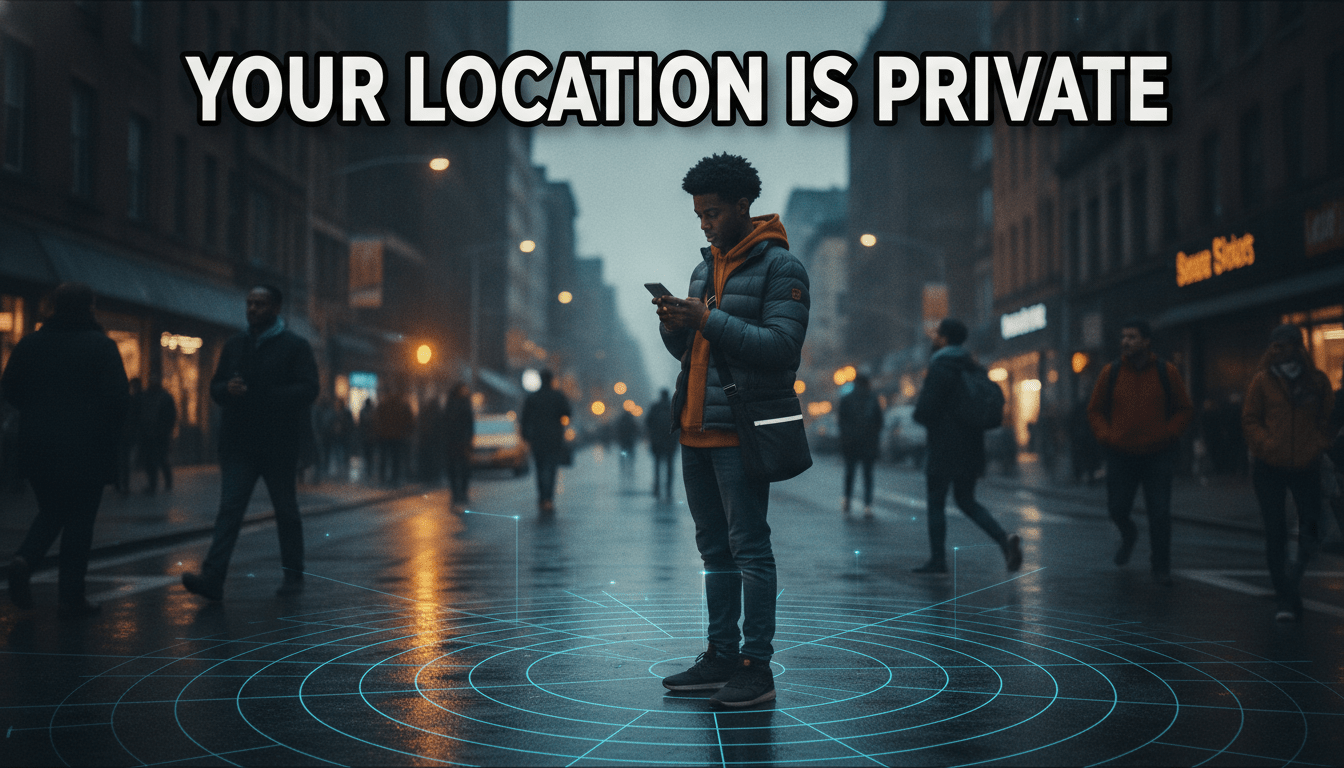
How the Court Blocked Warrantless Location Tracking
By Darius Spearman (africanelements)
Support African Elements at patreon.com/africanelements and hear recent news in a single playlist. Additionally, you can gain early access to ad-free video content.
On June 29, 2026, the Supreme Court of the United States delivered a major decision in Chatrie v. United States (harvardlawreview.org). By a 6-3 vote, the justices ruled that government geofence warrants constitute a search under the Fourth Amendment (harvardlawreview.org). Justice Elena Kagan wrote the majority opinion (harvardlawreview.org). The court declared that cell phone location history is protected by constitutional privacy rights (harvardlawreview.org). This protection remains active even when tech companies store the location data (harvardlawreview.org). It also remains active when law enforcement accesses the data for brief periods (harvardlawreview.org).
Civil rights and digital privacy advocates celebrated the decision (harvardlawreview.org). For years, organizations like the American Civil Liberties Union and the Electronic Frontier Foundation warned against geofencing (harvardlawreview.org). They argued that these general warrants sweep up innocent bystanders in heavily policed urban areas (harvardlawreview.org). Consequently, the decision represents a critical defense for marginalized communities. This article examines the deep history and systemic realities behind this legal milestone.
The Katz Revolution and the Third-Party Loophole
Historically, the Fourth Amendment protected people mostly in physical spaces (harvardlawreview.org). If the police did not physically trespass on your property, a search did not occur (harvardlawreview.org). However, this property-based rule changed in 1967 with Katz v. United States (harvardlawreview.org). In that case, federal agents recorded telephone booth conversations using an external microphone (cornell.edu, cornell.edu). The court ruled that the Fourth Amendment protects people, not places (harvardlawreview.org). Under this ruling, the government must obtain a warrant if a person has a reasonable expectation of privacy (harvardlawreview.org).
Despite this victory, the Supreme Court quickly created a major loophole. In the 1970s, the court established the Third-Party Doctrine (harvardlawreview.org). Under decisions like United States v. Miller and Smith v. Maryland, individuals lost their privacy expectations for information shared with third parties (duq.edu, btlj.org, cornell.edu). For decades, banks and telephone companies could share user records with police without warrants (harvardlawreview.org). This loophole emerged during a massive political transition. During this time, the United States saw a rapid expansion of the police state, marking the rise of mass incarceration.
Sotomayor’s Warning and the Carpenter Precedent
As mobile technology developed, cell phones began transmitting precise location data (harvardlawreview.org). Consequently, the Third-Party Doctrine faced new challenges (harvardlawreview.org). The first major shift occurred in United States v. Jones in 2012 (harvardlawreview.org). Police had attached a physical GPS tracker to a suspect’s car (cornell.edu, cornell.edu). While the majority focused on physical trespass, Justice Sonia Sotomayor warned that the Third-Party Doctrine was ill-suited for the digital age (harvardlawreview.org). She noted that carrying a device reveals sensitive details about familial, political, and religious associations (harvardlawreview.org).
The formal turning point came with Carpenter v. United States in 2018 (harvardlawreview.org). The Supreme Court ruled 5-4 that accessing historical Cell Site Location Information requires a warrant (aclu.org, umn.edu). Chief Justice John Roberts noted that cell phones are indispensable to modern life (harvardlawreview.org). Thus, sharing location data with cell towers is not a voluntary choice (harvardlawreview.org). This ruling recognized that digital tracking provides an intimate chronicle of a person’s life (harvardlawreview.org). However, debates over digital surveillance and racial bias continued. These battles highlighted how constitutional jurisprudence often struggles to protect marginalized communities from systemic police overreach.
Annual Growth of Geofence Warrants Received by Google
The Threat of Geofence Warrants and the Case of Okello Chatrie
Although the Carpenter ruling protected specific suspects, law enforcement found a new loophole (harvardlawreview.org). They turned to geofence warrants, which reverse the investigative process (harvardlawreview.org). Instead of targeting a suspect, police draw a boundary around a crime scene (harvardlawreview.org). They demand that Google provide data on every active device in that boundary during a set timeframe (harvardlawreview.org). This process effectively targets every bystander inside the virtual boundary (harvardlawreview.org). This digital policing method mirrors physical patterns of control that have historically limited the freedom of Black individuals.
The case of Okello Chatrie perfectly illustrates this digital overreach. On May 20, 2019, an armed robber stole $195,000 from a bank in Midlothian, Virginia (harvardlawreview.org). Lacking active suspects, police obtained a geofence warrant for Google location data (harvardlawreview.org). The boundary covered a 150-meter radius, which included private homes, a hotel, and a church (harvardlawreview.org). The search identified Okello Chatrie, a 24-year-old Black resident of Richmond (nacdl.org, nacdl.org).
The demographic background of Chatrie is highly significant to his legal case. Civil rights advocates argue that geofence warrants disproportionately harm communities of color (nacdl.org). In Chatrie’s case, witness descriptions initially indicated a thin white suspect (nacdl.org). However, police identified Chatrie, a Black man, through his driver’s license photo and the geofence data (nacdl.org). Defense attorneys and advocacy groups filed amicus briefs highlighting this racial bias (nacdl.org, nacdl.org). They argued that digital dragnets amplify existing systemic racism in police practices (nacdl.org, nacdl.org).
Following his arrest, Chatrie moved to suppress the evidence, leading to a major legal battle (harvardlawreview.org). The federal courts soon split over the constitutionality of geofence warrants (harvardlawreview.org). The Fourth Circuit Court of Appeals allowed the evidence under the good-faith exception (nacdl.org). Conversely, the Fifth Circuit ruled in United States v. Smith that geofence warrants are categorically unconstitutional (theguardian.com, ballsandstrikes.org). This split prompted the Supreme Court to grant a petition for a writ of certiorari in January 2026 to review the case (harvardlawreview.org).
In legal terms, certiorari means the Supreme Court agreed to hear Chatrie’s appeal (harvardlawreview.org). After hearing the case, the Supreme Court vacated the lower court’s ruling and remanded the case on June 29, 2026 (harvardlawreview.org). The term remanded means the case was sent back to the lower courts for further evaluation (harvardlawreview.org). The lower courts must now determine if the warrant met Fourth Amendment standards or if the good-faith exception applies (harvardlawreview.org). Before this ruling, Chatrie had received a sentence of nearly 12 years in prison (nacdl.org). His ultimate legal outcome remains pending as lower courts re-examine his conviction under the new guidelines (harvardlawreview.org).
The Three-Step Geofence Unmasking Process
Step 1: Anonymized Dragnet
Google searches its databases and produces a list of randomized, anonymous device numbers that entered the geographic zone.
Step 2: Path Analysis
Police study the movements of these anonymous devices and ask Google to expand the tracking history outside the boundary.
Step 3: Identity Unmasking
Police identify suspicious paths and demand that Google reveal personal account names, email addresses, and phone numbers.
The Racial and Spatial Bias of Digital Dragnets
The spatial application of geofence warrants is deeply unequal (harvardlawreview.org). Heavily policed urban areas are disproportionately targeted by location-history requests (harvardlawreview.org). This targeting is directly connected to historical over-policing and systemic bias (nacdl.org). For instance, predictive policing tools analyze historic arrest records to deploy patrols (nacdl.org). This process creates a feedback loop that focuses heavily on minority neighborhoods (nacdl.org). Furthermore, technologies like automated license plate readers are concentrated in lower-income Black and Latino areas (nacdl.org).
Additionally, historical redlining and housing segregation keep minority communities geographically concentrated (nacdl.org). Consequently, when police draw a digital boundary over an urban neighborhood, they sweep in a higher percentage of minority residents (nacdl.org). A study by the ACLU of Northern California highlighted this systemic inequality (aclunorcal.org). In San Francisco, police frequently drew geofence boundaries over diverse, lower-income areas like Portola (aclunorcal.org). The population in Portola is highly diverse, consisting of approximately 47.8 percent Asian, 14.9 percent Hispanic, and 6.2 percent Black residents (aclunorcal.org). By targeting these neighborhoods, police captured the personal location data of innocent residents (aclunorcal.org). This included people visiting local medical clinics, houses of worship, and grocery stores (aclunorcal.org).
This digital dragnet has created severe real-world consequences for innocent citizens (harvardlawreview.org). The cases of Jorge Molina and Zachary McCoy illustrate this danger (themarshallproject.org, theguardian.com). Jorge Molina, a 23-year-old Hispanic resident of Arizona, was wrongfully arrested for murder (themarshallproject.org). A geofence warrant placed his Google account at the scene of the crime (themarshallproject.org). In reality, his stepfather had used an old phone still logged into Molina’s account (themarshallproject.org). Molina spent six days in jail, lost his retail job, and had his car repossessed before authorities realized the error (themarshallproject.org). His case demonstrates how location data can easily ensnare innocent individuals of color (themarshallproject.org).
In contrast, Zachary McCoy, a white cyclist in Florida, avoided arrest using financial resources (themarshallproject.org). McCoy discovered he was a burglary suspect because his fitness app tracked him riding his bike past a house (themarshallproject.org). Because he had the financial means, McCoy hired an attorney to block Google from releasing his personal information (themarshallproject.org). The stark contrast between these cases highlights the deep class and racial inequalities inherent in digital surveillance (themarshallproject.org, theguardian.com).
Demographics of Portola: A Frequently Targeted Neighborhood
Digital boundaries in San Francisco disproportionately swept up diverse, low-income populations.
Protecting Protestors and Dismantling Sensorvault
The Chatrie decision also protects political demonstrators from warrantless surveillance (harvardlawreview.org). Historically, geofence warrants have been used to monitor civil rights protests (harvardlawreview.org). For example, during the 2020 George Floyd protests in Minneapolis, police used geofences to track every device near an AutoZone store where property damage occurred (eff.org). Similarly, federal agents deployed at least twelve geofence warrants during the Jacob Blake protests in Kenosha, Wisconsin (aclu-wi.org). One warrant captured a third of a major downtown public park, sweeping up the records of hundreds of peaceful demonstrators (aclu-wi.org). This weaponization of technology closely mirrors the history of state surveillance used to monitor and disrupt civil rights activists.
The Supreme Court ruling shields future demonstrators by requiring police to show probable cause before launching digital dragnets (harvardlawreview.org). However, the ruling does not automatically apply retroactively to past cases (harvardlawreview.org). Under established legal standards, new rules of criminal procedure do not overturn finalized convictions (harvardlawreview.org). Therefore, individuals convicted during past demonstrations cannot automatically use the ruling to overturn their convictions (harvardlawreview.org). Nevertheless, defense attorneys can actively leverage the Chatrie precedent to suppress location data in ongoing trials (harvardlawreview.org).
Importantly, tech companies have also taken steps to curb geofence surveillance (google.com, 9to5google.com). Historically, Google archived location records in a centralized repository known as the Sensorvault database (google.com, 9to5google.com). This database contained precision location history compiled from cellular signals, Wi-Fi networks, and Bluetooth beacons (google.com, 9to5google.com). In late 2023, Google announced major structural changes (9to5google.com). The company began saving Location History directly to personal user devices (9to5google.com). It also shortened default retention times from 18 months to three months (9to5google.com). By decentralizing storage, Google dismantled Sensorvault, making it technically impossible to respond to sweeping geofence warrants (9to5google.com).
In conclusion, the Supreme Court decision in Chatrie v. United States establishes a crucial defense for digital privacy (harvardlawreview.org). By classifying geofence searches as Fourth Amendment searches, the court has limited the power of warrantless digital tracking (harvardlawreview.org). This milestone protects all citizens, particularly those living in heavily policed minority neighborhoods (harvardlawreview.org). Cell phones are no longer open tracking devices for the state, but protected domains under the law (harvardlawreview.org).
About the Author
Darius Spearman is a professor of Black Studies at San Diego City College, where he has been teaching for over 20 years. He is the founder of African Elements, a media platform dedicated to providing educational resources on the history and culture of the African diaspora. Through his work, Spearman aims to empower and educate by bringing historical context to contemporary issues affecting the Black community.
