
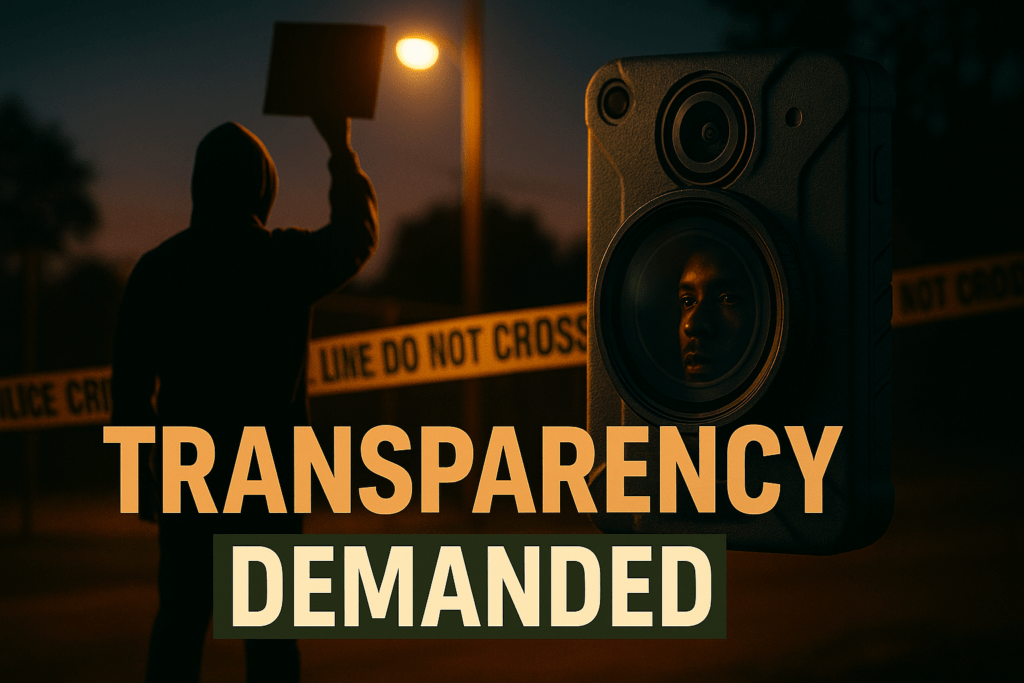
Justice Denied: The Fight for Transparency in Jabari Peoples’ Shooting
By Darius Spearman (africanelements)
Support African Elements at patreon.com/africanelements and hear recent news in a single playlist. Additionally, you can gain early access to ad-free video content.
The Tragic Incident and Conflicting Accounts
The community in Homewood, Alabama, and beyond, is reeling from the fatal shooting of 18-year-old Jabari Peoples by a police officer. This tragic event unfolded last week at the Homewood Soccer Park (wbrc.com). The incident has ignited a fierce demand for answers and transparency, especially as the official narrative clashes sharply with the family’s account.
The Homewood Police Department claims that Peoples resisted arrest and reached for a gun during a struggle with the officer (wbrc.com). They stated that officers were investigating a suspicious vehicle when Peoples allegedly got into a fight with an officer. He then reportedly broke away to retrieve a handgun, which led the officer to fire (keyt.com). However, the Peoples family’s legal team strongly disputes this version of events. Attorney Leroy Maxwell Jr., representing the family, stated that preliminary findings from an investigator indicate Peoples was shot once in the back (abc3340.com). Furthermore, Maxwell reported that an eyewitness account suggests Peoples did not possess a weapon when the officer approached him (abc3340.com). The family’s legal team believes the police’s statement “does not add up” (wbrc.com). This stark difference in accounts underscores the critical need for the release of body camera footage, which the family and community hope will provide clarity.
Conflicting Accounts of Jabari Peoples’ Shooting
Police Department’s Claim
- Peoples resisted arrest.
- Peoples reached for a gun during a struggle.
- Officer fired after Peoples broke away to retrieve a handgun.
Family’s Legal Team’s Claim
- Peoples was shot once in the back.
- Eyewitness account indicates Peoples did not possess a weapon.
- Police statement “does not add up.”
The Battle for Transparency: Withholding Body Camera Footage
The Alabama Law Enforcement Agency (ALEA) has denied the Peoples family’s request for the release of body camera footage related to Jabari’s fatal shooting (wbrc.com). ALEA, a state-level law enforcement agency responsible for various investigative and public safety functions in Alabama, stated that releasing the video could impact an ongoing investigation (wbrc.com). This rationale, often cited in such cases, means that law enforcement agencies believe releasing the footage could compromise the integrity or progress of their inquiry. The duration of such investigations is not explicitly defined, but they can be lengthy, with outcomes sometimes taking months (al.com).
Alabama’s laws regarding the release of body camera footage are notably restrictive. They often prioritize ongoing investigations and classify footage as investigative material, which significantly limits public and even family access (al.com). In 2021, the Alabama State Supreme Court ruled that police body camera and dash camera videos are investigative materials and are therefore exempt from the disclosure requirements of the state’s public records law (al.com). This ruling grants police departments the power to release footage or to withhold it at their discretion. Consequently, the media and the general public in Alabama have no legal recourse to view body camera footage (al.com). A state law passed in 2023 allows individuals depicted in footage to petition the agency to view it, but this does not guarantee release and does not extend to the media or general public under public records law (al.com).
Alabama’s Body Camera Footage Release Policy
Legal Labyrinth and the Fight for Justice
The Peoples family faces a challenging legal landscape in their quest for justice and transparency. While the articles indicate that individuals depicted in body camera footage can petition the agency to view it, there is no detailed explanation of a formal process for requesting footage or the specific rights available if a request is denied (al.com). The current legal framework in Alabama heavily favors law enforcement’s discretion in releasing such footage. This means that even with a direct request, families may find themselves without a clear path to access the very evidence they believe will shed light on their loved one’s death.
Despite the hurdles, families in Alabama have pursued various legal avenues beyond public outcry. For example, in one instance, a judge denied a family’s request for footage, citing an “upcoming civil trial,” which suggests that civil litigation is a legal option families pursue (al.com). Furthermore, families have engaged legal representation to demand the release of footage and to seek criminal justice outcomes, such as the arrest and firing of officers involved (al.com). The ruling in the Steve Perkins case, where a judge found the officer did not prove self-defense, demonstrates that families can pursue legal challenges to officer actions, which can lead to criminal charges (al.com). These cases highlight the persistent struggle for accountability within the legal system, often requiring significant effort and resources from affected families.
A Community Rises: Demands for Accountability
The decision by ALEA to withhold the body camera footage has ignited significant public outcry in the Birmingham metro area (wbrc.com). The Peoples family and the broader community are actively rallying for justice and transparency (wbrc.com). This collective response is not isolated; it reflects a deeper context of community-police relations in Alabama, where distrust often arises from incidents involving police use of force and limited transparency. The demand for body camera release and calls for accountability from state representatives and family lawyers in similar cases underscore the community’s desire for transparency and justice in police-involved incidents (al.com).
A vigil was held at the Homewood Soccer Park to honor Jabari Peoples and to demand answers (wvtm13.com). Friends, family, and community supporters gathered for a candlelight vigil, expressing deep emotion and demanding more information (wvtm13.com). The family also shared that they were not contacted by law enforcement the night Jabari was killed, stating they were “denied basic dignity” (keyt.com). This lack of communication further fuels the community’s frustration and highlights the perceived disregard for the affected families. Chad Chavez of Citizens for Criminal Justice Reform has stated that “Body cameras were sold to the public as a transparency tool,” but that police departments often withhold footage, leading to a lack of clarity and trust (al.com). This sentiment resonates deeply within communities that have historically experienced disproportionate policing and a lack of accountability.
Community Demands for Justice and Transparency
The Ongoing Struggle for Accountability
The case of Jabari Peoples is a stark reminder of the ongoing struggle for accountability and transparency in police-involved shootings, particularly within the African American community. The conflicting narratives, coupled with the state’s restrictive body camera laws, create a significant barrier to understanding the full truth of what happened. The family’s claim that Peoples was shot in the back and that an eyewitness saw no weapon directly challenges the police’s justification for the use of deadly force. This discrepancy highlights why the body camera footage is so crucial; it is seen as the objective record that could either corroborate or refute the official account.
The public outcry and the community’s unwavering demand for the footage reflect a broader desire for systemic change. People want to ensure that such incidents are thoroughly investigated and that justice is served, not just for Jabari Peoples, but for all individuals who encounter law enforcement. The lack of immediate contact with the family after the shooting also underscores a profound lack of empathy and basic human dignity that often characterizes interactions between law enforcement and marginalized communities. As the investigation continues, the community remains vigilant, pushing for the truth to emerge and for meaningful reforms that will foster greater trust and accountability between police and the communities they serve.
ABOUT THE AUTHOR
Darius Spearman has been a professor of Black Studies at San Diego City College since 2007. He is the author of several books, including Between The Color Lines: A History of African Americans on the California Frontier Through 1890. You can visit Darius online at africanelements.org.
