

Listen to this article
Download AudioSouth Sudan Aid Crisis: Children Face Starvation
By Darius Spearman (africanelements)
Support African Elements at patreon.com/africanelements and hear recent news in a single playlist. Additionally, you can gain early access to ad-free video content.
Upper Nile State: Child Malnutrition Emergency
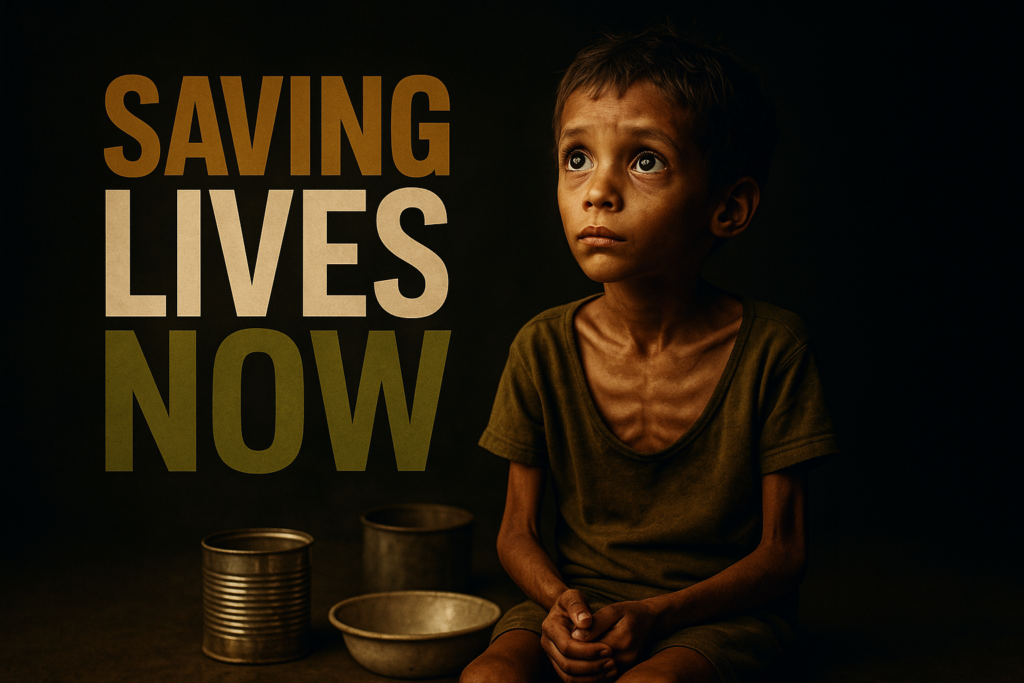
In South Sudan’s Upper Nile State, a devastating crisis is unfolding. Over 60,000 children already suffering from malnutrition are in grave danger (Africanews). Their situation worsens daily as essential humanitarian supplies run critically low. These children face plunging into even deeper levels of malnutrition because aid cannot reach them. This region sadly holds some of the highest malnutrition rates in the entire country. Indeed, over 300,000 children battled moderate or severe malnutrition there just last year (Africanews).
The challenges don’t end with hunger. Upper Nile State is also fighting a cholera outbreak (Africanews). This deadly disease spreads easily through contaminated water, especially in areas with poor sanitation. Cholera causes severe dehydration, making it extremely dangerous for already weakened, malnourished children. Furthermore, surges in violence since February 2025 have forced more families from their homes (Africanews). This displacement makes finding food even harder, compounding the health and nutrition crisis for countless vulnerable families.
Urgent Warning: Supplies Running Out
May 2025 Deadline
UNICEF and WFP expect nutrition supplies to be exhausted by the end of May 2025 without urgent action.
Blocked Lifeline: Humanitarian Aid Routes Cut
A major reason for the dwindling supplies is the disruption of aid routes. The White Nile River is usually the main highway for humanitarian aid into the Upper Nile State (UNICEF). However, intense fighting has choked off this vital corridor. For nearly a month, no food aid has been delivered via the river (Africanews). This blockage directly threatens the lives of severely malnourished children who depend on these supplies.
Boats carrying thousands of tons of essential food and nutrition supplies have been forced back (Africanews). Aid agencies face immense security risks. They fear ongoing fighting, potential looting, and other disruptions that make safe delivery impossible. Consequently, UNICEF and WFP, key aid organizations, urgently call for safe and secure access (UNICEF). They stress that reliable pathways are needed immediately to get lifesaving nutrition treatments for children who desperately need them in Upper Nile.
Wider South Sudan Crisis: Conflict Fuels Hunger
The problems in Upper Nile State are part of a much larger humanitarian crisis engulfing South Sudan. The country faces immense challenges pushing needs to record levels (Global Humanitarian Overview 2025). Ongoing conflict remains a primary driver of suffering. Political tensions between President Salva Kiir and First Vice President Riek Machar continue to undermine the fragile 2018 peace agreement (Africanews). This instability fuels violence, displacement, and widespread food insecurity.
Beyond conflict, South Sudan reels from climatic shocks like floods and droughts. Disease outbreaks, including cholera affecting Upper Nile, add another layer of hardship (Global Humanitarian Overview 2025). The spillover effects from the conflict in neighboring Sudan further complicated the situation. Nearly 850,000 people, mostly returning South Sudanese and Sudanese refugees, have fled Sudan into South Sudan since April 2023 (Global Humanitarian Overview 2025). Therefore, this massive influx puts immense pressure on already scarce resources and fragile host communities.
Scale of the South Sudan Crisis (2025)
Deepening Food Insecurity Across South Sudan
Food insecurity is a significant feature of the South Sudan crisis. One out of every two people is expected to struggle to find enough food during the lean season (Global Humanitarian Overview 2025). This period, typically from April to July, marks the time between planting and harvest when food stocks are lowest. For many families, this means extreme hardship and hunger. The situation is dire for tens of thousands.
Alarmingly, almost 80,000 people are predicted to face catastrophic food insecurity (Global Humanitarian Overview 2025). This is the most severe level, where food is almost entirely inaccessible, leading to starvation and death. Since nine out of ten people rely on agriculture, supporting farming is vital (FAO HNRP 2025). Initiatives like providing crop production kits can make a real difference. Indeed, a kit costing just $55 can help a family grow enough nutritious food for over five months (Global Humanitarian Overview 2025). However, the scale of need is enormous. The Food and Agriculture Organization (FAO) requires $60 million to assist 3.9 million people, highlighting the urgent need for funding (FAO HNRP 2025).
South Sudan: Food Insecurity Snapshot (2025 Lean Season)
Urgent Call for Action: Saving South Sudan’s Future
The situation in South Sudan, especially for the children in Upper Nile State, demands immediate attention. The White Nile supply route disruption has created a life-threatening emergency (UNICEF). Without swift intervention, the nutrition supplies needed to save over 60,000 malnourished children will run out by the end of May 2025 (Africanews). This is not just a statistic; it represents the future of a nation hanging in the balance.
Aid organizations like UNICEF and WFP are on the ground, ready to help. However, they need safe passage guaranteed by all parties involved in the conflict (UNICEF). The international community must also step up. Funding the Humanitarian Needs and Response Plan is crucial (Global Humanitarian Overview 2025). Supporting agricultural initiatives through organizations like the FAO can provide longer-term solutions (FAO HNRP 2025). Ultimately, lasting peace and stability, driven by political will from leaders like Kiir and Machar, are essential to end this cycle of crisis and build a hopeful future for the people of South Sudan.
ABOUT THE AUTHOR
Darius Spearman has been a professor of Black Studies at San Diego City College since 2007. He is the author of several books, including Between The Color Lines: A History of African Americans on the California Frontier Through 1890. You can visit Darius online at africanelements.org.
