

The Dominican Republic Environmental Justice Battle for Jaragua
By Darius Spearman (africanelements)
Support African Elements at patreon.com/africanelements and hear recent news in a single playlist. Additionally, you can gain early access to ad-free video content.
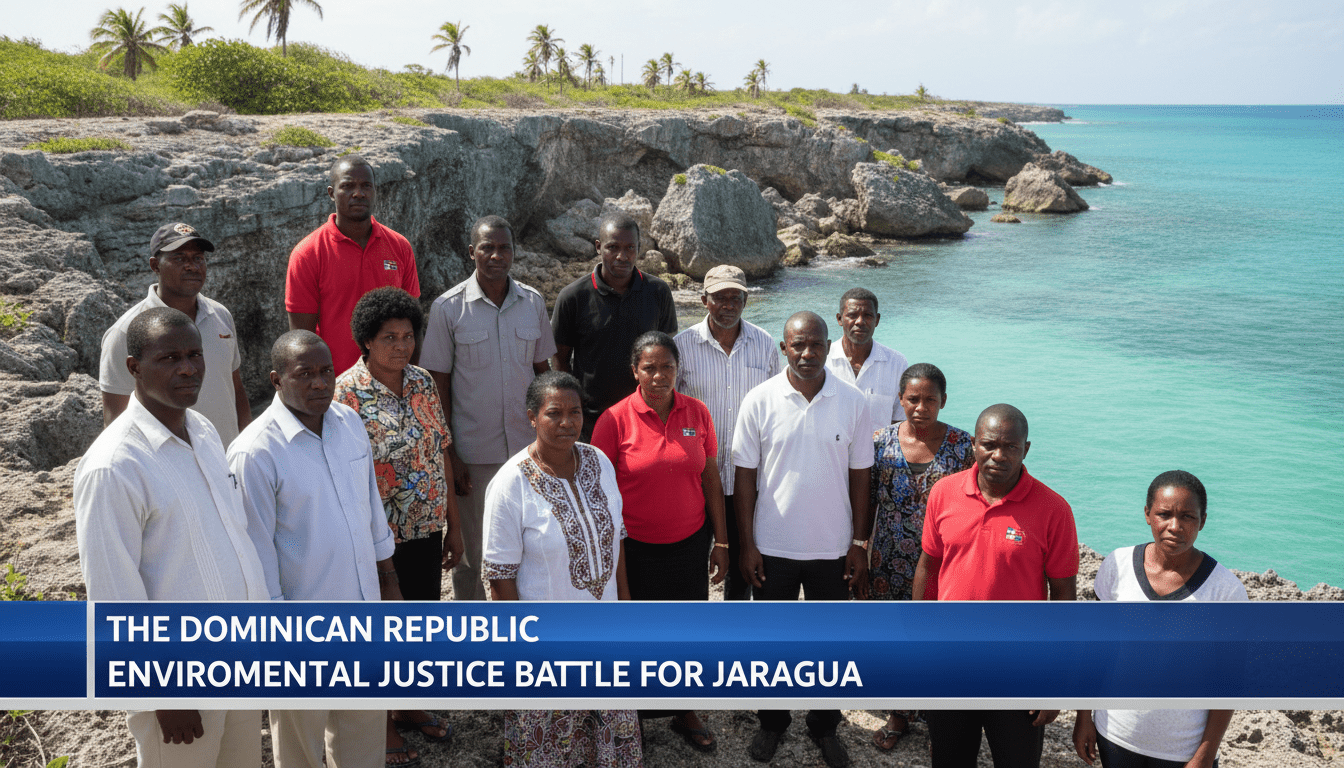
The Dominican Republic is currently the site of a massive legal and social struggle. Within the last 24 hours, the Global Forest Coalition and Afro-descendant movements have taken a stand. They issued an urgent demand to the Supreme Court. Their goal is to overturn a ruling that threatens Jaragua National Park. This park is a treasure of the Caribbean. However, a recent court decision would take land away from the park. Activists say this land grab favors private tourism over the rights of local Black communities. This conflict is about more than just trees and water. It is about who owns the history and the future of the land (dominicantoday.com, inmobiliario.do).
The situation in the Pedernales province is reaching a boiling point. The Superior Administrative Court recently ruled to exclude a huge area from the park. This area covers about 28 million square meters of coastal land. A private group called Inversiones del Sur, SRL claims this land. This group represents the heirs of a family with ties to a former dictator. Local movements like Red Afros argue that this ruling ignores the people who have lived there for decades. They see this as a form of predatory tourism. The battle highlights a deep divide between wealthy elites and the Afro-descendant population (dominicantoday.com).
Land Area at Risk of Privatization
Targeted Coastal Land: 28.3 Million Square Meters
This represents nearly 70,000 hectares of protected ecological heritage currently under legal dispute.
The Historical Roots of the Jaragua Conflict
To understand why people are so angry, one must look at the history of Jaragua National Park. It was established in 1983 by a presidential decree. The park covers over 1,500 square kilometers. It is one of the most important protected areas in the Caribbean. In 2002, UNESCO even made it part of a global Biosphere Reserve. This status was supposed to protect its unique plants and animals forever. For many years, the park stood as a wall against uncontrolled development (unesco.org, gcbo.org).
However, the land in this region has always been a target for the powerful. The struggle over this territory connects to broader issues of political black nationalism and community control. In the Dominican Republic, land ownership is often a tool of the elite. For generations, Afro-descendant families have farmed and fished in these areas. They moved there long before the park was even a legal idea. These families maintained the land without formal papers. Now, the government and private companies label them as squatters. This ignores their ancestral connection to the soil (inmobiliario.do).
The creation of the park in 1983 was a win for nature but a challenge for local people. They were told their traditional way of life was now illegal within park boundaries. While the state restricted these poor families, it often turned a blind eye to wealthy interests. This double standard has created decades of resentment. The current movement to protect the park is not just about the environment. It is also about the right of Black communities to exist on their own terms. They are fighting against a system that has historically pushed them to the margins (dominicantoday.com, inmobiliario.do).
The Dark Legacy of the Trujillo Era
The current legal battle features a name from a very dark time in Dominican history. The private consortium, Inversiones del Sur, SRL, represents the Gadhala-María family. This family has ties to the regime of Rafael Trujillo. Trujillo was a dictator who ruled the country with an iron fist for thirty years. During his time, he and his friends took control of vast amounts of land. Many of these properties were taken through force or fraud. When Trujillo was killed in 1961, the state tried to take back these assets (inmobiliario.do).
The Gadhala-María family claims they bought the land in the late 1950s. Activists argue that these titles are nothing more than spoils of the dictatorship. They believe the current legal attempt to claim the land is a “rehabilitation of Trujilloism.” This means that old, unfair power structures are trying to come back to life. The state confiscated these lands in 1962. However, legal battles have dragged on for decades. The family won a court reversal in 1970, but it was never fully put into action. Now, they are using modern courts to finally get what they want (inmobiliario.do).
This history makes the land grab even more painful for the local population. Many Afro-descendants in the south were the primary victims of the Trujillo era. To see the heirs of that era return to claim national park land is a major insult. It feels like a repeat of the historical exploitation that has defined the region for centuries. The activists are calling for the Supreme Court to recognize this context. They argue that the law should not be used to reward the remnants of a brutal dictatorship at the expense of the public good (dominicantoday.com, inmobiliario.do).
Biodiversity Under Threat
Bird Species in Jaragua National Park
Including 76 native and 10 endemic species that depend on this specific habitat for survival.
The Bahía de las Águilas Precedent
The people of the Dominican Republic have seen this kind of land grab before. In 1997, a massive scandal broke out regarding Bahía de las Águilas. This is a beautiful beach within the same national park. Government officials at the time issued over 1,200 fake land titles. They gave these titles to politicians and business partners. This was the largest land fraud in the history of the country. It took a legal battle of nearly twenty years to fix the mess (inmobiliario.do, inmobiliario.do).
The Supreme Court finally stepped in during 2014. It annulled the fraudulent titles and returned the land to the people. This victory was a major moment for environmentalists. It proved that the law could protect the park from private greed. However, the memory of that fraud still haunts the region. When the Superior Administrative Court (TSA) issued its new ruling in 2025, people immediately thought of the 1997 scandal. They fear that the same tactics are being used again to steal public property (inmobiliario.do).
The current case involves many of the same legal arguments. The private companies say they have “acquired rights.” They claim that they bought the land before the park rules became so strict. This is a common strategy in the Caribbean. Developers try to find loopholes in old laws to bypass modern environmental protections. The Bahía de las Águilas case showed that these claims are often based on shaky ground. Activists are now using that history to fight the latest ruling. They want to make sure the park is never broken up into private pieces again (inmobiliario.do, inmobiliario.do).
The Conflict Between Law 266-04 and the Constitution
There is a major legal knot at the center of this battle. In 2004, the government passed Law 266-04. This law was meant to turn the southwest region into a major tourism hub. It included language that tried to change the borders of the national parks. The goal was to make room for hotels and resorts. For years, environmentalists argued that this law was not valid. They said it went against the country’s basic environmental rules (inmobiliario.do).
The problem became even bigger with the new Dominican Constitution in 2010. Article 16 of the Constitution is very clear. It says that the National System of Protected Areas belongs to the people. These lands cannot be sold, taken, or destroyed. This creates a “legal shield” for parks like Jaragua. However, the Superior Administrative Court used the old 2004 law to justify its recent decision. This has created a massive constitutional crisis. How can an old law about tourism take precedence over the highest law of the land (inmobiliario.do)?
This legal struggle mirrors issues of racial inequality found in other justice systems. In the United States, current President Donald Trump has often focused on deregulation. In the Dominican Republic, developers are also pushing to remove rules. They want the court to ignore Article 16. The Ministry of Environment is fighting back. They say the ruling is reckless. They argue that if this ruling stands, every single one of the country’s 134 protected areas could be at risk. Any private company with an old claim could sue to take a piece of a national park (dominicantoday.com, inmobiliario.do).
Environmental Justice as a Matter of Racial Reparations
The movements fighting for Jaragua are changing the conversation. They are not just talking about biology. They are talking about justice. Darío Solano is a leader of the Red Afros. He argues that the way land is managed in the country is still stuck in a colonial mindset. This “structural racism” means that elite families get their land claims honored. Meanwhile, the Black families who have lived there for generations are pushed out. They are denied the chance to own the land they have cared for (dominicantoday.com, inmobiliario.do).
The Red Afros and the Global Forest Coalition see this as a battle for climate justice. They believe that the protection of these forests is essential for the survival of local communities. These communities are the ones who face the brunt of climate change. When the forests are destroyed for tourism, the people lose their protection from storms and drought. They are framing the protection of Jaragua as a form of reparations. They want the state to recognize the historical debt owed to these Afro-descendant families (inmobiliario.do).
This movement is also about intersectional oppression. The people in Pedernales face poverty, lack of education, and racial bias. By taking away their land, the state is deepening these problems. The demand to “decolonize conservation” is a call to stop using the environment as an excuse to displace Black people. Instead, the activists want a system where local people are the guardians of the park. They want to co-manage the land rather than being excluded from it by a wall of high-end hotels (inmobiliario.do).
Demographics of the Southwest Region
While making up a significant portion of the population, these communities often hold the fewest land titles.
The Threat to Biodiversity and Ecosystems
If the private tourism project goes forward, the ecological cost will be very high. Jaragua National Park is a sanctuary for many endangered species. It is home to the Ricord’s Iguana and the Hispaniolan Solenodon. These animals are found nowhere else on Earth. They depend on the dry forests and coastal wetlands of the park. The ruling targets the very areas where these species live and breed (gcbo.org).
The park also supports 130 different bird species. Many of these are migratory birds that fly from North America to spend the winter in the Caribbean. The loss of 28 million square meters of habitat would be a disaster for these birds. It would break the chain of protection that they need to survive. Environmentalists warn that once this land is developed, it can never be restored. The delicate balance of the ecosystem will be destroyed by the construction of roads, hotels, and golf courses (gcbo.org).
Historically, the region has already suffered from land loss. Between 1996 and 2003, about 15 percent of the forests in the larger Biosphere Reserve were lost. This happened because of illegal clearing and small-scale farming. However, the current threat is much larger. It is an organized, legal attempt to remove protection from a massive area. The Global Forest Coalition argues that this will lead to a “domino effect.” If one piece of the park falls to private interests, the rest will follow soon after (gcbo.org).
The 2026 Legal Crisis and the Future
The ruling from the Superior Administrative Court has created an emergency. The Ministry of Environment has already filed an appeal. They are joined by dozens of social and environmental organizations. They are all looking to the Supreme Court to fix what they call a “reckless” decision. The court must decide if it will follow the Constitution or if it will allow private interests to carve up the national heritage. The outcome of this case will set a precedent for years to come (dominicantoday.com, inmobiliario.do).
This battle is happening at the same time as a huge government project. The Pedernales-Cabo Rojo Master Plan is a 2.2 billion dollar effort. The government wants to build 12,000 hotel rooms and a new airport. They claim the project will be “sustainable.” However, the activists are skeptical. They see the TSA ruling as a way for private actors to jump into this development without following the rules. They worry that “sustainable” is just a buzzword used to hide a massive land grab (inmobiliario.do, dominicantoday.com).
The final demand from the Afro-descendant movements is clear. They want the Supreme Court to protect Jaragua as a whole. They are asking for a system that respects both nature and the people. The world is watching this case closely. It is a test of whether a developing nation can balance the need for tourism with the duty to protect its environment and its most vulnerable citizens. The history of the Dominican Republic is full of struggles over land. This is the latest and perhaps most important chapter in that long story (dominicantoday.com, inmobiliario.do).
About the Author
Darius Spearman is a professor of Black Studies at San Diego City College, where he has been teaching for over 20 years. He is the founder of African Elements, a media platform dedicated to providing educational resources on the history and culture of the African diaspora. Through his work, Spearman aims to empower and educate by bringing historical context to contemporary issues affecting the Black community.
