


The Secret Fight Over Kenya Rare Earth Mineral Deposits
By Darius Spearman (africanelements)
Support African Elements at patreon.com/africanelements and hear recent news in a single playlist. Additionally, you can gain early access to ad-free video content.
On June 19, 2026, a major shift in the global balance of power took place far from the traditional centers of wealth in Washington or Beijing (standardmedia.co.ke). On the sidelines of the G7 summit in France, Kenyan President William Ruto announced a preliminary minerals agreement with the United States (standardmedia.co.ke). This deal grants the United States access to the immense mineral wealth of Mrima Hill, located in Kwale County (standardmedia.co.ke, ejatlas.org). The total value of these newly evaluated rare earth mineral deposits is estimated at a staggering 9.7 trillion Kenyan shillings, or 62.4 billion United States dollars (standardmedia.co.ke). This landmark deal has effectively sidelined Chinese state-backed corporations that had been competing fiercely for access (standardmedia.co.ke).
The geopolitical tension surrounding this agreement represents a modern manifestation of a long history of resource extraction on the African continent. This modern race for critical minerals highlights the tension between national economic ambitions and the sovereignty of local communities. For decades, foreign entities have sought to control these resources. However, the history of Mrima Hill shows that the path to extracting this wealth is paved with legal conflicts, ecological hazards, and cultural resistance.
The Ancient Rocks of Mrima Hill
To understand the current geopolitical rush, one must look back nearly three-quarters of a century. Mrima Hill is a modest, forested ridge situated in coastal Kwale County, approximately 50 kilometers south of Mombasa (ejatlas.org). Long before modern electric vehicles created a global demand for rare earth elements, colonial geologists recognized the unique nature of this hill. In the 1950s, the multinational conglomerate Anglo American initiated the first systematic exploration of the site, searching primarily for niobium and thorium (standardmedia.co.ke).
Following this initial phase, the French company Pechiney Saint Gobain conducted further exploratory work between 1967 and 1971 (ejatlas.org). Unfortunately, much of the geological data from this era was poorly documented or lost in foreign archives, leaving the true scale of the mineral deposits a mystery. Decades passed with little industrial activity, and the forest reclaimed the old drill sites. Yet, the underlying potential of Mrima Hill remained a topic of interest for international mining companies waiting for the right economic and legal conditions to strike.
The Billion Dollar Legal War Over Mining Licenses
The modern era of exploration began in 2007 when Cortec Mining Kenya Limited, a subsidiary of the Canadian firm Pacific Wildcat Resources, commenced operations (jusmundi.com). By 2013, the company announced that Mrima Hill hosted one of the largest niobium and rare earth deposits in the world, valued at over 62 billion dollars (allafrica.com). In April 2013, during a political transition, the outgoing Kenyan government awarded the company a 21-year Special Mining Licence (ejatlas.org).
However, this licensing agreement was short-lived. In August 2013, the newly appointed Mining Cabinet Secretary Najib Balala abruptly revoked the license (ejatlas.org). The government argued that the license was issued irregularly and sought to increase mineral royalties to ensure the Kenyan public received a fair share of the wealth (ejatlas.org, allafrica.com). This action triggered a massive legal battle that eventually reached the International Centre for Settlement of Investment Disputes, or ICSID (jusmundi.com). The mining firm filed a two-billion-dollar claim against the Kenyan government, freezing development at the hill for years (jusmundi.com).
In 2018, the ICSID tribunal ruled in favor of the Kenyan state, declaring that the mining license was void ab initio, or void from the very beginning (jusmundi.com). This legal term means that the license was treated as if it had never existed because the company had failed to satisfy mandatory local statutory and environmental laws before issuance (jusmundi.com). Specifically, the company did not obtain an approved Environmental Impact Assessment license from Kenya’s National Environment Management Authority (jusmundi.com). This landmark ruling demonstrated that international investment treaties only protect investments that are lawfully established under domestic laws (jusmundi.com).
What Lies Beneath: Defining Niobium and Rare Earths
The minerals locked within Mrima Hill are vital to the modern global economy. Rare earth elements are a group of 17 chemically similar metallic elements (wikipedia.org). Despite their name, they are relatively abundant in the Earth’s crust, but they are rarely found in concentrated, easily extractable quantities. These minerals possess unique magnetic, luminescent, and catalytic properties that make them indispensable for high-tech applications (rareelementresources.com). They are often referred to as the “seeds of technology” because they enable the miniaturization of smartphones and the production of powerful permanent magnets (rareelementresources.com). These magnets are critical components in electric vehicle motors, wind turbines, and defense technologies (rareelementresources.com).
Niobium, on the other hand, is a light-grey transition metal prized for its superconducting properties and its ability to strengthen steel alloys (wikipedia.org). Adding small amounts of niobium to steel makes the alloy highly resistant to heat, corrosion, and structural stress. Consequently, niobium is a critical material for the aerospace sector, particularly in jet engines and rocket assemblies, as well as in oil and gas pipelines (rareelementresources.com). Mrima Hill is estimated to contain 680 million kilograms of niobium, ranking it among the top six largest deposits globally (allafrica.com, wikipedia.org).
The competition to secure these minerals is driven by a desire to break the near-monopoly held by the People’s Republic of China. Currently, China controls approximately 60 percent of global mining output and roughly 90 percent of global refining capacity for rare earths (scmp.com). To counter this dominance, Western nations are actively seeking alternative sources. The global demand for these materials has surged dramatically, growing from 132,000 metric tonnes in 2017 to approximately 390,000 metric tonnes in recent years (wikipedia.org). This dramatic rise highlights why the Kenyan deposits have become a central front in a global resource race.
The Sacred Kaya Forests and Ecological Heritage
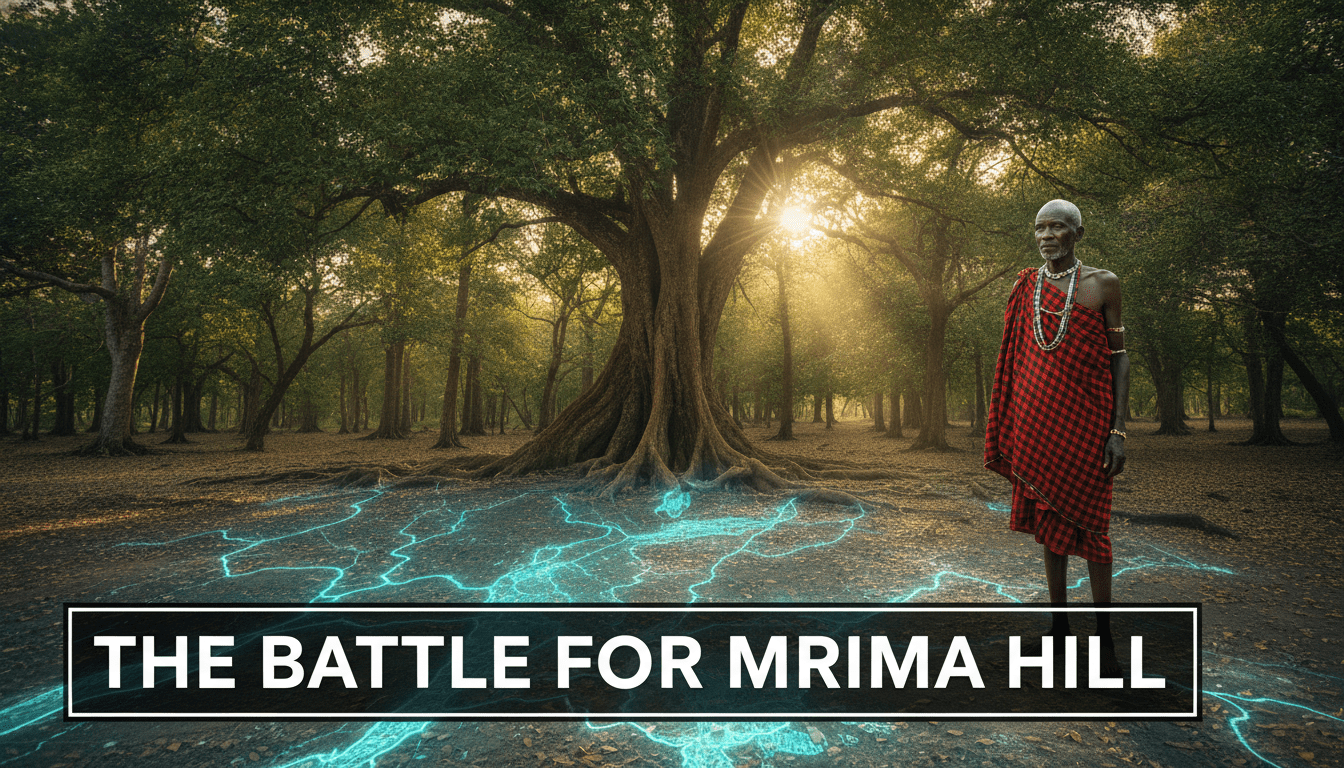
The geopolitical scramble for Mrima Hill must also navigate a profound local reality. The hill is not an empty wasteland; it is a sacred space. Mrima Hill is double-gazetted, meaning it is protected under two overlapping and potentially conflicting legal frameworks (ejatlas.org). It was first designated as a national forest reserve in 1961, placing it under the environmental protection of the Kenya Forest Service (ejatlas.org). In 1992, it received a second layer of statutory protection when it was gazetted as a Sacred Grove National Monument under the custody of the National Museums of Kenya (ejatlas.org).
For the indigenous Digo and Mijikenda communities, the forest is a deeply spiritual ancestral home. These communities maintain sacred shrines, known as Kayas, within the forest, alongside ancestral graves and rare medicinal plants (ejatlas.org). The Mijikenda people view themselves as guardians of this sacred landscape. This protective stance creates a natural tension with industrial mining ambitions. While Article 62 of the Constitution of Kenya states that all minerals are public land vested in the national government, the Community Land Act of 2016 recognizes customary ancestral lands as the direct property of the local community (kmco.co.ke, rightsandresources.org). This legal conflict means that mining companies cannot simply rely on government permits; they must also navigate the moral and legal rights of the people who live on the land.
Radioactive Realities and Environmental Justice
Extracting rare earth minerals is an inherently dirty and hazardous industrial process. Rare earth elements are chemically bound with radioactive materials, such as thorium and uranium, which occur naturally within the ore at Mrima Hill (ejatlas.org). When these minerals are mined and processed, they release radioactive gases, including radon and thoron (nih.gov). Long-term exposure to these gases is linked to elevated rates of lung cancer and other respiratory diseases among nearby populations (nih.gov).
Furthermore, the chemical refining process is highly toxic. Separating rare earth elements requires large volumes of strong chemical acids, generating massive amounts of radioactive and acidic wastewater. Industry data reveals that refining just one single tonne of rare earth concentrate produces roughly 2,000 tonnes of toxic, thorium-bearing waste (pnnl.gov). For the Digo and Mijikenda communities, the prospect of hosting such a facility is alarming. Local residents fear that toxic runoff will contaminate local freshwater supplies and destroy their agricultural livelihoods. This conflict mirrors historical struggles where local autonomy is sacrificed for national economic gain, exposing the sharp contradictions of global expansion where profits outrank human rights. The community’s defensive stance was made clear in late 2025 when local guards actively turned away foreign nationals who attempted to access the sacred forest without authorization (allafrica.com).
Local Beneficiation and Redefining the Resource Deal
Historically, resource extraction in Africa has followed a colonial pattern: foreign corporations extract raw materials and ship them to the Global North or East for processing. This practice, known as extractivism, leaves the host nation with environmental destruction while foreign companies capture the vast majority of the economic value. To break this cycle, Kenyan President William Ruto has insisted on a policy of local beneficiation, or processing, requiring that all raw minerals mined at Mrima Hill be refined within the country (standardmedia.co.ke, dawan.africa).
This policy shift is a major turning point in African resource management. To secure the June 19, 2026 agreement, the United States-backed consortium had to make a significant concession: they agreed to build processing facilities within Kenya (standardmedia.co.ke). This proposal directly aligned with the Kenyan government’s desire to build a local value chain, create high-skilled jobs, and retain a larger share of the wealth. This compromise allowed Washington to edge out Beijing, which has historically preferred to ship raw ores back to processing plants in mainland China. By demanding local processing, Kenya is attempting to avoid the errors of past projects, such as the titanium mining in Kwale County, which enriched foreign shareholders while leaving local communities with minimal long-term economic benefits (business-humanrights.org, business-humanrights.org).
Splitting the Spoils: The Struggle for Fair Compensation
Even with local processing, the success of the project will depend on how the financial rewards are distributed. Under Section 183 of the Kenya Mining Act of 2016, mineral royalties are split using a strict legal formula: 70 percent goes to the national government, 20 percent to the county government, and 10 percent goes directly to the local community where the mining takes place (lexafrica.com). This formula was formally secured and protected under the Mining Regulations of 2026, which were approved by Parliament to increase the community’s share from previous proposals (standardmedia.co.ke, saccoreview.co.ke).
To prevent these funds from being lost to corruption or administrative waste, the new regulations mandate the creation of community project identification committees (eastleighvoice.co.ke). These committees, made up of local residents, are responsible for selecting and managing community development initiatives, such as schools, clinics, and water projects (eastleighvoice.co.ke). However, local leaders have expressed concern that bureaucratic delays and “process inertia” could prevent these funds from reaching the people of Kwale County in a timely manner (eastleighvoice.co.ke). The struggle of these communities to secure their rightful share of the mineral wealth reflects the long struggle for reparations and economic justice across the African diaspora.
Conclusion: The Unfolding Chapter of Mrima Hill
The preliminary agreement signed on June 19, 2026, is not the end of the story for Mrima Hill; it is merely the opening of a complex new chapter (standardmedia.co.ke). The decision to grant mining access to a United States-backed consortium represents a significant geopolitical victory for Western powers seeking to secure critical supply chains. However, the true test of this project will lie on the forest floor of Kwale County.
The Kenyan government must successfully balance its national economic ambitions with its constitutional duty to protect the cultural heritage and environmental rights of its citizens. The indigenous Digo and Mijikenda communities have made it clear that they will not quietly accept the destruction of their sacred Kaya forests. As the global green energy transition accelerates, the world will be watching to see if Kenya can pioneer a new model of resource sovereignty, or if Mrima Hill will become another cautionary tale of global exploitation. This delicate balance mirrors historical systemic political shifts where local communities must fight to ensure that their voices are not drowned out by the demands of global capital.
About the Author
Darius Spearman is a professor of Black Studies at San Diego City College, where he has been teaching for over 20 years. He is the founder of African Elements, a media platform dedicated to providing educational resources on the history and culture of the African diaspora. Through his work, Spearman aims to empower and educate by bringing historical context to contemporary issues affecting the Black community.
