
Listen to this article
Download AudioKeith LaMar: Wrongful Conviction from Death Row
By Darius Spearman (africanelements)
Support African Elements at patreon.com/africanelements and hear recent news in a single playlist. Additionally, you can gain early access to ad-free video content.
The Weight of Injustice: Keith LaMar’s Decades-Long Fight
Keith LaMar, an African American man, sits on Ohio’s death row, scheduled for execution on January 13, 2027 (Home | Keith (Bomani) LaMar). For nearly thirty years, he has maintained his innocence, imprisoned in indefinite solitary confinement. His conviction stems from the harrowing 1993 Lucasville Prison Uprising, a violent eleven-day rebellion that tragically involved the deaths of a prison guard and several inmates (Lucasville Legacy).
LaMar’s case represents a stark example of potential wrongful conviction within a justice system often marked by systemic biases. Supporters argue that new evidence has emerged, strongly supporting attempts to overturn his conviction. This evidence sheds light on the deeply flawed processes that led to his death sentence (Keith LaMar Speaks From Death Row as Movement Grows to Save His Life).
A Flawed Trial: Systemic Bias and Withheld Evidence
The State of Ohio’s investigation and trial process were significantly flawed and biased against LaMar. Investigators contaminated the crime scene, compromising crucial evidence. Furthermore, authorities paid jailhouse informants to produce false testimony implicating LaMar (Home | Keith (Bomani) LaMar). Interestingly, LaMar was not affiliated with any of the groups actively involved in the Lucasville riot, a detail that undermines the credibility of the accusations against him.
Jailhouse Informants

Jailhouse informants are individuals who provide information to authorities, often in exchange for benefits such as reduced sentences. Their testimony can be unreliable and compromise the integrity of trials, disproportionately affecting African American defendants due to systemic biases.
The prosecution furthermore withheld exculpatory evidence. This included a confession from an actual perpetrator, who admitted to one of the murders for which LaMar was convicted (Home | Keith (Bomani) LaMar). The trial took place in a remote Ohio community known for its racial prejudice, where Black jurors were systematically excluded. This resulted in an all-white jury that ultimately sentenced LaMar to death, raising serious questions about fairness and due process.
Prosecutorial Misconduct

Prosecutorial misconduct refers to unethical behavior by prosecutors that compromises trial fairness. This may include withholding exculpatory evidence, coercing witnesses, or making improper statements. Such actions can lead to wrongful convictions and erode public trust in the justice system.
The Lucasville Uprising: A Crisis of Conditions
The Lucasville Prison Uprising, which began on Easter Sunday, April 11, 1993, was a monumental event in Ohio’s carceral history (Lucasville Legacy). Lasting eleven days, the rebellion involved over 400 inmates and resulted in the deaths of nine prisoners and one corrections officer. Multiple factors triggered the unrest, including new prison regulations, mandatory tuberculosis tests that offended Muslim inmates, and severe overcrowding.
A notable aspect of the riot was the unusual cooperation among different inmate gangs, such as the Black Gangster Disciples, Black Muslims, and Aryan Brotherhood (Lucasville Legacy). These groups collaborated to control parts of the prison, highlighting the unified frustration among the inmate population. LaMar’s advocates underscore his lack of affiliation with these factions, suggesting his conviction was based on misidentification and systemic targeting rather than actual involvement in the riot’s leadership or violence.
A Decades-Long Nightmare: Solitary Confinement and Death Row Realities
Keith LaMar has spent approximately thirty years in solitary confinement (Home | Keith (Bomani) LaMar). This practice, where inmates are isolated from others, is widely criticized for its severe psychological harm. Prolonged isolation significantly increases the risk of depression, anxiety, and cognitive impairment. For those on death row, these effects are intensified by the constant awareness of an impending execution.
Key Statistics: LaMar’s Confinement and Wrongful Convictions
Ohio has displayed a troubling pattern of wrongful convictions in capital cases. This includes documented instances of racial bias and prosecutorial misconduct across multiple death penalty cases (Home | Keith (Bomani) LaMar). National research indicates that approximately four percent of inmates on death row are wrongfully convicted. This sobering statistic underscores the irreversible risk of error inherent in capital punishment decisions, placing the lives of individuals like Keith LaMar in dire peril.
The Movement for Justice: Art, Advocacy, and Awareness
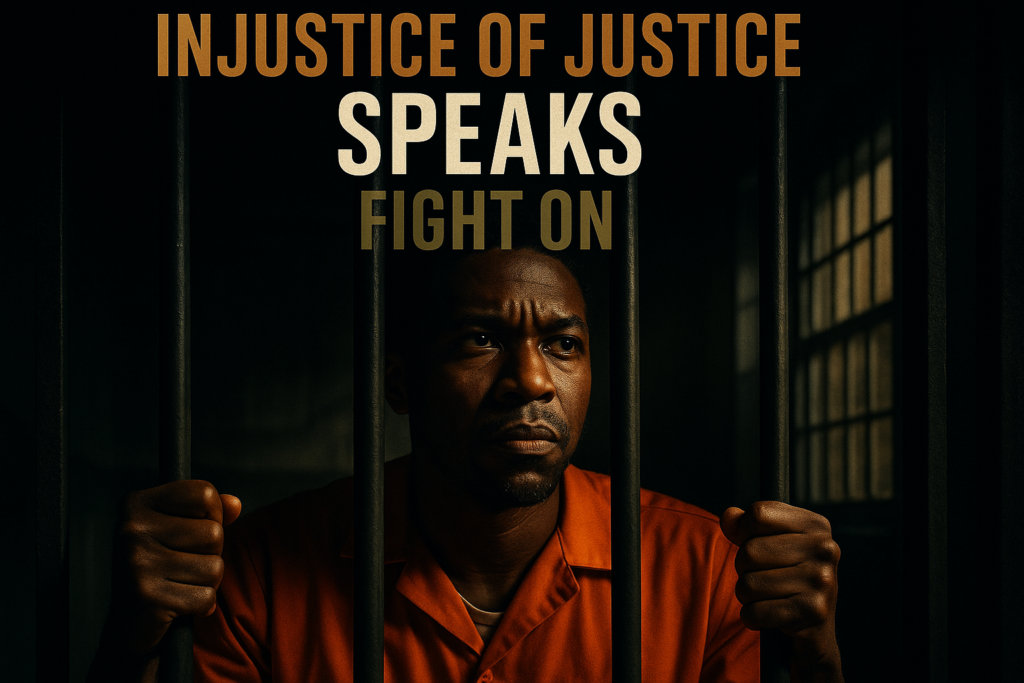
A strong movement has gathered momentum, advocating to save Keith LaMar from execution. The release of The Injustice of Justice, a short animated film about his case, has significantly raised awareness. The film recently won the grand prize for best animated short film at the Golden State Film Festival (Keith LaMar Speaks From Death Row as Movement Grows to Save His Life). This cultural achievement has brought LaMar’s story to a broader audience, fostering empathy and understanding.
Legal teams representing LaMar have uncovered substantial new evidence. This evidence supports appeals for a retrial or even exoneration (Keith LaMar Speaks From Death Row as Movement Grows to Save His Life). Additionally, LaMar has transformed his life into a powerful tool for fighting injustice. He uses spoken word, jazz performances, and multimedia projects to communicate his experience. These artistic endeavors, including his album Freedom First and collaboration with Albert Marquès on LIVE FROM DEATH ROW, provide a unique platform for his voice (NEW RELEASE: Keith LaMar & Albert Marquès’ ‘LIVE FROM DEATH ROW’ is out May 30, 2025).
Ohio’s Troubling Death Penalty Landscape
The specific conditions of Keith LaMar’s case reflect deeper systemic issues within Ohio’s death penalty system. The exclusion of Black jurors in capital cases remains a critical concern, directly contributing to disparities in sentencing (Home | Keith (Bomani) LaMar). Such practices undermine the principle of a fair and impartial jury, especially for African American defendants, who are already disproportionately affected by the justice system.
The confluence of racial bias in jury selection and prosecutorial misconduct creates an environment where wrongful convictions are not anomalies but rather systemic failures. The likelihood of LaMar’s execution, while seemingly imminent, remains subject to legal challenges and the powerful call for clemency from a growing movement. His case amplifies the urgent need for reforms in Ohio’s criminal justice system, ensuring that justice is blind and equitable for all. The fight for LaMar’s life is a fight for the integrity of justice itself.
ABOUT THE AUTHOR
Darius Spearman has been a professor of Black Studies at San Diego City College since 2007. He is the author of several books, including Between The Color Lines: A History of African Americans on the California Frontier Through 1890. You can visit Darius online at africanelements.org.
