

US Arms Nigeria: A Deep Dive
By Darius Spearman (africanelements)
Support African Elements at patreon.com/africanelements and hear recent news in a single playlist. Additionally, you can gain early access to ad-free video content.
US-Nigeria Arms Deal
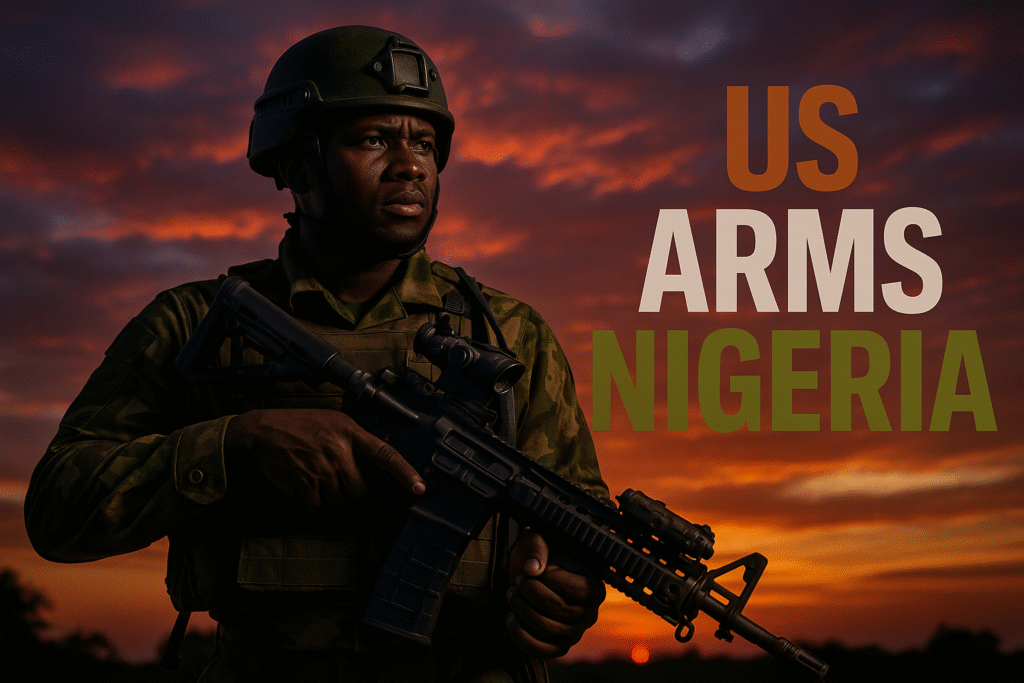
The United States State Department has given the green light for a significant arms sale to Nigeria, totaling $346 million. This deal includes a variety of munitions, bombs, and precision rockets (africanews.com). The primary goal of this sale is to bolster Nigeria’s efforts in combating the rising tide of terrorist violence within its borders. The Defense Security Cooperation Agency (DSCA), an agency within the U.S. Department of Defense, stated that this sale aligns with U.S. foreign policy goals and national security objectives (flightglobal.com). The DSCA manages U.S. security cooperation programs and foreign military sales (FMS), facilitating the transfer of defense articles and services to foreign partners (defensedaily.com). By enhancing the security of a key strategic partner in Sub-Saharan Africa, the U.S. aims to improve Nigeria’s capacity to counter terrorist organizations and illicit trafficking in Nigeria and the Gulf of Guinea (africanews.com).
Key Components of the $346M Arms Sale to Nigeria
General-purpose unguided bombs, noted for their recent use in Gaza.
Advanced Precision Kill Weapon System II, converting unguided rockets into precision-guided munitions.
Including GBU-12 and GBU-58 components for enhanced accuracy.
Additional rocket munitions for various combat scenarios.
Support for training, maintenance, and logistical assistance for the new systems.
The comprehensive package includes 1,002 Mk-82 500 lb bombs, 5,000 Advanced Precision Kill Weapon System II (APKWS) rounds, laser-guided bomb kits, high-explosive rockets, and technical personnel services (africanews.com). Additionally, the sale encompasses 1,002 MXU-650 Air Foil Groups (AFGs) for 500 lb Paveway II GBU-12 and 1,517 MAU-169 or MAU-209 computer control groups for Paveway II GBU-12/GBU-58 (africa.businessinsider.com). These components are crucial for converting unguided bombs into precision-guided munitions. The “technical personnel services” included in the deal likely cover training for Nigerian forces on the proper use, maintenance, and operation of these new weapons systems, along with logistical support and on-site technical assistance from U.S. government and contractor personnel (guardian.ng).
Mk-82 Bombs and Precision Munitions
The Mk-82 is a 500-pound general-purpose, unguided bomb, designed to deliver explosive force against various targets (defensedaily.com). The inclusion of over a thousand Mk-82 500 lb bombs in this sale has drawn attention, particularly because this weapon was recently used by the Israeli military to bomb civilians in Gaza (africanews.com). This raises concerns about potential civilian casualties and human rights implications in the Nigerian context.
In contrast to unguided bombs, the Advanced Precision Kill Weapon System II (APKWS) is a guidance kit that transforms unguided 70mm rockets into precision-guided munitions (africanews.com). It enhances precision targeting by adding a laser guidance system to existing Hydra 70 rockets, significantly improving accuracy and reducing collateral damage. Similarly, Paveway II GBU-12 and GBU-58 are laser-guided bomb kits that convert “dumb” bombs into precision-guided munitions (flightglobal.com). These systems attach a guidance section with movable fins and a laser seeker to conventional bombs, allowing them to glide towards a laser-designated target. This greatly increases accuracy and reduces the number of bombs needed to destroy a single target. The MXU-650 Air Foil Groups and MAU-169/MAU-209 computer control groups are integral components of these kits, providing stability, control, and guidance processing (defensedaily.com).
Understanding Key Munitions in the Nigeria Arms Deal
These are general-purpose, unguided bombs weighing 500 pounds. Their primary function is to deliver explosive force against various targets. Their inclusion in the sale has raised concerns due to their recent use in civilian areas.
APKWS is a guidance kit that converts unguided 70mm rockets into precision-guided munitions. It enhances accuracy by adding a laser guidance system, allowing rockets to hit targets with much greater precision and reducing collateral damage.
These are laser-guided bomb kits that transform unguided bombs into precision-guided munitions. They improve accuracy by attaching a guidance section with movable fins and a laser seeker, enabling the bomb to “glide” towards a laser-designated target.
Nigeria’s Fight Against Terrorism
The weapons sale is specifically designed to aid Nigeria in its ongoing struggle against escalating terrorist violence, primarily from groups such as Boko Haram and the Islamic State West Africa Province (ISWAP) (africanews.com). Boko Haram, founded in 2002, initially aimed to oppose Western education and establish an Islamic state. ISWAP emerged in 2016 as a splinter faction of Boko Haram, pledging allegiance to the Islamic State. Both groups have had a devastating impact on Nigeria, causing widespread violence, displacement, and humanitarian crises (flightglobal.com). Their activities include bombings, kidnappings, and attacks on military and civilian targets, severely disrupting economic activities and governance in affected areas. The insurgency has led to widespread displacement, with thousands killed and entire communities uprooted (africanews.com). Millions have become internally displaced persons (IDPs) or refugees in neighboring countries, facing dire food insecurity and requiring significant humanitarian assistance.
Despite these challenges, the Nigerian military is intensifying its offensives to reclaim territories from these groups (africanews.com). Nigeria’s Chief of Air Staff, Hasan Abubakar, recently reported significant success in counter-terrorism operations. He announced that 592 terrorists have been eliminated in the northeastern state of Borno over the past eight months (africanews.com). Abubakar emphasized that the air campaign is “quicker, more precise, and more surgical,” focusing on eliminating high-value targets, crippling logistics networks, and dismantling terrorist cells (africanews.com). This new delivery of precision weapons from the U.S. is expected to significantly boost Nigeria’s counter-terrorism capabilities, allowing for more effective and targeted strikes against insurgent groups.
Recent Successes in Nigeria's Counter-Terrorism Efforts
Impact and Future Outlook
Nigeria’s military strength includes a substantial ground force, air force, and navy. However, it has historically faced challenges in equipment modernization, training, and logistics, particularly in asymmetric warfare against insurgent groups. Prior counter-terrorism efforts have involved various military operations, often with regional partners, but have struggled to fully contain the insurgency. This sale provides Nigeria with advanced precision-guided munitions, which are crucial for effectively targeting terrorist strongholds while minimizing collateral damage (govconwire.com). The acquisition of these weapons, especially the APKWS and laser-guided bombs, represents a significant upgrade in their precision strike capabilities, vital for counter-terrorism operations.
The DSCA noted that this sale is not expected to alter the basic military balance in the region, and Nigeria should have no difficulty integrating these munitions into its armed forces (guardian.ng). While the articles do not explicitly detail specific conditions or oversight mechanisms for the sale, U.S. foreign military sales typically include end-use monitoring agreements. These agreements often involve training on international humanitarian law and best practices for weapon deployment. The long-term impact of this sale on regional security dynamics in West Africa and the Gulf of Guinea remains to be seen. However, the immediate goal is to enhance Nigeria’s ability to combat terrorism and illicit trafficking, thereby contributing to greater stability in the region. The U.S. government views this as a critical step in supporting a strategic partner and addressing shared security challenges.
ABOUT THE AUTHOR
Darius Spearman has been a professor of Black Studies at San Diego City College since 2007. He is the author of several books, including Between The Color Lines: A History of African Americans on the California Frontier Through 1890. You can visit Darius online at africanelements.org.
