

Listen & Share
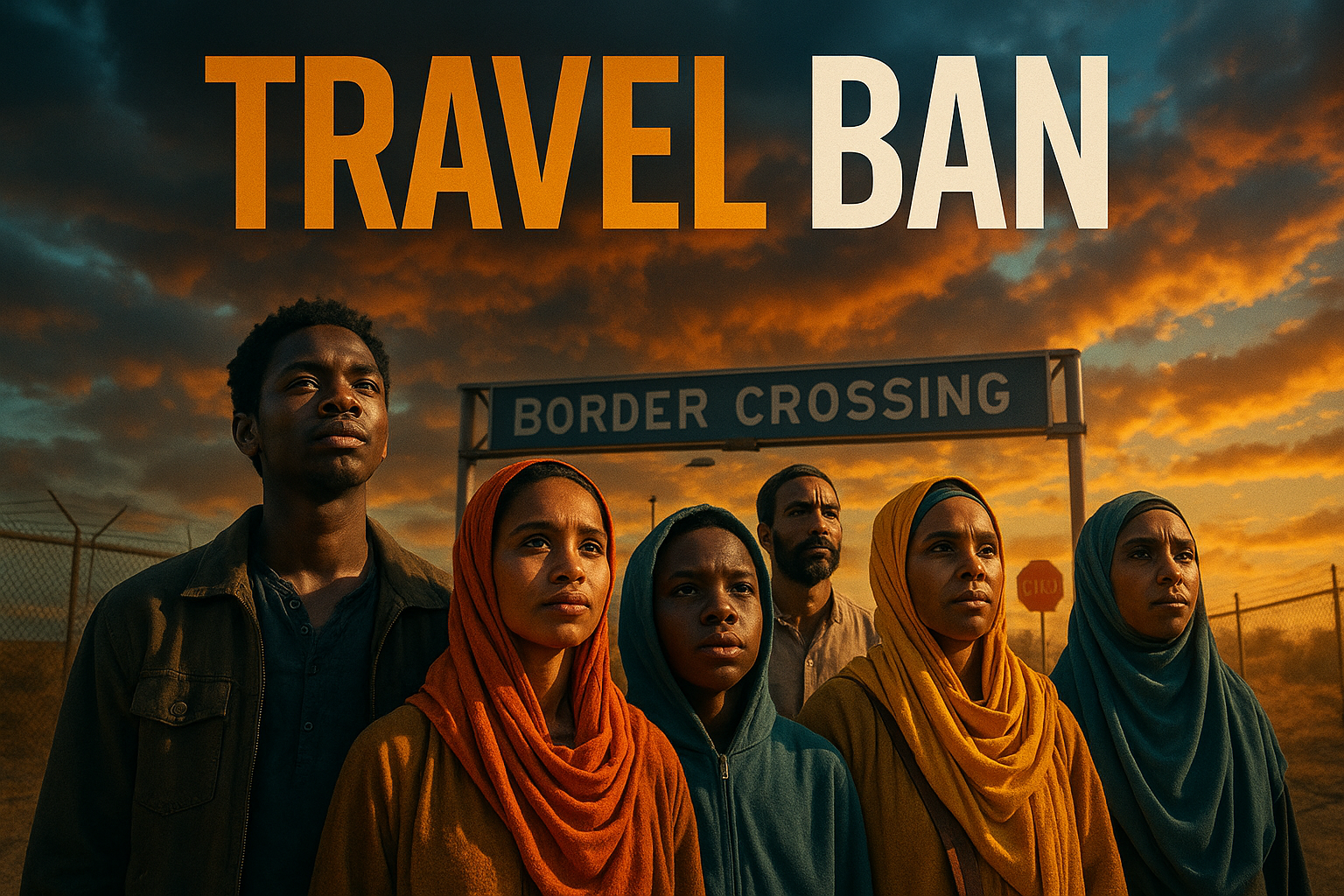
U.S. Travel Ban: Impact on African Diaspora
By Darius Spearman (africanelements)
Support African Elements at patreon.com/africanelements and hear recent news in a single playlist. Additionally, you can gain early access to ad-free video content.
Navigating the Travel Landscape: Countries Under Restriction
The U.S. government has announced new travel restrictions, affecting citizens from a total of 19 countries. Among these nations, several African countries are significantly impacted, including Chad, Eritrea, Sudan, Somalia, and the Republic of the Congo. The ban lists 12 countries facing full entry suspensions, while an additional seven nations face heightened screening measures (Africanews, WDET). This updated policy marks a critical moment for global mobility, particularly for those with ties to the targeted regions.
Officials have stated that these countries are deemed to have “deficient screening and vetting processes,” which supposedly pose a high risk to U.S. national security (White House Fact Sheet, African.Business). The criteria for selection supposedly involve assessing risk levels and the level of cooperation with U.S. authorities (U.S. Law). Furthermore, metrics such as overstay rates and identity verification capabilities are also considered as part of this complex evaluation process (NAFSA Presidential Proclamation). Understanding these classifications becomes especially important for African Americans and members of the diaspora who connect with family and heritage across these borders.
Nations Facing Full Travel Bans
- Afghanistan
- Myanmar
- Chad
- Republic of the Congo
- Equatorial Guinea
- Eritrea
- Haiti
- Iran
- Libya
- Somalia
- Sudan
- Yemen
Executive Order 14161: The Legal Underpinnings
The foundation of this expansive travel ban rests upon President Trump’s Executive Order 14161. This executive order is specifically designed to enhance immigration screening and vetting processes, aiming to prevent perceived national security threats (NAFSA Executive Order). It seeks to reinstate certain rigorous vetting standards from previous administrations. Additionally, the order mandates a thorough review of all visa policies to ensure that security measures are as stringent as possible, identifying high-risk countries and strengthening refugee screening procedures (NAFSA Executive Order, Asian Law Caucus).
The implementation of this ban is scheduled to begin promptly at 12:01 a.m. on Monday, with authorities emphasizing a short notice period to minimize disruptions experienced during earlier rollouts (Africanews, WDET). This approach stands in stark contrast to the widespread confusion and chaos that characterized the 2017 travel ban implementation. Furthermore, the legality of the ban has been affirmed by the Supreme Court in the case of *Trump v. Hawaii*, providing it with a firm legal precedent (White House Fact Sheet). This legal backing means the policy is likely to withstand immediate challenges, compelling many to adapt to these new realities swiftly.
Understanding Exceptions and Differentiating Bans
Despite the broad scope of these restrictions, there are important exceptions to the travel ban. Lawful permanent residents, also known as Green Card holders, are generally exempt from these restrictions (White House Fact Sheet, NAFSA Presidential Proclamation). Similarly, individuals who already possess valid U.S. visas will not be immediately affected. Moreover, exceptions may be granted to those whose entry is deemed to serve U.S. national interests, such as for diplomatic, humanitarian, or strategic purposes. These provisions aim to mitigate some of the most severe impacts, but they do not eliminate the disruption for many.
The policy distinguishes between “full restrictions” and “heightened screening” for different countries (WDET, Africanews). Full restrictions typically involve a complete suspension of entry for nationals from specific countries, including Afghanistan, Somalia, and the Republic of the Congo (U.S. Law). Heightened screening, on the other hand, means that visa applicants from countries such as Burundi and Cuba will undergo more stringent vetting processes (NAFSA Presidential Proclamation). It is important to note the specific listing of the Republic of the Congo for full restrictions, while the Democratic Republic of the Congo is not mentioned in these official lists, indicating a crucial difference in the application of the ban.
Countries Under Heightened Scrutiny
The Diaspora’s Lens: Impacts on Community and Connections
For African American communities and the broader African diaspora, these travel restrictions carry significant implications. The prohibition or heightened scrutiny of travel to and from countries like Chad, Eritrea, Sudan, Somalia, and the Republic of the Congo directly impacts individuals with family members, cultural connections, or business ties in these regions. Visits for family reunions, cultural exchange programs, humanitarian efforts, and educational pursuits could become exceptionally challenging, if not entirely impossible. Therefore, the emotional and social strain on these communities, striving to maintain their heritage and relationships, is substantial.
Beyond personal connections, the ban’s wider economic and social effects on the U.S. could be felt across various sectors. While specific statistical data on the number of individuals affected or the precise economic impact remains unavailable, limitations on international travel and immigration can influence labor markets and educational institutions (Inferred). The U.S. economy, as well as the cultural diversity within its educational settings, may experience a subtle shift. These shifts could ultimately impact academic exchange programs that foster global understanding.
Justification and Historical Echoes
The stated justification for this extensive travel ban is rooted in national security concerns, explicitly addressing what are perceived as deficiencies in foreign countries’ vetting processes (White House Fact Sheet). President Trump referenced a terror attack in Boulder, Colorado, as part of his announcement, linking it to the need for stricter immigration controls (Africanews, WDET). However, the perpetrator of that attack was not from any of the countries listed under the current travel restrictions. Consequently, the relevance of this specific incident to the ban’s stated rationale remains ambiguous, leading to questions about the policy’s true justifications.
Executive Order 14161 represents a continuation of security-focused immigration policies, building upon prior vetting standards from the Trump administration (NAFSA Executive Order). This order is framed with a broader regional and functional approach compared to previous bans. Additionally, it notably distinguishes itself from the controversial 2017 “Muslim Ban” by not directly targeting specific religious groups (Asian Law Caucus). Nonetheless, its impact on predominantly Muslim-majority African nations, such as Somalia and Sudan, means that a disproportionate effect on Muslim communities is still a significant concern for many observers and affected populations.
Core Tenets of Executive Order 14161
ABOUT THE AUTHOR
Darius Spearman has been a professor of Black Studies at San Diego City College since 2007. He is the author of several books, including Between The Color Lines: A History of African Americans on the California Frontier Through 1890. You can visit Darius online at africanelements.org.
