

Why a Deadly Ebola Threat is Spreading Without Vaccines
By Darius Spearman (africanelements)
Support African Elements at patreon.com/africanelements and hear recent news in a single playlist. Additionally, you can gain early access to ad-free video content.
The Urgent Emergency in Central Africa
The Democratic Republic of the Congo and Uganda are facing a rapidly escalating crisis (washingtonpost.com, theguardian.com). In May 2026, the World Health Organization designated the outbreak of the Bundibugyo strain as a Public Health Emergency of International Concern (who.int). This designation is reserved for extraordinary events that carry global health risks (who.int). It legally binds nations to report emergencies and triggers international health recommendations (who.int). Soon after, the United States Centers for Disease Control and Prevention released a stark warning (cdc.gov). If contact tracing and patient isolation remain low, there is a sixty-five percent chance that infections will surpass twenty thousand within three months (cdc.gov).
To combat this rapid spread, international agencies mobilized financial resources (unric.org). The World Health Organization and the Africa Centres for Disease Control and Prevention launched a joint response plan of five hundred and eighteen million dollars (who.int, znphi.co.zm). Additionally, the European Commission allocated fifteen million euros in emergency aid (europa.eu). They airlifted over one hundred metric tonnes of medical supplies to the eastern region of the Democratic Republic of the Congo (unicef.org). Yet, despite these massive figures, the virus continues to outpace containment efforts. The situation reveals a deeper disconnect between global finance and frontline realities.
The Silent Legacy of the Ebola River
The history of Ebola begins fifty years ago in Central Africa (wikipedia.org, cdcmuseum.org). In 1976, two near-simultaneous outbreaks occurred in Nzara, Sudan, and Yambuku, Zaire, which is now the Democratic Republic of the Congo (who.int, cdc.gov). Scientists named the new pathogen after the Ebola River near Yambuku to avoid stigmatizing the village (cdcmuseum.org). Over the years, researchers identified six distinct species within the genus Orthoebolavirus (wikipedia.org). Four of these species cause severe, life-threatening hemorrhagic fever in human populations (cdc.gov). These four include the Zaire, Sudan, Taï Forest, and Bundibugyo strains (cdc.gov).
The current outbreak is driven by the Bundibugyo virus disease strain (washingtonpost.com, theguardian.com). First discovered in late 2007 in western Uganda, this species has historically been rare (cdc.gov, nih.gov). The initial 2007 outbreak infected fifty-six confirmed individuals and resulted in a case fatality rate of thirty to fifty percent (cdc.gov, who.int). It reemerged briefly in the Democratic Republic of the Congo in 2012 before remaining dormant for years (umn.edu, cdc.gov). Its sudden reemergence in 2026 represents a major threat because this strain has been neglected by researchers for decades.
The Fatal Gap in Modern Medicine
The primary reason for panic in 2026 is the lack of medical countermeasures for the Bundibugyo strain (washingtonpost.com, umn.edu). For the common Zaire strain, the international community has highly effective tools (cdc.gov, kff.org). These include the licensed vaccine Ervebo and monoclonal antibody treatments like Inmazeb and Ebanga (gavi.org, who.int). These therapies work by binding specifically to the surface glycoprotein of the Zaire virus (nih.gov). By doing so, they prevent the pathogen from entering and destroying human cells (nih.gov).
Unfortunately, these advanced therapies cannot be repurposed for the current crisis (umn.edu). Monoclonal antibodies are highly strain-specific (oup.com, cas.org). Because the glycoprotein structure of the Bundibugyo strain is genetically different, Zaire-specific antibodies fail to bind to it (nih.gov, researchgate.net). This complete lack of licensed vaccines or targeted therapeutics is a direct consequence of market failure (lse.ac.uk). Since Bundibugyo outbreaks are rare and sporadic, pharmaceutical developers see no predictable financial return on investment (nam.edu). Consequently, research remains unfunded until a global emergency forces action (cepi.net).
Frontline Labor and the Price of Sacrifice
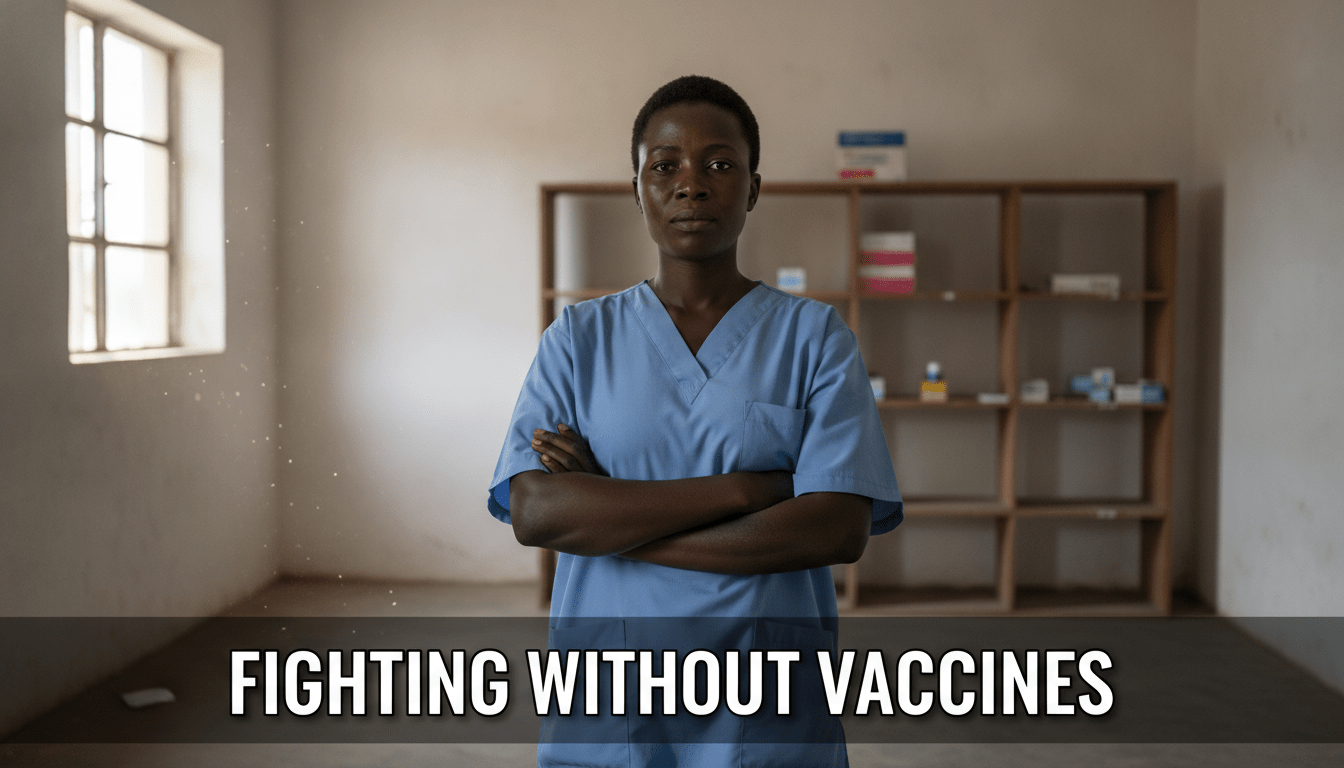
While scientific laboratories struggle to create new vaccines, local healthcare workers are paying the ultimate price (doctorswithoutborders.org, hrw.org). In the Democratic Republic of the Congo, frontline medical staff are working under extreme duress (peoplesworld.org). Dr. Richard Lokudu, the medical director of Mongbwalu General Referral Hospital, reports that his staff operates with almost no compensation or hazard allowances (mixvale.com.br). Despite working round-the-clock to isolate highly infectious patients, these workers cannot buy food or protect their own families (newsy-today.com).
This crisis of underpaid labor is not new. It closely mirrors the struggles of past generations of workers fighting for economic justice. During the devastating 2014 to 2016 West Africa Ebola outbreak, public health systems relied on unpaid volunteers and underpaid staff who lacked basic personal protective equipment (harvard.edu, wsws.org). The lack of hazard pay in Sierra Leone led to repeated strikes, which crippled containment efforts and allowed the virus to spread (theguardian.com). Once again, the global response relies on the exploitation of local labor to shield the rest of the world (allafrica.com).
Gold Mines and the Anatomy of Spillover
To understand why the 2026 outbreak began, observers must examine the local environment (pulitzercenter.org). The epicenter of the outbreak is Mongbwalu, a bustling artisanal gold-mining town in the Ituri Province of the Democratic Republic of the Congo (latimes.com). Artisanal mining is characterized by informal, manual labor using basic, non-industrial equipment (c4ads.org). To access gold, miners engage in extensive deforestation and habitat destruction (researchgate.net, researchgate.net). This environmental fragmentation disrupts the natural habitats of wild animals, pushing humans and animal hosts into dangerous contact (nih.gov).
Specifically, miners frequently enter deep, bat-inhabited caves where fruit bats carry zoonotic pathogens like Ebola and Marburg (nih.gov, mtpr.org). Once a virus jumps from a bat to a miner, human-to-human transmission begins rapidly (who.int). The social structure of mining towns accelerates this spread (socialscienceinaction.org). Mongbwalu serves as a major trade hub with high population mobility and poor sanitation (latimes.com). Workers live in crowded temporary camps, moving frequently across health zones (socialscienceinaction.org, reliefweb.int). This continuous movement makes contact tracing extremely difficult for underfunded healthcare teams.
The Broken Pipeline of Global Aid
Although international donors have pledged millions of euros, very little of this capital reaches local medical workers (newsy-today.com, doctorswithoutborders.org). This failure is rooted in a broken distribution system (ft.com). Historically, a massive portion of humanitarian aid is consumed by the administrative overhead of foreign non-governmental organizations (atlanticcouncil.org). High salaries, travel expenses, and bureaucratic operations in Western capitals drain resources before they ever cross the ocean (lse.ac.uk, pulitzercenter.org).
Furthermore, local healthcare systems have been hollowed out by external economic pressures (ft.com, allafrica.com). Decades of structural adjustment programs and Africa’s rising debt crisis have forced governments to cut spending on public health. Under pressure from foreign lenders, nations must prioritize debt payments over local health services (peoplesworld.org). Consequently, local ministries of health suffer from chronic payment backlogs, delayed procurement, and administrative inefficiency (aljazeera.com). Even when funds do arrive, top-level managers sometimes divert resources, leaving local doctors completely empty-handed (peoplesworld.org, allafrica.com).
Medical Colonialism and the Roots of Mistrust
In addition to the lack of funds, healthcare workers must fight deep-seated community mistrust (socialscienceinaction.org). This skepticism is not an irrational reaction (globalsistersreport.org). Instead, it is a logical response to a long history of medical exploitation (lse.ac.uk). During colonial administrations, public health campaigns in Africa were frequently coercive and militarized (chaberlin.org). European powers used medical interventions to protect foreign economic assets rather than the lives of local residents (chaberlin.org, researchgate.net). This history of extraction created a legacy of systemic exploitation that still influences perceptions today.
In modern times, communities see well-funded foreign organizations suddenly arrive only when a deadly virus threatens global trade (socialscienceinaction.org). Meanwhile, basic medical needs, clean water, and local schools remain completely ignored (reliefweb.int). This stark disparity fuels rumors that the virus is manufactured by outsiders for financial profit (doctorswithoutborders.org, socialscienceinaction.org). When armed security forces are used to enforce quarantine measures, it reinforces the perception of a hostile, external occupation (hrw.org, reliefweb.int). To successfully contain the virus, the response must prioritize community-led communication and respect local agency.
Uncounted Lives Behind the Official Statistics
As the 2026 outbreak progresses, there is major concern about the accuracy of official data (theguardian.com, durangoherald.com). The recorded case fatality rate of fifteen point nine percent in early June is surprisingly low for Ebola (who.int, who.int). This low figure is likely an artificial deflation caused by systemic under-reporting (doctorswithoutborders.org, umn.edu). In remote, conflict-torn regions, dozens of deaths occur far from any medical facility (hrw.org, wsls.com). Because diagnostic capacity is limited, many of these fatalities are never laboratory-verified (newsy-today.com, umn.edu).
Furthermore, contact tracing is operating at critically low levels (rescue.org). The International Rescue Committee reports that only about forty-five percent of active contacts are being followed up daily, compared to the target of ninety percent (rescue.org). With over two hundred and fifty suspected community deaths awaiting validation, the true scale of the epidemic remains hidden (who.int, who.int). Armed conflict and population displacement prevent surveillance teams from entering high-risk areas (hrw.org, latimes.com). Until frontline workers receive adequate support and security, the official statistics will continue to under-represent the true tragedy unfolding on the ground.
About the Author
Darius Spearman is a professor of Black Studies at San Diego City College, where he has been teaching for over 20 years. He is the founder of African Elements, a media platform dedicated to providing educational resources on the history and culture of the African diaspora. Through his work, Spearman aims to empower and educate by bringing historical context to contemporary issues affecting the Black community.
