


Why Did a Federal Court Ban Confederate School Renaming?
By Darius Spearman (africanelements)
Support African Elements at patreon.com/africanelements and hear recent news in a single playlist. Additionally, you can gain early access to ad-free video content.
A Federal Order Halts Confederate Names in Virginia
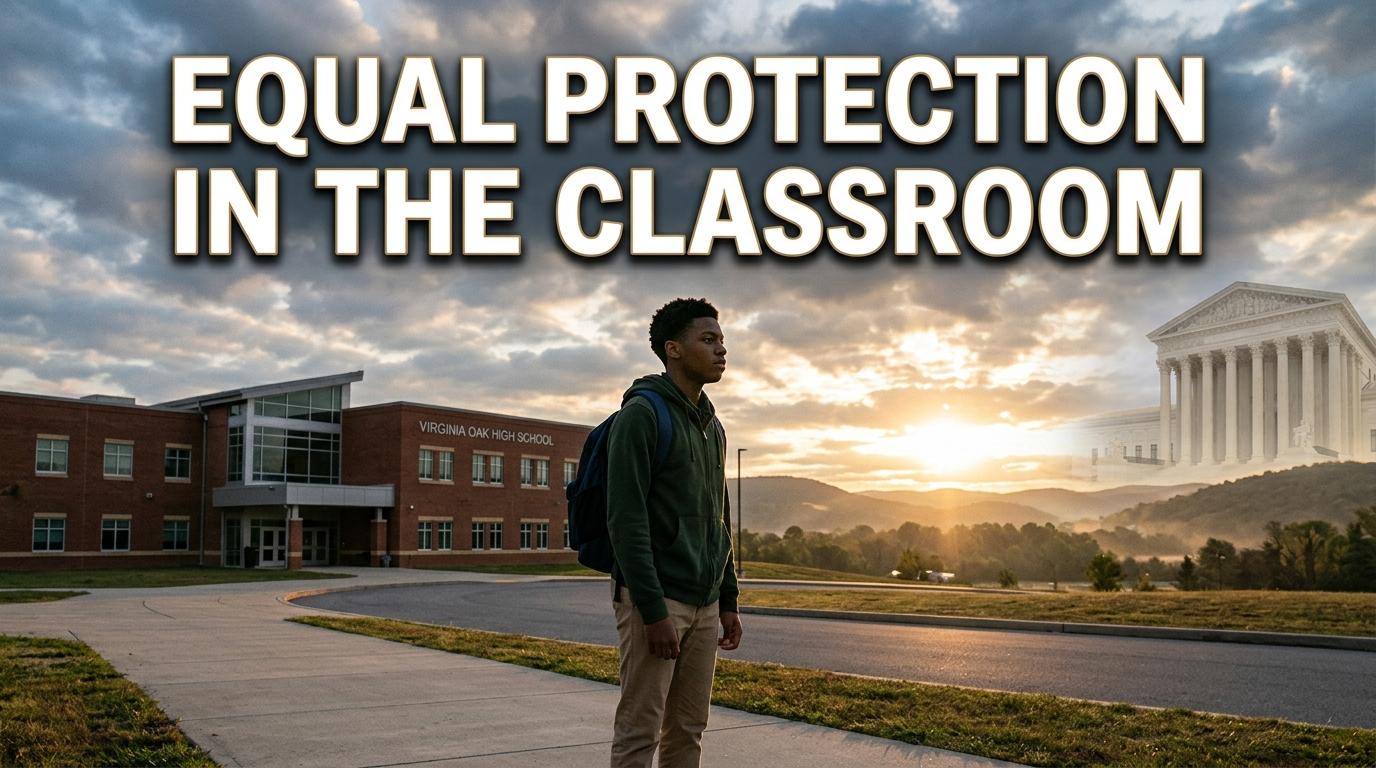
A federal courtroom in western Virginia delivered an unmistakable message about racial equality in public education. Senior U.S. District Judge Michael F. Urbanski handed down a 141-page ruling against the Shenandoah County School Board. The judge issued an injunction that stopped local officials from restoring Confederate names on two public schools (clearinghouse.net). The decision struck down the names of Confederate Generals Thomas “Stonewall” Jackson, Robert E. Lee, and cavalry officer Turner Ashby (newsfromthestates.com).
The court determined that the board committed serious constitutional and civil rights violations. Re-establishing the monikers breached the Equal Protection Clause of the Fourteenth Amendment. It also violated Title VI of the Civil Rights Act of 1964 and the Equal Educational Opportunities Act of 1974 (courthousenews.com). This conflict exposes how the legacy of racial defiance continues to surface in classrooms today (edweek.org).
The Fall of Plessy and the Rise of Massive Resistance
To understand the current controversy, one must examine the legal framework that sustained Southern segregation. In 1896, the Supreme Court decided Plessy v. Ferguson, creating the doctrine of “separate but equal.” That standard legalized Jim Crow apartheid across transportation, public accommodations, and schools for six decades. Under this regime, Southern school boards starved Black facilities of adequate resources while running dual educational tracks.
The fall of Plessy arrived in May 1954 when the Supreme Court ruled unanimously in Brown v. Board of Education. Chief Justice Earl Warren declared that separate educational facilities are inherently unequal. Segregated classrooms caused psychological harm that damaged Black children deeply. Instead of complying with the ruling, white political elites launched a massive campaign of open defiance across the American South (encyclopediavirginia.org).
Massive Resistance in the Old Dominion
Virginia became the headquarters for organized resistance against federal school desegregation. United States Senator Harry F. Byrd Sr. organized the crusade known as Massive Resistance (encyclopediavirginia.org). Byrd called on Southern politicians to erect every conceivable barrier against integration (encyclopediavirginia.org). He insisted that local white officials could compel the federal government to abandon its constitutional mandate (encyclopediavirginia.org). This showdown illustrated the historical friction surrounding state vs federal power.
The campaign took aggressive forms across the Commonwealth of Virginia. Prince Edward County became notorious when officials shut down its entire public school system in 1959 (encyclopediavirginia.org). County leaders refused to fund integrated facilities and kept public classrooms closed for five agonizing years (motonmuseum.org). Roughly 1,700 Black children were locked out of formal education entirely (encyclopediavirginia.org). Meanwhile, white residents received state tuition vouchers to attend segregated private academies (encyclopediavirginia.org, eji.org).
School Naming as an Instrument of Intimidation
School boards that kept their doors open weaponized iconography against desegregation. During rural school consolidation in the 1950s and 1960s, school boards selected Confederate heroes for newly constructed buildings (cardinalnews.org). These names served as cultural monuments to white supremacy. They sent a direct message to Black residents seeking educational rights (newsfromthestates.com). White leaders tried to preserve the past through symbolic intimidation, much as the post-Reconstruction South devised ways to restrict freedom.
Shenandoah County adopted this strategy directly during the desegregation crisis. County leaders opened Stonewall Jackson High School in 1959 as an all-white institution (cardinalnews.org, courthousenews.com). Ashby-Lee Elementary School opened in the late 1960s and early 1970s, keeping the names of Robert E. Lee and Turner Ashby alive for children (newsfromthestates.com, courthousenews.com). These choices were calculated political statements intended to assert defiance against federal authority (cardinalnews.org, newsfromthestates.com).
Who Was Turner Ashby?
While Robert E. Lee and Stonewall Jackson are familiar historical figures, Turner Ashby is less known outside Virginia. Ashby served as an officer and led cavalry units under Stonewall Jackson in the Shenandoah Valley (newsfromthestates.com). In 1859, he mobilized armed horsemen in Charles Town following the anti-slavery raid by John Brown on Harpers Ferry. Ashby helped secure the territory to ensure the trial and execution of the abolitionist leader proceeded without interruption (newsfromthestates.com).
Ashby earned the wartime nickname “Black Knight of the Confederacy” and died in combat in 1862 (newsfromthestates.com). He took up arms to preserve a society grounded in human enslavement. Placing his name on an elementary school in the desegregation era deliberately reinforced the Confederate cause (newsfromthestates.com, courthousenews.com). Generations of young Black students were required to enter a public building honoring an officer committed to their ancestors’ enslavement (clearinghouse.net, newsfromthestates.com).
The Modern Retreat and Sudden Reversal
The national racial reckoning of 2020 pushed Shenandoah County toward change. The county school board acknowledged that Confederate names fostered racial division (newsfromthestates.com). In 2020, board members voted to drop the Confederate monikers (newsfromthestates.com, courthousenews.com). Stonewall Jackson High became Mountain View High School (newsfromthestates.com). Ashby-Lee Elementary became Honey Run Elementary School (newsfromthestates.com). The district joined communities across Virginia that retired Confederate symbols (cbsnews.com).
The retirement of those symbols proved temporary. A conservative slate took control of the school board in subsequent elections (newsfromthestates.com, courthousenews.com). On May 10, 2024, the board voted 5–1 to reverse its previous decision (newsfromthestates.com). It officially restored the names of Stonewall Jackson and Ashby-Lee (newsfromthestates.com). The move made Shenandoah County the first school system in the country to bring back Confederate names after discarding them (newsfromthestates.com). The reversal sparked outrage and triggered an immediate federal civil rights lawsuit (clearinghouse.net, courthousenews.com).
The Injunction: Root and Branch
Judge Urbanski rejected the board’s argument that returning to the names merely preserved heritage (newsfromthestates.com, courthousenews.com). The court recognized an essential legal difference between passive history and active government endorsement (courthousenews.com). The board had an affirmative duty to dismantle segregation “root and branch” (courthousenews.com). Restoring these monikers in 2024 deliberately reinstated vestiges of segregation that had already been removed (courthousenews.com).
The judge noted that the board acted with full awareness of the pain the names caused (courthousenews.com). The decision underscored that the legacy of Confederate generals cannot be separated from white supremacy (courthousenews.com). These leaders fought to preserve chattel slavery (courthousenews.com). Their names were later applied to schools to resist integration (cardinalnews.org, courthousenews.com). Re-imposing them denied minority students equal protection under the law (courthousenews.com).
Psychological Harm in the Classroom
The court placed substantial evidentiary weight on student testimony (courthousenews.com). Black students make up roughly 3 percent of Shenandoah County’s student body (schooldigger.com, publicschoolreview.com). Because their numbers are small, minority youth were vulnerable to isolation (newsfromthestates.com). Black students described intense psychological distress (courthousenews.com). They were forced to wear athletic jerseys celebrating generals who waged war to enslave Black people (newsfromthestates.com, courthousenews.com). The broader social struggle mirrors challenges Black students face in American school systems.
In an earlier 2025 ruling, Judge Urbanski protected students on First Amendment grounds (courthousenews.com). He ruled that school districts cannot compel students to serve as “mobile billboards” for Confederate generals (courthousenews.com). Forcing children to wear Confederate imagery infringed on their personal freedom (courthousenews.com). In his final ruling, the judge determined the names created a hostile educational atmosphere (clearinghouse.net, courthousenews.com). The re-imposition violated the Equal Educational Opportunities Act of 1974 (courthousenews.com).
The Irony of “With All Deliberate Speed”
Judge Urbanski concluded his decision with a pointed historical phrase (courthousenews.com). He ordered the Shenandoah County School Board to adopt new names on a nondiscriminatory basis “with all deliberate speed” (courthousenews.com). The phrase carries heavy meaning in civil rights history. In 1955, the Supreme Court issued Brown II and instructed Southern jurisdictions to desegregate with deliberate speed. Southern politicians exploited that vague wording to delay integration for decades (encyclopediavirginia.org).
The federal court repurposed that famous phrase to demand immediate compliance (courthousenews.com). The judge signaled that the era of stalling has ended. The injunction did not automatically reinstate the 2020 names, Mountain View and Honey Run (clearinghouse.net, courthousenews.com). Instead, it ordered the board to dismantle Confederate signage and select replacement names that comply with federal law (clearinghouse.net, courthousenews.com). The decision barred officials from prolonging the dispute (clearinghouse.net, courthousenews.com).
The Board’s Defense and the Battle Ahead
The school board defended its actions by claiming local authority and legislative privilege (courthousenews.com). Members refused to disclose their personal communications or motivations (courthousenews.com). Defense attorney Jim Guynn argued that school naming constitutes local governmental authority (courthousenews.com). The defense argued the plaintiffs failed to prove damage because the student plaintiffs achieved high grades and extracurricular honors (courthousenews.com). The board maintained that names are simply historical labels (courthousenews.com).
Judge Urbanski rejected those arguments (courthousenews.com). Success in the classroom does not erase the psychological sting of discrimination, nor does it excuse constitutional violations (courthousenews.com). Following the ruling, the Shenandoah County School Board held a closed-door meeting (cardinalnews.org). The members voted unanimously, 6–0, to appeal the ruling to the U.S. Court of Appeals for the Fourth Circuit (cardinalnews.org). This legal fight is set to continue on the appellate level (cardinalnews.org, courthousenews.com).
Constitutional Stakes for the Nation
The Shenandoah County ruling establishes an important precedent for civil rights across the United States. School boards across the country are facing pressure to resurrect Confederate and segregation-era symbols. This federal injunction makes clear that affirmative revivals of discriminatory markers violate the law (courthousenews.com). When local officials intentionally re-impose symbols designed to enforce white supremacy, courts can strike them down (courthousenews.com). Educational environments must provide equal dignity to every child who walks through their doors (courthousenews.com).
About the Author
Darius Spearman is a professor of Black Studies at San Diego City College, where he has been teaching for over 20 years. He is the founder of African Elements, a media platform dedicated to providing educational resources on the history and culture of the African diaspora. Through his work, Spearman aims to empower and educate by bringing historical context to contemporary issues affecting the Black community.
