


Why Did the Black Unemployment Rate Spike to 7.5%?
By Darius Spearman (africanelements)
Support African Elements at patreon.com/africanelements and hear recent news in a single playlist. Additionally, you can gain early access to ad-free video content.
The Reality of the Current Job Market
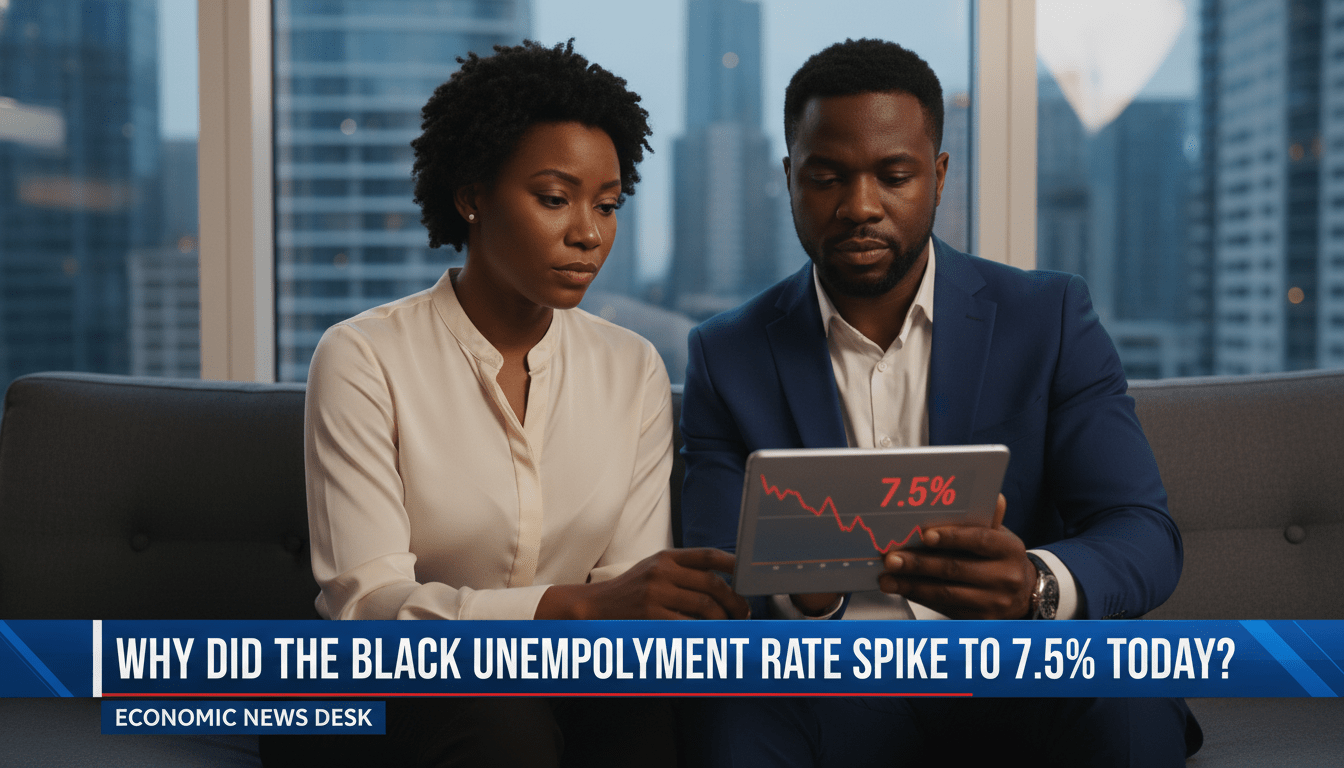
Economic reports from today deliver a startling message. The Black unemployment rate has suddenly climbed to 7.5 percent. This figure is the highest level recorded since the year 2021. Observers must ask what forces are driving this sudden spike. The national average unemployment rate currently sits at 4.3 percent. This contrast reveals a massive gap in economic stability. Black unemployment is nearly double the rate of the general population. Two major factors are directly causing this alarming economic shift. The first factor is the rapid elimination of federal diversity programs. The second factor is the sudden automation of service-sector jobs.
The national economy appears quite resilient on the surface level. However, Black workers face a completely different economic reality. This spike is a major reversal of recent post-pandemic employment gains. Many families are struggling to secure adequate daily income. Economic security remains an elusive goal for marginalized communities. This moment requires a serious examination of national labor policies. The statistics show a rapidly shifting landscape for minority workers.
Unemployment Rate Disparity
(April 2026 Data)
This chart highlights the significant difference in unemployment rate across worker groups, providing a clear visual contrast on any background. (Source: Bureau of Labor Statistics)
A Historical Look at the Two-to-One Gap
This modern economic crisis has deep roots in American history. A persistent disparity defines the foundation of the national labor market. For over fifty years, Black unemployment has remained consistently elevated. It typically hovers at double the rate of white unemployment. This structural gap began to widen dramatically during the Great Migration. From the 1940s through the 1970s, millions of Black families relocated. They left Southern agricultural regions to escape violent systemic oppression. They migrated to Northern industrial cities seeking fair wage labor.
The Civil Rights Movement eventually helped close the racial earnings gap. However, the employment gap continued to expand despite these legal gains. By the year 1960, the two-to-one unemployment ratio became permanent. The current 7.5 percent rate is highly concerning for today. Still, it falls short of the historical peak reached in 1983. During that severe recession, Black unemployment hit an astonishing 21.2 percent. The deep history of African American labor shows consistent systemic barriers. Structural racism within employment is certainly nothing new (epi.org).
Early Labor Victories and A. Philip Randolph
Understanding the modern workforce requires reviewing early labor rights struggles. Black workers have spent generations fighting for equitable employment practices. A. Philip Randolph emerged as a powerful and transformative labor leader. He established the Brotherhood of Sleeping Car Porters in the year 1925. This organization became the first predominant Black labor union in America. The American Federation of Labor eventually recognized this vital union. Randolph organized these workers to forcefully demand fair compensation.
He believed economic pressure was essential for achieving lasting civil rights. In 1941, Randolph planned a massive March on Washington. This bold demonstration threatened to disrupt the national defense industry. President Franklin D. Roosevelt chose to act quickly to prevent unrest. Roosevelt signed Executive Order 8802 into law during that same year. This historic order prohibited discriminatory hiring practices within the defense industry. These early organizing efforts laid the foundation for modern equity programs. Randolph explicitly stated that civil rights demanded total economic equality (americanprogress.org).
The Public Sector as an Economic Refuge
Generations of Black professionals have faced intense discrimination in corporate settings. Therefore, the public sector evolved into a necessary economic refuge. Government jobs historically provided a much fairer working environment. The federal government utilized standardized pay scales for all civilian employees. The General Schedule pay scale successfully narrowed the racial wage gap. This structured system greatly reduced the impact of individual managerial bias. Consequently, Black women achieved significant professional success within government agencies.
The public sector became the largest employer of Black professionals nationwide. Civil service laws require competitive examinations and completely objective hiring criteria. These rules severely limit the networking biases common in corporate America. Furthermore, public sector employees are much more likely to join unions. Union membership provides essential legal protections for vulnerable marginalized workers. Arbitrary or biased terminations are extremely difficult to execute against union members. The complex sharing of power between national and state governments impacts local rights. Federal employment historically offered a stable path into the middle class (epi.org).
The Dismantling of Federal Equity Programs
The current spike in unemployment correlates strongly with changing government policies. Beginning in early 2025, federal employment practices shifted in a dramatic fashion. The current administration successfully dismantled long-standing diversity and equity frameworks. President Donald Trump issued a series of sweeping Executive Orders. These actions effectively eliminated diversity offices across numerous federal agencies. The orders also ended crucial diversity reporting requirements for federal contractors. The direct impact on the federal workforce was absolutely devastating.
By the middle of 2025, the government eliminated roughly 271,000 positions. Employment reports indicate nearly 200,000 of these roles belonged to Black women. These employees primarily worked in administrative, support, and human resources departments. This massive reduction quickly removed a highly stable source of income. Dismantling these inclusive programs stripped away vital institutional worker protections. Black professionals suddenly found themselves navigating a hostile job market alone. The elimination of inclusive recruitment removes essential pathways for underrepresented talent (schaeferhalleen.com).
Federal Job Losses (2025-2026)
The Direct Impact of Dismantled Equity Programs
The Chilling Effect on Corporate Diversity
The sudden elimination of federal mandates created a massive ripple effect. Private corporations observed the changing legal and political environment closely. Many companies decided to aggressively scale back their internal equity programs. Corporate leaders expressed fear regarding potential litigation and public political backlash. Legal experts frequently refer to this phenomenon as the chilling effect. Companies observed recent Supreme Court rulings concerning affirmative action in education. They worry conservative legal groups will file reverse discrimination lawsuits soon.
Consequently, businesses are completely abandoning diversity targets and specialized recruitment efforts. Some organizations chose to simply rebrand their human resources departments completely. They utilize vague titles like Business Excellence or general Talent Management. Unfortunately, this rebranding completely erases the specific focus on marginalized communities. Furthermore, corporate human resources departments abruptly stopped tracking racial demographic data. They strongly desire to avoid creating evidence for potential future lawsuits. Corporations are overcorrecting and cancelling legally sound mentorship programs out of fear (schaeferhalleen.com).
Occupational Segregation and Job Market Barriers
Occupational segregation remains a primary driver of the current economic crisis. This concept describes how demographic groups are pushed into specific industries. Black workers are heavily concentrated within lower-paying service and support roles. They frequently secure employment as cashiers, line cooks, and administrative assistants. Systemic societal barriers constantly funnel minority applicants into these exact positions. Vertical segregation presents another major obstacle within the national labor market. Black employees are frequently trapped in basic, entry-level corporate positions.
Meanwhile, executive leadership and senior management roles remain overwhelmingly white spaces. This strict segregation creates a massive portion of the racial wage gap. It actively prevents career advancement and limits long-term wealth accumulation. Structural racism within the housing market compounds this economic problem daily. Spatial mismatch leaves marginalized workers geographically isolated from excellent career opportunities. A lack of reliable public transportation further restricts access to quality jobs. The legacy of historical exploitation continues to shape modern economic outcomes (epi.org).
Artificial Intelligence and Technological Displacement
The rapid advancement of artificial intelligence is actively disrupting the economy. This massive technological shift targets the service sector with unprecedented speed. Black workers are disproportionately concentrated in these highly vulnerable service industries. Major retail corporations are quickly adopting advanced automation technology everywhere. Fast-food chains aggressively rolled out artificial intelligence kiosks between 2024 and 2026. Autonomous delivery vehicles are actively replacing human drivers across major cities. Support roles generally involve predictable, routine tasks that computers manage easily.
Researchers estimate that 53 percent of support tasks are currently automatable. By contrast, only 31 percent of directive management roles face this danger. Directive positions require complex human decision-making and strong emotional intelligence. Furthermore, significant digital literacy gaps leave many support workers extremely vulnerable. Early 2026 reports suggest automation threatens over 4.5 million specific roles. Displaced workers often lack access to the advanced technical training required. They are ten percent more likely to occupy easily automated jobs (mckinsey.com).
Task Automation Risk by Role Type
Percentage of daily tasks susceptible to AI replacement
(High Minority Density)
(Low Minority Density)
The Reality of Last Hired and First Fired
Economic downturns expose the deepest structural flaws within the labor system. The old rule of last hired and first fired remains devastating. Black workers are frequently the most recent entrants into lucrative industries. Historical discrimination delayed their entry into the professional corporate workforce significantly. Therefore, they have accumulated much less tenure than their white colleagues. Companies routinely terminate their newest employees first during severe economic storms. Seniority-based layoffs are strictly enforced in numerous unionized working environments.
Collective bargaining agreements legally mandate that newer employees lose jobs immediately. This seemingly neutral system disproportionately harms workers of color nationwide. Even non-unionized corporate managers frequently utilize tenure as a performance proxy. This indirect penalty severely hurts Black professionals who faced initial hiring delays. Economic data confirms this exact pattern during every modern financial recession. Black unemployment rates consistently rise much faster and peak significantly higher. The absence of specific diversity protections leaves these recent hires unprotected (americanprogress.org).
Where Does the Workforce Go From Here?
The newly reported 7.5 percent Black unemployment rate demands serious attention. This statistic represents a dangerous regression to the mean for America. The complete removal of protective labor policies leaves workers entirely exposed. Diversity programs previously functioned as a crucial buffer during corporate layoffs. Unfortunately, those specific institutional protections are largely absent from the workplace. Meanwhile, automation is permanently erasing thousands of critical entry-level employment opportunities. These accessible jobs once offered marginalized communities a realistic path forward.
Historical evidence demonstrates that active federal intervention is absolutely necessary today. Without bold policies, the devastating two-to-one unemployment ratio will certainly persist. Artificial intelligence will undoubtedly continue displacing the traditional twentieth-century labor force. The deep resilience tradition and unity of the Black family offers hope. However, surviving this modern economic storm requires massive structural policy changes. Communities must heavily advocate for fair labor laws and retraining programs. Workers need equitable access to the digital skills of the future.
About the Author
Darius Spearman is a professor of Black Studies at San Diego City College, where he has been teaching for over 20 years. He is the founder of African Elements, a media platform dedicated to providing educational resources on the history and culture of the African diaspora. Through his work, Spearman aims to empower and educate by bringing historical context to contemporary issues affecting the Black community.
