



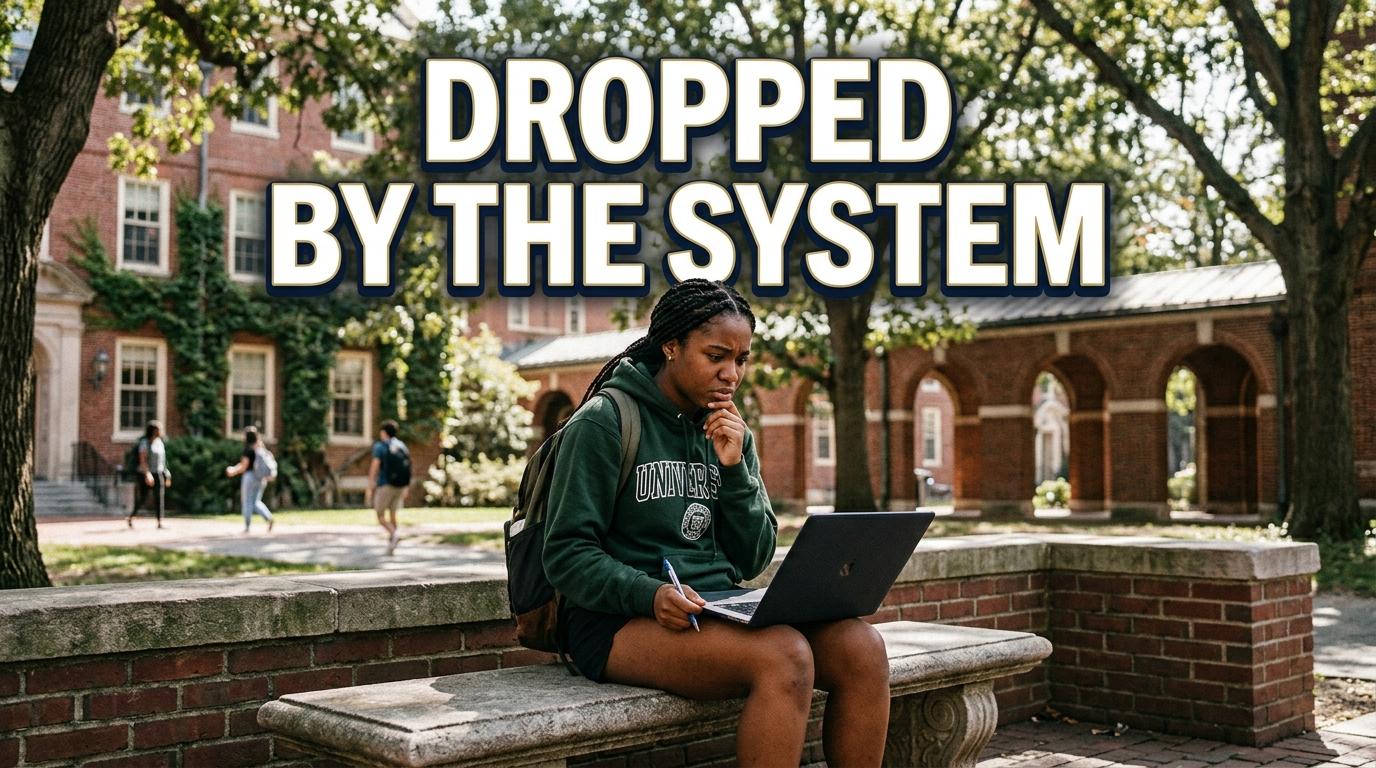
Why Howard Dropped 502 Freshmen Before Readmitting 200
By Darius Spearman (africanelements)
Support African Elements at patreon.com/africanelements and hear recent news in a single playlist. Additionally, you can gain early access to ad-free video content.
A Sudden Unenrollment Disruption for Hundreds of Freshmen
In mid-July 2026, Howard University sent unexpected administrative notices to 502 incoming first-year students. This group represented nearly twenty percent of the incoming freshman class for the fall semester (apnews.com, capitalbnews.org). The automated cancellation notices informed families that course schedules and housing assignments were dropped. School officials stated that the cancellations occurred because students missed payment deadlines or failed to upload required health documents (capitalbnews.org, washingtonpost.com).
Interim President Wayne A. I. Frederick defended the firm enforcement of university deadlines. He noted that operational deadlines are necessary to manage campus resources efficiently (howard.edu, howard.edu). However, the sudden notifications caused deep frustration for incoming students and parents. Many families had already paid security deposits, secured private scholarships, or arranged federal loans. Parents reported difficulty reaching campus offices to resolve minor processing issues. The incident quickly exposed historical factors impacting Black students during critical educational transitions.
Software Migration Bottlenecks and Administrative Friction
The financial drop crisis was compounded by campus administrative software updates. Howard University recently transitioned from its legacy software system, BisonWeb, to a platform called BisonHub (thehilltoponline.com, thehilltoponline.com). This complex system migration created severe processing delays during the peak summer enrollment period. Consequently, approximately one thousand student billing accounts experienced processing backlogs (thehilltoponline.com).
A major disconnect occurred between the Financial Aid Office and the Bursar’s Office. The Financial Aid Office calculates eligibility and verifies outside scholarships. Meanwhile, the Bursar’s Office handles billing statements and payment collections. System glitches delayed the transfer of approved financial aid into active student accounts. As a result, automated billing routines marked accounts unpaid despite pending financial aid (thehilltoponline.com, thehilltoponline.com). Families found themselves locked out of registration while waiting for help lines to answer.
Public Advocacy, State Support, and Partial Reinstatements
The sudden unenrollment of hundreds of students triggered a massive backlash on social media networks. Disenrolled students posted verified documentation of paid deposits, government loans, and external awards. Campus advocates organized online campaigns to demand immediate review from university leaders. Following public pressure, administrators initiated manual case reviews. By late July 2026, Howard University announced the official reinstatement of over two hundred students (apnews.com, capitalbnews.org).
External leaders and local institutions stepped in to help the remaining displaced scholars. Maryland Governor Wes Moore directed state higher education agencies to provide emergency assistance (maryland.gov). Maryland offered fast-tracked transfer admissions and an eight-hundred-dollar enrollment credit for affected students entering public universities (cbsnews.com, maryland.gov). Furthermore, the University of the District of Columbia extended its admissions deadlines to absorb local students seeking immediate options (bet.com). These swift measures provided vital safety nets during an academic emergency.
A Century of Student Activism and Institutional Resistance
Administrative tension and student activism have a long history at Howard University. For decades, the student body has organized sit-ins and rallies to challenge policy decisions, tuition hikes, and campus oversight. In March 1968, over one thousand students occupied the administration building for four days (wikipedia.org). That historic protest forced administrative reforms and established Black studies within the academic curriculum.
Organized campus protests continued in subsequent decades whenever administrative friction surfaced. In 1989, more than two thousand students occupied facilities to protest political appointments to the Board of Trustees (wikipedia.org, wikipedia.org). These actions reflect long-standing traditions of Black student activism against institutional neglect. In 2018, students staged a nine-day occupation following financial aid accounting scandals (aaup.org). Later in 2021, students completed a thirty-four-day takeover over housing conditions (wikipedia.org). Student pushback in July 2026 aligned directly with this historic legacy of organized student defense.
Economic Reality, Title IV Aid, and the Racial Wealth Gap
The financial hurdles facing Howard families reflect structural economic realities across Black higher education. Between seventy and eighty-three percent of undergraduates at HBCUs rely on federal Pell Grants for low-income households (uncf.org, tcf.org). Additionally, over eighty-one percent of HBCU students rely on federal Title IV aid programs to attend college (pnpi.org). When federal disbursements face paperwork delays, low-income students lack cash reserves to cover remaining balances instantly.
Generational wealth disparities aggravate these higher education barriers. The median net worth of white families stands near two hundred fifty thousand dollars, compared to roughly twenty-seven thousand dollars for Black families (responsiblelending.org, edtrust.org). Because of these disparities, Black graduates carry an average student loan debt of thirty-two thousand three hundred seventy-three dollars (responsiblelending.org). These economic factors illustrate longstanding structural economic traps that leave families vulnerable to automated institutional drop policies.
Chronic State Underfunding and Endowment Disparities
Institutional financial pressures at HBCUs stem from decades of chronic state underfunding. A joint federal report revealed that state governments underfunded eighteen public land-grant HBCUs by twelve point eight billion dollars between 1987 and 2020 (ed.gov, ed.gov, usda.gov). Under the Second Morrill Act of 1890, states were legally required to match federal funding for Black agricultural colleges equitably (ed.gov, langston.edu). Systemic state failures to match these funds starved Black institutions of capital for generations.
Endowment disparities further limit the financial cushion of Black universities. Elite private research institutions frequently hold endowments ranging from five billion to over forty billion dollars. In contrast, Howard University holds an endowment of approximately one point one billion dollars, which stands as the largest among HBCUs (tcf.org, howard.edu). Across higher education, land-grant PWIs hold a one-hundred-to-one endowment ratio over public HBCUs (tcf.org, edtrust.org). Consequently, HBCU administrations rely heavily on annual tuition revenue to maintain operations, leading to strict deadline enforcement.
Balancing Fiscal Responsibility with Educational Access
The readmission of over two hundred students at Howard highlights an ongoing institutional challenge. University leaders must manage daily operations, maintain operational budgets, and ensure financial survival. Enforcing strict registration deadlines allows institutions to project revenue and allocate campus resources accurately. However, automated student drops run counter to the foundational mission of Historically Black Colleges and Universities. HBCUs exist to provide access, upward mobility, and community sanctuary for Black scholars.
Resolving this systemic conflict requires administrative modernization, flexible billing practices, and transparent communication channels. Universities must refine financial software platforms so pending third-party aid does not trigger automated drop notifications. Furthermore, expanding emergency grant funds can protect students from sudden tuition gaps. By applying principles of Black self-determination, institutions and community advocates can build sustainable financial safety nets. Strengthening institutional support ensures administrative policies safeguard educational opportunities for future generations.
About the Author
Darius Spearman is a professor of Black Studies at San Diego City College, where he has been teaching for over 20 years. He is the founder of African Elements, a media platform dedicated to providing educational resources on the history and culture of the African diaspora. Through his work, Spearman aims to empower and educate by bringing historical context to contemporary issues affecting the Black community.
