


Why Somalia is Hosting Thousands of Foreign Refugees
By Darius Spearman (africanelements)
Support African Elements at patreon.com/africanelements and hear recent news in a single playlist. Additionally, you can gain early access to ad-free video content.
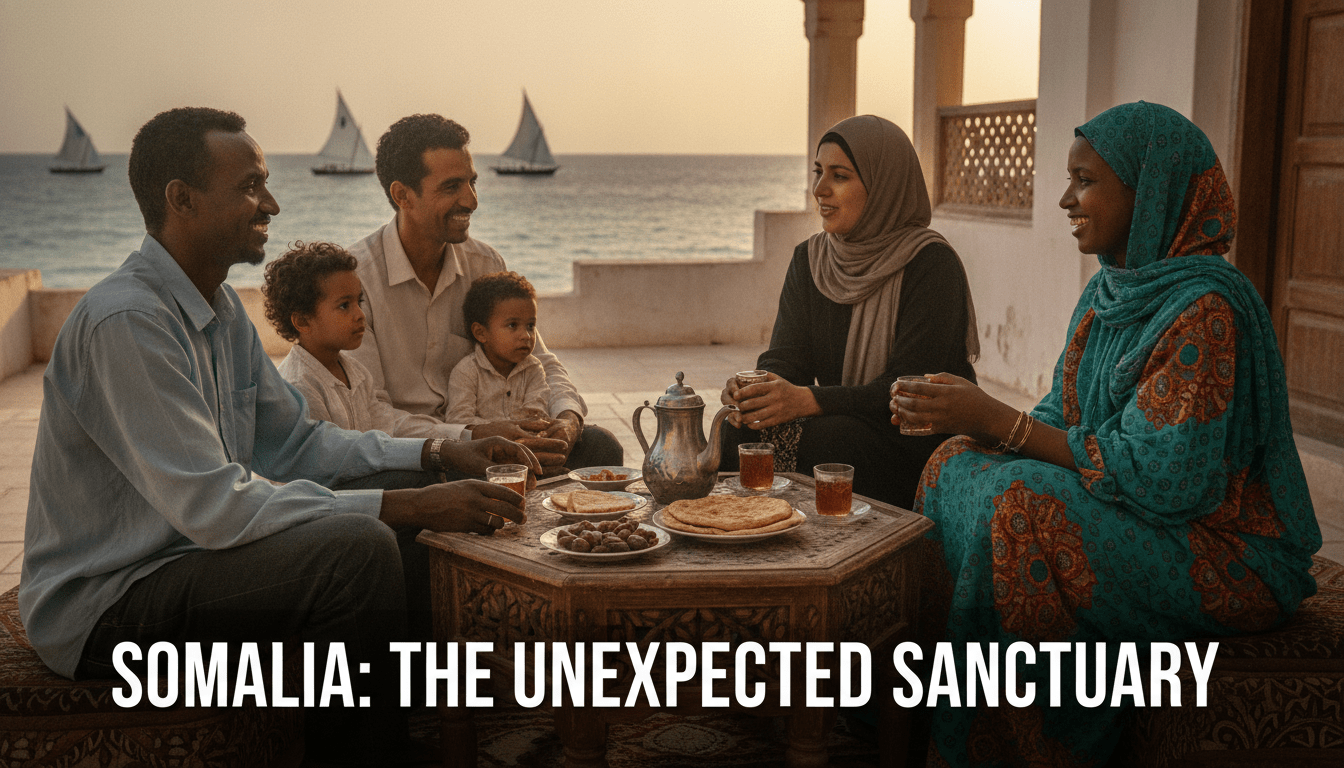
On June 19, 2026, during a commemoration of World Refugee Day in Mogadishu, the Somali National Commission for Refugees and IDPs delivered a remarkable announcement (insidesomalia.net). Commission Chairman Liban Abdi Egal revealed that Somalia currently provides sanctuary to 45,500 displaced persons and asylum seekers (insidesomalia.net, ncri.gov.so). These individuals have arrived from six different countries: Yemen, Syria, Sudan, Ethiopia, Tanzania, and Palestine (insidesomalia.net, somalia.gov.so).
This news may surprise those who primarily associate the nation with its own decades-long history of conflict and flight. For years, international news reports have depicted Somalia as a generator of refugees rather than a place of refuge. However, this humanitarian footprint is a direct reflection of deep cultural reciprocity, historical ties, and regional solidarity in the Horn of Africa (insidesomalia.net). The willingness of the Somali people to share their limited resources highlights a powerful message of global African resilience and community care.
The Ogaden War and the Roots of Somali Refugee Policy
The role of Somalia as a refugee host did not begin in the twenty-first century. The nation established its foundational humanitarian frameworks during the late twentieth century (countrystudies.us). In 1977, the Somali government under President Mohamed Siad Barre sought to realize the geopolitical vision of a unified ethnic Somali territory (wikipedia.org, britannica.com). This political ambition resulted in the Ogaden War against Ethiopia, which quickly escalated into a major Cold War proxy conflict involving Soviet and Cuban intervention (wikipedia.org).
Following the defeat of the Somali military, counter-insurgency operations by the Ethiopian army forced hundreds of thousands of people to flee their ancestral lands (countrystudies.us, macalester.edu). By 1980, Somalia hosted nearly one million refugees, mostly ethnic Somalis and Oromos, in massive camps across the Gedo and Woqooyi Galbeed regions (countrystudies.us). To manage this monumental task, the government established the National Refugee Commission under the Ministry of Local Government and Rural Development (somalilandlaw.com). The country also signed the 1951 Refugee Convention and its 1967 Protocol in 1978, which legally bound the nation to protect displaced individuals and uphold the core principle of non-refoulement (somalilandlaw.com, refworld.org).
Historical Influx vs. Today’s Refugee Population
Somalia’s administrative framework was built to handle massive regional crises, making today’s hosting capacity a legacy of past administrative mobilization.
State Collapse and the Experience of Flight
The historical narrative changed dramatically in 1991 when the central Somali government collapsed (britannica.com, cfr.org). Decades of civil war, localized conflicts, and the rise of the militant insurgent group Al-Shabaab forced millions of Somalis to flee their homes (unhcr.org, cfr.org). This massive displacement created a large global diaspora, with many finding shelter in neighboring countries such as Kenya, Ethiopia, and Uganda (unhcr.org). Many settled in massive refugee camps like Dadaab and Kakuma in Kenya (unhcr.org).
This shared experience of displacement has shaped how Somalis view those who seek safety within their borders today. Understanding this journey requires looking at the broader context of African history before colonialism, when regional movement was common and communities welcomed travelers. Today, even as Somalia welcomes foreign nationals, the country continues to face a major internal crisis with nearly three million internally displaced persons within its borders (unhcr.org). These internal refugees have been displaced by ongoing conflict with Al-Shabaab, as well as severe climate shocks such as the devastating 2022–2023 drought and subsequent river flooding (reliefweb.int).
The Reciprocal Bond Between Somalia and Yemen
The relationship between Somalia and Yemen represents a unique historical cycle of mutual aid across the Gulf of Aden. After the collapse of the Somali state in 1991, Yemen became a vital place of refuge (somalinet.com). Despite its own economic challenges, Yemen granted Somalis immediate refugee status on a group basis, allowing them to work and integrate into local communities (sihma.org.za, migrants-refugees.va). This practice, known as prima facie recognition, allowed hundreds of thousands of Somali refugees to build new lives, run businesses, and raise families in Yemen for over two decades (sihma.org.za).
This generous gesture was repaid decades later when the Yemeni Civil War escalated in 2015 (unhcr.org). Facing intense aerial bombardment and ground conflict, thousands of Yemeni nationals—alongside returning Somali refugees—fled across the Gulf of Aden in the opposite direction (unhcr.org). They traveled by boat to Somali ports like Bosaso and Berbera, seeking the same safety that Somalis had once found in Yemen (unhcr.org, unhcr.org). Remembering the kindness of their neighbors, Somali communities have worked diligently to welcome and house these new arrivals (insidesomalia.net).
The Gulf of Aden Reciprocity Loop
Somalis found safety in Yemen for over two decades. Today, Yemenis are returning the journey, fleeing conflict to find security in Somalia.
Unexpected Migrant Journeys to Mogadishu
The modern refugee population in Somalia includes groups from surprising origins. Since 2011, the civil war in Syria has driven thousands of people to the Horn of Africa (insidesomalia.net, reliefweb.int). In Mogadishu and Hargeisa, Syrian refugees have integrated into the local economy (reliefweb.int). Many are highly educated professionals, including doctors, dentists, and business owners, who contribute directly to the development of the private sector (reliefweb.int).
Another unique group consists of political refugees from Zanzibar, Tanzania, who arrived in 2001 (youtube.com). Following severe post-election political violence, these individuals fled to Kenya but faced difficult conditions and the threat of deportation (youtube.com). They chose to move to Mogadishu during the height of the Somali civil war (youtube.com). The local population welcomed them warmly, and many Zanzibaris established small businesses, married local citizens, and became permanent members of the community (youtube.com).
The Legal Rights of Refugees in Somalia
The legal status of foreign refugees in Somalia is governed by modern domestic frameworks. In 2023, the federal government enacted the Refugees and Asylum Seekers Law, No. 103/2023 (ncri.gov.so). This landmark legislation guarantees refugees the right to reside in the country, receive formal identification, and access essential services like healthcare and primary education (ncri.gov.so, unhcr.org).
However, significant economic limitations remain. While the domestic law guarantees basic protections, the right to work is heavily restricted by the Foreign Employment Act of 2015 (ilo.org). This law prohibits the government from issuing work permits to foreign nationals for positions that Somali citizens can fill (ilo.org). Consequently, many refugees must operate in the informal economy, working as fishermen, tailors, or small business owners to survive (youtube.com, ilo.org).
Resource Competition and Social Challenges
The co-existence of foreign refugees and millions of internally displaced Somalis has created noticeable urban pressure (unhcr.org, reliefweb.int). Many displaced people live in highly congested, informal settlements in major cities (reliefweb.int, unhcr.org). This rapid population growth has strained limited municipal resources, leading to intense competition for clean water, affordable housing, and entry-level jobs (reliefweb.int, reliefweb.int).
This strain has occasionally led to forced evictions and localized disputes over land (reliefweb.int). In some regions, these challenges have influenced ideological debates on nationalism and the security implications of hosting displaced populations (fmreview.org). Local authorities must balance the desire to show humanitarian solidarity with the practical realities of severe resource scarcity (reliefweb.int).
Somalia’s Dual Displaced Populations
The staggering disproportion between internal and foreign displacement highlights why competition over basic services remain a core challenge for local authorities.
International Support and Funding Limitations
Because the Somali government faces immense financial difficulties, the cost of supporting these refugees falls largely on international organizations (hiiraan.com). The United Nations High Commissioner for Refugees and various non-governmental organizations manage the primary relief programs (unhcr.org). These organizations rely on contributions from international donors to maintain health, education, and shelter services (unhcr.org).
Unfortunately, global humanitarian funding is often unstable. In recent years, severe funding shortages have forced aid agencies to reduce services and scale back critical programs (unhcr.org). Addressing these cycles of economic distress is crucial for the long-term stability of the region. Without sustained international assistance, both host communities and displaced populations will face increasing vulnerability (unhcr.org, reliefweb.int).
About the Author
Darius Spearman is a professor of Black Studies at San Diego City College, where he has been teaching for over 20 years. He is the founder of African Elements, a media platform dedicated to providing educational resources on the history and culture of the African diaspora. Through his work, Spearman aims to empower and educate by bringing historical context to contemporary issues affecting the Black community.
