

Why Springfield Ohio Haitian Residents Fear Mass Deportation Now
By Darius Spearman (africanelements)
Support African Elements at patreon.com/africanelements and hear recent news in a single playlist. Additionally, you can gain early access to ad-free video content.
The Cold Reality of a New Administration
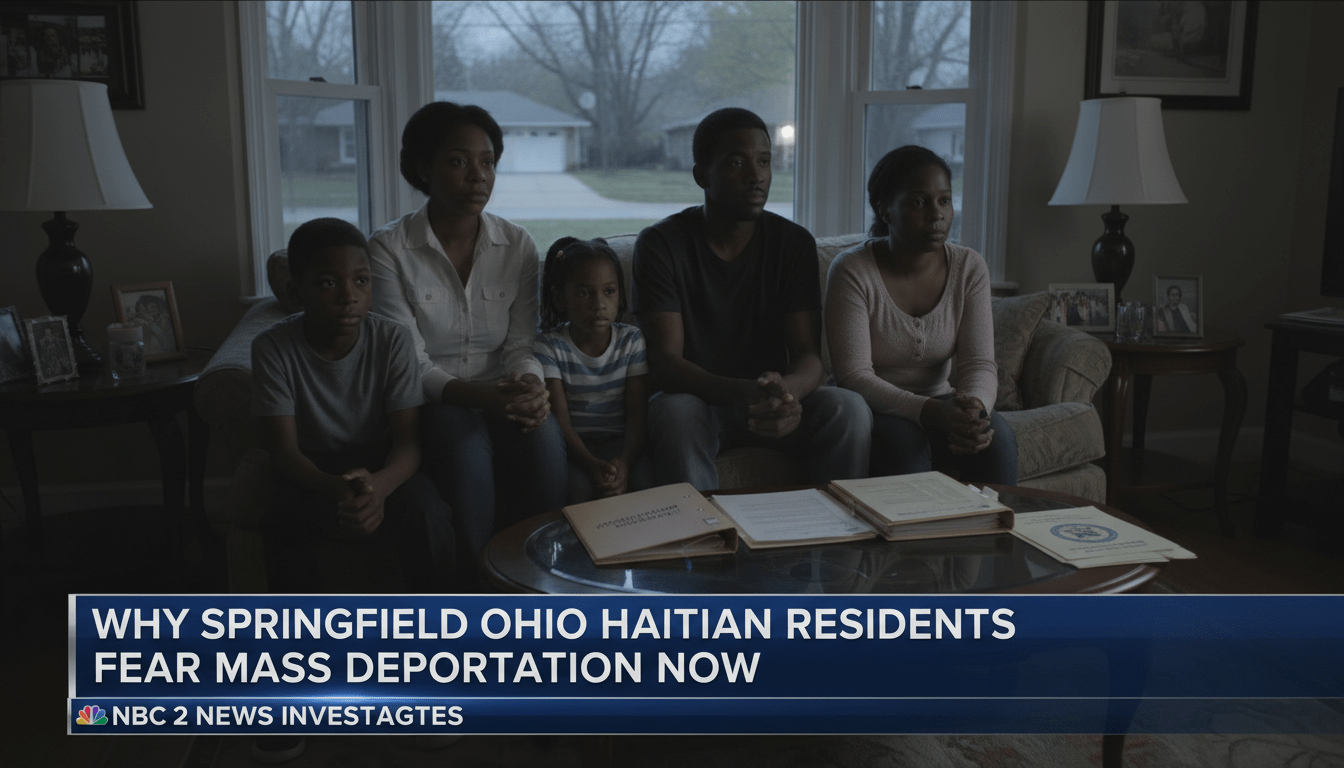
As of January 2026, the atmosphere in Springfield, Ohio, is heavy with fear and uncertainty. President Donald Trump has officially returned to office and has wasted no time in making good on his promises (cbsnews.com). The Haitian community, which helped rebuild this city over the last decade, is now the primary target of mass deportation efforts. Families are staying indoors and keeping their lights off. They are bracing for Immigration and Customs Enforcement (ICE) activity that feels more certain every day (apnews.com).
For many residents, this is not just a policy change but a betrayal of the work they put into the American Dream. They came to Ohio legally to fill jobs that nobody else wanted. They paid taxes and bought homes. Now, because of a shift in the political wind, their status is being stripped away. Civic leaders are working around the clock to provide legal resources. However, the sheer scale of the planned deportations is overwhelming local resources. The “bracing” that is happening right now is a survival tactic for thousands of people who have nowhere else to go (springfieldnewssun.com).
Springfield Population Decline & Recovery
Source: Historical Census and Local Estimates
A Rust Belt City Reborn Through Labor
To understand why this is happening, we must look at the history of Springfield itself. This city was once a booming manufacturing hub in the American Midwest. Like many places in the Rust Belt, it fell on hard times in the late 20th century. Factories closed their doors and the population began to shrink (wikipedia.org). By the year 2011, things were so bad that Gallup named Springfield the “unhappiest city” in the entire United States. The city was losing its young people and its tax base was disappearing (thereportingproject.org).
The turn toward recovery began when local businesses realized they had a massive labor shortage. As the economy started to recover after the pandemic, companies like McGregor Metal could not find enough workers (springfieldnewssun.com). The city leadership decided to market Springfield as a welcoming place for legal immigrants. This was an intentional effort to save the local economy from total collapse. When we look at how Post-Civil War Reconstruction failed to provide lasting security for Black workers, we see a pattern of economic cycles being used against the community (springfieldnewssun.com).
The Workforce Vacuum and Global Crisis
The “Workforce Vacuum” was real. Between 2017 and 2023, thousands of Haitian immigrants arrived in Springfield. Many moved from Florida because they heard there were good jobs and a low cost of living. This was not a random event. It was a response to the economic needs of the city. Most of these new residents arrived legally. They were granted Temporary Protected Status (TPS) because of the extreme violence in their home country (globalrefuge.org). Following the 2021 assassination of President Jovenel Moïse, Haiti fell into chaos as gangs took over the capital (apnews.com).
These workers did not just take any jobs; they took the hard jobs in manufacturing and warehouse work. Business owners praised their work ethic and their willingness to work long shifts (springfieldnewssun.com). They were essential to the supply chains of automotive parts and food packaging. This influx of labor helped Springfield rank second in Ohio for job growth after the pandemic. The city was finally moving away from its “unhappy” reputation. However, this progress was built on a legal status that could be taken away at any moment by the federal government (americanimmigrationcouncil.org).
The Tragedy That Changed Everything
In August 2023, a single accident changed the course of the city. A Haitian driver who did not have an Ohio license crashed into a school bus. This accident led to the death of an 11-year-old boy named Aiden Clark (springfieldnewssun.com). It was a horrific tragedy that devastated the community. While the boy’s parents asked for people not to use their son’s name to spread hate, political groups did the opposite. They used this accident to frame the entire Haitian community as a public safety threat (springfieldnewssun.com).
Before this accident, the challenges in Springfield were mostly about infrastructure. The city needed more translators in schools and more doctors who spoke Haitian Creole. After the accident, the conversation became about “illegal invasion,” even though most of the residents were there legally. This tragedy was the spark that allowed extremist groups to enter the local scene. This mirrors how the Haitian Revolution once caused fear among those who wanted to maintain the status quo in the United States (thereportingproject.org).
Rising Tensions in 2024
Schools, Hospitals, and City Hall targeted after rumors spread.
When Rumors Turn Into Real Violence
By late 2024, Springfield became a national focal point for political rhetoric. During the presidential campaign, false rumors began to spread on social media. People claimed that Haitian residents were stealing and eating pets. Even though the Mayor and the Police Chief said these stories were completely false, the rumors went viral (cbsnews.com). They were repeated on the national debate stage by Donald Trump. This led to a wave of real-world violence and harassment against the Haitian community (theguardian.com).
In a single month, the city received over 30 bomb threats. Schools had to be evacuated and children were afraid to go to class. Neo-Nazi groups like the Blood Tribe began to march on the streets of Springfield (reddit.com). They wore red and black uniforms and carried symbols of hate. This created a climate of terror for anyone who looked different. The focus was no longer on the economic success of the city. Instead, the focus was on a manufactured crisis that put lives at risk. This exploitation of racial tension is a familiar tactic used to suppress the struggle for political representation in America (cbsnews.com).
The Legal Maze of TPS and Parole
It is very important to understand the legal status of these residents. Most Haitians in Springfield are not “undocumented” in the traditional sense. They are under Temporary Protected Status or Humanitarian Parole. TPS is a benefit for people from countries where it is too dangerous to return (lawfirm4immigrants.com). Humanitarian Parole is a special entry permit granted on a case-by-case basis. Both programs require background checks and regular fees. They are not permanent pathways to citizenship, which makes them very fragile (reevesimmigration.com).
As of 2025, the Department of Homeland Security announced it would not renew TPS for Haiti. This means that thousands of legal workers are becoming “removable” overnight. Their work permits are expiring and they are losing their legal right to stay in the country. This creates a massive legal maze for families. Some children were born in the U.S. and are citizens, while their parents are now facing deportation (asaptogether.org). This legal uncertainty is what is causing the current “brace” in the community. Without TPS, people who have lived here for years are suddenly considered fugitives (acf.gov).
The Economic Heartbeat of Springfield
If the Haitian community is forced to leave, Springfield faces a serious economic “spiral.” Local business owners are already reporting a drop in revenue. At places like the Adasa Latin Market, sales have dropped by 30 to 40 percent (springfieldnewssun.com). This is because people are too afraid to go out and shop. They are saving their money for legal fees or for the possibility of having to move quickly. The very people who saved the city from its “unhappiest” era are now being pushed out (springfieldnewssun.com).
Industrial leaders have warned that mass deportations will leave massive gaps in the workforce. Factories that make car parts and process food cannot function without these workers. This could lead to factory closures and a return to the high unemployment rates of the past. The city’s resurgence was tied directly to this new population. Removing them is not just a social issue; it is a financial disaster for the whole region. The history of the diaspora shows that Black labor is often valued until it becomes politically inconvenient (springfieldnewssun.com).
Economic Risks of Mass Deportation
Retail
Gap
Loss
Standing Ground Amidst Extremism
Civic leaders in Springfield are in a very difficult position. Mayor Rob Rue has publicly criticized the federal government for using his city as a political pawn. He and other leaders are trying to maintain public order while extremist groups continue to visit. These groups use the city to film videos and spread propaganda. They often claim they are “protecting” the town, but their presence only brings fear (reddit.com). This atmosphere makes it hard for the police to do their regular jobs because they are constantly responding to threats and protests (cbsnews.com).
The city has even filed lawsuits against some extremist groups to stop them from harassing residents. This is a rare move for a small city, but the situation is extreme. The “Blood Tribe” and other neo-Nazi organizations have made Springfield a symbol of their white supremacist ideology. For the Haitian residents, this is a direct threat to their lives. They are caught between a federal government that wants to deport them and extremist groups that want to hurt them. This tension is a reminder of the historical relationship with Russia and other nations that have vacillated between accepting and rejecting Black people based on political needs (theguardian.com).
The Human Cost of Dislocation
Behind the statistics and the political arguments are real human beings. There are children who are afraid to go to school because they think their parents might not be there when they get home. There are elderly people who fled violence in Haiti only to find a different kind of fear in Ohio. These people have spent years building lives here. They have fixed up old houses that were falling apart. They have started churches and small businesses that serve the whole community (themarshallproject.org).
The human cost of mass deportation is the destruction of these communities. When you remove a large group of people suddenly, you tear the social fabric of the city. The friends, neighbors, and co-workers who stay behind are also affected. The “bracing” is not just about ICE agents at the door. It is about the mental toll of living in a place that no longer feels like home. Springfield was supposed to be a place of refuge and opportunity. Now, for many, it has become a place of surveillance and dread (refugees.org).
Looking Toward an Uncertain Horizon
The future of Springfield is now tied to federal court rulings and the speed of ICE activity. A major court case regarding the termination of TPS is expected in February 2026. This ruling could either provide a temporary shield or open the doors for immediate removals (georgetown.edu). In the meantime, the city remains divided. Some residents support the deportations, while others stand in solidarity with their Haitian neighbors. This division is exactly what the political rhetoric was designed to create (apnews.com).
Whatever happens next, Springfield will never be the same. The city proved that it could be revived through hard work and immigration. It also proved how easily that progress can be undone by rumors and hate. The history of the African diaspora is one of constant movement and resilience. The Haitian residents of Springfield are part of that long story. They are bracing for the storm, but they are also holding onto the hope that the community they helped build will eventually stand up for them (thereportingproject.org).
About the Author
Darius Spearman is a professor of Black Studies at San Diego City College, where he has been teaching for over 20 years. He is the founder of African Elements, a media platform dedicated to providing educational resources on the history and culture of the African diaspora. Through his work, Spearman aims to empower and educate by bringing historical context to contemporary issues affecting the Black community.
