

Why Xenophobic Violence in South Africa Faces a Critical Deadline
By Darius Spearman (africanelements)
Support African Elements at patreon.com/africanelements and hear recent news in a single playlist. Additionally, you can gain early access to ad-free video content.
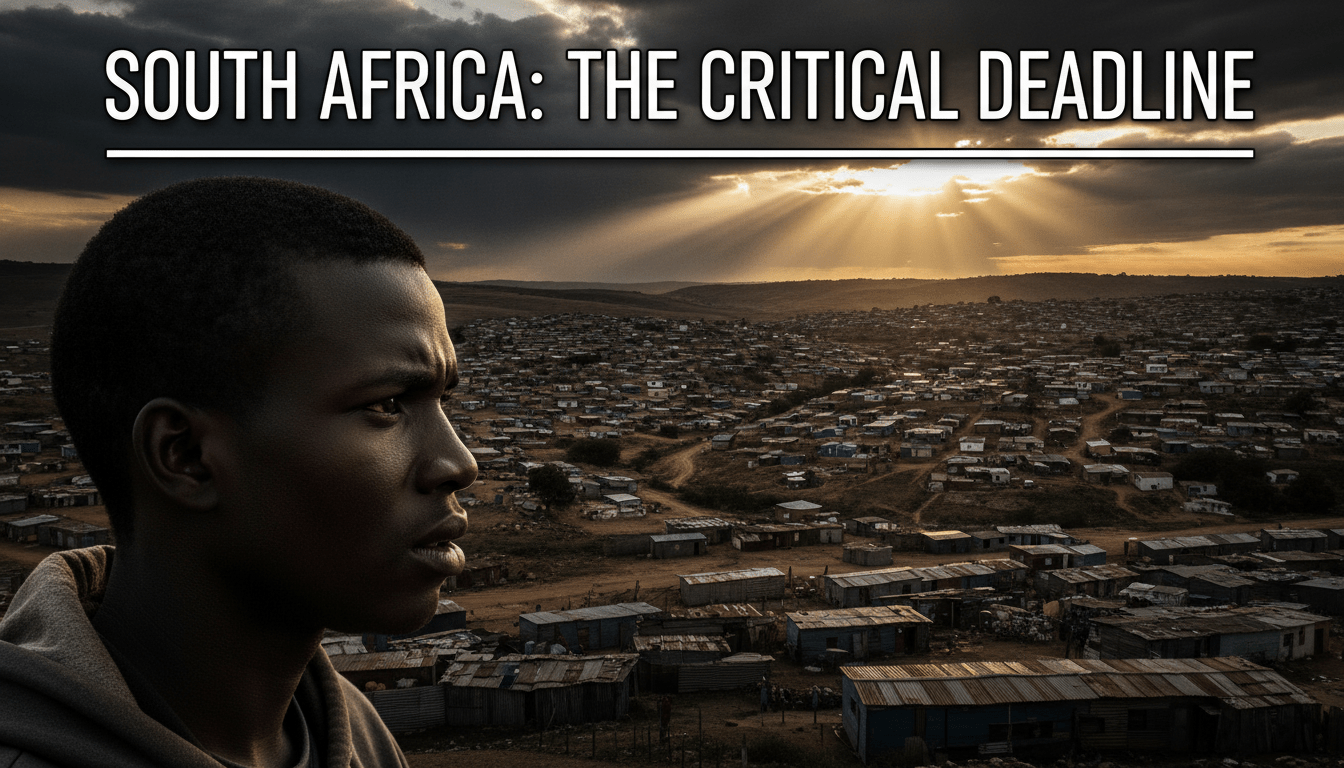
South Africa is currently standing on a razor-edge. A self-imposed deadline of June 30, 2026, has pushed tensions to a boiling point across the nation (sanews.gov.za, dailymaverick.co.za). On this day, anti-immigrant groups plan to stage a massive nationwide shutdown (dailymaverick.co.za). They demand the immediate expulsion of all undocumented African migrants (dailymaverick.co.za). The atmosphere in major cities remains tense as local communities prepare for potential disruptions.
In response, President Cyril Ramaphosa has issued an urgent national directive (sanews.gov.za). He warned citizens against xenophobia and illegal vigilantism in several addresses (sanews.gov.za). Ramaphosa stated that those who take the law into their own hands will face the full weight of the law (sanews.gov.za). Yet, the threat of violence remains high as the deadline approaches (dailymaverick.co.za).
To understand this crisis, one must look at the history behind the headlines. The current tension is the result of decades of economic hardship and unresolved apartheid legacies. By examining these historical roots, one can see how local frustrations have turned into coordinated anti-immigrant movements.
The Broken Promise of the Rainbow Nation
In 1994, South Africa transitioned to democracy under the leadership of Nelson Mandela. The country earned the nickname of the “Rainbow Nation.” This name symbolized a new era of equality, human rights, and continental unity. Many people believed that the country would become a beacon of hope for the entire African continent.
Historically, neighboring African nations played a vital role in ending apartheid. Frontline states provided safe havens, funding, and training bases for the African National Congress during exile (wikipedia.org). This support built a strong foundation of Pan-African solidarity. Many people expected that post-apartheid South Africa would welcome its continental neighbors with open arms.
However, the end of apartheid also opened South Africa’s borders (migration.org.za). Migrants from across the region arrived searching for safety and economic opportunity (migration.org.za). South Africa represents the dominant economic hub of the Southern African Development Community (migration.org.za). Consequently, many migrants from Zimbabwe, Mozambique, and Malawi settled in the country (statssa.gov.za).
This influx soon clashed with the expectations of local citizens. Many poor South Africans expected rapid economic relief after 1994. Instead, they faced continued poverty, which fueled deep frustration. The ideal of Pan-African solidarity began to fade as local communities faced harsh economic realities.
The Spatial and Economic Legacies of Apartheid
The roots of this frustration lie in the spatial and economic legacies of the apartheid system. Under white minority rule, the Black majority suffered systematic oppression. For example, the Group Areas Act forced Black citizens into dense, remote townships (wikipedia.org). These townships were designed to keep Black people segregated from wealthy urban centers (wikipedia.org).
Furthermore, the Bantu Education Act of 1953 restricted the quality of education for Black children (wikipedia.org). This law aimed to limit Black South Africans to low-skilled labor (wikipedia.org). When democracy arrived, millions of citizens lacked the skills needed for a modern economy. This educational gap has made it very difficult for young people to find employment. Today, scholars are working towards decolonizing African universities to address these educational inequalities.
These legacy policies created deep-seated inequalities that still exist today. In places like informal settlements, residents live in crowded, makeshift housing (groundup.org.za). They often lack running water, electricity, and basic sanitation (groundup.org.za). The combination of poverty and lack of infrastructure creates a highly volatile environment.
As a result, an intense competition for survival has emerged. Local residents must compete with regional migrants for jobs, housing, and public services (groundup.org.za). This struggle is similar to historical battles where Black workers fought for economic justice under harsh, unfair systems. The failure of the post-apartheid state to resolve these issues has turned townships into geographic flashpoints for violence.
Cyclical Tragedies: From Spontaneous Riots to Digital Vigilantism
Xenophobic violence in South Africa has erupted in cyclical waves. In May 2008, a massive wave of violence began in Alexandra township, Johannesburg (wikipedia.org). It quickly spread across the nation, leaving 62 people dead (wikipedia.org). Among the victims, 21 were South African citizens who were killed by mistake (wikipedia.org). This tragedy showed how easily fear can turn into blind violence.
To identify “foreigners,” vigilante mobs used arbitrary and discriminatory tests. They forced people to name body parts in isiZulu, such as “indololwane” for elbow (researchgate.net). They also listened to accents or scrutinized physical features like skin tone (researchgate.net). Because South Africa has 11 official languages, many minority citizens failed these arbitrary street-side tests (researchgate.net).
Over time, these spontaneous riots transformed into organized movements. In 2021, Operation Dudula emerged to conduct unauthorized citizenship checks (dailymaverick.co.za). Although the High Court ruled these checks unconstitutional in November 2025, the group continued to operate (icj.org). They used physical intimidation to target foreign-owned businesses and individuals.
More recently, the March and March Movement, founded in March 2024, has scaled up these efforts (dailymaverick.co.za). Led by former radio host Jacinta Ngobese-Zuma, the group uses social media to mobilize protests (dailymaverick.co.za). They have placed volunteers outside clinics to block migrants from receiving healthcare (groundup.org.za). This digital organization has culminated in the June 30 national shutdown demand (dailymaverick.co.za).
1,321
Verified Incidents
698
Deaths Recorded
128.8k
People Displaced
5,648
Shops Looted
Inside the June 30, 2026 Ultimatum
As the June 30 deadline approaches, the human cost of the crisis has escalated. In Pietermaritzburg, a Malawian father named Mishack Banda was stoned to death during a demonstration (groundup.org.za). In Mossel Bay, riots over the employment of undocumented workers led to massive arson (groundup.org.za). Mobs burned down over 50 informal homes and beat two Mozambican nationals to death (groundup.org.za).
Fearing for their lives, thousands of migrants have fled their homes (aljazeera.com). Many are camping outside police stations and consulates for safety (aljazeera.com). They hope to find protection from the escalating violence in their neighborhoods.
This crisis has also caused a severe diplomatic strain within the African continent. Malawi, Zimbabwe, and Mozambique have initiated emergency repatriation schemes to rescue their citizens (thenationonlineng.net). Ghana has successfully repatriated over 300 citizens and petitioned the African Union to intervene (premiumtimesng.com). Meanwhile, Nigeria has prepared evacuation plans and warned Pretoria about the safety of its diaspora (thenationonlineng.net, premiumtimesng.com).
These events contradict the historic ideals of Pan-African solidarity. Many continental neighbors feel a sense of betrayal. They recall the massive sacrifices they made to help end the apartheid regime.
The Administrative Collapse of Immigration Systems
Many experts argue that the crisis is worsened by the collapse of South Africa’s immigration systems. The Department of Home Affairs faces a massive, systemic backlog (lhr.org.za). There are over 161,000 cases of asylum seekers appealing rejected refugee status (lhr.org.za).
Because of these processing bottlenecks, it takes five to seven years to finalize a single claim (georgetown.edu). During this long waiting period, applicants receive temporary permits that allow them to work legally (georgetown.edu). This long delay leaves many people in a state of legal uncertainty.
This administrative failure has created a major loophole. Economic migrants often use the asylum system as the only way to obtain legal work status (georgetown.edu, lhr.org.za). This practice overwhelms an already underfunded system.
Unfortunately, funding constraints prevent the Refugee Appeals Authority from hiring enough staff (lhr.org.za). Only a small fraction of the necessary adjudicators are currently funded (lhr.org.za). This leaves hundreds of thousands of migrants in a permanent state of legal limbo. This collapse of state capacity makes it easy for populist groups to exploit public fears.
Note: 86% of migrants originate from the SADC region.
Political Pressures and the Government Backlash
The ruling African National Congress faces intense political pressure ahead of upcoming local elections (dailymaverick.co.za). A growing ecosystem of populist, right-leaning parties has successfully weaponized anti-immigrant sentiment (dailymaverick.co.za). Parties like ActionSA, uMkhonto weSizwe Party, and the Patriotic Alliance blame migrants for the country’s economic woes (dailymaverick.co.za).
The uMkhonto weSizwe Party, which won 14.58 percent of the vote in 2024, has supported the June 30 national shutdown (dailymaverick.co.za). This political shift has forced the government to adopt a much tougher stance on immigration.
In response, Acting Police Minister Firoz Cachalia announced a 600 million Rand security operation (dailymaverick.co.za). The government has deployed the South African Police Service in full force (sanews.gov.za). They have also placed the military on standby to protect critical infrastructure (dailymaverick.co.za).
At the same time, President Ramaphosa must balance security with constitutional rights. He continues to warn citizens against taking the law into their own hands (sanews.gov.za). He emphasizes that only the state has the legal authority to enforce immigration laws (sanews.gov.za).
Conclusion: The Danger of Scapegoating
The upcoming June 30, 2026 deadline represents a critical moment for South Africa. Historically, sudden expulsions of immigrant populations in other nations have led to economic disaster. When countries like Ghana in 1969 or Uganda in 1972 expelled minority groups, they suffered severe economic stagnation and supply chain collapses.
The real issues facing South African communities are high unemployment and a lack of resources. However, blaming regional African migrants does not build houses or create jobs. Instead, it threatens to tear apart the delicate constitutional fabric of the country.
For those interested in how historical struggles shape modern movements, analyzing South Africa’s labor dynamics offers deep lessons. One can read more about how African workers are rising to challenge systemic inequality and demand real economic justice. South Africa must address its structural issues directly rather than allowing xenophobia to destroy its democratic ideals.
About the Author
Darius Spearman is a professor of Black Studies at San Diego City College, where he has been teaching for over 20 years. He is the founder of African Elements, a media platform dedicated to providing educational resources on the history and culture of the African diaspora. Through his work, Spearman aims to empower and educate by bringing historical context to contemporary issues affecting the Black community.
