


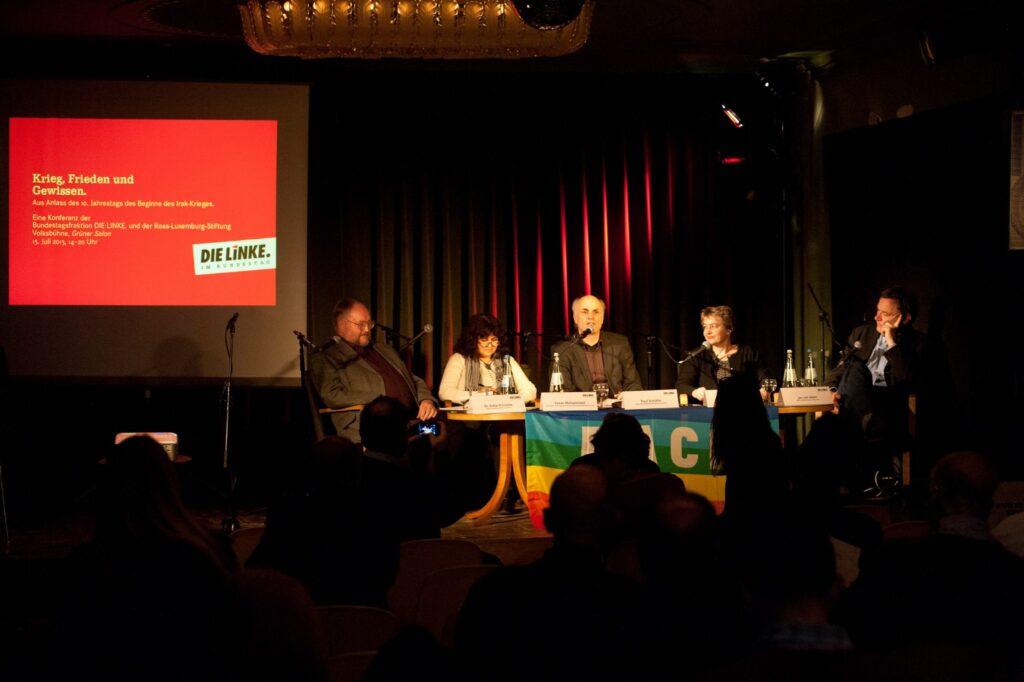
Yanar Mohammed Assassinated: Uncovering The Hidden History
By Darius Spearman (africanelements)
Support African Elements at patreon.com/africanelements and hear recent news in a single playlist. Additionally, you can gain early access to ad-free video content.
A Devastating Loss for Human Rights
Mohammed built an extraordinary legacy of protecting vulnerable populations from severe harm. Following the United States-led invasion in 2003, she returned to a nation where basic safety had completely collapsed. She immediately founded the first established network of shelters for women in the country. She provided necessary sanctuary for survivors of domestic abuse and individuals fleeing horrific violence. Her organization steadily expanded to operate eleven safe houses across five different cities. These shelters successfully protected more than one thousand and three hundred women over two remarkable decades (paxforpeace.nl, amnesty.org). Her untimely death highlights a severe and ongoing crisis within the region, underscoring the immense dangers faced by those who challenge entrenched power structures.
The Afro-Iraqi Legacy of Resistance
Yanar Mohammed fought fiercely for the rights of Afro-Iraqis, a community that remains largely invisible in national political discussions. Afro-Iraqis are primarily the descendants of enslaved East Africans brought to the region during the Indian Ocean slave trade. Historians refer to these resilient people as the Zanj. The powerful Abbasid Caliphate brought them to the Middle East centuries ago. Authorities forced the Zanj to perform grueling labor, draining salt marshes under brutally harsh conditions to enrich absentee landowners (wikipedia.org).
The Zanj Rebellion stands as a historical event of monumental significance for the global diaspora. This massive uprising lasted from 869 to 883 CE. It ranks among the most successful and sustained revolts by enslaved Africans in recorded history. The Zanj forces established an independent state in southern Iraq, created their own capital called al-Mukhtara, and even minted their own currency. The uprising severely exhausted the imperial treasury, diverted fifty thousand troops, and permanently weakened the Abbasid Empire. This remarkable history connects deeply to the broader struggles of the African diaspora. It echoes similar fights for freedom and dignity across the globe. For instance, similar dynamics are evident when examining how Black women contributed to civil rights efforts in the United States despite facing massive institutional barriers. Mohammed recognized this deep historical trauma and actively worked to elevate their voices on the global stage.
Modern Struggles of Black Iraqis
Today, researchers estimate that between five hundred thousand and two million Afro-Iraqis live within the country. The vast majority of these individuals reside in the southern city of Basra, often segregated into impoverished areas. They endure severe systemic racism every single day of their lives. Many citizens and even religious clerics still use the highly offensive slur “abd,” meaning slave, to describe Black Iraqis. Afro-Iraqi communities suffer from disproportionately massive rates of illiteracy. They also face widespread unemployment and terrible poverty (thenewregion.com).
The established political system completely ignores Black Iraqis. They make up roughly five percent of the total national population. However, there is absolutely no Afro-Iraqi holding a high-level government position. Furthermore, they receive zero seats in the Iraqi Parliament. The official minority quota system completely excludes them from political representation (newarab.com). Grassroots movements have attempted to organize, but they often meet violent ends. Yanar Mohammed gave this targeted community a rare and powerful voice. She consistently demanded equal civil rights and national visibility for Afro-Iraqis. The political shift towards systemic exclusion heavily mirrors the difficult challenges faced by Black communities worldwide who fight for basic representation.
Afro-Iraqi Political Erasure
Despite making up 5% of the population, Afro-Iraqis hold 0 seats in Parliament.
Estimated Population (5%)
Government Representation (0%)
The Battle Over Personal Status Laws
The assassination of Yanar Mohammed did not occur randomly or without context. It followed a severe and calculated backlash against gender equality. In January 2025, the Iraqi Parliament passed deeply controversial amendments. They drastically altered the 1959 Personal Status Law. This foundational law previously governed marriage, divorce, and family life exclusively through civil courts. It was widely considered one of the most progressive legal codes in the Middle East (europa.eu).
The new amendments completely shift this critical legal authority to religious figures and sectarian courts. Human rights activists protested these dangerous changes immediately. They explicitly warned that the amendments essentially legalize child marriage nationwide. The newly implemented rules allow girls as young as nine to marry under specific religious interpretations. Furthermore, UNICEF data already shows that twenty-eight percent of girls in Iraq currently marry before turning eighteen. Activists expect this terrible statistic to rise sharply in the coming years (refworld.org, europa.eu). Mohammed fought tirelessly against these dangerous legal regressions. She understood that shifting power to religious courts strips women of their basic human rights and custody protections, cementing a deeply patriarchal society.
The Child Marriage Crisis
Percentage of girls in Iraq married before the age of 18 (UNICEF Data).
Weaponizing Technology Against Women
The state increasingly uses modern technology to suppress basic human freedoms and monitor its citizens. The Ministry of Interior launched an official application called Ballegh in 2023. This digital platform directly encourages citizens to report online content they consider indecent, offensive, or violating public morals. Authorities utilize this powerful digital tool to systematically silence political dissidents. They intentionally target secular feminists who publicly challenge traditional societal norms (smex.org).
Corrupt officials used this specific platform to run vicious smear campaigns against Yanar Mohammed. They formally accused her prominent organization of human trafficking. This completely absurd charge aimed to criminalize her crucial life-saving work. She provided shelter to desperate women fleeing horrific domestic violence. The Ballegh app creates a terrifying culture of state-sponsored surveillance (amnesty.org). It heavily relies on peer monitoring to suppress social justice movements across the nation. This tactic directly reflects historical efforts where authorities sought to undermine community unity from within. It is strikingly similar to how government agencies weaponized homophobia to disrupt prominent civil rights organizations in the past. Technology simply provides a new avenue for old methods of oppression.
The Rising Tide of Violence
Iraq currently faces a massive and unaddressed crisis regarding domestic violence against women. The available statistics paint a truly grim picture of everyday life for marginalized groups. The Iraqi Center for Human Rights officially recorded more than fifty-three thousand cases of domestic violence between 2022 and mid-2024. Physical abuse remains the most common form of violence reported to authorities. Thirty-one percent of these documented attacks occurred in Baghdad alone (substack.com).
Unfortunately, the legal system completely fails to protect these vulnerable victims. Iraq still lacks a comprehensive national law criminalizing domestic abuse. This legislative failure leaves brave activists like Yanar Mohammed as the only line of defense for countless women. Furthermore, honor killings remain a significant and deadly threat across the country. Authorities documented at least fifty-three women murdered by male relatives in the Kurdistan Region during 2025. Countless other horrifying cases remain deliberately unrecorded by central authorities nationwide (paxforpeace.nl). Families often falsely report these brutal murders as simple suicides to avoid legal scrutiny and maintain social standing.
The Domestic Violence Epidemic
Reported cases in Iraq between 2022 and mid-2024.
Documented Cases of Abuse
The Intersection of Race and Gender
Afro-Iraqi women face incredibly unique and complex challenges in their daily lives. They carry a heavy double burden in a society entirely structured around strict racial and gender hierarchies. Black women endure systemic anti-Black racism alongside intense gender-based violence. They suffer from deliberate exclusion in the professional workforce. Consequently, society often restricts them to low-status domestic or manual labor roles, denying them basic economic mobility (thenewregion.com).
Yanar Mohammed understood these intersecting societal struggles deeply and fundamentally. She correctly recognized that achieving true justice requires addressing both racism and sexism simultaneously. Defending Afro-Iraqis means entirely dismantling the patriarchal laws that consistently enforce servitude and silence. Her intersectional approach strongly mirrored the enduring strength and resilience frequently seen throughout the history of the African diaspora. She firmly believed that religious piety should remain a deeply private choice. It should never function as a state-enforced law used to oppress minorities. By fighting deeply embedded systems of control, she championed the rights of the most marginalized individuals in society. Her efforts highlight the urgent necessity of transforming educational institutions to reflect true historical realities and foster inclusive, equitable societies.
A Pattern of Impunity and Silence
The brutal assassination of Yanar Mohammed fits a highly disturbing and persistent pattern of violence. Prominent human rights organizations note a rapidly growing trend of targeted killings across Iraq. Since the massive youth-led Tishreen protests of 2019, dozens of prominent activists have vanished. Heavily armed gunmen murder progressive journalists and community leaders with total impunity. These attackers frequently use motorcycles and silenced pistols, a known signature of political assassinations in the region (theguardian.com).
These violent attackers often represent armed militias or deeply conservative death squads affiliated with political parties. They view secular activists and feminists as dangerous threats to their political and religious authority. The government rarely prosecutes these well-known killers, suggesting a deeply infiltrated security apparatus functioning as a state within a state. The tragic murder of Mohammed has created a massive chilling effect across the entire nation. The region is now a deeply dangerous environment for feminist activism. Many dedicated human rights defenders must flee the country immediately or operate entirely underground to survive (theguardian.com). The international community must acknowledge the incredibly heavy price paid by those who courageously speak truth to entrenched power.
About the Author
Darius Spearman is a professor of Black Studies at San Diego City College, where he has been teaching for over 20 years. He is the founder of African Elements, a media platform dedicated to providing educational resources on the history and culture of the African diaspora. Through his work, Spearman aims to empower and educate by bringing historical context to contemporary issues affecting the Black community.
